


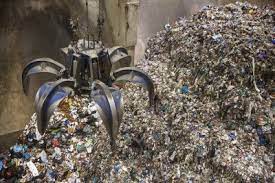
Solid waste describes discarded materials that have lost their intended usefulness and are being abandoned, recycled, or otherwise treated as waste. The term does not mean that every solid waste must physically be solid.
The waste stream can include liquids, semisolids, or gases contained inside equipment or containers, depending on the applicable legal definition. Understanding this point helps organizations classify materials correctly before management, treatment, or disposal decisions.
Solid waste classification also determines whether a material can move into hazardous waste regulation. Some recycled materials may qualify for specific exclusions, so facilities should document the reasoning behind every exclusion used.
Hazardous waste forms a smaller but important part of the wider waste stream. It includes discarded materials that possess listed properties or characteristics capable of creating significant risks for people, ecosystems, property, or environmental resources.
A clear distinction between ordinary solid waste and hazardous waste supports safer storage, transportation, recycling, treatment, and disposal. It also helps facilities maintain records, select suitable controls, and avoid mixing incompatible waste streams.
What Is Solid Waste?
Solid waste generally refers to discarded garbage, refuse, sludge, and other materials produced by industrial, commercial, agricultural, mining, institutional, household, or community activities under applicable waste-management rules and procedures within regulated systems.
The definition focuses on a material’s status as discarded rather than simply its physical form. A liquid or gas held in a container can therefore fall within a solid-waste framework.
Materials become important for classification when they are abandoned, thrown away, accumulated before disposal, or handled in ways that demonstrate an intention to discard them permanently. Storage circumstances can influence the final classification.
Some materials remain outside solid-waste regulation because specific rules exclude them from the definition. Facilities should identify the applicable exclusion and retain supporting records before relying upon it during compliance reviews.
Understanding the basic waste definition gives waste generators a foundation for making later decisions about recycling, treatment, transportation, and disposal requirements. It also helps explain why some discarded materials receive different regulatory treatment.
Solid waste does not automatically mean hazardous waste. A material must first meet the relevant solid-waste definition, after which additional rules determine whether it belongs within hazardous waste regulation or another category.
The major waste categories can require different controls because physical properties, chemical composition, source, and potential environmental effects influence suitable management methods for mixed materials generated across multiple activities and processes.
Read Also: Guide to Waste Determination Process
When Does Material Become Solid Waste?
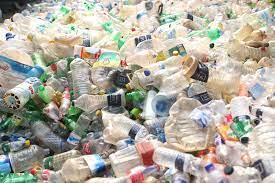
1. Discarded Materials: A material commonly enters the solid-waste stream when its owner discards it, abandons it, or no longer intends to use it for its original purpose. Actual handling practices guide this decision.
2. Accumulated Materials: Materials stored before disposal can require classification when the surrounding circumstances show that disposal is intended. Records should explain why the material remains stored and what happens next under the facility’s procedure.
3. Recycled Materials: Recycling can change how a material is regulated, because certain materials receive specific exclusions. Generators should verify eligibility and document the facts supporting the applicable recycling exclusion before using it.
4. Inherently Waste-Like Materials: Some materials may remain regulated because their characteristics and handling make them inherently waste-like. Such classifications require careful review against the relevant regulatory framework and documented facts.
5.Excluded Materials: Specific exclusions may remove certain materials from the solid-waste definition. The waste classification framework helps readers understand how categories support accurate identification, documentation, and consistent management decisions within facilities.
6. Documented Determinations: A reliable classification should record the waste source, composition, handling method, applicable exclusion, and supporting evidence. Using waste determination methods strengthens consistency and creates an audit trail.
7. Management Hierarchy: Once classification is clear, generators can prioritize prevention, reuse, recycling, recovery, treatment, and disposal according to applicable requirements. The waste management hierarchy supports this sequence for effective management.
What Types of Solid Waste Exist?
1. Municipal Solid Waste: Household and community refuse commonly includes food residues, paper, plastics, glass, metals, textiles, and other everyday discarded materials requiring organized collection and responsible disposal across communities.
2. Industrial Solid Waste: Factories may generate production residues, packaging, process materials, sludges, scrap, and contaminated items. Their hazards depend on the processes, chemicals, and materials involved within each facility.
3. Agricultural Solid Waste: Farms generate crop residues, animal manure, packaging, plastics, used containers, and chemical-related wastes. The waste properties help explain how composition influences storage and handling for proper control.
4. Construction Waste: Construction and demolition activities can produce concrete, wood, metals, glass, soil, packaging, and other debris. Segregation improves recovery while preventing hazardous materials from entering ordinary debris streams unnecessarily.
5. Institutional Waste: Schools, offices, laboratories, and public facilities generate paper, food remains, packaging, maintenance materials, and specialized wastes requiring controls that reflect their sources, composition, and handling conditions in those settings.
6. Special Waste Streams: Electronic equipment, batteries, medical materials, contaminated containers, and other specialized wastes may require separate handling. The core management elements provide a useful framework for controlling these streams.
What Is Hazardous Waste?
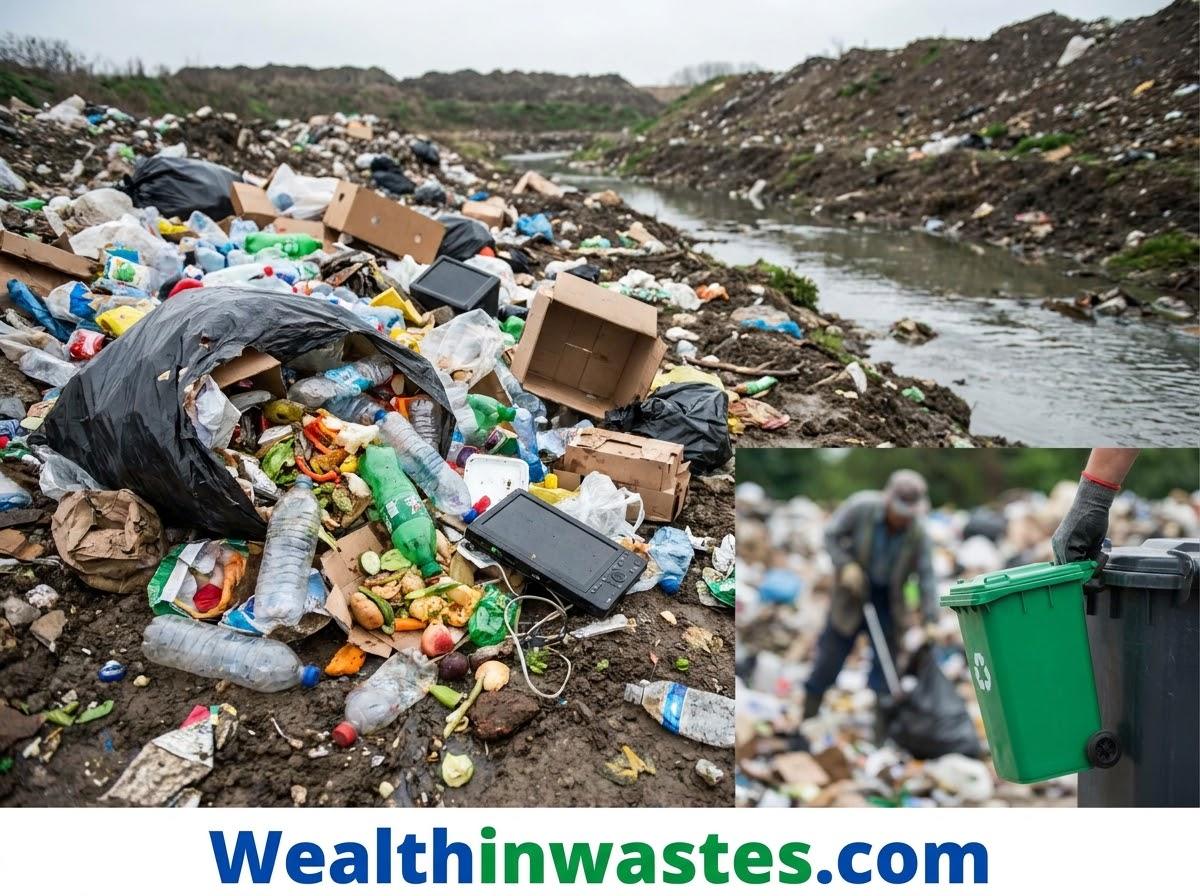
Hazardous waste is discarded material that can threaten human health or the environment because it appears on a regulated list or exhibits a recognized hazardous characteristic under applicable waste-management rules.
These wastes can occur as solids, liquids, sludges, or gases held within containers. Their hazardous status depends on composition, source, properties, and the regulatory criteria governing each waste stream during management.
Examples can include spent solvents, pesticides, certain laboratory chemicals, contaminated materials, industrial residues, and discarded commercial products. Not every chemical-containing waste automatically qualifies as hazardous waste under every regulatory system.
The household chemical waste examples category shows why ordinary homes can produce materials needing separate management, including paints, solvents, batteries, automotive products, and chemical cleaners that require careful handling in household settings.
Industrial facilities may generate hazardous waste from chemical manufacturing, metal processing, petroleum activities, pesticide production, healthcare, maintenance, and other operations that use hazardous substances and produce contaminated residual materials during routine operations.
The hazardous waste sources can connect hazardous materials with generating activities and explain why source information matters during classification, segregation, treatment, and disposal decisions across facilities, making source records important.
Correct identification protects workers and communities because hazardous waste can require specialized containers, labels, storage areas, transportation controls, treatment processes, and disposal arrangements that differ from ordinary solid waste and recyclables.
What Makes Waste Hazardous?
1. Ignitability: Ignitable waste can catch fire readily or support dangerous combustion. Examples may include certain spent solvents and waste oils, requiring controls that reduce ignition sources and unsafe accumulation.
2. Corrosivity: Corrosive waste can damage living tissue or materially react with metals and other materials. The hazardous-waste criteria explain how regulatory characteristics support accurate classification decisions during compliance reviews.
3. Reactivity: Reactive waste may undergo unstable chemical reactions, produce toxic gases, or react violently under particular conditions. Careful segregation prevents dangerous contact with incompatible materials during storage and treatment operations.
4. Toxicity: Toxic waste contains substances capable of causing harmful effects when exposure occurs through appropriate pathways. Testing and process knowledge can help determine whether waste meets applicable toxicity criteria reliably.
5. Listed Waste: Some wastes qualify because regulations specifically identify them by source, process, or chemical content. The hazard classification provides additional context for identifying regulated materials under applicable regulations.
6. Evidence-Based Classification: Generators can apply process knowledge or laboratory results when determining waste status. sample handling guidance help maintain reliable evidence for compliance documentation during future reviews and inspections.
How Do Solid And Hazardous Waste Differ?
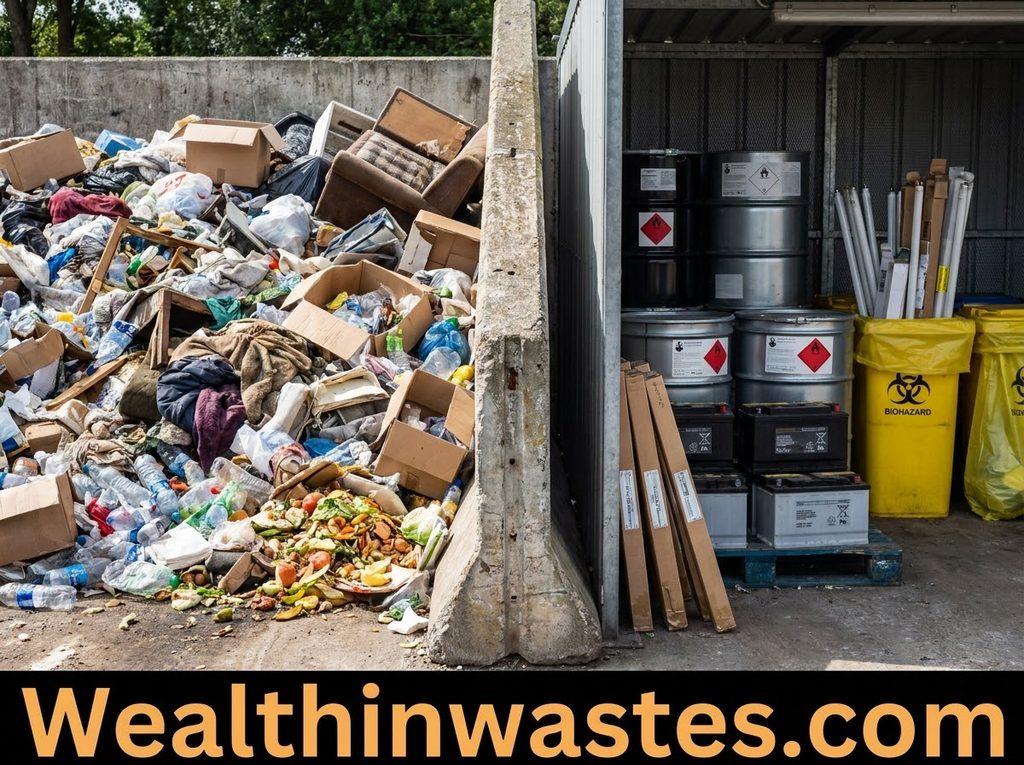
Solid waste is a broad category, while hazardous waste identifies materials within or associated with waste regulation that present defined risks. Therefore, the two terms are related but they are not interchangeable.
A nonhazardous municipal waste stream can contain ordinary household refuse without meeting hazardous criteria. By contrast, a discarded pesticide or solvent may require hazardous-waste controls because of listed properties or characteristics.
The solid waste management principles emphasize organized collection, transport, processing, recovery, and disposal, while hazardous waste management adds controls for specific risks and regulated materials throughout daily operations and reviews.
Solid-waste management emphasizes segregation, recycling, composting, recovery, treatment, and controlled disposal. Hazardous-waste management additionally emphasizes compatibility, containment, labeling, emergency preparedness, specialized treatment, and regulatory documentation for higher-risk streams across facilities.
The broader waste-management guidance explains how waste management connects generation, storage, recycling, treatment, disposal, and regulatory considerations across the wider system, helping managers coordinate multiple waste streams effectively within organizations.
Classification also affects cost and operational planning. Hazardous waste may require specialized containers, testing, treatment, transport arrangements, and disposal facilities, whereas ordinary recyclable materials may enter recovery systems with fewer controls.
The control measures show why collection, transportation, processing, resource recovery, and final disposal must work together rather than treating classification as an isolated administrative task throughout the full waste lifecycle.
How Should Solid And Hazardous Waste Be Managed?
1. Waste Segregation: Separate hazardous materials from ordinary recyclables and general refuse at the point of generation. Proper segregation reduces contamination, improves recovery, and limits accidental exposure during collection and transport.
2.Safe Storage: Use suitable containers, secure storage areas, clear labels, and compatible materials. Hazardous wastes need stronger controls to prevent leaks, reactions, unauthorized access, and environmental releases during storage.
3. Recycling And Recovery: Reuse and recycling should be considered where materials remain suitable and legally eligible. The recycling process explains how separation and processing can recover useful resources safely.
4. Treatment: Treatment can reduce hazardous properties, stabilize materials, destroy contaminants, or prepare waste for safer disposal. The chosen process should match the waste characteristics, facility capabilities, and applicable requirements.
5. Final Disposal: Residual wastes should reach facilities designed and authorized for their characteristics. Treatment and disposal methods emphasize prevention, reuse, recycling, recovery, and controlled disposal according to facility requirements and documented waste classifications.
6. Waste Prevention: Reducing waste at the source lowers the amount requiring storage, treatment, recycling, or disposal. Disposal options place avoidance and reduction before final disposal in the hierarchy for responsible management.
Read Also: Management of Hazardous Wastes in the Environment
Why Does Correct Waste Classification Matter?
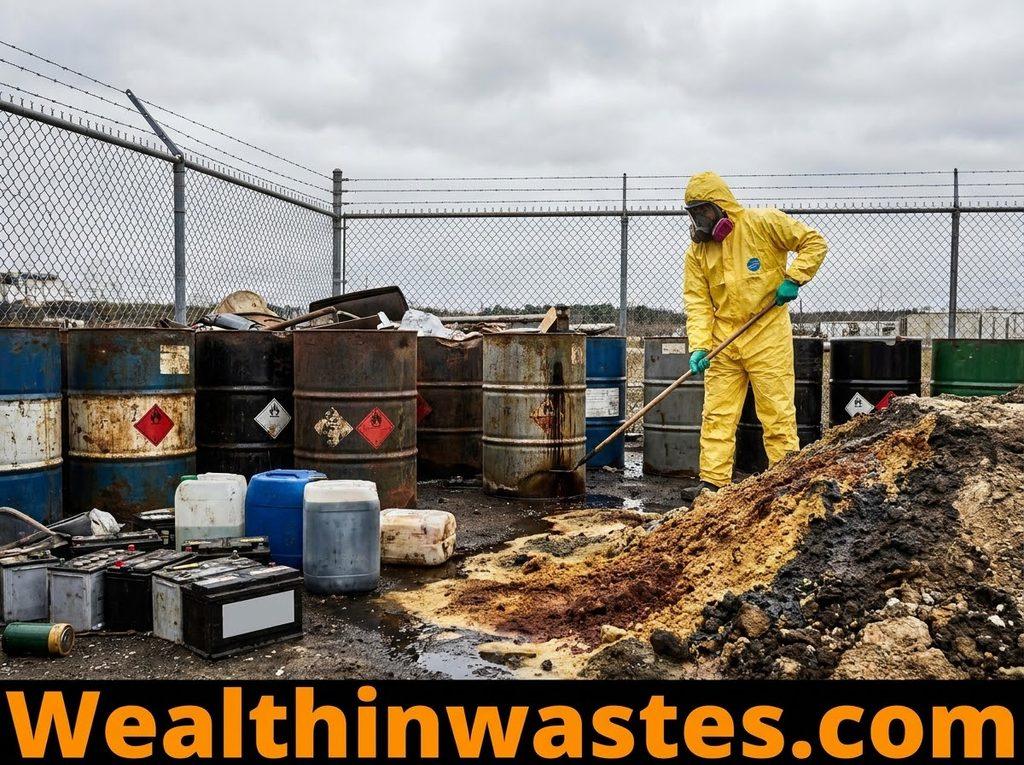
Correct classification matters because every later waste-management decision depends on knowing what the material is, where it came from, and what hazards or recovery opportunities it presents throughout the waste lifecycle.
Misclassification can lead to inappropriate storage, disposal, transport, or treatment. It can also cause contaminated recyclable materials, hazardous substances, or incompatible wastes to enter the wrong management pathway and increase handling risks.
Facilities should keep records showing waste sources, process information, analytical results, classifications, exclusions, codes where applicable, and final management decisions. Clear records make inspections and internal reviews easier for responsible personnel.
The waste minimization guidance shows how prevention can reduce both waste quantities and potential hazards before materials require downstream management. Source reduction therefore remains an important part of responsible waste planning.
Environmental protection also depends on controlling where residual waste goes. Poor disposal can create pollution pathways, while well-managed facilities use containment, monitoring, treatment, and operational controls to reduce environmental risks.
The landfill impacts illustrate why uncontrolled disposal can affect air, soil, water, climate, and nearby communities. Understanding these pathways reinforces the need for controlled disposal and long-term monitoring over time.
In practice, the goal is not simply to label waste but to manage each stream according to its actual characteristics. Accurate classification supports safer decisions, stronger compliance, resource recovery, and environmental protection.
Summary on What is a Solid Waste and Hazardous Waste
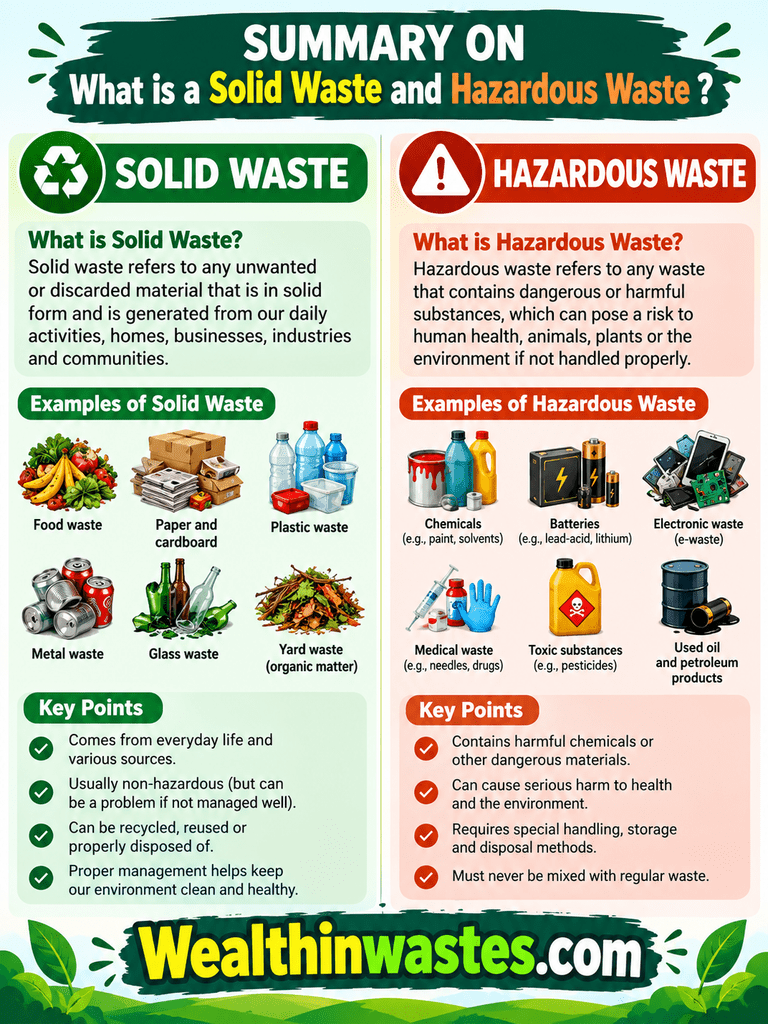
| Section | Main Idea | Why It Matters |
|---|---|---|
| Solid Waste | Explains the broad meaning of discarded waste and why physical form alone does not determine classification. | Creates a foundation for accurate waste identification. |
| Waste Classification | Shows how discarded, recycled, excluded, and documented materials receive different treatment. | Supports consistent regulatory decisions and recordkeeping. |
| Types of Solid Waste | Highlights municipal, industrial, agricultural, construction, institutional, and special waste streams. | Connects waste sources with suitable handling methods. |
| Hazardous Waste | Defines waste that appears on regulated lists or exhibits hazardous characteristics. | Identifies materials requiring additional controls. |
| Hazard Characteristics | Covers ignitability, corrosivity, reactivity, toxicity, listed wastes, and evidence-based classification. | Helps determine the appropriate management pathway. |
| Key Differences | Compares broad solid-waste classification with hazardous-waste requirements. | Prevents confusion between related waste categories. |
| Waste Management | Discusses segregation, storage, recycling, treatment, disposal, and prevention. | Supports safer and more efficient waste handling. |
| Classification Importance | Explains why accurate identification and records influence environmental protection and compliance. | Reduces mismanagement, contamination, and unnecessary risks. |
Frequently Asked Questions About What Is Solid Waste and Hazardous Waste? A Complete Guide
1. What Is Solid Waste?
Solid waste is discarded material covered by the applicable waste definition. It may include solids, liquids, semisolids, sludge, or contained gases, depending on the regulatory framework and circumstances when applicable.
2. Can A Liquid Be Solid Waste?
Yes. The term can describe a regulatory waste category rather than physical state alone. Certain liquids and contained gases may qualify when the applicable rules define them as solid waste.
3. What Makes Waste Hazardous?
Waste may be hazardous when it appears on a regulated list or exhibits characteristics such as ignitability, corrosivity, reactivity, or toxicity within the applicable regulatory system and circumstances when those criteria apply.
4. Is Every Solid Waste Hazardous?
No. Solid waste is a broader category. Only wastes meeting relevant hazardous-waste criteria require hazardous classification, although nonhazardous waste still needs appropriate collection, treatment, recycling, or disposal under applicable rules.
5. Why Should Waste Determinations Be Documented?
Documentation records the material’s source, composition, handling, exclusions, test results, and classification. Clear records support consistent decisions, inspections, internal reviews, audits, and defensible environmental management throughout the waste determination process.
6. How Should Hazardous Waste Be Managed?
Hazardous waste should be segregated, stored safely, labeled, transported appropriately, treated when necessary, and sent to suitable authorized facilities according to its characteristics, applicable requirements, and documented waste-management procedures throughout the process.
Do you have any questions, suggestions, or contributions? If so, please feel free to use the comment box below to share your thoughts. We also encourage you to kindly share this information with others who might benefit from it. Since we can’t reach everyone at once, we truly appreciate your help in spreading the word. Thank you very much for your support and for sharing!
Read Also: Proper Farm Waste management guide