


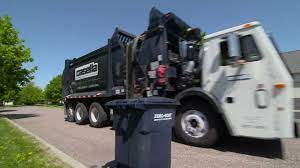
Effective waste management requires more than removing unwanted materials from homes, businesses, institutions, and communities. It also involves collection, sorting, recycling, recovery, treatment, disposal, and responsible resource use.
Casella Waste Services provides a useful example of how an established waste management organization can combine collection services with recycling, organics management, recovery, transfer, disposal, and other environmental services.
For households and businesses, the quality of waste presented for collection can influence what happens after pickup. Clean, suitable materials can support recovery, while contamination can complicate sorting and processing operations.
Understanding recycling requirements therefore helps people make better decisions about what belongs inside recycling containers and what should move through separate collection, reuse, composting, or specialized recovery systems.
This guide examines Casella Waste Services, its recycling approach, accepted materials, restricted items, contamination concerns, household practices, waste reduction strategies, and lessons that apply across broader waste management systems.
About Casella Waste Services
Casella began as a single-truck business in Rutland, Vermont, in 1975 and later expanded into a broader organization serving different customer groups through multiple waste management and resource recovery activities.
Its development reflects the changing nature of waste management, where collection increasingly connects with recycling, organics handling, energy recovery, transfer operations, disposal, and resource conservation.
1. Residential Services: Residential waste services help households manage everyday discarded materials through organized collection systems that can separate recyclable materials from general waste before processing or disposal.
2. Commercial Services: Commercial customers often generate larger and more varied waste streams, requiring dependable collection arrangements that support recycling, recovery, disposal, and consistent operational planning.
3. Municipal Services: Municipal waste programs must coordinate collection and processing across communities, making reliable infrastructure essential for maintaining sanitation, environmental quality, and orderly material recovery systems.
4. Resource Recovery: Resource recovery seeks to retain useful materials within productive systems by directing suitable waste toward recycling, organics processing, energy recovery, reuse, or other beneficial pathways.
The broader principles of organized solid waste management help explain why collection, transport, processing, monitoring, recycling, and disposal must operate together rather than as isolated activities.
Casella’s development also demonstrates why modern waste services must respond to different material types, customer requirements, environmental expectations, operational conditions, and available markets for recovered commodities.
The company’s approach provides a useful framework for understanding how waste generators influence the success of recycling systems through preparation, segregation, contamination prevention, and responsible disposal decisions.
Read Also: Types of Wastewater and Motivational Factors for Recycling/Reuse
How Casella Waste Services Recycling Works
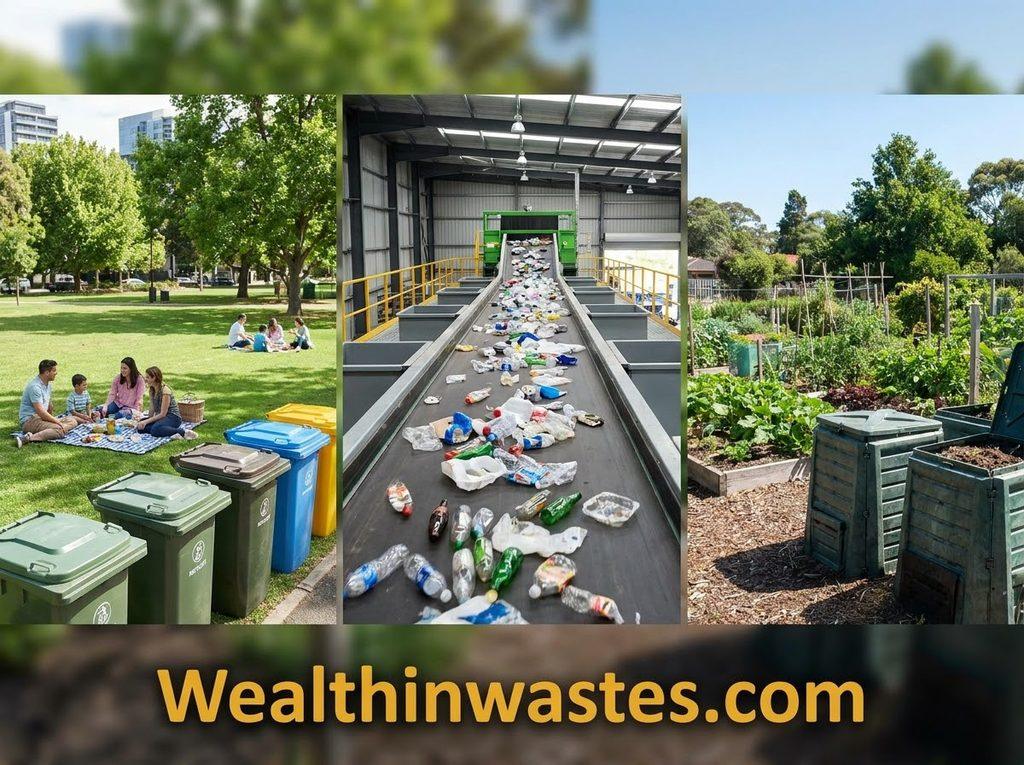
Casella recycling begins when suitable recyclable materials leave households, businesses, or other participating customers through organized collection services that move materials toward facilities equipped for sorting and processing.
1. Collection: Trucks collect materials from designated locations and transport them toward facilities where workers and equipment can inspect the incoming stream and prepare suitable commodities for recovery.
2. Sorting: Sorting separates paper, cardboard, plastics, metals, glass, and other suitable materials from contaminants that may reduce quality, interfere with equipment, or require disposal through another pathway.
3.Processing: Suitable materials move through preparation processes that can include cleaning, grading, compacting, baling, shredding, or other steps needed before manufacturers or processors can use them.
4. Marketing: Recovered commodities can move into commercial markets where manufacturers use suitable materials as secondary raw materials for producing new goods and products.
The standard waste recycling process shows why collection and sorting quality matter because contaminated materials may lose value or become unsuitable for efficient recovery.
Material recovery also depends on household behavior because recyclables that contain liquids, food residue, loose bags, or unrelated objects can create problems throughout collection and sorting operations.
Guidance on recycling common waste materials further demonstrates that paper, metals, glass, plastics, and other commodities require appropriate handling because their physical properties differ considerably.
Understanding different recycling methods can help households recognize why some materials enter ordinary recycling streams while other items require specialized collection or alternative recovery systems.
Accepted Materials For Casella Recycling
Casella recycling guidance identifies several common household materials that may enter appropriate recycling streams when they meet preparation requirements and remain free from excessive contamination.
1. Dry Cardboard: Dry corrugated cardboard, box board, food boxes, paper rolls, and egg cartons can qualify when they remain clean, dry, and suitable for paper recovery processes.
2. Paper: Paper bags, office paper, envelopes, magazines, newspapers, and similar materials may qualify when local program requirements permit them and contaminants remain under acceptable levels.
3. Rigid Plastics: Clean, empty heavy-duty tubs, bottles, jugs, and suitable lids can qualify under applicable recycling requirements when their material type and condition meet program specifications.
4. Metal Cans: Clean aluminum and steel cans, together with suitable foil, can enter appropriate recycling streams when residents empty them and prepare them according to collection instructions.
5. Glass Containers: Clean, empty glass bottles and jars used for food or beverages can provide recoverable glass when the local program accepts those containers.
The paper recovery process illustrates why clean paper remains valuable, since sorting and preparation influence fibre quality and determine whether recovered material can enter further processing.
Similarly, aluminum recycling systems rely on appropriate collection and preparation so valuable metal can move efficiently through sorting, processing, and manufacturing stages.
Residents should always check their specific service instructions because accepted materials can vary by location, collection arrangement, processing facility, equipment, market conditions, and program requirements.
Clean, dry, and correctly prepared recyclables generally provide a better starting point for recovery than wet, contaminated, mixed, or improperly prepared materials.
Restricted Items In Casella Recycling Bins
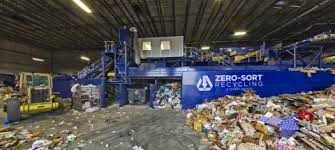
Some materials should stay outside ordinary recycling containers because they can contaminate recoverable commodities, damage sorting equipment, create safety concerns, or require specialized handling methods.
1. Plastic Bags: Plastic bags can wrap around sorting machinery and interfere with mechanical operations, so households should use suitable retail or collection points instead of curbside recycling bins.
2. Bagged Recyclables: Recyclables should generally remain loose because workers and automated equipment may not identify bagged contents correctly, causing suitable materials to miss the recovery process.
3.Textiles: Clothing, fabric, and other textiles can become tangled in sorting machinery, while reusable garments can create greater value when donated or directed toward dedicated textile recovery programs.
4. Electronics: Electronic devices contain mixed components that may require specialized processing, while batteries and other parts can create safety concerns within conventional recycling operations.
The guidance on specialized recycling streams shows why electronics, batteries, clothing, hazardous materials, and other restricted items often need separate management arrangements.
Households should also keep hazardous materials outside ordinary recycling bins because their contents can threaten workers, contaminate recovered commodities, or require controlled treatment and disposal methods.
Good solid waste management practices encourage segregation at the source because separating materials early makes later collection, processing, recycling, treatment, and disposal more manageable.
Residents can reduce mistakes by checking local instructions regularly instead of assuming that every item bearing a recycling symbol automatically qualifies for curbside collection.
Household Recycling Practices For Better Results
Household recycling becomes more effective when residents understand accepted materials, prepare items correctly, separate problematic waste, and consistently follow local collection requirements.
1. Check Local Rules: Review current collection guidance before placing unfamiliar materials inside recycling containers because accepted items differ across communities, contracts, facilities, and processing systems.
2. Empty And Clean Containers: Remove remaining food and liquids from recyclable containers to reduce contamination and protect paper, cardboard, plastics, metals, and glass during sorting.
3. Keep Cardboard Dry: Flatten suitable cardboard and protect it from rain because moisture can weaken paper fibres and reduce its suitability for efficient recycling and processing.
4. Keep Recyclables Loose: Avoid placing recyclable materials inside plastic bags because bagged materials may interfere with sorting equipment and make their contents difficult to identify.
The household waste management approach emphasizes source separation because proper segregation can make recycling easier while reducing the quantity of waste that ultimately reaches disposal facilities.
Residents can also improve household recycling by establishing convenient storage areas for recyclable materials, teaching family members the rules, and correcting mistakes before collection day.
Understanding different waste types and sources helps households distinguish ordinary recyclables from organic, hazardous, electronic, textile, construction, and other specialized waste streams.
Households that consistently follow clear procedures can reduce contamination, improve collection quality, protect workers and equipment, and increase the likelihood that suitable materials will reach productive recovery markets.
Waste Reduction And Reuse Before Recycling
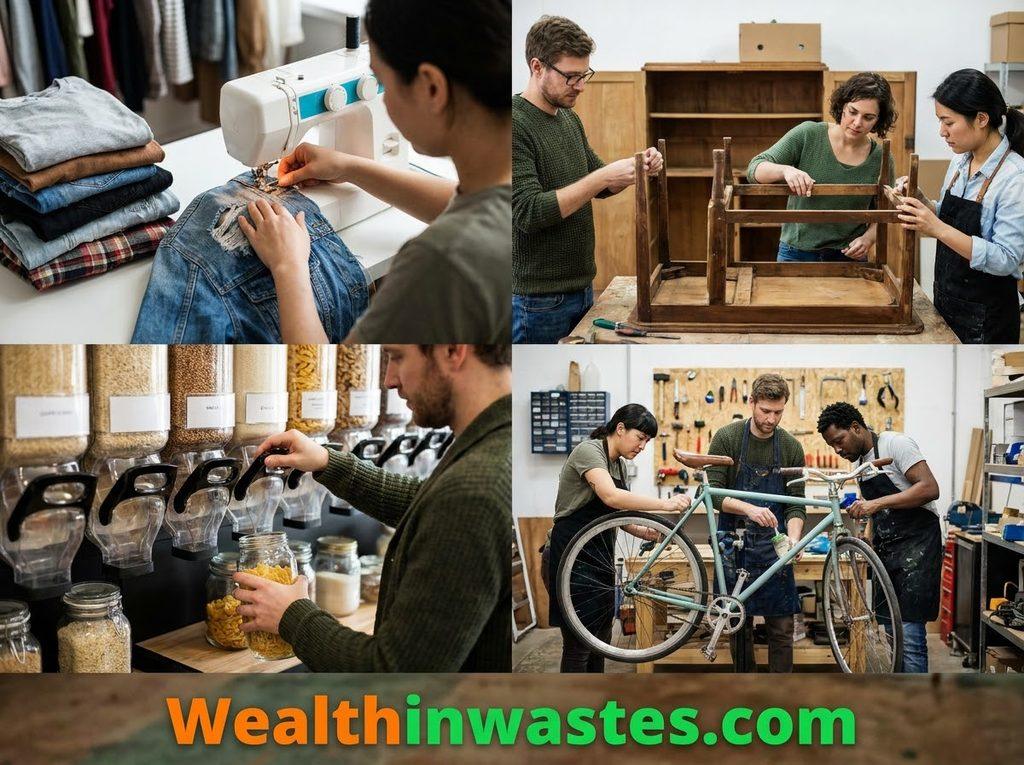
Recycling plays an important role, but waste reduction and reuse should come earlier because preventing unnecessary waste avoids the collection, transportation, processing, recycling, or disposal of unwanted materials.
1. Reduce Consumption: Buy only appropriate quantities, avoid unnecessary packaging, select durable products, and consider long-term usefulness before purchasing items that may soon become waste.
2. Reuse Suitable Products: Reuse containers, clothing, furniture, packaging, tools, and other functional materials whenever practical instead of discarding them after their first intended application.
3. Repair Before Replacement: Repairing useful products can extend their service life, conserve resources, reduce purchasing costs, and delay the point at which materials enter waste streams.
4.Prevent Food Waste: Plan purchases, store food correctly, prepare realistic quantities, and use safe leftovers wisely so edible materials do not become unnecessary household refuse.
The source reduction approach shows how better purchasing, production, housekeeping, material choices, and process improvements can reduce waste before collection systems need to manage it.
The three Rs remain practical because reducing, reusing, and recycling materials helps households control waste generation while conserving resources and limiting pressure on collection and disposal infrastructure.
Businesses can apply similar principles by redesigning packaging, improving inventory control, reducing material losses, repairing equipment, sharing resources, and finding productive uses for suitable by-products.
Effective waste reduction therefore begins with purchasing and production decisions, continues through reuse opportunities, and reaches recycling only after materials no longer provide practical direct-use options.
Organic Waste And Agricultural Resource Recovery
Agricultural activities produce organic residues, packaging materials, spoiled food, livestock manure, crop remains, plastics, metals, and other wastes that require suitable management based on their characteristics.
1. Compostable Materials: Suitable food scraps, plant residues, and selected organic materials can enter composting systems where biological decomposition produces useful soil amendments for gardening and agricultural applications.
2. Farm By-Products: Some agricultural by-products can support animal feeding, soil improvement, energy production, or other productive uses when their safety, quality, and intended application remain appropriate.
3. Packaging Recovery: Clean agricultural packaging made from suitable materials may enter reuse or recycling pathways when collection systems accept those materials and contamination remains controlled.
4. Waste Segregation: Farmers should separate organic, recyclable, hazardous, and general waste streams because mixing materials can increase contamination, create safety concerns, and reduce resource recovery opportunities.
The composting of organic waste demonstrates how biodegradable materials can become useful organic amendments instead of moving directly toward disposal.
Farmers can also examine organic waste conversion methods when they want to transform suitable food and plant residues into compost for gardens, fields, or other productive uses.
Agricultural waste management can support cleaner farms by limiting open dumping, uncontrolled burning, leakage, runoff, unpleasant odors, pest attraction, and unnecessary accumulation of discarded materials.
These practices connect household recycling principles with broader circular economy thinking, where organic residues and other suitable materials remain useful resources rather than becoming immediate disposal burdens.
Waste Management Lessons From Casella Services
Casella Waste Services provides several practical lessons about the relationship between waste generators, collection companies, sorting facilities, processors, manufacturers, regulators, and end markets for recovered materials.
1. Separation Matters: Correct separation at the source improves the quality of incoming materials and reduces the number of unsuitable objects that workers and equipment must remove later.
2. Contamination Matters: Food residue, liquids, bags, textiles, electronics, batteries, and other unsuitable materials can create operational difficulties and reduce the value of otherwise recoverable resources.
3. Collection Matters: Reliable collection systems provide the connection between waste generators and downstream processing facilities, making dependable transportation essential for organized waste recovery.
4.Markets Matter: Recovered materials need buyers and processors, meaning recycling systems depend not only on public participation but also on viable markets for secondary commodities.
The waste management hierarchy supports prevention and reuse before recycling, followed by recovery, treatment, and final disposal when higher-value options cannot apply.
Reliable collection can also improve community sanitation because organized trash pickup services help prevent accumulated waste from remaining in public spaces for extended periods.
Another useful principle appears in comprehensive waste management planning, which recognizes that education and coordinated systems influence how effectively communities control waste generation and disposal.
These lessons show that successful recycling does not depend on collection alone. It requires informed households, suitable infrastructure, responsible handling, effective communication, and consistent material specifications.
Read Also: Proper Waste Control Complete Guide
Benefits Of Proper Recycling And Waste Control
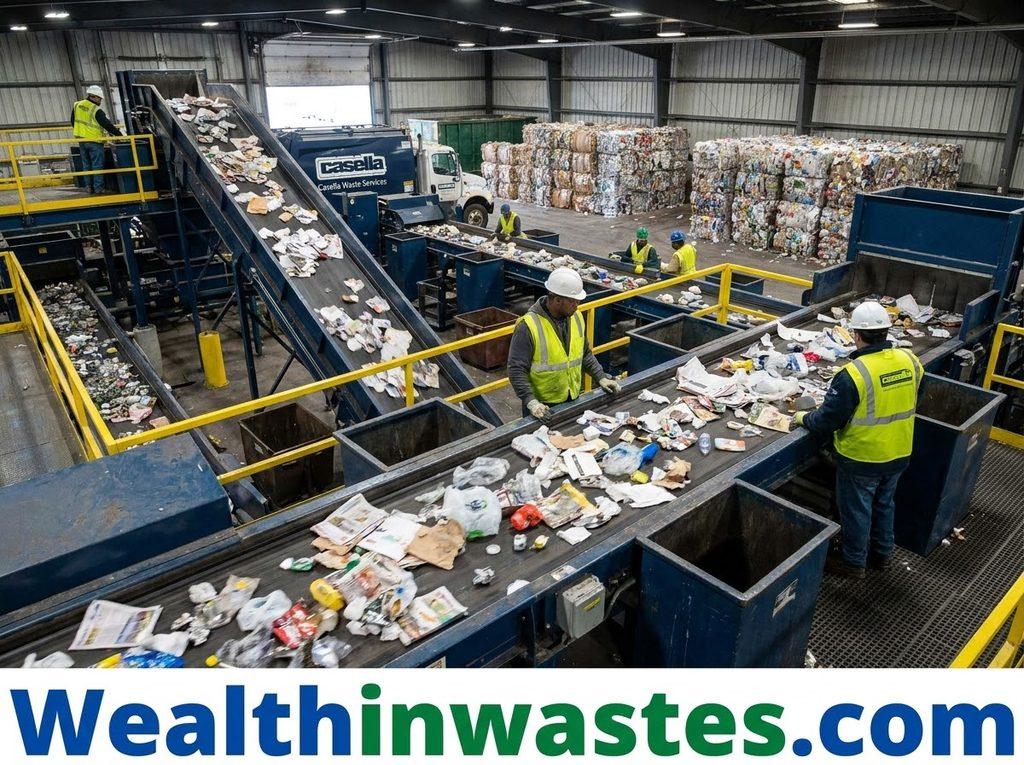
Proper recycling can conserve valuable materials, reduce disposal volumes, support cleaner communities, and create opportunities for recovered commodities to replace some virgin resources in productive applications.
1. Resource Conservation: Recycling keeps useful paper, metals, glass, plastics, and other materials circulating longer, reducing pressure on natural resources required for producing replacement materials.
2. Cleaner Communities: Organized collection, recycling, reuse, and disposal practices can reduce litter, uncontrolled dumping, unpleasant odors, blocked drainage, and other environmental sanitation problems.
3. Better Material Quality: Clean and correctly prepared recyclables give sorting facilities a better opportunity to recover useful materials while reducing contamination-related operational challenges.
4. Lower Disposal Pressure: Waste prevention, reuse, composting, recycling, and recovery can reduce the volume of material requiring landfilling or other final disposal methods.
The benefits of waste recycling extend beyond environmental protection because resource recovery can also support economic activity, material conservation, and more efficient use of existing resources.
Effective waste control also depends on choosing suitable treatment methods because some materials cannot enter ordinary recycling systems and instead require appropriate treatment or disposal options.
Different communities may also require different collection arrangements, which makes regional waste removal planning important when determining how materials should move from collection points toward recovery or disposal facilities.
Ultimately, responsible waste control combines prevention, reuse, recycling, composting, recovery, treatment, and disposal while matching each material with the safest and most practical management pathway.
Summary on Complete Guide on Casella Waste Services
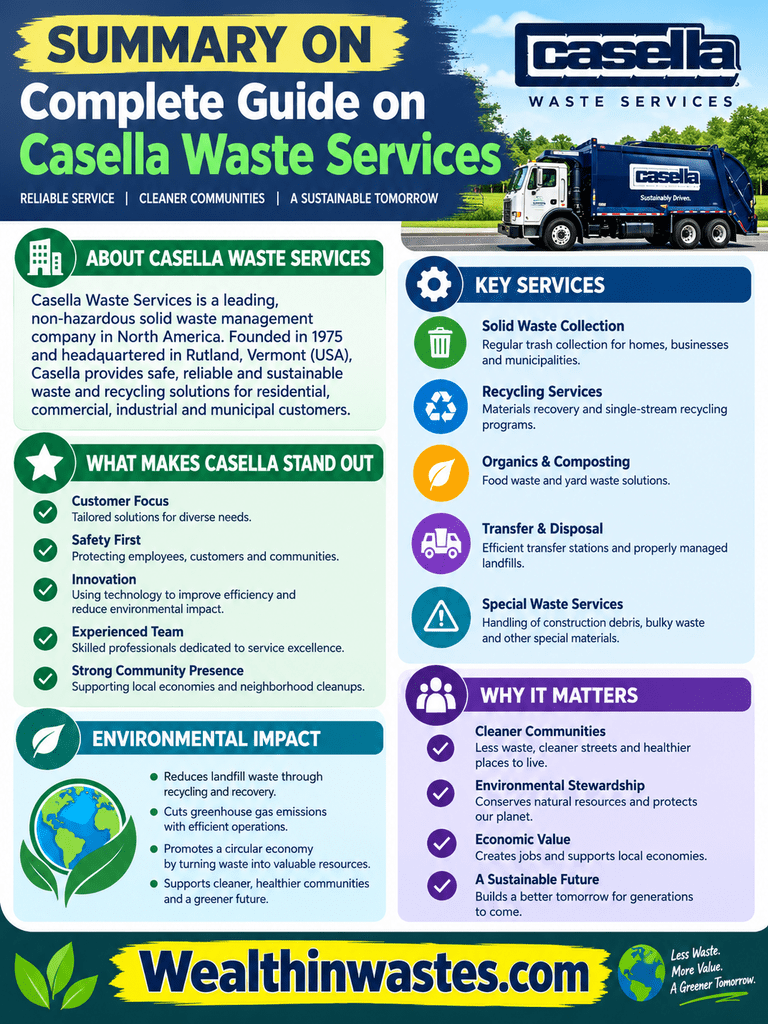
| Topic | Summary |
|---|---|
| Casella Waste Services | Casella developed from a small collection business into a broader waste management and resource recovery organization. |
| Recycling Process | Collection, sorting, processing, and marketing help move suitable materials toward further use. |
| Accepted Materials | Suitable dry cardboard, paper, rigid plastics, cans, foil, and glass containers may qualify under applicable requirements. |
| Restricted Items | Plastic bags, bagged recyclables, textiles, electronics, batteries, liquids, and other unsuitable materials may require alternative management. |
| Household Practices | Residents should check local rules, clean suitable containers, keep cardboard dry, and place recyclables loose. |
| Waste Reduction | Reducing consumption, reusing products, repairing goods, and preventing food waste can reduce recycling and disposal demands. |
| Agricultural Recovery | Farms can segregate, compost, reuse, recycle, and recover suitable organic and material waste streams. |
| Key Lesson | Effective waste management depends on cooperation among waste generators, collectors, processors, manufacturers, and end markets. |
Frequently Asked Questions About Casella Waste Services: Recycling and Waste Management
1. What Is Casella Waste Services?
Casella Waste Services refers to waste management activities involving collection, recycling, organics handling, resource recovery, transfer, disposal, and related environmental services.
2. What Materials Can Enter Casella Recycling?
Suitable dry cardboard, paper, certain rigid plastics, clean metal cans, suitable foil, and clean glass bottles and jars may qualify under applicable recycling requirements.
3. Can Plastic Bags Go Into Recycling Bins?
No. Plastic bags can interfere with sorting equipment and should instead move through suitable retail or dedicated collection programs.
4. Should Recyclables Remain Loose?
Yes. Keeping recyclable materials loose helps workers and sorting equipment identify materials and reduces problems associated with bagged recyclables.
5. Can Clothing Enter Ordinary Recycling Bins?
Clothing and textiles should generally move through donation, reuse, or dedicated textile recovery channels instead of ordinary recycling containers.
6. Why Should Food Waste Stay Out Of Recycling?
Food waste and liquids can contaminate recyclable materials, particularly paper and cardboard, reducing their quality and making recovery more difficult.
7. Can Electronics Go Into Recycling Bins?
Electronics should use appropriate specialized recycling or take-back programs because components and batteries can create safety and processing concerns.
8. Why Is Waste Reduction Important Before Recycling?
Waste reduction prevents unnecessary materials from becoming waste, while reuse extends product life and lowers the amount requiring collection, processing, recycling, or disposal.
9. Can Agriculture Apply These Waste Management Principles?
Yes. Farms can separate waste streams, compost suitable organic residues, reuse materials, recycle appropriate packaging, and recover useful agricultural by-products.
10. Why Does Recycling Contamination Matter?
Contamination can reduce material quality, complicate sorting, damage equipment, create safety concerns, and increase the amount of material requiring disposal instead of recovery.
Do you have any questions, suggestions, or contributions? If so, please feel free to use the comment box below to share your thoughts. We also encourage you to kindly share this information with others who might benefit from it. Since we can’t reach everyone at once, we truly appreciate your help in spreading the word. Thank you very much for your support and for sharing!
Read Also: Exploring Food By-Product Utilization in Food Processing