


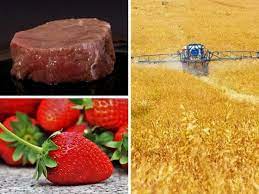
The growing demand for meat and dairy products has increased the importance of safe and efficient livestock production systems. Protecting animal products from chemical contamination remains an important food safety concern.
Livestock can encounter pesticide residues through feed, forage, drinking water, treated facilities, or direct contact with agricultural chemicals. These exposure routes may allow residues to move from the environment into edible products.
Crop protection chemicals can remain on plants after field applications, particularly when farmers apply products close to harvest or when persistent compounds remain in soil and surrounding production environments over time.
When contaminated plants become feed, residues may enter livestock tissues and secretions. Some compounds can accumulate in fatty tissues, while others undergo metabolism, transformation, excretion, or gradual elimination over time.
Understanding pesticide residue contamination of meat and dairy products helps farmers, processors, regulators, and consumers recognize major contamination sources. It also supports better monitoring, handling, pesticide use, and residue management practices.
Sources of Pesticide Residue Contamination
The main sources of pesticide residue contamination include feed, forage, water, soil, treated buildings, and direct animal treatment. Movement of pesticides through soil helps explain indirect exposure pathways for livestock.
1. Contaminated Feed: Treated crops can retain residues after harvest, especially when applications occur near harvest or products persist naturally. Concentrates, grains, oil cakes, and milling materials may therefore introduce residues.
2. Treated Forage: Pastures, grasses, maize, legumes, and other forage crops can retain pesticide residues. Animals consuming contaminated fodder may ingest residues repeatedly during regular feeding periods. Agricultural waste generation can influence residue handling.
3. Contaminated Storage Materials: Pesticides applied during storage can contaminate grains and feed ingredients. Poor storage may transfer residues from treated surfaces into animal diets. Hazardous substance sources can also affect farm environments.
4. Polluted Water Sources: Livestock may consume residues carried into surface water or groundwater through runoff, leaching, or accidental releases. Land pollution around livestock areas can compound these contamination risks.
5. Treated Animal Facilities: Pesticides used around barns, yards, sheds, feed troughs, or water points can create contact exposure. Residues may later reach animals through contaminated surfaces, feed, water, or dust.
Read Also: Factors Influencing Pesticide Degradation in Soils
Feed and Crop Sources of Pesticide Residues
Feed and fodder often provide the clearest connection between pesticide applications and animal exposure. Crops intended for livestock may carry residues from field treatments, storage protection, drift, runoff, or contaminated production areas.
Residues in grain can remain relevant after harvest when pesticide treatments protect stored commodities against insects. Feed mills may then incorporate treated grains, oil cakes, or other ingredients into concentrates consumed by livestock.
Pasture contamination can occur when pesticides reach grazing areas directly or move from nearby fields. Understanding pesticide residues in fresh produce also helps explain how contaminated crop materials may enter animal diets.
Residue levels may vary according to the chemical, application rate, timing, crop type, weather, and interval between treatment and harvesting. Farmers should therefore prevent animals from receiving recently treated feed when restrictions apply.
Good feed management requires careful sourcing, proper storage, and accurate pesticide application records. Understanding residues in cereals and pulses can strengthen feed safety decisions for livestock farmers, processors, and feed handlers.
Soil and Water Pesticide Exposure Pathways
Environmental contamination can connect pesticide use on farmland with livestock exposure. Soil particles, runoff, drainage systems, groundwater, and surface water can transport residues beyond the original application site and into animal environments.
1. Soil Persistence: Some pesticides remain in soil after application and can later become available to plants, grazing animals, or surrounding environmental pathways. Their persistence depends on chemical properties and site conditions.
2. Runoff Movement: Rainfall can move pesticide residues from treated fields toward livestock watering points, ponds, streams, and low-lying areas. The risk increases when application timing coincides with heavy rainfall or poor soil protection.
3. Groundwater Leaching: Certain mobile pesticides can move downward through soil and reach groundwater. Animals using affected wells or boreholes may therefore receive residues through drinking water over extended periods.
4. Surface Water Transport: Pesticides may travel through streams, drainage channels, reservoirs, and ponds after entering flowing or standing water. Research on transport of pesticides through surface waters illustrates these pathways.
5. Site Conditions: Soil texture, moisture, organic matter, pH, groundwater depth, and rainfall influence pesticide movement. Farmers can examine soil properties that govern pesticide movement and site conditions affecting pesticide mobility when assessing exposure.
Direct Animal Exposure to Pesticides

Livestock can acquire residues through direct treatment and accidental contact with pesticide-containing materials. These routes differ from dietary exposure because the chemical may contact skin, hair, housing, equipment, or contaminated surfaces.
Pesticides used to control ticks, lice, mites, flies, and other external parasites can expose cattle, sheep, goats, and pigs. Careless application can increase residue transfer. Water pollution effects also matter.
Animals may also encounter pesticides during spraying operations near barns, grazing fields, and movement routes. Wind drift can carry droplets onto animals, feed, water, equipment, or nearby surfaces. Protecting shared resources requires careful water management.
Historical observations involving DDT illustrate how contamination could occur without spraying animals directly. Residues deposited on feed troughs, watering points, and building surfaces could later contribute to animal exposure over time.
The degree of animal exposure depends on the pesticide, concentration, contact route, treatment frequency, environmental conditions, and time between treatment and consumption. Routes by which pesticides enter the body provide useful background.
Pesticide Residues in Animal Tissues
Once pesticide residues enter an animal, their distribution depends on chemical properties, metabolism, dose, exposure duration, and tissue characteristics. Some compounds leave quickly, while persistent chemicals can remain longer in specific tissues.
1. Fat Storage: Many pesticides with strong fat solubility can accumulate in adipose tissues. This characteristic matters because fatty tissues may retain residues after exposure ends, especially when repeated exposure occurs.
2. Milk Transfer: Dairy animals can excrete certain pesticide residues through milk. Contamination may occur after contaminated feed intake, environmental contact, or direct treatment, making residue monitoring important for milk safety.
3. Tissue Distribution: Residues can occur in organs and tissues depending on metabolism, circulation, and chemical characteristics. Monitoring therefore requires suitable sampling rather than relying on one tissue alone. Contaminated water pathways also matter.
4. Metabolic Conversion: Animals can transform pesticide compounds through metabolic processes, producing metabolites with different properties.The discussion of plant pesticide metabolism provides useful context for chemical transformation within organisms.
5. Residue Elimination: Elimination can occur through urine, faeces, milk, respiration, or tissue metabolism. The time varies among chemicals and animals, so exposure history remains important. Soil contamination concerns also show why persistence matters.
Contamination of Meat and Dairy Products

Meat and dairy products can carry pesticide residues when animals receive contaminated feed, water, forage, or direct exposure. The amount transferred into products depends on the chemical and animal exposure history.
Milk may become contaminated when residues circulating in a dairy animal move into milk during or after exposure. Persistent compounds stored in body fat can create continuing concerns when contamination occurs repeatedly.
Meat contamination may involve muscle, liver, kidney, fat, or other tissues, although distribution varies by pesticide. Monitoring examines suitable tissues to identify residues that could exceed safety limits. Industrial effluent impacts can threaten farm water.
The quality of animal products can also change when pesticide exposure affects livestock physiology or processing systems. Existing evidence on the effects of pesticide residues on livestock provides relevant background for assessment.
Residue concerns extend beyond food safety because contaminated products may face rejection, restricted marketing, disposal costs, or reduced consumer confidence. These consequences can increase financial pressure on livestock producers and processors.
Pesticide Residues and Food Safety
Pesticide residues in livestock products matter because contaminated meat and dairy products can move through food markets. Effective residue control protects product quality while supporting compliance with applicable food safety requirements.
Residue limits provide a framework for determining acceptable concentrations in foods under specified conditions. Farmers and processors should therefore follow approved pesticide directions, observe required intervals, and maintain records of treatments.
Monitoring is especially important where animals receive multiple feed sources or access treated land and water. Reviewing safe pesticide container disposal practices can help prevent contamination around livestock facilities and feed stores.
Food safety programmes should consider contamination from the farm through transport, holding, slaughter, processing, and storage. Each stage can introduce environmental contaminants if facilities, equipment, feed, or water become affected.
The economic effects can extend beyond individual farms because rejected products, investigations, recalls, or market restrictions can reduce returns. Strong preventive practices can reduce these financial pressures while supporting food safety.
Read Also: Measures to Manage Pesticide Residues in Livestock
Managing Pesticide Residue Contamination

Managing pesticide residue contamination requires prevention at every major exposure point. Farmers can reduce risk by controlling pesticide use, protecting feed and water, maintaining records, and monitoring animals and products.
1. Follow Label Directions: Apply pesticides according to approved instructions, including recommended rates, target pests, timing, and required intervals. Responsible application reduces unnecessary residues and limits improper waste; see dilute pesticide waste disposal guidance.
2. Protect Animal Feed: Keep feed away from pesticide storage areas, treated surfaces, contaminated soil, and chemical spills. Good storage practices reduce opportunities for residues to enter concentrates, grains, forage, and water.
3. Protect Water Supplies: Prevent runoff and chemical discharge from reaching livestock drinking sources. Understanding management practices that reduce pesticide mobility supports better water protection on farms and grazing areas.
4. Control Direct Exposure: Use appropriate treatment procedures for external parasite control and avoid unnecessary contact between animals, treated facilities, feed equipment, and pesticide residues within livestock housing areas and surrounding grounds.
5. Monitor Residues: Test feed, water, animal tissues, and milk when contamination is suspected or monitoring programmes require it. Use applicable limits and investigate unusual findings through appropriate pollution control measures promptly.
Summary on Sources of Pesticide Residue Contamination of Meat and Dairy Products
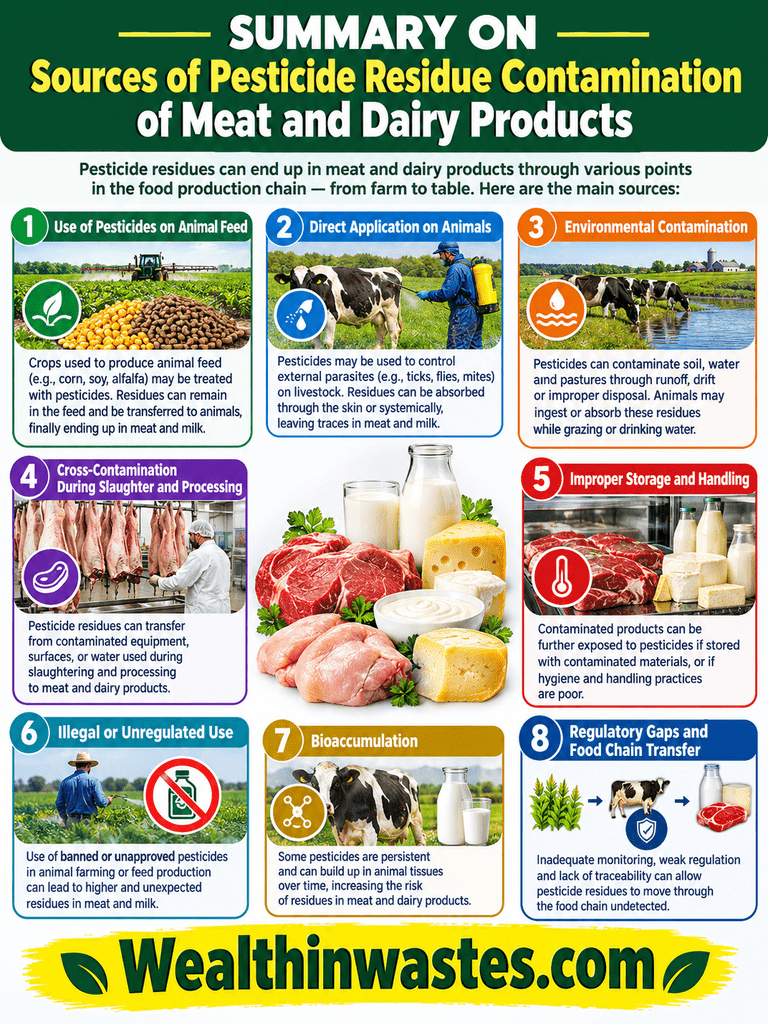
| Aspect | Key Point |
|---|---|
| Feed and forage | Treated crops, grains, concentrates, and pastures can transfer pesticide residues to livestock. |
| Soil and water | Runoff, leaching, contaminated soil, and polluted water can create indirect exposure. |
| Direct contact | Spraying animals or treating their surroundings can leave residues on animals, equipment, or facilities. |
| Animal tissues | Some residues can remain in fat or other tissues, while others undergo metabolism and elimination. |
| Meat and dairy | Milk and edible tissues can contain residues after contaminated feed, water, or direct exposure. |
| Management | Proper pesticide use, feed protection, water protection, records, monitoring, and applicable MRLs reduce risks. |
Frequently Asked Questions About Pesticide Residue Contamination of Meat and Dairy Products
1. What is pesticide residue contamination of meat and dairy?
It is the presence of pesticide residues or relevant metabolites in edible animal tissues, milk, or other products after livestock exposure.
2. How do livestock consume pesticide residues?
Animals may ingest residues through contaminated feed, forage, grains, concentrates, pasture plants, drinking water, or contaminated environmental materials.
3. Can pesticide residues enter milk?
Yes. Some pesticides can transfer into milk after exposure through feed, water, direct treatment, or contaminated surroundings.
4. Can residues accumulate in animal tissues?
Some persistent, fat-soluble pesticides can remain in fatty tissues for extended periods, while other compounds leave more rapidly through metabolism and excretion.
5. What role does contaminated water play?
Polluted surface water or groundwater can provide repeated exposure when livestock drink from affected sources.
6. Why are withdrawal periods important?
Withdrawal periods allow time for residues associated with approved animal treatments to decline before products enter the food chain.
7. How can farmers reduce pesticide residues in livestock?
Farmers can follow pesticide labels, protect feed and water, control direct exposure, keep records, and arrange appropriate residue monitoring.
8. What is an MRL?
A maximum residue limit is an established concentration used by food safety authorities to indicate an acceptable residue level under specified conditions.
Do you have any questions, suggestions, or contributions? If so, please feel free to use the comment box below to share your thoughts. We also encourage you to kindly share this information with others who might benefit from it. Since we can’t reach everyone at once, we truly appreciate your help in spreading the word. Thank you very much for your support and for sharing!
Read Also: Animal Feed Evaluation