


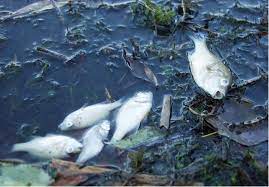
Water is essential for human survival, plant growth, agriculture, and the continued functioning of aquatic ecosystems. When pollutants enter water bodies, they can alter water quality and create serious environmental challenges.
The effects of water pollution vary according to the pollutant involved, its concentration, exposure period, and the organisms that encounter it. Chemicals, pathogens, organic materials, and sediments can produce different harmful outcomes.
Polluted water can affect people directly through drinking and domestic use, or indirectly through contaminated food, irrigation, aquatic organisms, and other environmental pathways. These effects can become more serious when pollution continues.
Plants also experience significant changes when pollution alters water chemistry, reduces light penetration, increases nutrient concentrations, or introduces toxic substances. Such changes can disturb plant growth, photosynthesis, nutrient cycling, and aquatic habitats.
Understanding the effects of water pollution is therefore important for communities, farmers, industries, environmental managers, and anyone concerned about protecting water resources. Recognizing these effects also supports better pollution prevention and control.
Effects of Water Pollution on Human Health
Water pollution can threaten human health when contaminated water contains heavy metals, pesticides, nitrates, petrochemicals, chlorinated solvents, or other substances capable of producing harmful effects after exposure.
Human exposure can occur through drinking contaminated water, consuming affected aquatic foods, using polluted water for domestic activities, or consuming crops grown with contaminated irrigation water over time.
Households also need to understand hazardous materials because improperly discarded products can eventually contribute contaminants to environmental pathways. Proper handling of hazardous wastes can reduce potential risks to water resources.
Electronic wastes can also contain substances such as lead and cadmium. Responsible electronic recycling practices can help prevent discarded equipment from becoming an additional environmental contamination pathway.
Lead can enter drinking water through pipes, fittings, solder, and household plumbing systems. Exposure can affect the blood, central nervous system, and kidneys, while children and pregnant women face particular concern.
Water contamination can become difficult to control when pollution originates from numerous waste sources. Understanding the sources of waste and their impacts helps identify possible pathways into water resources.
Read Also: How to Locate Electronic Recycling Near Me
Heavy Metal Effects From Water Pollution
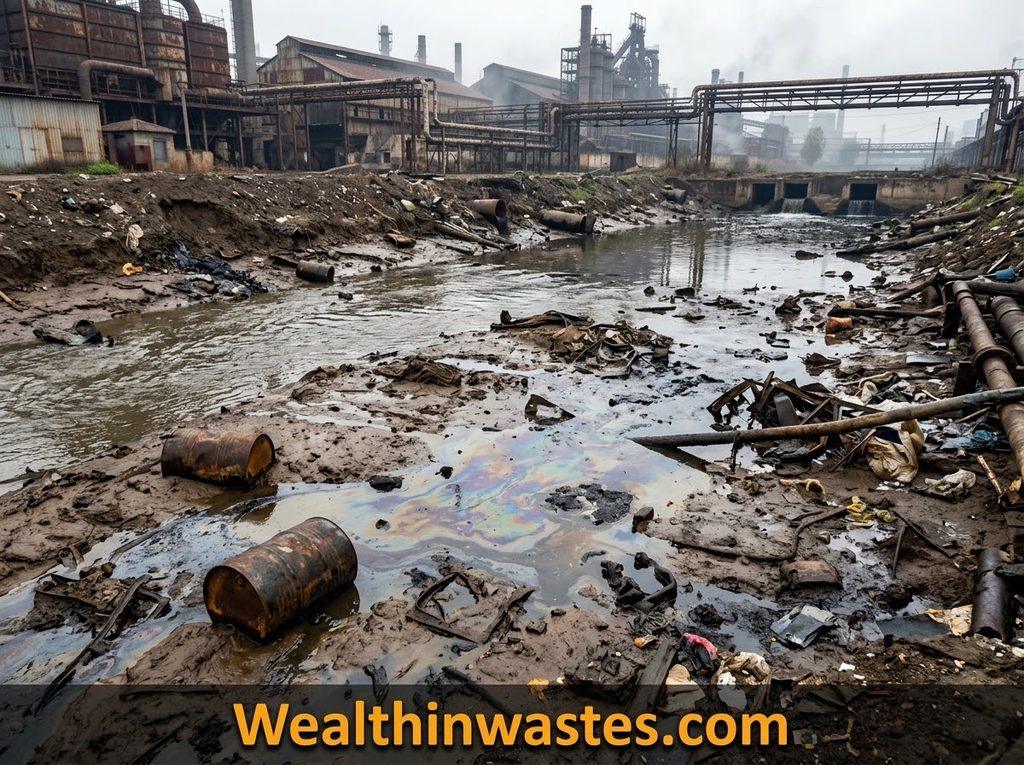
Several metals mentioned in the source can create serious health concerns when they contaminate water and remain available for human exposure. Their effects depend on concentration, duration, and exposure pathways.
Understanding pollutant characteristics helps explain why some contaminants create persistent environmental problems. The classification and environmental impact of pollutants provide useful context for understanding their behavior.
1. Fluoride: Fluoride can support dental protection at appropriate concentrations, while excessive exposure over several years may contribute to fluorosis and other adverse effects on human health.
2. Arsenic: Arsenic can reach water naturally or through industrial activities, wastewater, fertilizers, and insecticides. Long-term exposure to contaminated drinking water can cause serious health problems, including skin lesions and cancer.
3. Mercury: Mercury can enter aquatic environments through industrial activities and other sources. It can accumulate through aquatic food chains, while prolonged human exposure may contribute to neurological and genetic damage.
4. Cadmium: Cadmium can reach people through crops grown in contaminated soils irrigated with affected effluents.Long-term consumption of contaminated agricultural products has been associated with serious kidney disorders.
Industrial discharges represent an important pollution pathway because effluents may contain numerous chemical substances. The documented impact of industrial effluents shows why careful wastewater management remains important.
Oil pollution creates another chemical concern because spilled petroleum can spread across water surfaces and interfere with normal aquatic processes. The broader discussion of oil pollution and its environmental effects illustrates these risks.
Waterborne Diseases Caused By Pollution
Microorganisms play an important role in water quality, particularly when sewage or fecal materials enter water supplies. Several microorganisms identified in the source can cause important waterborne diseases.
Sewage contamination becomes especially dangerous when untreated human waste enters drinking water. Understanding the characteristics and composition of sewage helps explain why treatment remains necessary.
1. Salmonella: Salmonella species can occur in contaminated water and contribute to disease transmission when people consume water or food affected by fecal contamination and poor sanitary conditions.
2. Shigella: Shigella species can spread through contaminated water and contribute to intestinal illness. Poor sanitation and unsafe water handling can increase opportunities for fecal-oral transmission within communities.
3. Escherichia coli: E. coli serves as an important indicator of fecal contamination. Some strains can cause intestinal disease, making their detection valuable when assessing possible contamination of water supplies.
4. Vibrio cholerae: Vibrio cholerae can cause cholera when contaminated water transmits the organism to people. Cholera illustrates the severe public-health consequences that may follow inadequate water and sanitation protection.
Water contamination may originate from several wastewater sources. The article on types and sources of wastewater explains how domestic, industrial, commercial, and storm-related wastewater can contribute to pollution.
Proper treatment can reduce contamination before wastewater reaches environmental water bodies. On-site municipal wastewater treatment therefore provides an important connection between wastewater management and water pollution prevention.
Groundwater contamination also deserves attention because pollutants can move below the surface and affect water sources used by communities. Public concern increases when contaminated groundwater becomes unsuitable for drinking or domestic purposes.
Effects of Water Pollution on Plants
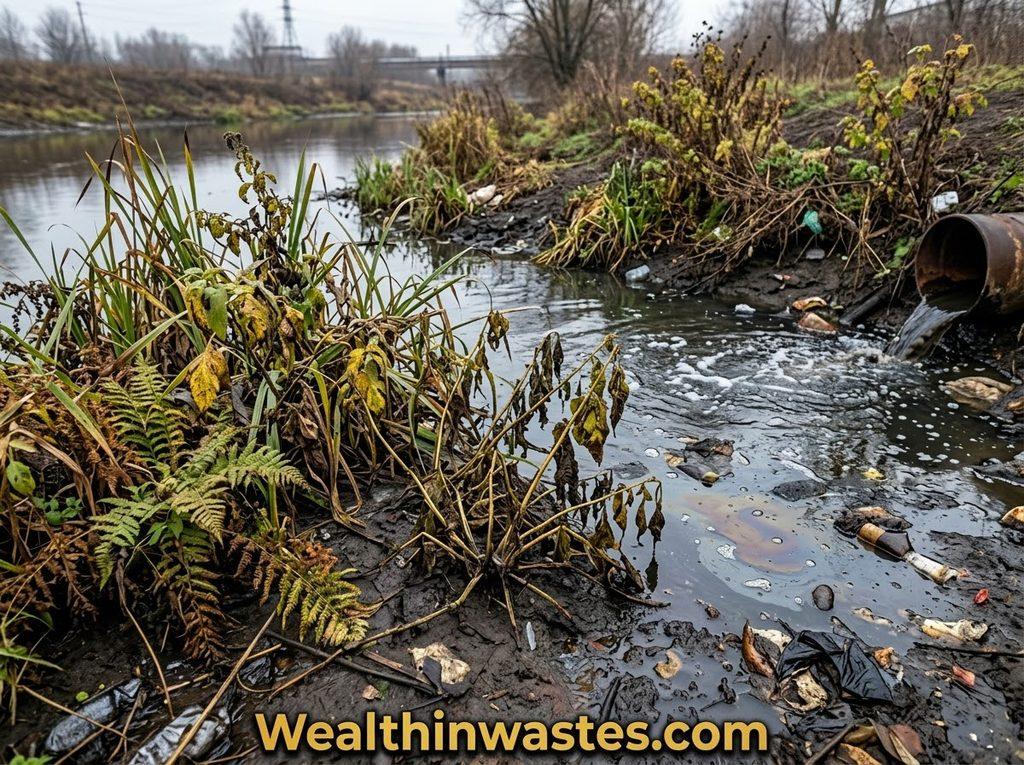
Plants respond strongly to changes in water chemistry, nutrient availability, acidity, turbidity, oxygen levels, and toxic substances. Pollution can therefore influence plant growth and alter the structure of aquatic plant communities.
Agricultural wastes can also contribute pollutants when poor disposal practices allow runoff or leaching to reach surface and groundwater. The impact of agricultural wastes on humans and the environment highlights these pathways.
1. Reduced Plant Growth: Polluted water can expose plants to toxic substances and unfavorable chemical conditions. These stresses may interfere with normal development and reduce the ability of sensitive species to survive.
2. Reduced Photosynthesis: Pollutants and excessive plant growth can reduce light penetration through water. Less available light limits photosynthesis and gradually affects submerged plants that depend on adequate illumination.
3. Root Damage: Acidic or chemically contaminated water can affect plant roots. Species with short root systems may experience greater stress, while plants with deep roots or rhizomes can sometimes tolerate acidic conditions better.
4. Bioaccumulation: Some chemical pollutants can accumulate in plant tissues after absorption.Mercury provides an example because aquatic plants may take up mercury compounds through their roots and surrounding water.
Reducing uncontrolled agricultural waste can help protect water resources. Appropriate organic waste conversion into compost offers one responsible pathway for handling suitable biodegradable materials instead of abandoning them near waterways.
Composting can also help redirect suitable organic materials away from inappropriate disposal routes. Properly managed waste composting practices can therefore support cleaner surroundings while recovering useful organic resources.
Acidification and Nutrient Changes in Water
Acid deposition can occur when acidic substances and aerosols released into the atmosphere eventually return to the ground and reach water bodies through rainfall and surface runoff.
Sulphates, nitrates, chlorides, and related substances can contribute to changes in water chemistry. When acidity increases, sensitive aquatic species may decline while species tolerant of acidic conditions become more common.
The source identifies a critical pH around 6.0 for many aquatic species. Below suitable conditions, species diversity can fall, while acid-tolerant organisms may increase and alter the community structure.
Acidification can also affect decomposing microorganisms such as bacteria and fungi. Their decline may reduce decomposition rates and interfere with nutrient cycling within aquatic ecosystems.
Water quality monitoring becomes easier when wastewater characteristics are understood. The guide to wastewater characteristics and flow rates explains why pollution assessment requires attention to physical and chemical properties.
Organic matter can produce another major change by increasing microbial activity and oxygen demand. Managing wastewater loads therefore remains important for preventing excessive oxygen depletion in receiving water bodies.
Effective wastewater planning also requires knowledge of the volume entering a treatment system. Estimating wastewater flow rates supports better planning for treatment and pollution-control requirements.
Effects of Agricultural Chemicals in Water
Fertilizers, pesticides, insecticides, and herbicides can reach water bodies when excessive applications wash from fields through rainfall and runoff. These chemicals can change water chemistry and affect aquatic plants.
1. Fertilizer Runoff: Excess fertilizer can enrich water with nutrients, particularly nitrogen and phosphorus. This enrichment can encourage excessive plant and algal growth and contribute to eutrophication.
2. Acidification: Ammonium from fertilizers can contribute to acidic conditions. Changes in water pH can affect aquatic plants and influence which species remain capable of growing successfully.
3. Reduced Photosynthesis: Agricultural chemicals may reduce photosynthetic activity in plants. Some substances can interfere with biochemical processes, while chemical accumulation may increase stress among aquatic vegetation.
4. Bioaccumulation: Some substances can accumulate in macrophytes because plants absorb chemicals from surrounding water and sediments. Continued exposure can therefore increase chemical concentrations within affected plant tissues.
Appropriate waste handling can help reduce opportunities for agricultural chemicals and containers to enter waterways. Proper waste treatment and disposal methods provide a broader framework for pollution prevention.
Source reduction is another useful approach because preventing unnecessary waste generation can reduce the amount of material requiring treatment or disposal. The proper waste reduction process supports this preventive principle.
Read Also: Hurts Wastewater Management Complete Guide
Industrial Waste, Silt, and Oil Pollution
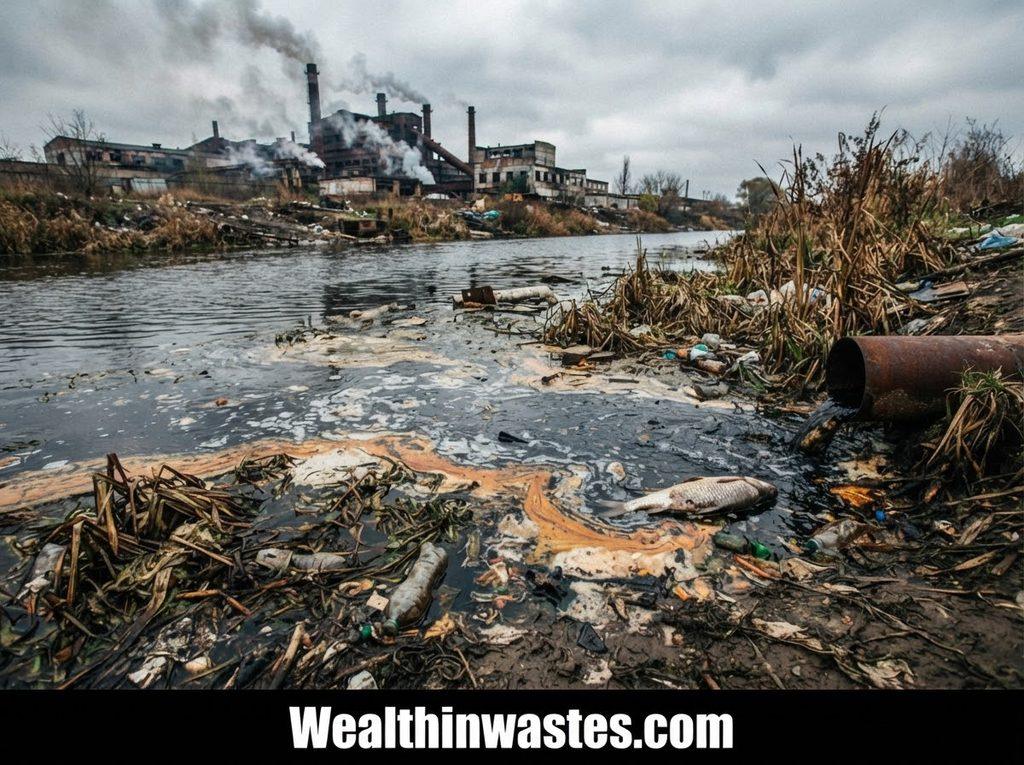
Industrial waste can contain organic and inorganic substances that alter water chemistry.Fly ash may form floating layers that reduce light penetration, while liquid effluents can change pH and create toxic conditions.
Wastewater from industrial processes requires suitable control because contamination can affect water, soil, aquatic organisms, plants, livestock, and nearby communities. Different contaminants also interact differently under varying environmental conditions.
1. Industrial Effluents: Industrial wastewater may contain metals, organic compounds, suspended materials, salts, and other chemicals. Their combined effects can alter aquatic conditions and place stress on sensitive organisms.
2. Silt Deposition: Erosion can carry silt-laden water into rivers, lakes, and ponds. Increased turbidity reduces light penetration and can inhibit submerged plants while changing the abundance of aquatic species.
3. Oil Spillage: Oil from tankers, storage containers, and related activities can spread over water surfaces. It reduces light transmission and interferes with oxygenation, plankton growth, and photosynthesis.
4. Floating Materials: Floating waste can interfere with light and gas exchange at the water surface. Persistent accumulation can worsen the environmental conditions required by aquatic plants and other organisms.
Silt and waste management problems often connect land-based activities with aquatic pollution. The general impact of wastes on the environment demonstrates how poorly managed wastes can affect several environmental compartments simultaneously.
Landfills can also create pollution risks when contaminated liquids escape into surrounding environments. Understanding different types of landfills helps explain why waste characteristics must match appropriate disposal systems.
Improper landfill management may allow leachate to move toward groundwater or surface water. Reviewing the advantages and disadvantages of landfills emphasizes the importance of responsible site management.
Phytotoxicity and Eutrophication Effects
Phytotoxicity occurs when toxic chemicals accumulate in aquatic or terrestrial environments and plants absorb them through their roots or surrounding tissues. Chemical stress can produce visible symptoms and reduced growth.
Common signs include poor growth, dying seedlings, and dead areas on leaves. Mercury provides an example of a contaminant that can accumulate in plant tissues and contribute to biological accumulation.
Eutrophication occurs when excessive inorganic nutrients, especially nitrogen and phosphorus, enter water bodies. Nutrient enrichment can stimulate rapid growth of algae and aquatic plants beyond normal ecological levels.
When excessive algal or plant material later decomposes, microorganisms consume oxygen while breaking down organic matter. Increasing oxygen demand can therefore reduce dissolved oxygen and create difficult conditions for aquatic organisms.
Proper recycling can help divert usable materials from disposal pathways that may contribute indirectly to environmental contamination. The proper waste recycling process explains how separation and recovery can support better waste management.
Solid waste handling also matters because discarded materials can eventually enter drains, runoff channels, rivers, and other water pathways. The classification of solid waste helps distinguish materials according to important characteristics.
Understanding types and sources of solid waste can help communities identify materials requiring proper collection, treatment, recovery, or disposal before they become environmental pollutants.
Communities can also reduce pollution by applying practical waste-management principles. The waste management hierarchy prioritizes prevention and recovery before final disposal, supporting environmental protection.
Careful waste collection remains another important step because discarded materials should not remain in locations where rainfall can wash contaminants into nearby water bodies and drainage systems.
Summary on The Effects of Water Pollution on Human Health and Plants
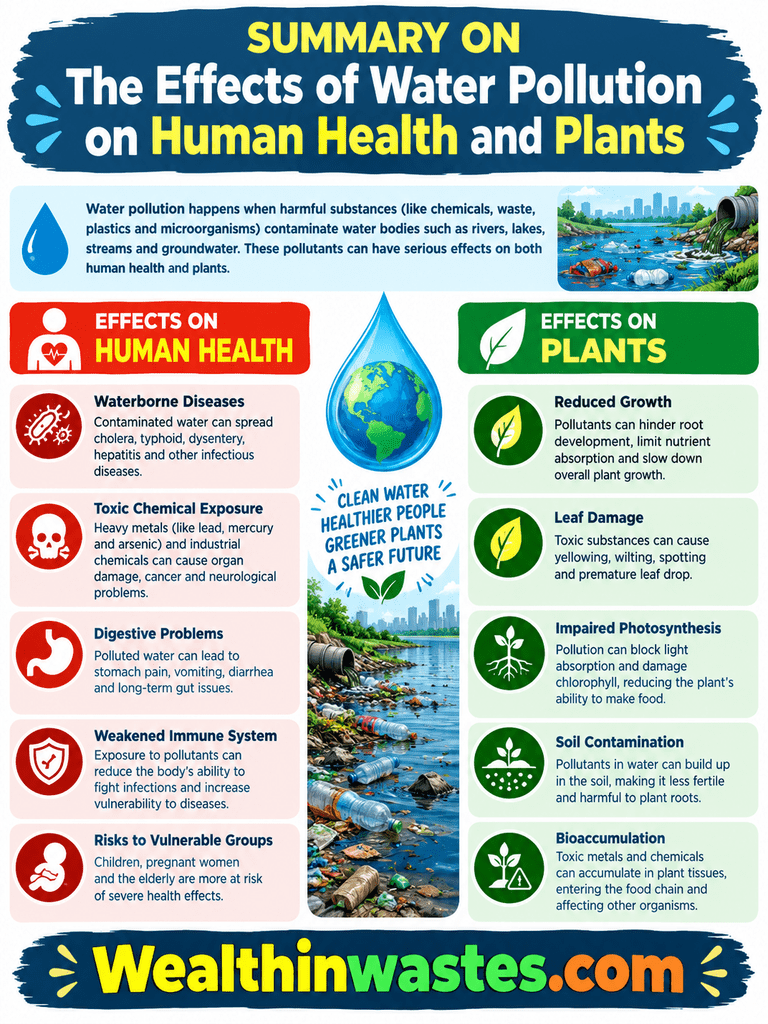
| Aspect | Main Effect | Why It Matters |
|---|---|---|
| Human health | Heavy metals and chemical pollutants can create serious health risks through contaminated water and food pathways. | Protecting drinking water reduces exposure and supports public health. |
| Waterborne diseases | Pathogens from fecal contamination can cause diseases such as typhoid, diarrhoea, dysentery, gastroenteritis, and cholera. | Proper sanitation and wastewater treatment reduce disease transmission. |
| Plants | Pollution can reduce growth, photosynthesis, nutrient cycling, and survival of sensitive aquatic species. | Healthy aquatic vegetation supports balanced water ecosystems. |
| Acidification | Reduced pH can lower species diversity and favor acid-tolerant organisms. | Water chemistry strongly influences aquatic biodiversity. |
| Agricultural chemicals | Fertilizers and pesticides can enter water through runoff and alter plant growth and water chemistry. | Responsible farm chemical management reduces pollution risks. |
| Industrial wastes | Industrial effluents may introduce organic and inorganic pollutants that alter water conditions. | Effective effluent control protects communities and aquatic resources. |
| Silt deposition | High turbidity reduces light penetration and can inhibit submerged plant growth. | Controlling erosion helps maintain aquatic habitats. |
| Oil pollution | Oil can reduce light transmission, interfere with oxygenation, and inhibit photosynthesis. | Preventing spills protects aquatic plants and ecosystems. |
| Eutrophication | Excess nutrients stimulate algal and plant growth and can increase oxygen demand during decomposition. | Controlling nutrient pollution helps preserve aquatic ecosystem stability. |
Frequently Asked Questions About The Effects of Water Pollution on Human Health and Plants
1. What are the major effects of water pollution?
Water pollution can affect human health, aquatic plants, water quality, nutrient cycling, aquatic habitats, and environmental conditions through biological, chemical, and physical changes.
2. How does polluted water affect human health?
People can experience health problems through contaminated drinking water, polluted food sources, pathogens, and exposure to chemicals such as arsenic, lead, mercury, and cadmium.
3. How does water pollution affect plants?
Pollution can reduce photosynthesis, damage roots, disturb nutrient cycling, reduce growth, increase chemical stress, and cause sensitive aquatic plant species to decline.
4. What is eutrophication?
Eutrophication occurs when excess nutrients, especially nitrogen and phosphorus, stimulate excessive growth of algae and aquatic plants and increase oxygen demand during decomposition.
5. Which microorganisms can cause waterborne diseases?
The source identifies Salmonella species, Shigella species, Escherichia coli, and Vibrio cholerae among microorganisms associated with waterborne diseases.
6. How does oil pollution affect aquatic plants?
Oil can reduce light transmission and interfere with oxygenation, thereby limiting photosynthesis and affecting plankton and aquatic plants within contaminated water bodies.
7. How can agricultural chemicals pollute water?
Rainfall and runoff can carry excess fertilizers, pesticides, insecticides, and herbicides from agricultural fields into nearby water bodies.
8. Why is wastewater treatment important?
Wastewater treatment helps reduce contaminants before wastewater reaches surface or groundwater, thereby lowering potential risks to people, plants, aquatic organisms, and surrounding environments.
9. What is phytotoxicity?
Phytotoxicity occurs when toxic chemicals affect plants after they absorb pollutants from contaminated water, soil, or surrounding environmental media.
Do you have any questions, suggestions, or contributions? If so, please feel free to use the comment box below to share your thoughts. We also encourage you to kindly share this information with others who might benefit from it. Since we can’t reach everyone at once, we truly appreciate your help in spreading the word. Thank you very much for your support and for sharing!
Read Also: Water and Land Pollution in Agriculture