


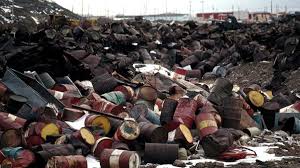
Hazardous and toxic substances occur in homes, farms, industries, hospitals, vehicles, construction materials, food chains, and contaminated environments. Their presence can threaten human health, ecological balance, and environmental quality.
These substances include heavy metals, gases, solvents, pesticides, radioactive materials, hydrocarbons, and other chemicals capable of causing harmful effects after exposure. Their effects depend on concentration, duration, pathway, and susceptibility.
Some hazardous substances enter the body through breathing, swallowing, skin contact, or contaminated food and water. Others move through soil, surface water, groundwater, sediments, plants, animals, and aquatic organisms.
Effective environmental protection therefore requires more than identifying dangerous chemicals. It requires understanding their sources, movement, persistence, biological effects, exposure routes, and appropriate methods for handling, treatment, storage, and disposal.
The analysis below explains major hazardous substances, their common sources, affected body systems, environmental pathways, and practical management principles. It also highlights why prevention remains essential for protecting communities.
Understanding Hazardous and Toxic Substances
Hazardous substances are materials that can cause injury, illness, environmental damage, fire, corrosion, reactivity, or other harmful outcomes when people, animals, plants, or ecosystems encounter them.
Toxicity describes a substance’s capacity to cause harm, while hazardousness also considers the likelihood of harmful exposure. A substance may therefore possess hazardous characteristics without causing injury under controlled conditions.
Understanding this distinction supports better waste decisions because hazardous waste characteristics determine whether materials need specialized storage, transportation, treatment, or disposal procedures.
Hazardous materials can appear as solids, liquids, gases, vapours, dusts, fumes, dissolved substances, or contaminated biological materials. Physical form strongly influences exposure because it determines mobility and contact opportunities.
A chemical sealed inside an intact container may present little immediate exposure, while the same chemical released through spills, evaporation, burning, leakage, or careless disposal can become highly dangerous.
The concept of pollution is important here because hazardous substances can change the quality of air, water, soil, food, and other environmental media beyond acceptable conditions.
Read Also: Hazardous Substance Treatment and Disposal
Major Hazardous Substances and Their Sources
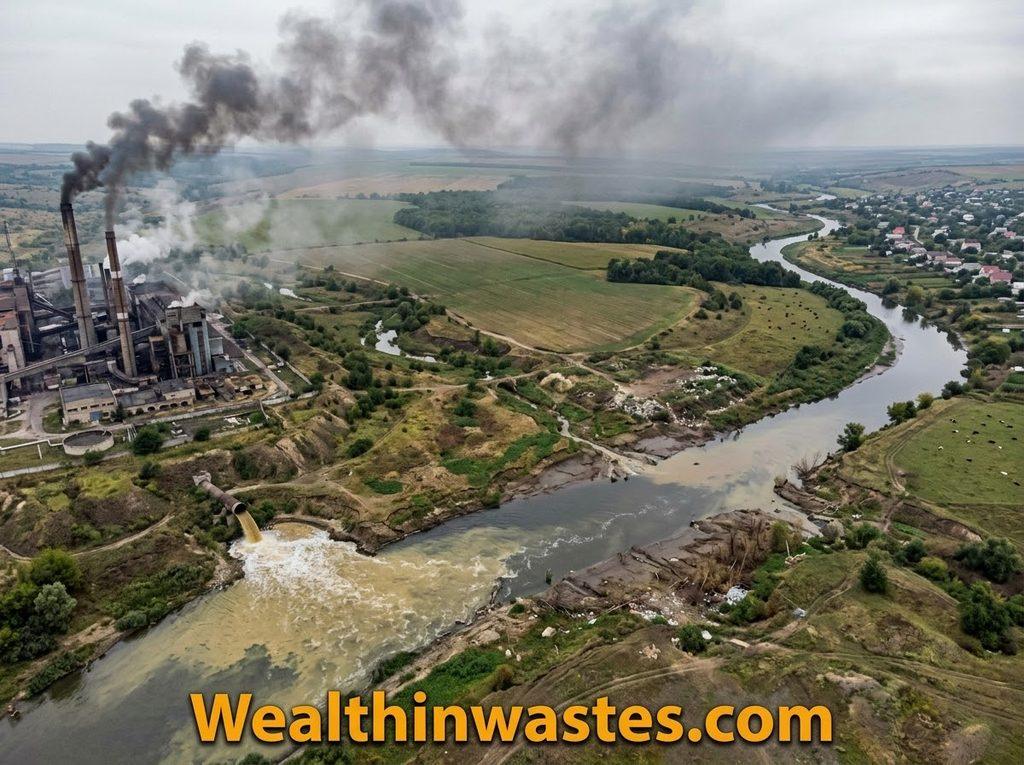
The following substances represent important examples because they occur across domestic, agricultural, industrial, transportation, construction, and environmental settings and can affect different organs, tissues, or biological functions.
1. Asbestos and Radon: Asbestos commonly occurs in older insulation and construction materials, while radon originates naturally from the ground. Both can create respiratory concerns after prolonged inhalation under unsuitable conditions.
2. Cadmium and Lead: Cadmium may originate from old batteries and industrial materials, whereas lead can occur in old paints and outdated plumbing. Exposure may affect renal, nervous, reproductive, immune, and developmental functions.
3. Benzene and Solvents: Benzene and chlorinated solvents can occur in degreasers, paint removers, dry-cleaning products, and industrial operations. These substances require careful control because inhalation and repeated contact can produce harmful effects.
4. Carbon Monoxide and Soot: Vehicle exhaust, faulty furnaces, wood-burning appliances, and incomplete combustion can release carbon monoxide and soot. These pollutants can reduce air quality and place substantial pressure on the respiratory system.
5. Mercury and Methyl Mercury: Mercury can come from older thermostats, thermometers, industrial sources, and contaminated fish.Methyl mercury can accumulate in aquatic food chains, increasing dietary exposure through contaminated fish consumption.
6. Uranium and Arsenic: Uranium may occur naturally in some food and water sources, while arsenic can originate from contaminated materials and certain industrial or agricultural settings. Both require careful environmental assessment.
7. Cyanide and Nitrates: Cyanide can occur in industrial processes and certain pest-control materials, while nitrates commonly enter water and soil through fertilizers. High exposure can interfere with normal biological processes.
8. Pesticides and PCBs: Pesticides can remain on improperly washed produce, while polychlorinated biphenyls may persist in contaminated industrial environments and aquatic systems. Their persistence can extend exposure across environmental compartments.
9. PAHs, Nickel, and Chromium: PAHs can arise from cigarette smoke, vehicle exhaust, asphalt, and combustion. Nickel and chromium can occur in cement, paints, and industrial processes, with repeated contact potentially affecting sensitive tissues.
10. VOCs, Carbon Tetrachloride, and Vinyl Chloride: These chemicals can occur in gasoline fumes, adhesives, paints, cleaning products, and industrial materials. Their presence requires controlled handling because inhalation can create significant exposure risks.
The sources and classification of hazardous waste provide additional insight into how industrial, commercial, agricultural, and household activities introduce dangerous substances into waste streams.
How Hazardous Substances Enter the Body
Human exposure usually occurs through inhalation, ingestion, skin contact, or accidental entry through wounds. Each route presents different opportunities for hazardous substances to reach internal organs.
Inhalation becomes important when hazardous substances form gases, vapours, smoke, fumes, dust, or fine particles. Workers, waste handlers, residents near pollution sources, and people exposed indoors may face elevated risks.
Ingestion occurs when contaminated water, food, soil, dust, or other materials enter the digestive system. Fish from polluted waters, unwashed produce, and contaminated drinking supplies can become exposure pathways.
Dermal exposure occurs when contaminated liquids, powders, surfaces, or residues contact the skin. The level of absorption depends on the chemical, concentration, duration, skin condition, and exposed surface area.
Pesticide exposure deserves particular attention because application, mixing, spraying, harvesting, and handling can create several contact opportunities. The routes of pesticide exposure include inhalation, skin absorption, ingestion, and accidental injection.
Exposure does not always produce immediate symptoms. Some hazardous substances act rapidly, while others accumulate gradually and contribute to chronic effects after repeated or prolonged exposure.
Health Effects of Hazardous and Toxic Chemicals
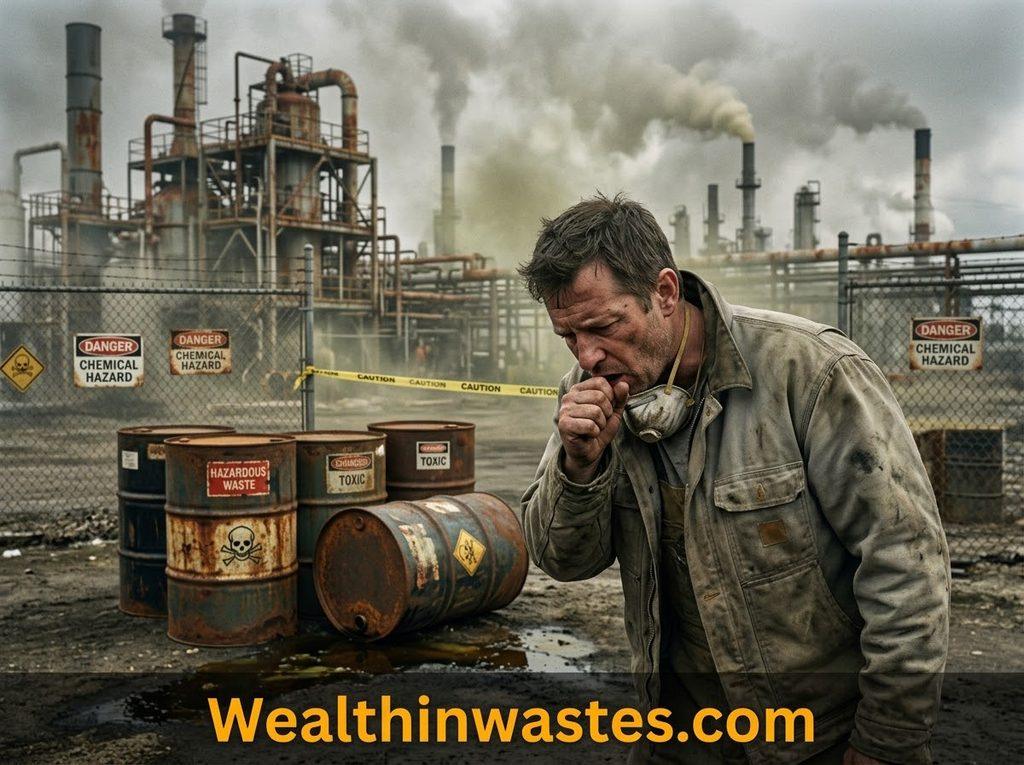
The effects of hazardous substances vary according to chemical properties, dose, exposure duration, route of entry, age, occupation, nutritional condition, and individual susceptibility to toxic effects.
1. Respiratory Effects: Asbestos, radon, benzene, soot, carbon monoxide, and other airborne contaminants can threaten respiratory health. Some exposures irritate airways, while others reduce oxygen delivery or contribute to longer-term disease.
2. Nervous System Effects: Lead, cadmium, carbon monoxide, arsenic, mercury, and cyanide can interfere with normal nervous-system functions. Severe exposure may produce confusion, weakness, impaired coordination, unconsciousness, or life-threatening complications.
3. Renal and Hepatic Effects: Cadmium, uranium, chlorinated solvents, carbon tetrachloride, and vinyl chloride can place pressure on organs involved in filtration and metabolism. Long-term exposure may produce serious organ damage.
4.Reproductive and Immune Effects: Lead, carbon monoxide, methyl mercury, pesticides, and certain persistent chemicals can affect reproductive or immune functions. Vulnerable groups may experience stronger consequences from comparable exposure levels.
5. Skin Effects: Arsenic, nickel, chromium, and some volatile chemicals can irritate the skin or contribute to dermatitis and other adverse reactions. Repeated occupational contact can increase the likelihood of complications.
6. Systemic Effects: Some substances affect several body systems simultaneously rather than remaining confined to one organ. This makes exposure assessment essential when the chemical source and concentration remain uncertain.
Evidence from health effects associated with biomedical waste also demonstrates how contaminated materials can contribute to respiratory, neurological, reproductive, infectious, and other health concerns.
Table 4.1: Hazardous Substance, Sources and Effects
| S/N | Hazardous Substance | Source | Effect |
|---|---|---|---|
| 1 | Asbestos | Old insulation | Respiratory |
| 2 | Radon | The ground | Respiratory |
| 3 | Cadmium | Old batteries | Respiratory, renal, nervous |
| 4 | Benzene | Degreasers | Respiratory |
| 5 | Carbon monoxide | Car exhaust, unvented or faulty furnaces | Respiratory, Reproductive, Cardiovascular, Nervous |
| 6 | Soot | Furnaces, wood burning stoves | Respiratory |
| 7 | Lead | Old paint, outdated plumbing | Renal, reproductive, Immune |
| 8 | Mercury | Thermostats, thermometers, Fish | Renal, immune, skin |
| 9 | Uranium | Food and water, proximity to nuclear testing sites | Renal |
| 10 | Chlorinated hydrocarbon solvent | Degreasers, paint removers, dry cleaning solutions | Renal |
| 11 | Carbon disulfide | Industrial production | Cardiovascular |
| 12 | Nitrates | Fertilizers | Cardiovascular |
| 13 | Methylene chloride | Auto part cleaners, paint removers | Cardiovascular, hepatic |
| 14 | Methyl mercury | Fish, coal-burning power | Reproductive |
| 15 | Arsenic | Pressure treated wood | Nervous, skin |
| 16 | Cyanide | Rat poison | Nervous |
| 17 | Pesticides | Unwashed fruits and vegetables | Immune |
| 18 | Polychlorinated biphenyls (PCBs) | Industrial waste, fish from contaminated water | Immune, skin |
| 19 | Polycyclic aromatic hydrocarbons (PAHs) | Cigarette smoke, vehicle exhaust, asphalt roads | Immune |
| 20 | Nickel | Cement | Skin |
| 21 | Chromium | Paints, industrial production | Skin |
| 22 | VOC (volatile organic compounds) | Fumes from gasoline, paint, adhesives, building supplies | Skin |
| 23 | Carbon tetrachloride | Adhesives | Hepatic |
| 24 | Vinyl chloride | Pipe sealer | Hepatic |
Source: Adapted from the Booklet of Health Effects of Chemical Exposure
Environmental Pathways of Hazardous Pollution
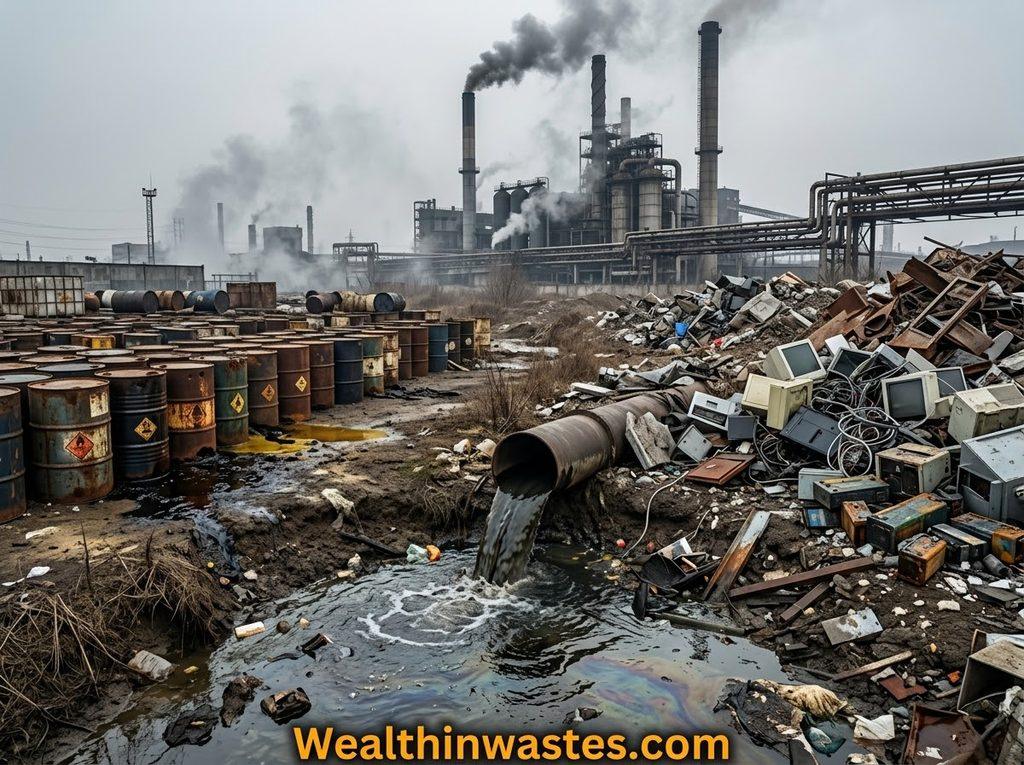
Hazardous substances rarely remain where they first enter the environment. Wind, rainfall, runoff, leaching, evaporation, sediment movement, plant uptake, and animal feeding can redistribute contaminants.
Soil can retain hazardous chemicals for long periods, particularly persistent pesticides, heavy metals, and industrial compounds. The composition of land pollution helps explain how contaminants accumulate within soils and surrounding environments.
Water provides another major pathway because chemicals can dissolve, remain suspended, attach to sediments, or accumulate inside aquatic organisms. Polluted water can therefore transfer contaminants across large geographic areas.
Research presented on biological and ecological characteristics of polluted waters shows that trace metals, mercury, pesticides, and hydrocarbons can affect aquatic organisms and move through food chains.
Landfills can also generate hazardous leachate when rainfall passes through waste and carries dissolved pollutants into soil and groundwater. This makes containment and engineered disposal especially important.
The impact of landfills on the environment includes leachate pollution, hazardous accumulation, volatile emissions, and long-term contamination risks when waste disposal systems lack adequate controls.
Agricultural chemicals create additional pathways because runoff can carry fertilizers and pesticides into drains, streams, ponds, rivers, and groundwater. These pathways make source control essential.
The movement and absorption of pesticides in soil shows why chemical application can result in runoff, leaching, volatilization, and movement away from intended treatment areas.
Managing Hazardous Substances Safely
Safe management begins before hazardous materials become waste. Identification, segregation, secure storage, correct labelling, controlled handling, spill prevention, and appropriate disposal reduce unnecessary exposure.
1. Identify Hazardous Materials: Check product labels, safety information, waste characteristics, and operational records before handling materials. Correct identification prevents incompatible substances from being mixed or stored together.
2. Separate and Store Properly: Keep hazardous chemicals away from food, water, public access, heat sources, and incompatible materials. Use sound containers, clear labels, secondary containment, and secure storage locations.
3. Control Exposure: Reduce unnecessary contact through ventilation, suitable protective equipment, safe work procedures, hygiene practices, and restricted access. Workers should understand the hazards associated with each substance they handle.
4. Transport Carefully: Hazardous waste should move in suitable containers and under controlled procedures that prevent leakage, spills, breakage, and unauthorized access during collection and transportation.
5. Treat or Dispose Responsibly: Choose treatment and disposal methods according to material properties. Specialized facilities may use physical, chemical, thermal, biological, or secure containment approaches where appropriate.
The complete hazardous waste management approach emphasizes identification, storage, transportation, treatment, disposal, and compliance as connected stages rather than isolated activities.
Wastewater containing hazardous chemicals may require additional treatment before discharge. The physic-chemical treatment process describes approaches for removing toxic materials, heavy metals, suspended impurities, and other contaminants.
Agricultural and Industrial Hazardous Exposure
Agriculture and industry generate important hazardous exposure pathways because both sectors use chemicals, fuels, machinery, solvents, pesticides, medicines, coatings, and other materials that require controlled management.
1. Agricultural Chemicals: Farms may generate hazardous wastes from pesticides, herbicides, fertilizers, veterinary medicines, fuel products, and contaminated containers. The sources and characteristics of agricultural waste show why chemical wastes need separate handling.
2. Pesticide Residues: Incorrect application can leave residues on crops and move chemicals through runoff, spray drift, leaching, and food chains. The concerns surrounding hazardous pesticides reinforce the importance of regulation and protective practices.
3. Industrial Chemicals: Factories can generate solvents, heavy metals, acids, alkalis, dyes, oils, cyanide, contaminated sludge, and chemical residues.The impact of industrial waste becomes severe when pollutants reach air, soil, water, or nearby communities.
4. Household Hazardous Materials: Homes may contain old batteries, paints, cleaners, pesticides, solvents, and other products that become dangerous when discarded incorrectly. The household hazardous waste category highlights the need for careful segregation.
5. Liquid Waste Pathways: Hazardous chemicals can enter liquid waste through industrial, medical, domestic, agricultural, and commercial activities. Proper treatment prevents contaminants from reaching rivers, soils, drainage channels, and groundwater systems.
The management of liquid wastes is particularly important because some liquid streams contain heavy metals, solvents, pesticides, oils, acids, and other hazardous substances.
Read Also: Hazardous Substance Treatment and Disposal
Why Hazardous Substance Control Matters
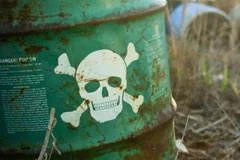
Hazardous substance control protects more than individual workers. It also protects households, communities, agricultural land, drinking water, fisheries, wildlife, ecosystems, and economic activities that depend on environmental quality.
Poor control can transform manageable chemicals into widespread pollutants through open dumping, uncontrolled burning, leaking containers, unsafe discharge, careless application, or contaminated runoff from affected sites.
Waste pollution can produce health and environmental consequences that spread beyond the original disposal site. The health and environmental impacts of waste demonstrate how exposure can occur through multiple environmental pathways.
Water contamination deserves special attention because hazardous chemicals can damage aquatic organisms and affect people who depend on polluted water for drinking, irrigation, fishing, livestock production, or recreation.
The consequences of water pollution include ecological damage, food-chain disruption, health risks, economic losses, and reduced water quality when contaminants remain uncontrolled.
Watersheds require coordinated protection because contaminants released upstream can travel into downstream communities and ecosystems. The management of watershed pollution therefore depends on integrated source control and monitoring.
Economic consequences also matter because pollution can reduce agricultural yields, fisheries production, property values, productivity, and public welfare while increasing treatment, healthcare, remediation, and monitoring expenses.
The economic losses resulting from pollution show why hazardous substance prevention is not merely an environmental responsibility but also an economic priority for communities.
Effective hazardous substance management should therefore combine prevention, accurate classification, worker protection, proper storage, environmental monitoring, emergency preparedness, responsible treatment, and lawful disposal throughout the entire waste management chain.
The control of land pollution also supports hazardous substance management because reducing chemical releases protects soil organisms, vegetation, groundwater, animals, and people who depend on productive land.
Hazardous substances require continuous attention because their consequences can develop through direct contact, contaminated food, polluted water, degraded soil, unsafe air, occupational exposure, and long-term environmental accumulation.
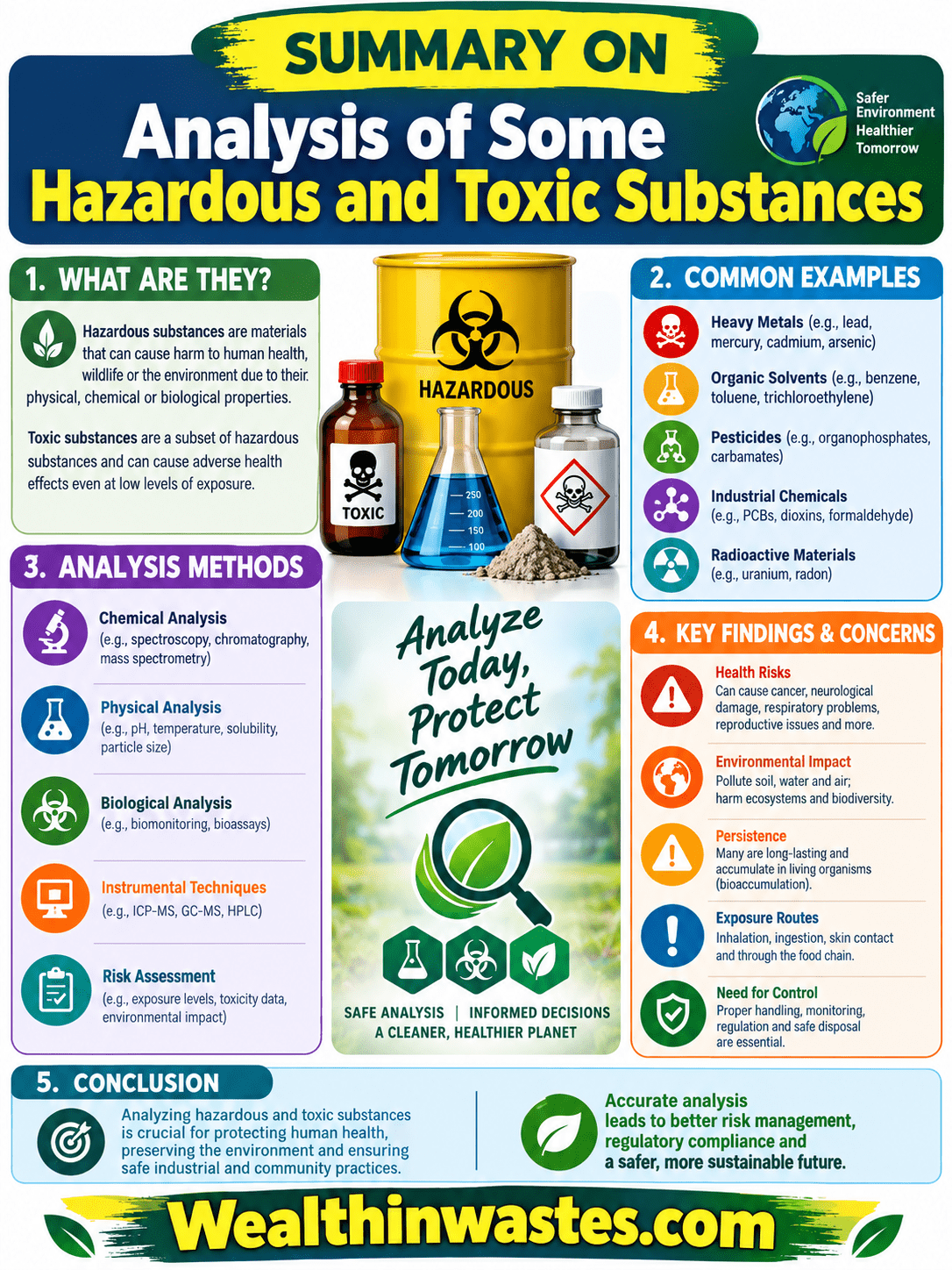
Summary on Analysis of Some Hazardous and Toxic Substances
| Aspect | Summary |
|---|---|
| Meaning | Hazardous substances can cause harm to humans, animals, plants, ecosystems, property, or environmental quality. |
| Major examples | Asbestos, radon, lead, mercury, cadmium, benzene, pesticides, cyanide, arsenic, PAHs, PCBs, VOCs, and several solvents. |
| Main sources | Homes, farms, industries, vehicles, construction materials, waste facilities, contaminated water, and certain consumer products. |
| Exposure routes | Inhalation, ingestion, skin contact, contaminated food, polluted water, dust, fumes, and environmental transfer. |
| Health effects | Respiratory, nervous, renal, hepatic, cardiovascular, reproductive, immune, and skin effects may occur. |
| Environmental movement | Hazardous substances can move through air, soil, surface water, groundwater, sediments, plants, animals, and food chains. |
| Control measures | Identification, segregation, labelling, safe storage, protective measures, controlled transport, treatment, monitoring, and responsible disposal. |
| Overall importance | Prevention reduces health risks, environmental damage, cleanup costs, economic losses, and long-term contamination. |
Frequently Asked Questions About Analysis of Some Hazardous and Toxic Substances
1. What is a hazardous substance?
A hazardous substance is a material capable of causing harm through toxicity, reactivity, corrosion, flammability, radiation, or dangerous environmental effects.
2. What is the difference between hazardous and toxic?
Toxic describes a substance’s ability to cause injury, while hazardous describes its potential to cause harm under particular exposure conditions.
3. Which hazardous substances commonly affect the respiratory system?
Asbestos, radon, benzene, soot, carbon monoxide, and some airborne chemical fumes can create respiratory risks.
4. How do hazardous chemicals enter the body?
Common routes include inhalation, ingestion, skin absorption, contaminated food and water, and accidental entry through damaged skin.
5. Can hazardous substances contaminate water?
Yes. Chemicals can enter surface water and groundwater through runoff, leakage, waste discharge, spills, leachate, and agricultural drainage.
6. Why are heavy metals dangerous?
Some heavy metals can persist in the environment, accumulate in organisms, and affect organs or biological systems after repeated exposure.
7. Why should hazardous wastes be separated?
Segregation prevents incompatible materials from reacting and reduces contamination, accidental exposure, and unsafe treatment or disposal.
8. How can hazardous exposure be reduced?
Use source reduction, safe storage, proper labelling, protective equipment, ventilation, training, controlled handling, treatment, and responsible disposal.
9. Why are pesticides considered hazardous?
Some pesticides can harm people, animals, plants, and aquatic organisms when misused, overapplied, improperly stored, or released into the environment.
10. Why is hazardous substance management important?
It protects public health, workers, ecosystems, water resources, agricultural productivity, property, and the economy from preventable chemical risks.
Do you have any questions, suggestions, or contributions? If so, please feel free to use the comment box below to share your thoughts. We also encourage you to kindly share this information with others who might benefit from it. Since we can’t reach everyone at once, we truly appreciate your help in spreading the word. Thank you very much for your support and for sharing!
Read Also: Proper Farm Waste Management Guide