


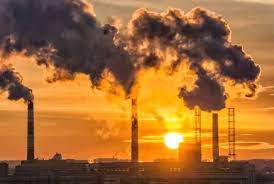
Air pollution occurs when harmful gases, particles, fumes, or biological materials enter the atmosphere in amounts that reduce air quality and create risks for people, animals, plants, and ecosystems.
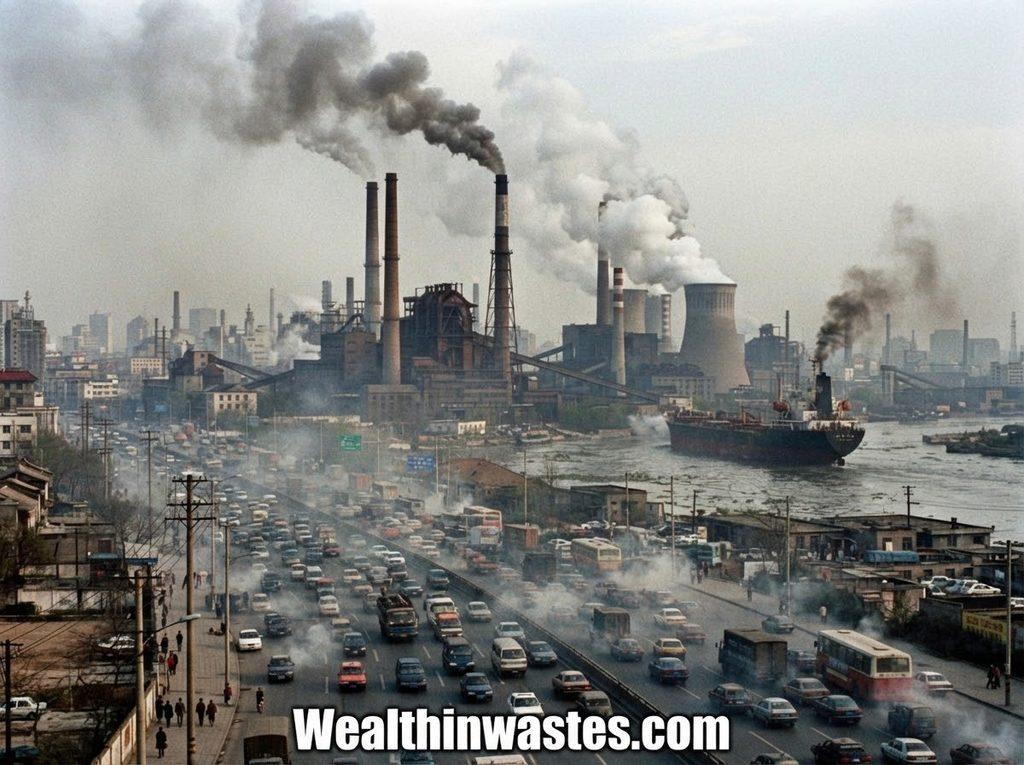
Some pollutants remain invisible, while others appear as smoke, dust, haze, or fumes from vehicles, factories, fires, construction activities, and poorly managed waste disposal practices around communities.
Clean air supports breathing, healthy ecosystems, productive agriculture, and comfortable living conditions. However, polluted air can irritate the body, damage vegetation, reduce visibility, and create environmental problems.
The seriousness of air pollution depends on the type, concentration, duration, and source of exposure. Weather conditions, population density, industrial activities, transportation, and household energy choices also influence exposure.
Understanding air pollution helps individuals, communities, farmers, industries, and governments recognize major pollution sources and adopt practical measures that protect health, reduce environmental damage, and improve air quality.
Meaning Of Air Pollution
Air pollution means the contamination of the atmosphere by substances that can harm human health, animals, vegetation, property, or environmental quality when their concentration becomes excessive or persistent.
These contaminants can include gases, suspended particles, smoke, aerosols, vapours, biological materials, and other substances released naturally or through human activities affecting the atmosphere.
Pollution may develop outdoors or indoors. Outdoor pollution commonly involves traffic, industries, generators, construction, burning, and natural events, while indoor pollution often comes from cooking fuels, tobacco smoke, and poorly ventilated spaces.
Environmental pollution becomes particularly dangerous when pollutants remain concentrated near populated areas, workplaces, schools, farms, or other places where people and living organisms regularly spend time.
The quality of air changes continuously because pollutants disperse, react chemically, settle on surfaces, or move across locations. Monitoring therefore helps determine pollution levels and identify important sources.
Read Also: Overview of Current Global Pollution Concerns
Common Sources Of Air Pollution

1. Motor Vehicles: Cars, buses, motorcycles, trucks, and other engines release carbon monoxide, nitrogen oxides, hydrocarbons, particulate matter, and other pollutants, especially when engines lack proper maintenance.
2. Industrial Activities: Factories, power plants, refineries, and processing facilities can release smoke, gases, dust, metals, and chemical vapours during manufacturing, combustion, storage, and transportation operations.
3. Open Burning: Burning household refuse, agricultural residues, plastics, and vegetation releases smoke, fine particles, gases, and toxic compounds that can reduce visibility and threaten respiratory health.
4. Household Energy: Firewood, charcoal, kerosene, coal, dung, and agricultural residues can produce substantial indoor pollution when people burn these fuels in poorly ventilated kitchens.
5. Construction And Dust: Road construction, demolition, mining, quarrying, unpaved surfaces, and agricultural activities can generate airborne dust that reduces visibility and increases exposure to suspended particles.
Air pollution sources vary between urban, rural, industrial, and residential environments, so effective control requires identifying the activities responsible for local emissions and targeting them directly.
Major Air Pollutants To Know
1. Particulate Matter: Tiny solid particles and liquid droplets suspended in air can penetrate the respiratory system, with finer particles presenting greater risks because they can travel deeper into lung tissues.
2. Carbon Monoxide: This colourless and odourless gas develops mainly through incomplete combustion and can interfere with the blood’s ability to transport oxygen throughout the body.
3.Sulfur And Nitrogen Oxides: Combustion processes can release sulfur dioxide and nitrogen oxides, which contribute to respiratory irritation, atmospheric reactions, smog formation, and acid deposition.
4. Ground-Level Ozone: Ozone near the Earth’s surface forms through chemical reactions involving other pollutants and sunlight, producing an irritant that can damage respiratory tissues and vegetation.
5. Hazardous Air Pollutants: Some pollutants, including benzene and certain toxic metals, can produce serious health or environmental effects when exposure occurs at sufficiently high levels or over long periods.
Understanding pollutant classes makes air-quality management easier because authorities can connect specific contaminants with their sources, exposure pathways, monitoring requirements, and appropriate reduction technologies.
Primary and secondary pollutants behave differently in the atmosphere, making source identification important when communities develop strategies for reducing harmful concentrations and improving environmental conditions.
Health Effects Of Air Pollution
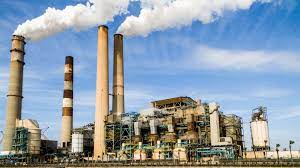
1. Respiratory Problems: Polluted air can irritate the nose, throat, and lungs, causing coughing, wheezing, breathing difficulty, inflammation, and worsening symptoms among people with existing respiratory conditions.
2. Cardiovascular Effects: Fine particles and other pollutants can contribute to inflammation and stress within the cardiovascular system, increasing the risk of serious heart and blood-vessel problems.
3. Vulnerable Groups: Children, older adults, pregnant women, outdoor workers, and people with respiratory or cardiovascular conditions may face greater health risks when pollution levels remain elevated.
4. Eye And Skin Irritation: Smoke, ozone, dust, and chemical pollutants can irritate sensitive tissues, producing watery eyes, burning sensations, discomfort, headaches, and other unpleasant symptoms.
5. Long-Term Exposure: Repeated exposure to polluted air can contribute to chronic respiratory disease and other serious health problems, particularly where pollution persists for months or years.
People can reduce exposure by limiting outdoor activity during severe pollution episodes, improving indoor ventilation appropriately, avoiding smoke, maintaining cleaner cooking practices, and supporting effective pollution-control measures.
Air pollution and human health remain closely connected because pollutants can enter the body through breathing and influence the lungs, bloodstream, heart, and other biological systems.
Environmental Effects Of Air Pollution
1. Acid Rain: Sulfur dioxide and nitrogen oxides can react with atmospheric moisture and produce acidic deposition, which may damage vegetation, aquatic ecosystems, soils, buildings, and sensitive structures.
2. Climate Change: Certain air pollutants and greenhouse gases influence Earth’s energy balance, contributing to warming, changing rainfall patterns, heat extremes, and other environmental consequences.
3. Vegetation Damage: Pollutants such as ground-level ozone can interfere with plant growth and physiological processes, reducing productivity and making crops or natural vegetation more vulnerable.
4. Wildlife Stress: Polluted air can expose wildlife directly through breathing while deposited pollutants can contaminate habitats, vegetation, water, and food sources used by animals.
5. Material Damage: Particles, acidic compounds, and ozone can accelerate corrosion, soil buildings and surfaces, damage textiles, and increase maintenance requirements for homes and infrastructure.
Climate-related environmental changes can become more severe when pollution interacts with greenhouse gas emissions, ecosystem degradation, changing land use, and unsustainable resource consumption.
Vegetation and forest loss can also interact with atmospheric problems because damaged ecosystems may lose part of their capacity to store carbon and support healthy ecological processes.
Economic And Agricultural Effects

Air pollution can create economic costs through healthcare expenses, reduced worker productivity, damaged materials, lower visibility, increased cleaning requirements, and losses associated with environmental degradation.
Farmers can also experience problems when pollutants affect crop physiology, soil conditions, livestock health, water quality, or the productivity of surrounding natural resources.
Economic losses from pollution can extend beyond direct treatment expenses because communities may also lose working hours, agricultural output, ecosystem services, and infrastructure value.
Agricultural smoke from residue burning can contribute to poor air quality while also carrying particles and gases across farmland, neighbouring communities, roads, and sensitive ecological areas.
Industrial waste and emissions may create additional air-quality pressures around processing zones, particularly where combustion, chemical handling, transport, or waste treatment occurs without adequate controls.
Good environmental management can reduce these costs by encouraging cleaner production, efficient energy use, responsible waste handling, better transportation systems, and stronger emission monitoring across economic activities.
Environmental management practices provide a broader framework for reducing pollution while protecting natural resources, improving compliance, strengthening community health, and supporting more sustainable development.
Improved waste disposal practices can further reduce smoke, harmful gases, and other emissions associated with open dumping, uncontrolled decomposition, and waste burning in residential or agricultural areas.
Air Pollution Prevention And Control
1. Cleaner Transportation: Regular vehicle maintenance, public transportation, walking, cycling, car sharing, and cleaner vehicle technologies can reduce emissions produced by traffic in busy communities.
2. Cleaner Energy: Efficient appliances, renewable energy, improved cooking systems, and reduced dependence on smoky fuels can lower household and commercial emissions while improving indoor air quality.
3. Better Waste Management: Recycling, reuse, proper collection, controlled treatment, and responsible disposal reduce open burning and prevent unnecessary releases of smoke and hazardous combustion products.
4. Industrial Controls: Factories can reduce emissions by installing appropriate pollution-control equipment, improving process efficiency, preventing leaks, maintaining machinery, and following established environmental requirements.
5. Air Quality Monitoring: Measuring pollutant concentrations helps authorities identify pollution patterns, locate major sources, evaluate control measures, and communicate risks to communities when air quality deteriorates.
Air-quality assessment tools help decision-makers understand emission sources, pollutant concentrations, environmental conditions, and the effectiveness of measures introduced to improve atmospheric conditions.
Air pollution measurements provide important information that supports monitoring programmes, public-health decisions, environmental planning, and evaluation of changes in pollutant concentrations over time.
Air-quality modelling can help predict pollutant movement, estimate likely concentrations, examine future emission scenarios, and support decisions concerning development, regulation, and pollution-control planning.
Mobile monitoring approaches can reveal pollution patterns across roads, neighbourhoods, industrial zones, and other locations where fixed monitoring stations may not capture every important variation.
Read Also: Meaning and Sources of Noise Pollution
Why Air Quality Matters
Air quality matters because every person depends on the atmosphere for oxygen and everyday activities. Healthy air supports comfortable living while polluted air creates preventable health and environmental risks.
Communities can improve air quality by reducing unnecessary combustion, maintaining vehicles, avoiding open waste burning, improving household ventilation, supporting cleaner energy, and encouraging responsible industrial practices.
Governments also play an important role by establishing standards, monitoring pollution, educating communities, enforcing environmental rules, and supporting technologies that reduce harmful emissions at their sources.
Institutional pollution-control systems help coordinate monitoring, regulation, enforcement, environmental education, and public-health protection across government agencies, industries, communities, and other responsible organizations.
Public awareness remains equally important because everyday choices influence pollution levels. Cleaner transportation, energy conservation, careful waste handling, and avoidance of unnecessary burning can collectively improve local air quality.
Community responses to environmental pollution can strengthen prevention efforts by encouraging responsible behaviour, reporting harmful practices, supporting environmental programmes, and promoting greater awareness of pollution-related risks.
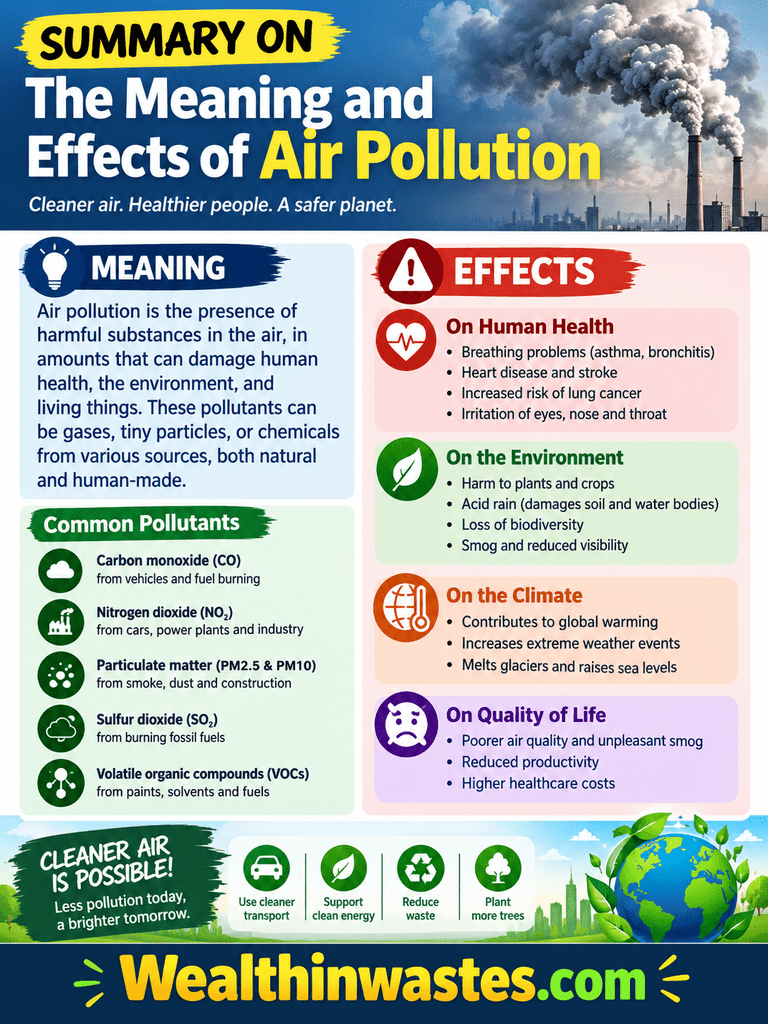
Summary on The Meaning and Effects of Air Pollution
| Aspect | Summary |
|---|---|
| Meaning | Air pollution is the contamination of the atmosphere by harmful gases, particles, fumes, aerosols, or biological materials. |
| Main Sources | Major sources include vehicles, industries, household fuels, open burning, construction, mining, agriculture, and waste disposal. |
| Major Pollutants | Important pollutants include particulate matter, carbon monoxide, sulfur dioxide, nitrogen oxides, ozone, and hazardous air pollutants. |
| Health Effects | Exposure can contribute to respiratory irritation, cardiovascular problems, and increased risks for vulnerable populations. |
| Environmental Effects | Air pollution can contribute to acid rain, climate change, vegetation damage, wildlife stress, and material deterioration. |
| Agricultural Effects | Pollution can affect crops, livestock, soil conditions, water resources, productivity, and agricultural communities. |
| Control Measures | Cleaner energy, transport, waste management, industrial controls, monitoring, regulation, and public awareness can reduce pollution. |
Frequently Asked Questions About Air Pollution: Meaning, Effects, Causes and Health Risks
1. What is air pollution?
Air pollution is the contamination of the atmosphere by harmful gases, particles, fumes, aerosols, or other substances at harmful concentrations.
2. What are the major causes of air pollution?
Major causes include vehicle emissions, industrial activities, open burning, household fuels, construction dust, mining, agriculture, and poor waste management.
3. What are common effects of air pollution on health?
Air pollution can cause respiratory irritation, breathing difficulties, cardiovascular stress, headaches, eye irritation, and worsening symptoms among vulnerable people.
4. How does air pollution affect agriculture?
Polluted air can affect crop growth, plant health, livestock welfare, soil conditions, farm productivity, and the quality of surrounding environmental resources.
5. What is acid rain?
Acid rain occurs when sulfur and nitrogen oxides react in the atmosphere and contribute to acidic precipitation or deposition.
6. How can individuals reduce air pollution?
Individuals can reduce pollution by avoiding open burning, using cleaner energy, maintaining vehicles, conserving fuel, reducing waste, and supporting sustainable transport.
7. Why is air-quality monitoring important?
Monitoring reveals pollutant concentrations, identifies problem areas, supports public warnings, evaluates control measures, and helps authorities plan effective environmental policies.
8. Can air pollution damage the environment?
Yes.Air pollution can contribute to acid rain, climate change, vegetation damage, wildlife stress, reduced visibility, and deterioration of buildings and other materials.
Do you have any questions, suggestions, or contributions? If so, please feel free to use the comment box below to share your thoughts. We also encourage you to kindly share this information with others who might benefit from it. Since we can’t reach everyone at once, we truly appreciate your help in spreading the word. Thank you very much for your support and for sharing!
Read Also: Air Pollution and Its Impact on Agriculture