


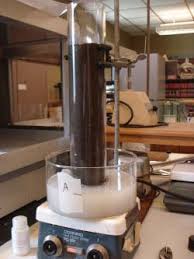
Soil properties strongly influence what happens to pesticides after application because they determine how chemicals attach to particles, dissolve in water, break down, and move through different soil layers. These effects vary with conditions.
Pesticide mobility matters because a chemical that remains near its target can provide effective control, while unwanted movement may reduce performance and increase exposure to groundwater, surface water, plants, and organisms.
Among the most important soil characteristics are texture, moisture, structure, organic matter, and pH, while permeability, temperature, biological activity, and drainage further modify pesticide behaviour within agricultural fields. This interaction makes field assessment especially important.
Understanding these properties helps farmers, land managers, and environmental professionals predict whether a pesticide will remain near the soil surface, enter the root zone, move downward, or leave the field.
This article explains major soil properties affecting pesticide mobility and shows how their combined effects influence adsorption, runoff, leaching, degradation, and pesticide availability in agricultural soils. It highlights practical field considerations.
Soil Texture and Pesticide Mobility
1. Sandy Soil: Sandy soils contain larger particles and wider pores, allowing water to infiltrate rapidly. A dissolved pesticide can move downward quickly when adsorption remains weak and rainfall is substantial. Soil characteristics explain this.
2. Clay Soil: Clay particles provide extensive surface area and numerous reactive sites that can retain many pesticides. Stronger adsorption often slows movement, although some compounds may remain available for plant uptake within soil.
3. Silt-Rich Soil: Silt has particle sizes between sand and clay, so its retention and drainage characteristics fall between both extremes. Pesticide transport still depends on aggregation, moisture, erosion, and rainfall intensity.
4. Soil Composition: The proportions of sand, silt, and clay determine pore distribution, drainage, and surface area. These characteristics influence whether pesticides remain attached to particles or travel dissolved in water. Land conditions matter.
Read Also: Movement and Absorption of Pesticides in Soil
Soil Moisture and Pesticide Movement
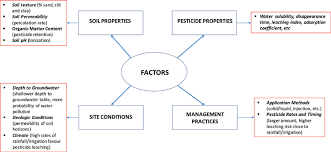
Soil moisture determines how much water occupies soil pores and how easily pesticides can travel with that water. Wet conditions may promote dissolved movement after rainfall or irrigation. These effects become clearer during frequent rainfall.
When soil already contains abundant water, additional rainfall may exceed its infiltration capacity and generate surface runoff. Pesticides dissolved in runoff or attached to sediment can then leave treated areas.
Moisture also influences pesticide degradation because microorganisms and chemical reactions require suitable water availability. Very dry conditions may slow transformation, allowing certain pesticides to remain longer and retain environmental mobility.
Excessive saturation can reduce oxygen movement into soil pores. Under poorly aerated conditions, microorganisms may favour anaerobic pathways, changing the degradation rate and persistence of some pesticide compounds in flooded soils.
The timing of rainfall or irrigation therefore matters greatly. Water applied soon after treatment may increase movement before sufficient adsorption or degradation occurs, particularly in permeable soils with limited retention capacity.
Soil moisture behaviour depends on texture, structure, pore spaces, and water retention. Those same properties determine how much water remains available to transport dissolved pesticide residues downward.
Water entering agricultural soils may come from rainfall, irrigation, drainage, or other sources. Understanding each source helps explain changes in moisture conditions and potential pesticide movement.
Soil Structure and Pesticide Mobility
1.Aggregate Stability: Stable soil aggregates resist breakdown during rainfall and reduce sediment generation. This can limit pesticide movement when chemicals remain attached to soil particles and erosion stays controlled. Soil resource management supports stability.
2. Macropores and Cracks: Large channels formed by roots, earthworms, shrinkage, and structural changes can carry water rapidly. Dissolved pesticides may bypass much of the surrounding soil matrix through these pathways.
3. Surface Compaction: Compacted surfaces can reduce infiltration and increase runoff. When rainfall exceeds infiltration, pesticides may travel with surface water and soil particles toward drains, streams, and other low areas.
4. Soil Erosion: Erosion detaches and transports soil particles that may carry adsorbed pesticides. Vegetation, residue cover, and stable aggregates can reduce this pathway and keep contaminated sediment within treated areas. Land protection can help.
Soil Organic Matter and Pesticide Adsorption
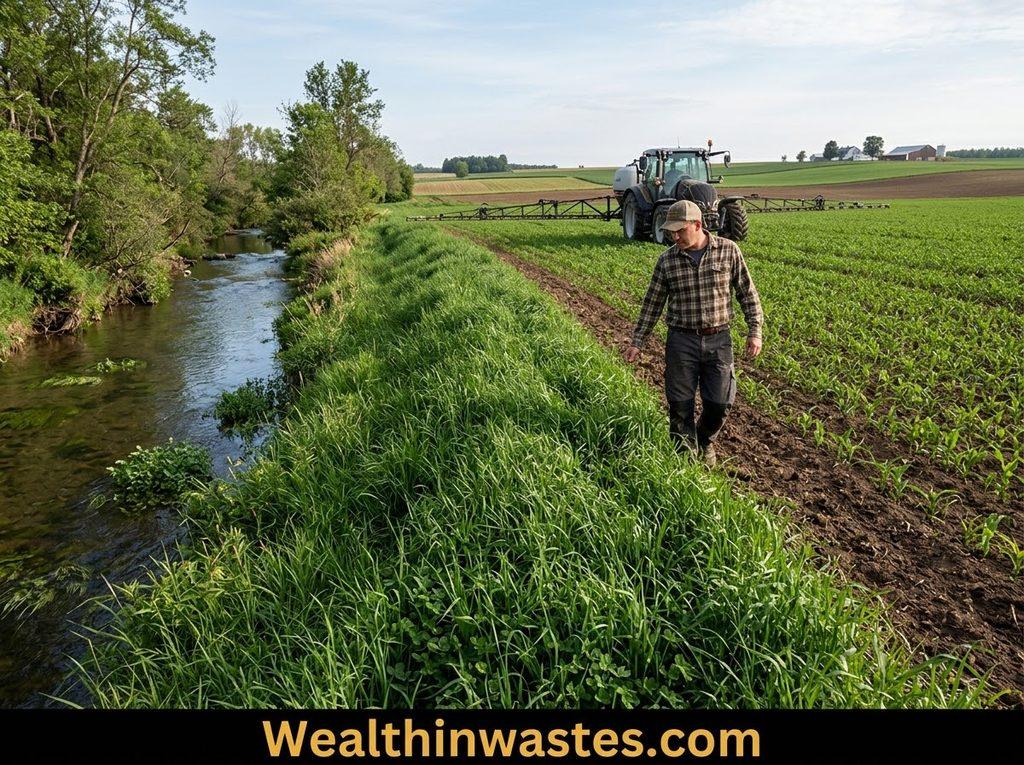
Soil organic matter strongly influences pesticide adsorption because organic materials provide surfaces capable of binding many chemical compounds. Greater organic matter can reduce the freely dissolved fraction in soil water.
Organic matter also changes soil physical conditions by improving aggregation, porosity, and water retention. These changes influence infiltration and determine how much water remains available to carry dissolved pesticides downward through the profile.
However, stronger adsorption does not completely eliminate environmental risk. A pesticide bound to organic matter may later become available through desorption, changing soil conditions, or decomposition of organic materials. The effect depends on pesticide chemistry.
Returning suitable crop residues can increase soil organic matter while improving soil structure. These changes may reduce erosion and modify pesticide transport by changing both water movement and the availability of adsorption sites.
Well-managed organic amendments can also improve the soil’s capacity to retain moisture. Better moisture retention may alter leaching patterns because less water moves rapidly through large connected pores after rainfall.
Compost-derived organic matter can improve water retention and soil structure, providing an additional management route for maintaining soil conditions that influence pesticide movement.
Composted organic materials can strengthen aggregation and improve infiltration when properly incorporated. Better structure may reduce erosion while changing the soil environment around pesticide residues.
Soil pH and Pesticide Mobility
1. Acidic Soil: Low pH changes hydrogen-ion concentration and can alter pesticide charge or ionization. These changes may strengthen or weaken adsorption depending on the pesticide and soil colloids. Chemical soil contamination may complicate effects.
2. Near-Neutral Soil: Soil conditions close to neutrality can produce different adsorption behaviour from strongly acidic or alkaline conditions. The response depends on pesticide chemistry, clay minerals, organic matter, and surface charges.
3. Alkaline Soil: High pH can change pesticide stability, charge, and degradation pathways. Some compounds may become more mobile or transform faster, making soil testing and label directions important. Pollutant behaviour also reflects chemical transformation.
4. Pesticide-Specific Response: No single pH rule applies to every pesticide. Farmers should consider the product label and known chemical behaviour because two compounds may respond differently to the same soil reaction.
Soil Water Movement and Permeability
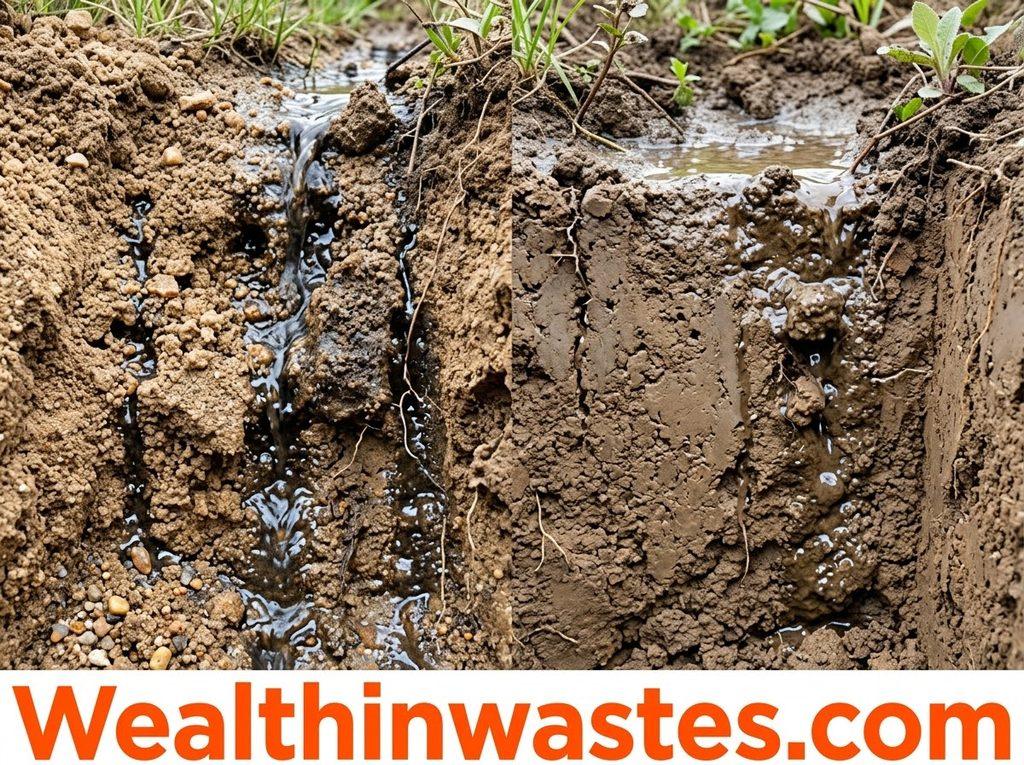
Soil permeability describes how readily water passes through connected pores. Coarse soils often permit faster vertical movement, while compacted or fine-textured soils may restrict flow and encourage surface runoff. Water therefore controls an important pathway.
The relationship is not absolute because soil structure can create preferential channels. A clay soil containing cracks or biological pores may transmit water and dissolved pesticides rapidly despite its fine texture.
Soil moisture behaviour depends on texture, structure, pore spaces, and water retention. Those properties collectively influence how much water moves through soil and how readily dissolved pesticide residues can travel downward.
Permeability becomes especially important when the groundwater table lies close to the surface. Shorter travel distances give pesticides fewer opportunities for adsorption and degradation before reaching groundwater resources beneath agricultural land.
Site conditions affecting pesticide mobility include groundwater depth, rainfall, drainage, and subsurface pathways. These external conditions interact with soil permeability to determine transport speed and direction.
Groundwater protection requires attention to soil type because mobile agricultural chemicals can move downward when water passes rapidly through permeable profiles and reaches underground water sources.
Pesticide transport in surface water becomes important when runoff carries chemicals from soil into streams, ponds, or drainage channels. Soil permeability influences whether rainfall infiltrates or instead becomes overland flow.
Soil Biology and Pesticide Degradation
1. Microbial Activity: Soil bacteria, fungi, and other microorganisms can transform pesticides into different compounds. Their activity depends on moisture, temperature, oxygen, pH, organic matter, and the chemical involved. Environmental health factors influence these processes.
2. Soil Temperature: Warm conditions often increase biological and chemical reaction rates within suitable ranges. Faster degradation can shorten pesticide persistence, although each compound responds differently to temperature changes and field conditions.
3. Aeration: Oxygen availability influences which microorganisms dominate and which transformation pathways operate. Poorly aerated soil may favour anaerobic degradation, while well-aerated conditions can support aerobic microbial processes. These pathways can change pesticide persistence.
4. Biological Diversity: Different microbial communities possess different abilities to transform pesticides. Repeated exposure to the same chemical can select for organisms capable of degrading it more rapidly. Diverse soil communities can support wider functions.
How Soil Properties Interact

Soil properties rarely act independently. Texture influences water flow, organic matter changes adsorption, structure controls preferential pathways, moisture affects degradation, and pH modifies chemical interactions and transformation rates. Their combined effects often determine pesticide fate.
Pesticide degradation in soils can change the period during which a compound remains available for leaching or runoff, linking degradation directly with mobility and environmental persistence. This makes persistence an important part of mobility assessment.
Risk becomes greater when several favourable transport conditions occur together. A soluble pesticide applied to wet, permeable soil before heavy rainfall may move farther than expected through the soil profile.
Pesticide management practices should account for soil conditions, weather, application timing, and product behaviour rather than relying on pesticide properties alone during field operations. Such planning can reduce preventable pesticide losses.
Farmers should consider soil testing, drainage patterns, recent rainfall, forecast conditions, and pesticide label restrictions before application. These precautions help keep chemicals near their intended target and reduce avoidable environmental losses.
Understanding pesticide movement and absorption helps explain why the same product can behave differently across fields with contrasting soil characteristics. Field history can influence behaviour, treatment results, and environmental risk.
Vegetation and soil biodiversity can influence infiltration, erosion, and soil biological activity. These relationships matter because changes in soil conditions can indirectly alter pesticide transport and degradation across agricultural fields.
Environmental monitoring can track soil and water indicators such as pH, soil health, erosion risk, and groundwater quality. Monitoring helps identify areas where pesticide movement may require closer attention.
Water pollution from pesticides can develop when runoff carries chemicals from fields into receiving waters. Preventing movement at the soil surface can therefore protect both agricultural performance and aquatic environments.
Read Also: Definition, Forms and Sources of Pollution Abatement and Control
How Farmers Can Reduce Pesticide Mobility

1. Test Soil Conditions: Determine texture, pH, organic matter, drainage, and moisture status where possible. These measurements help farmers understand likely adsorption, infiltration, runoff, and leaching risks before pesticide application.
2. Manage Water Carefully: Avoid unnecessary irrigation immediately after pesticide application and monitor heavy-rainfall forecasts. Controlled water application reduces the chance that pesticides will move rapidly with runoff or percolating water. Water management strengthens this.
3. Protect Soil Structure: Maintain vegetation cover, suitable crop residues, and erosion-control practices that support stable aggregates. Reducing compaction and erosion can decrease rapid surface transport and sediment-bound pesticide losses.
4. Follow Product Guidance: Apply pesticides according to label directions, paying attention to soil restrictions, application rates, timing, and environmental precautions. Correct use reduces unnecessary residues and limits off-site movement. Hazard prevention remains a priority.
Summary on Soil Properties Affecting Pesticide Mobility in Soil
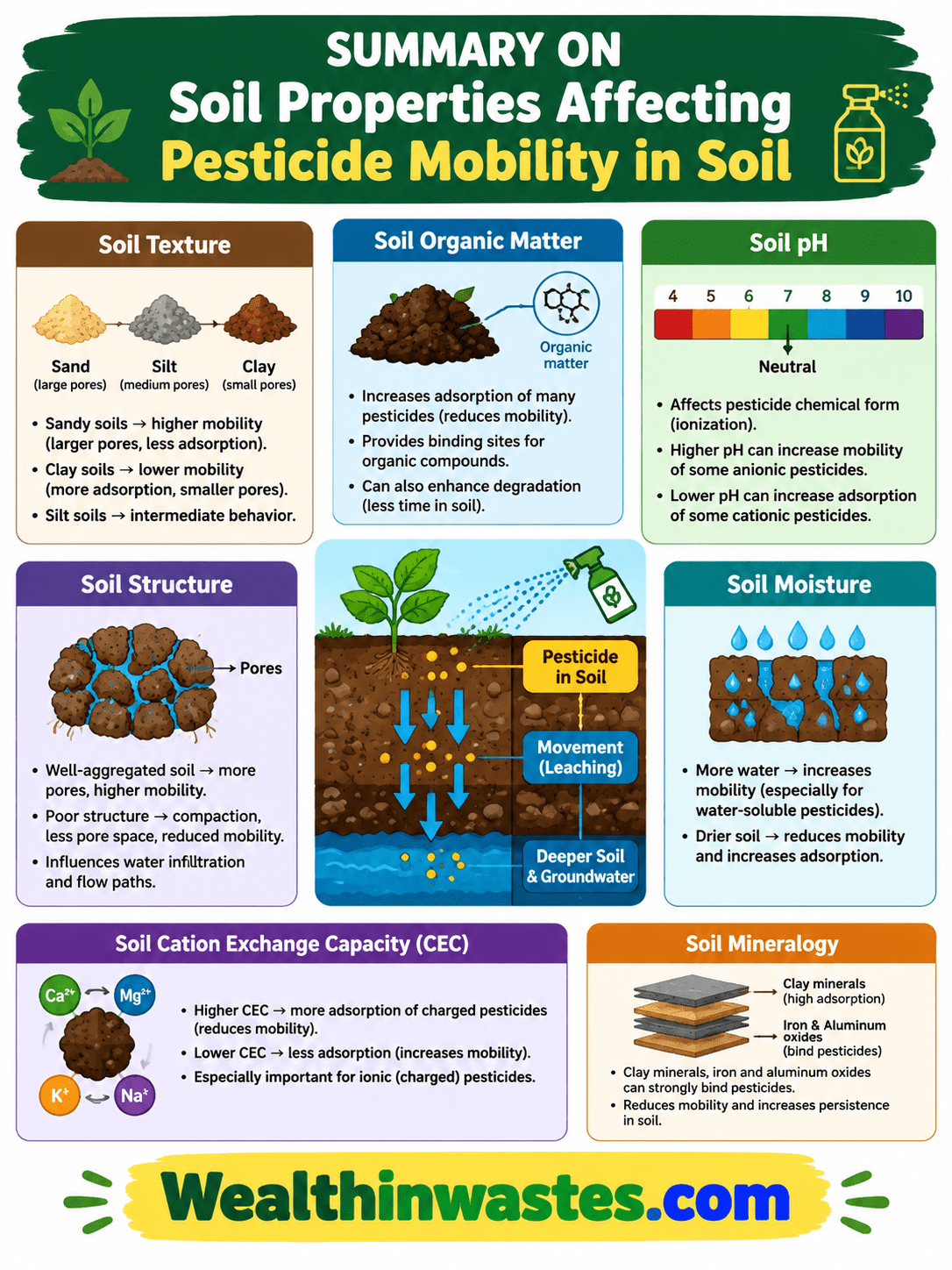
| Soil Property | Main Influence | Mobility Implication |
|---|---|---|
| Soil Texture | Controls particle size, pore space, surface area, and permeability. | Sandy soils often permit faster movement; clay can increase retention. |
| Soil Moisture | Controls water flow and affects degradation conditions. | Wet or saturated conditions can change runoff, leaching, and transformation. |
| Soil Structure | Controls aggregation, infiltration, cracks, and macropores. | Preferential pathways can accelerate pesticide movement. |
| Organic Matter | Provides important adsorption sites and improves water retention. | Often reduces dissolved mobility while altering soil physical conditions. |
| Soil pH | Changes pesticide charge, adsorption, stability, and reactions. | Mobility varies according to pesticide chemistry and soil reaction. |
| Permeability | Determines how readily water moves through connected pores. | High permeability can increase downward pesticide transport. |
| Biological Activity | Microorganisms transform pesticides under suitable conditions. | Faster degradation can shorten persistence and reduce transport opportunities. |
Frequently Asked Questions About Soil Properties Affecting Pesticide Mobility in Soil
1. Which soil property most affects pesticide adsorption?
Organic matter and clay content often strongly influence adsorption because they provide surfaces where many pesticide molecules can bind.
2. Why do sandy soils increase leaching risk?
Sandy soils often have larger pores and faster permeability, allowing dissolved pesticides to move downward more readily when water enters the profile.
3. How does soil moisture affect pesticide mobility?
Moisture controls water movement and degradation. Wet conditions can increase dissolved transport, while excessive saturation can alter oxygen availability and transformation pathways.
4. Does soil pH change pesticide movement?
Yes. Soil pH can change pesticide charge, adsorption, stability, and degradation, although the response depends on the active ingredient and soil chemistry.
5. Can soil structure create rapid pesticide pathways?
Yes. Macropores, cracks, and other continuous channels can allow water and dissolved pesticides to bypass much of the surrounding soil matrix.
6. How can farmers reduce pesticide mobility?
Farmers can test soil conditions, manage irrigation, protect soil structure, follow label directions, and avoid applications immediately before heavy rainfall.
7. Why is pesticide mobility an environmental concern?
Excess movement can reduce pest-control effectiveness and carry pesticide residues toward groundwater, streams, ponds, crops, wildlife, and other non-target environments.
Do you have any questions, suggestions, or contributions? If so, please feel free to use the comment box below to share your thoughts. We also encourage you to kindly share this information with others who might benefit from it. Since we can’t reach everyone at once, we truly appreciate your help in spreading the word. Thank you very much for your support and for sharing!
Read Also: Safe Handling of Pesticides in Agriculture