


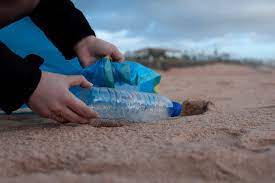
Water pollution prevention protects drinking water supplies, aquatic ecosystems, agriculture, fisheries, recreation, and public health while reducing expensive treatment and restoration efforts after contamination occurs.
Effective prevention requires cooperation among households, farmers, industries, communities, and government agencies. Each group can reduce pollution by managing waste properly, conserving water, controlling runoff, and following environmental standards.
Because pollution can come from identifiable discharge points or diffuse sources across large areas, prevention must combine source control, wastewater treatment, responsible farming, stormwater management, and careful monitoring of water quality.
The most effective approach begins at the source. This means using fewer harmful materials, improving production practices, reducing unnecessary waste, and ensuring contaminated water receives suitable treatment before environmental discharge.
Water pollution can involve sewage, agricultural chemicals, industrial effluents, petroleum, sediments, plastics, pathogens, nutrients, heat, and other contaminants. Preventing these substances from entering water bodies protects both ecosystems and human communities.
Main Approaches to Water Pollution Prevention
Water pollution prevention works best when several control measures operate together. Source reduction should come first, followed by proper waste handling, treatment, monitoring, and enforcement wherever pollution risks remain.
The principles of water quality management emphasize prevention rather than relying only on expensive cleanup after contamination has already damaged rivers, groundwater, wetlands, or coastal environments.
Pollution prevention also depends on understanding where contaminants originate. The sources and classifications of water pollution help authorities identify municipal, industrial, agricultural, and diffuse pollution requiring different control strategies.
Communities can reduce pollution by keeping refuse away from drainage channels, maintaining sanitation facilities, reporting illegal discharges, protecting wells, and avoiding activities that introduce oils, chemicals, plastics, or sewage into waterways.
Industries can prevent contamination by improving production systems, reducing waste generation, reusing process water, maintaining treatment facilities, monitoring effluent quality, and preventing hazardous substances from reaching drains or receiving water bodies.
Read Also: The Effects of Water Pollution
Sustainable Agriculture Protects Water Quality
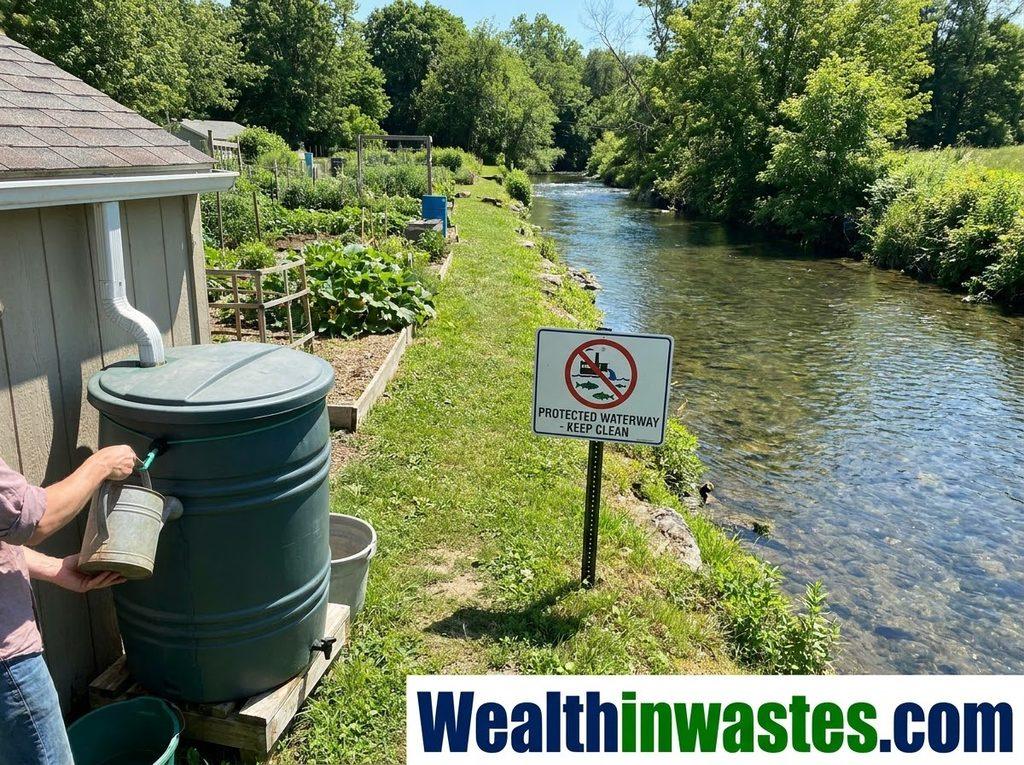
Agriculture can prevent pollution by reducing unnecessary chemical inputs, controlling erosion, protecting waterways, and using irrigation efficiently. These practices reduce nutrients, pesticides, sediments, and animal wastes entering surface and groundwater.
1. Nutrient Management: Farmers should apply fertilizers according to crop requirements, soil conditions, and appropriate timing. This reduces nutrient losses that rainfall can carry into streams, ponds, rivers, and groundwater.
2. Efficient Irrigation: Drip systems, properly maintained sprinklers, scheduling, and moisture monitoring can reduce unnecessary water application. Efficient irrigation limits runoff while conserving water needed for crop growth and productivity.
3. Soil Protection: Cover crops, mulching, contour farming, conservation tillage, and vegetation around waterways help control erosion. Reducing soil movement prevents sediment and attached nutrients from entering nearby water bodies.
4. Responsible Pesticide Use: Farmers should select appropriate products, follow recommended application rates, avoid spraying before heavy rainfall, and store chemicals safely. These measures reduce pesticide movement into streams and groundwater.
5. Manure Management: Livestock manure should be stored, handled, and applied carefully. Proper management prevents nutrient-rich waste from entering drainage channels while allowing farmers to recover valuable organic matter.
Sustainable farming becomes more effective when farmers understand the relationship between agriculture and water contamination. Current agricultural guidance also highlights agricultural waste sources and characteristics as an important pollution-control consideration.
Wastewater Treatment and Safe Discharge
Wastewater treatment removes or reduces pollutants before used water returns to rivers, lakes, soil, or coastal environments. Treatment may involve physical, chemical, biological, or combined processes depending on contamination levels.
The sources of wastewater include domestic activities, industries, commercial operations, agricultural activities, and stormwater. Understanding these sources helps determine the treatment technology and management system required.
Primary treatment usually removes coarse materials and settleable solids, while secondary treatment reduces biodegradable organic matter. Advanced processes may remove nutrients, pathogens, chemicals, and other contaminants requiring additional treatment.
Proper treatment also depends on facility operation and maintenance. Regular inspection, equipment servicing, process monitoring, sludge management, and timely repairs help treatment plants operate efficiently and prevent accidental pollutant releases.
The efficiency and maintenance of wastewater treatment units therefore remain essential because poorly maintained systems may discharge inadequately treated water into receiving environments.
Industries require additional controls because their wastewater may contain heavy metals, oils, solvents, acids, nutrients, or other substances. The industrial wastewater treatment procedure helps address these complex pollutant mixtures.
Stormwater Management Reduces Water Pollution
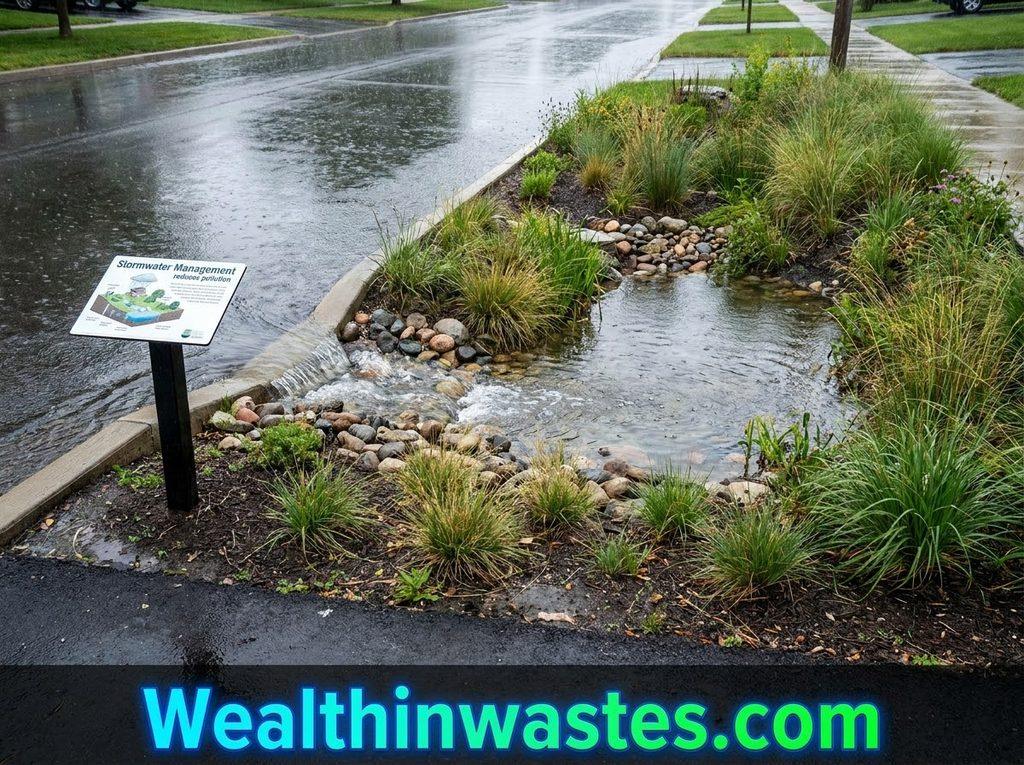
Rainfall can wash pollutants from roads, farms, construction areas, roofs, industrial sites, and waste storage areas into drainage channels and natural water bodies. Stormwater management reduces this movement before contamination spreads.
1. Vegetated Buffers: Grass strips, shrubs, and trees planted beside streams can slow runoff and trap sediments, nutrients, and other pollutants before they reach sensitive water bodies.
2. Drainage Control: Properly designed drains, channels, retention structures, and infiltration areas can control runoff speed and volume. This reduces erosion while providing opportunities for water to infiltrate safely into soil.
3. Erosion Prevention: Construction areas and exposed soils should receive appropriate protection. Mulching, temporary vegetation, sediment barriers, and controlled site drainage can prevent large quantities of soil from entering waterways.
4. Clean Surface Areas: Communities and businesses should remove litter, spilled oils, chemicals, and accumulated waste from yards, roads, and work areas. Keeping surfaces clean limits contaminants available for stormwater transport.
5. Wetland Protection: Natural wetlands can retain water, trap sediments, and support ecological processes. Protecting these areas strengthens natural pollution control while reducing flooding and improving watershed resilience.
Proper runoff control should accompany broader water resource protection measures, especially around wells, springs, rivers, ponds, drainage channels, and other sources used by communities.
Plastic Waste Reduction Protects Water Bodies
Plastic waste can enter waterways through littering, poor collection systems, illegal dumping, drainage channels, and runoff. Reducing plastic use and improving waste management therefore form important parts of prevention.
1. Reduce Single-Use Plastics: Reusable containers, bags, bottles, and food storage materials can replace many disposable products. Reducing consumption at the source decreases the quantity that requires collection and disposal.
2. Improve Waste Collection: Reliable collection services prevent discarded plastics from accumulating beside roads, drains, streams, and waterways.Communities should also provide suitable storage points that discourage uncontrolled dumping.
3. Increase Recycling: Recycling gives used plastics another purpose and reduces pressure on disposal systems. Proper separation at source can make collection, sorting, processing, and recovery more efficient.
4. Prevent Drainage Blockage: Plastics should never enter storm drains or water channels. Blocked drainage systems can worsen flooding and transport large quantities of waste into rivers and coastal environments.
The growing environmental burden of discarded plastics makes plastic waste pollution control especially important for communities located near rivers, lakes, wetlands, estuaries, and coastal areas.
Households can further reduce risks by following proper waste practices. The proper management of solid waste helps prevent rubbish from becoming a source of runoff contamination and drainage obstruction.
Water Conservation Supports Pollution Prevention
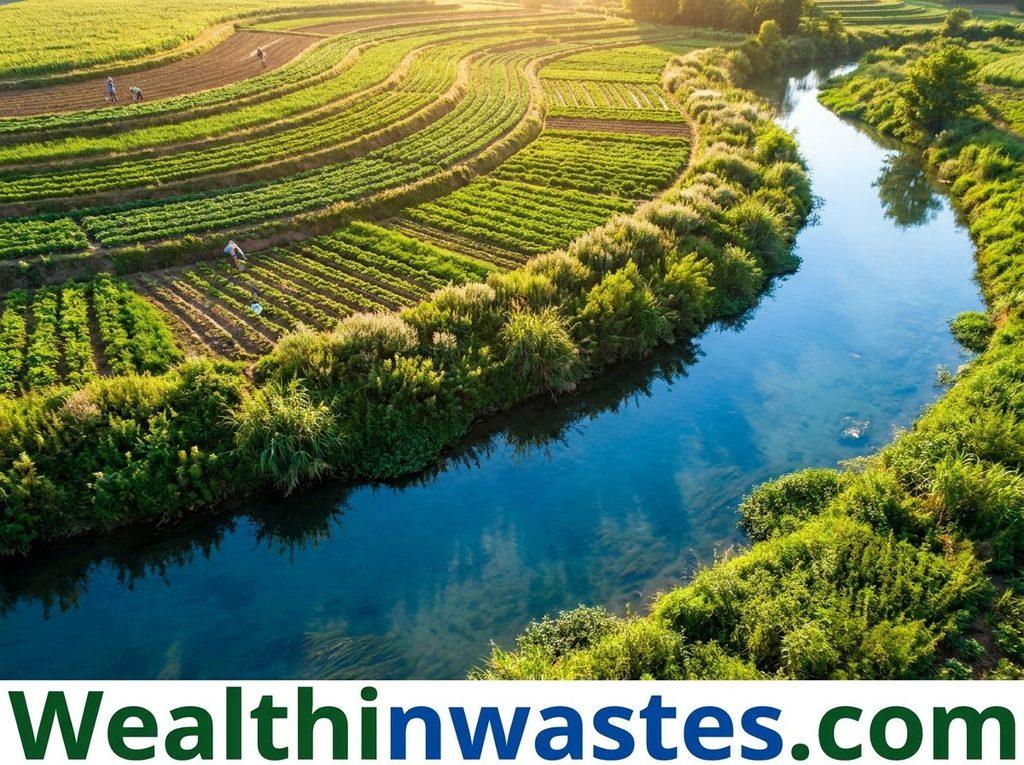
Water conservation and pollution prevention complement each other because reducing unnecessary water use can decrease wastewater volumes and lower the pressure placed on treatment systems and natural water resources.
1. Repair Leaks: Leaking taps, pipes, storage tanks, and irrigation systems waste treated or freshwater resources. Prompt repairs conserve water and reduce unnecessary demand on public and private supplies.
2. Reuse Suitable Water: Appropriately treated water can support some irrigation, industrial, landscaping, or other applications. Safe reuse reduces freshwater demand while lowering the volume requiring final environmental discharge.
3. Improve Water Efficiency: Efficient appliances, irrigation equipment, industrial processes, and household practices can reduce unnecessary consumption. Lower demand also decreases the quantity of wastewater generated by homes and businesses.
4. Protect Watersheds: Forests, wetlands, vegetation, and healthy soils support water storage, infiltration, and natural filtration. Protecting these systems helps communities maintain reliable water supplies while reducing pollution risks.
Practical water conservation measures can therefore support long-term pollution prevention by reducing wasteful consumption and encouraging responsible management of limited freshwater resources.
Effective water conservation also requires understanding treatment and supply systems. The complete guide to water waste management provides useful context for managing wastewater and protecting nearby water resources.
Read Also: Industrial Wastewater Treatment Process
National Water Quality Standards and Guidelines
1. Nigeria
In Nigeria, environmental regulation has developed through several institutions and legal frameworks. The Federal Environmental Protection Agency established water protection responsibilities through measures designed to safeguard environmental quality and public health.
Historical national water quality work considered available information from other countries and international organizations alongside Nigerian data. The resulting guidelines addressed different beneficial uses and pollution-control needs.
These uses included drinking water, recreation, aquatic life, irrigation, livestock watering, industrial activities, and protection of inland and coastal waters. Water quality criteria help establish limits for harmful substances and guide pollution control.
Nigeria also shares major transboundary rivers, including the Niger and Benue systems, making coordinated monitoring and management important for protecting water resources that cross administrative and national boundaries.
Modern water pollution prevention additionally benefits from institutional arrangements for pollution control, since effective regulation requires coordination among government authorities, industries, communities, researchers, and environmental organizations.
2.Papua New Guinea
Papua New Guinea has used water-resource and public-health regulations to establish requirements for drinking water, fisheries, recreation, and other water uses, drawing on international guidance and conditions relevant to tropical environments.
3. Vietnam
Vietnam’s water management approach emphasizes adequate water quantity and quality, control of point and non-point pollution sources, long-term resource planning, and cooperation among countries sharing major river systems.
Water quality criteria can cover pH, dissolved oxygen, nutrients, heavy metals, dissolved solids, pesticides, and other contaminants. Monitoring these parameters helps determine whether water remains suitable for intended uses.
Regular monitoring is especially important in agricultural regions where fertilizers and pesticides may enter waterways. The methods for improving drinking water quality also demonstrate why treatment must match the contaminants present.
Water quality standards should therefore support prevention rather than simply respond to pollution. Clear limits, monitoring programmes, enforcement, public participation, and periodic review can strengthen protection of water resources.
Community and Industrial Pollution Control
Water pollution prevention succeeds when communities and industries take responsibility for the waste they generate. Proper sanitation, waste collection, treatment, monitoring, and enforcement should operate as connected parts of one system.
1. Control Sewage: Domestic sewage should receive appropriate treatment before discharge. The treatment of municipal wastewater can reduce pathogens, solids, nutrients, and organic pollution affecting nearby water resources.
2. Characterize Wastewater: Facilities should understand the quantity and composition of wastewater they produce. Wastewater characteristics and flow rates provide information needed for appropriate treatment design and operational control.
3. Remove Suspended Solids: Sediment and other settleable materials should receive suitable treatment before discharge. Sedimentation processes can reduce solids loads and improve the effectiveness of subsequent treatment stages.
4. Prevent Hazardous Releases: Oils, chemicals, petroleum products, and toxic substances require careful storage, handling, and disposal. The main types of water pollutants show why source-specific controls remain necessary.
5. Manage Oil Pollution: Oil spills should be prevented through proper storage, transportation, maintenance, containment, and emergency response. Oil pollution control matters because petroleum can persist in sediments and damage aquatic ecosystems.
Communities should also understand how poor waste disposal affects water. Environmental and health effects of wastes include contamination of surface water and groundwater and increased risks to people and animals.
Poor solid waste practices can create additional pollution when rainwater carries contaminants from disposal sites into surrounding water bodies. The effects of solid waste on the environment demonstrate this connection clearly.
Finally, effective prevention depends on understanding waste sources and selecting appropriate management systems. Sources of waste and their environmental impacts can help communities identify major contamination pathways.
Summary on Effective Ways to Protect Water Pollution
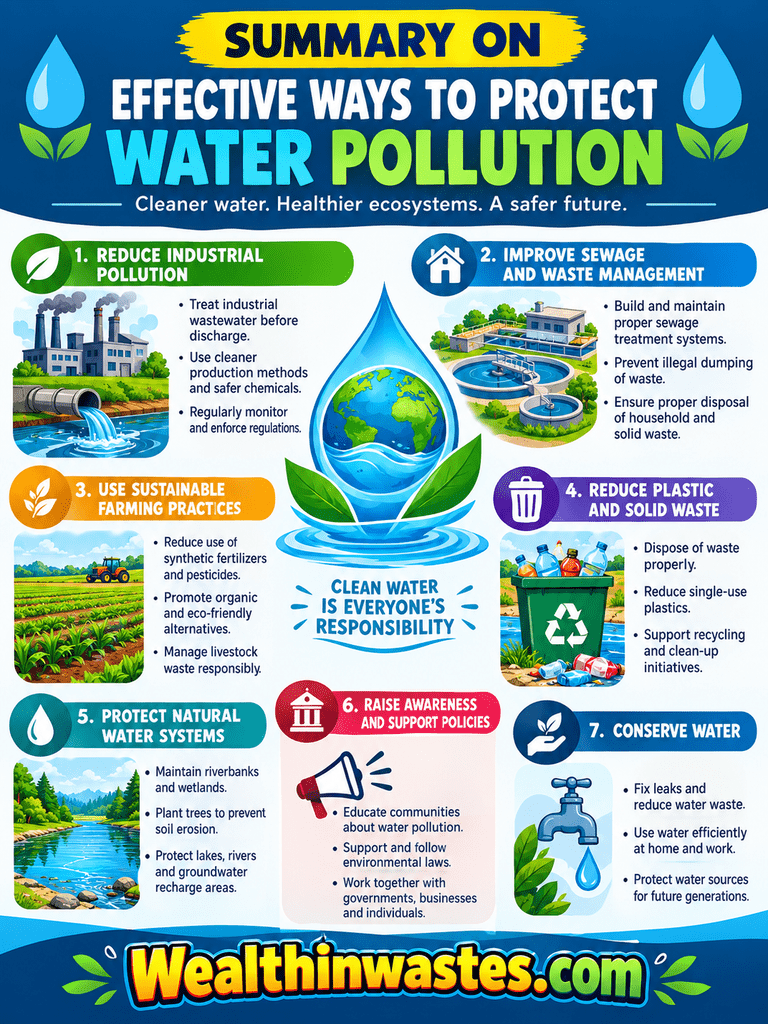
| Section | Main Idea | Why It Matters |
|---|---|---|
| Main Approaches | Prevent pollution at its source through coordinated controls. | Reduces contamination before expensive cleanup becomes necessary. |
| Sustainable Agriculture | Manage fertilizers, pesticides, irrigation, soil, and manure responsibly. | Limits agricultural runoff and protects surface and groundwater. |
| Wastewater Treatment | Treat domestic and industrial wastewater before discharge. | Reduces pathogens, solids, nutrients, chemicals, and organic pollution. |
| Stormwater Management | Control runoff, erosion, drainage, and pollutant movement. | Prevents contaminants from rapidly reaching water bodies. |
| Plastic Waste Reduction | Reduce, collect, recycle, and properly dispose of plastics. | Keeps plastic waste away from drains, rivers, lakes, and oceans. |
| Water Conservation | Reduce waste and improve efficient water use. | Protects limited freshwater resources and lowers wastewater volumes. |
| Water Quality Standards | Use monitoring, criteria, regulation, and coordinated management. | Protects water for human, agricultural, industrial, and ecological uses. |
| Community and Industry Control | Manage sewage, hazardous materials, oils, and solid waste responsibly. | Strengthens practical pollution prevention at local and industrial levels. |
Frequently Asked Questions About Water Pollution Prevention: 8 Effective Ways to Protect Water
1. What is water pollution prevention?
Water pollution prevention involves reducing, controlling, and treating contaminants before they enter rivers, lakes, groundwater, wetlands, and other water bodies.
2. Why is water pollution prevention important?
It protects human health, aquatic ecosystems, agriculture, fisheries, drinking water supplies, biodiversity, and the economic activities that depend on clean water.
3. How can farmers prevent water pollution?
Farmers can manage fertilizers and pesticides carefully, control erosion, protect waterways, improve irrigation efficiency, and handle livestock manure responsibly.
4. How does wastewater treatment prevent pollution?
Treatment removes or reduces harmful solids, organic matter, nutrients, pathogens, chemicals, and other pollutants before wastewater reaches the environment.
5. What role does plastic waste reduction play?
Reducing plastic use, improving collection, recycling materials, and preventing litter from entering drainage systems helps stop plastic pollution in rivers and oceans.
6. How does stormwater cause water pollution?
Stormwater can collect oil, chemicals, sediments, fertilizers, litter, and other contaminants from land surfaces and transport them directly into waterways.
7. What is the role of water quality standards?
Water quality standards establish acceptable conditions or pollutant limits that help authorities monitor water, protect public health, regulate discharges, and manage different water uses.
8. Can individuals help prevent water pollution?
Yes. Individuals can conserve water, avoid littering, dispose of chemicals properly, maintain sanitation facilities, reduce plastic waste, and prevent oils or household waste from entering drains.
Do you have any questions, suggestions, or contributions? If so, please feel free to use the comment box below to share your thoughts. We also encourage you to kindly share this information with others who might benefit from it. Since we can’t reach everyone at once, we truly appreciate your help in spreading the word. Thank you very much for your support and for sharing!
Read Also: Water Pollution from Agricultural Runoff