


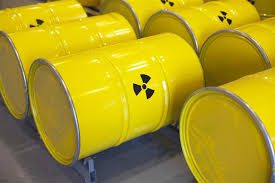
Radioactive materials occur naturally in the environment and also arise from human activities involving medicine, industry, research, nuclear energy, and weapons. Their effects depend greatly on the type, dose, and duration of exposure.
Public concern about radiation increased after major events involving nuclear weapons and power plant accidents. Hiroshima, Nagasaki, Three Mile Island, Chernobyl, and Fukushima remain closely associated with the dangers of radioactive exposure.
However, radiation exposure does not occur only during catastrophic events. People encounter natural radiation from the Earth, atmosphere, food, and cosmic sources, while controlled applications also occur in healthcare and industry.
Scientists have therefore spent more than a century studying how ionizing radiation affects living organisms. Research involving exposed populations, medical patients, workers, laboratory animals, and cells has improved understanding of radiation risks.
The effects of radioactive materials vary widely. Very high doses can damage tissues quickly, while lower exposures may increase the probability of developing certain diseases years or decades afterward, particularly some cancers.
Understanding these effects helps governments, industries, healthcare professionals, workers, and communities develop appropriate protection measures. It also explains why radioactive materials require careful handling, monitoring, storage, transportation, and responsible disposal.
What Are Effects of Radioactive Materials?
The effects of radioactive materials occur when ionizing radiation transfers enough energy to living tissues to alter molecules, damage cells, disrupt biological processes, or destroy cellular structures within exposed organisms.
Radiation can damage DNA directly or indirectly through chemically reactive molecules produced during irradiation. Cells often repair such damage, but severe or incorrectly repaired changes can cause permanent mutations and biological dysfunction.
The seriousness of radiation effects depends on several factors, including radiation type, absorbed dose, exposure duration, exposed body region, age, tissue sensitivity, and whether radioactive substances enter the body.
For practical environmental management, understanding radioactive contamination and other forms of pollution helps explain how harmful substances can affect air, water, soil, food, ecosystems, and public health.
Radioactive materials can produce external exposure when radiation reaches the body from outside. Internal exposure occurs when radioactive substances enter through breathing, eating, drinking, wounds, or other routes of incorporation.
The body does not respond equally to every radioactive substance. Some radionuclides concentrate in particular tissues, meaning the thyroid, bones, lungs, or other organs can receive substantially different doses after internal contamination.
Effective environmental management therefore requires reliable monitoring and appropriate control systems. Institutional arrangements for pollution control can help authorities coordinate monitoring, regulation, enforcement, emergency response, and public protection.
People working around radiation also need appropriate protection programs. Good waste management practices can reduce unnecessary environmental exposure when contaminated materials require controlled handling and disposal.
Read Also: Complete List of Recyclable Plastics
Effects on Human Cells and Tissues

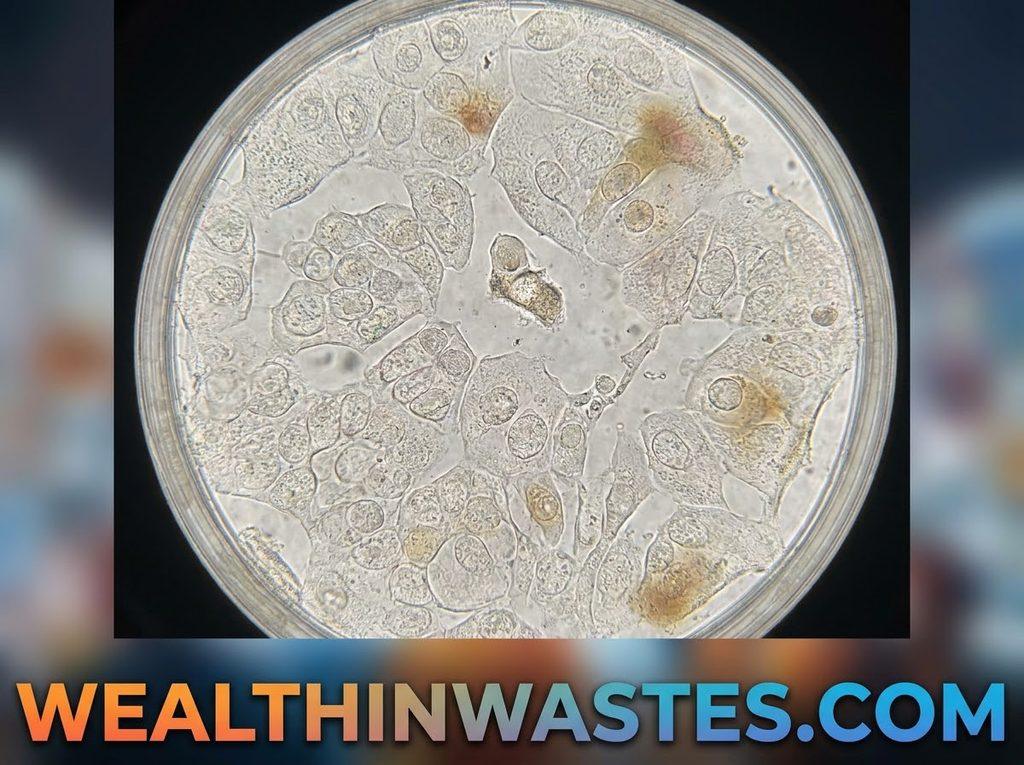
Radiation can affect living cells by producing energy changes that alter cellular molecules. DNA represents one of the most important targets because genetic material controls cell growth, repair, reproduction, and normal function.
When radiation causes extensive cellular injury, affected cells may stop functioning or die. If enough cells within an organ suffer damage, the organ may lose part of its normal ability to perform essential physiological functions.
1. DNA Damage: Ionizing radiation can break DNA strands or modify important cellular molecules.Cells may repair these changes successfully, incorrectly repair them, or fail to survive when the damage becomes extensive.
2. Cell Death: Large numbers of damaged cells can cause tissue injury. Rapidly dividing tissues, including bone marrow, intestinal lining, reproductive tissues, and developing tissues, can show substantial sensitivity under significant exposure.
3. Mutation: Surviving cells may carry permanent genetic alterations when repair mechanisms do not restore their original structure. Such mutations can contribute to abnormal cell behavior, although not every mutation causes disease.
4. Organ Dysfunction: Severe exposure can damage enough cells within specific organs to produce functional impairment. The resulting symptoms depend upon the dose received and the particular organs or tissues exposed.
These cellular mechanisms also explain why controlled radiation has medical applications. Radiotherapy deliberately damages cancer cells while treatment teams carefully limit exposure to surrounding healthy tissues through planning and dose distribution.
Radiotherapy illustrates the careful balance between radiation damage and medical benefit. Treatment teams divide many cancer treatments into multiple fractions, allowing healthy tissues greater recovery while repeatedly exposing targeted malignant cells.
Proper waste control remains important wherever radioactive or hazardous materials enter broader waste streams. Understanding waste sources and types helps organizations identify materials requiring specialized management rather than ordinary disposal.
Early Health Effects of Radiation Exposure
Early health effects usually appear after substantial exposure over a relatively short period. They occur when radiation damages enough cells to disrupt tissues before normal biological repair can adequately restore their function.
The severity of early effects generally increases as absorbed dose rises after relevant thresholds are exceeded. Common manifestations can include skin injury, hair loss, temporary or permanent fertility impairment, and acute radiation syndrome.
1. Acute Radiation Syndrome: A sufficiently high whole-body dose can produce nausea, vomiting, diarrhoea, abdominal discomfort, fatigue, fever, headache, dehydration, weakness, and changes in blood pressure and blood cell production.
2. Skin Injury: Significant localized exposure can damage skin cells, producing redness, irritation, swelling, burns, tissue injury, or delayed ulceration. The severity depends on dose, exposure pattern, radiation type, and affected area.
3. Bone Marrow Damage: Radiation can reduce blood-forming cells within bone marrow. Severe damage may cause infection, bleeding, weakness, and other complications because the body cannot produce adequate blood cells.
4. Gastrointestinal Injury: High doses can seriously damage rapidly dividing intestinal cells. Severe gastrointestinal injury may cause persistent vomiting, diarrhoea, dehydration, abdominal symptoms, infection, and potentially life-threatening complications.
Early radiation injury requires prompt professional assessment because symptoms can develop in stages. Specialized medical teams may evaluate exposure history, physical findings, blood counts, organ function, and other clinical indicators.
Hazardous material management principles can reduce accidental exposures. Waste management hierarchy principles emphasize prevention, appropriate treatment, safe handling, and environmentally responsible final disposal.
Facilities handling radioactive materials should also maintain strong emergency procedures. Recommended waste disposal methods demonstrate why different waste categories require different handling strategies and appropriate disposal technologies.
Delayed Health Effects and Cancer Risk
Delayed health effects can occur years or decades after radiation exposure. Unlike acute injuries, these effects may remain unnoticed for long periods before disease becomes clinically recognizable in an exposed individual.
The probability of developing some radiation-related diseases generally increases with dose, although individual outcomes vary. Cancer remains the most important established long-term health concern associated with ionizing radiation exposure.
1. Cancer Development: Radiation can induce DNA changes that contribute to malignant transformation. However, cancer usually results from several biological events, and radiation-induced cancers cannot ordinarily be distinguished from cancers caused otherwise.
2. Leukaemia: Radiation exposure can increase the risk of leukaemia, a cancer involving blood-forming tissues. The disease may develop relatively sooner than many radiation-associated solid tumours after substantial exposure.
3. Solid Tumours: Radiation can increase the risk of several solid cancers, including cancers affecting tissues such as the thyroid, breast, lung, stomach, and other organs.
4. Latency Period: Some radiation-associated cancers can appear several years after exposure, while others may emerge decades later. This delay makes long-term medical follow-up important for significantly exposed populations.
Large epidemiological studies have helped researchers estimate long-term radiation risks by comparing disease occurrence among exposed populations with expected patterns in populations receiving different exposure levels.
Environmental pollution can create additional hazards when harmful substances enter natural systems. Water pollution and contamination pathways provide useful context for understanding how contaminants can move through aquatic environments.
Similarly, contaminated industrial materials require careful control. Industrial waste impacts on the environment demonstrate how poorly managed hazardous materials can create interconnected health and ecological problems.
Read Also: Industrial Wastewater Treatment Process
Other Health Effects of Radioactive Materials

Radiation can affect more than cancer risk. Depending on dose and exposure conditions, significant irradiation may influence cardiovascular tissues, the immune system, the eyes, reproductive organs, and other sensitive biological systems.
High radiation doses involving the heart can increase cardiovascular disease risk, particularly when substantial cardiac exposure occurs during medical treatment. Modern treatment planning aims to reduce unnecessary radiation reaching healthy heart tissue.
1. Cardiovascular Effects: High doses affecting the heart and surrounding tissues can contribute to later cardiovascular problems. Evidence concerning low-level exposure remains less certain than evidence involving substantial therapeutic or accidental doses.
2. Cataracts: Significant radiation exposure can injure the lens of the eye. Cataracts may develop after substantial exposure, and occupational protection remains important for workers who could experience repeated radiation doses.
3. Immune System Effects: High radiation doses can reduce lymphocyte numbers and impair immune function because blood-forming tissues are especially sensitive. Clinicians may use blood-cell changes when evaluating significant acute exposure.
4. Reproductive Effects: Radiation can damage reproductive cells and reproductive tissues. Significant exposure may impair fertility temporarily or permanently, depending upon dose, exposed organs, biological sex, age, and recovery capacity.
Safe healthcare waste handling also matters because medical facilities can generate materials requiring specialized management. Biomedical special waste management highlights the importance of identifying hazardous materials before disposal.
Public health protection also depends on sound sanitation and environmental controls. Human health and environmental concerns show why unsafe material handling can create risks for workers, communities, and ecosystems.
Effects on Children and Unborn Babies
Children can respond differently to radiation because their bodies remain smaller and their tissues continue growing. Developing organs and rapidly dividing cells can make particular childhood exposures especially important for protection.
For the same external exposure, a child may receive a different organ dose from an adult because of body size, anatomy, physiology, and the location of sensitive tissues relative to the radiation source.
1. Childhood Cancer Risk: Children exposed to substantial radiation can face increased lifetime risks of certain cancers. Their longer remaining lifespan also provides more time for delayed radiation-associated diseases to develop.
2. Thyroid Exposure: Radioactive iodine can concentrate in the thyroid after internal intake. Children, particularly younger children, can receive comparatively higher thyroid doses from the same amount of radioactive iodine.
3. Developing Tissues: Childhood tissues undergo growth and differentiation, making developmental stage important when evaluating radiation exposure. Protection measures should therefore minimize unnecessary exposure whenever practical.
4. Long-Term Monitoring: Children who experience significant radiation exposure may require appropriate medical follow-up. Healthcare professionals can consider exposure circumstances, estimated dose, affected organs, age, and potential long-term consequences.
An embryo or fetus can receive radiation through external exposure or through radioactive substances taken into the mother’s body. The developing organism remains particularly sensitive during several stages of development.
5. Fetal Development: Depending upon gestational stage and dose, significant fetal exposure can contribute to developmental effects, growth impairment, nervous-system injury, or increased childhood cancer risk.
6. Maternal Protection: Protecting pregnant workers and patients requires individualized professional assessment. Exposure circumstances differ greatly, so radiation safety specialists should evaluate the source, dose, timing, shielding, and medical necessity.
Environmental contaminants can also travel through food and water. Water quality management principles emphasize pollution prevention and control strategies that help reduce the movement of hazardous substances through water systems.
Families and communities should never handle suspected radioactive materials casually. Professional authorities should assess unusual sources, contaminated objects, accident scenes, and potentially affected food, soil, or water before reuse or consumption.
Effects on Animals and Plants

Radiation can affect animals and plants as well as humans. Biological sensitivity varies greatly between species, developmental stages, tissues, exposure pathways, and radiation doses received over particular periods.
At the population level, reproductive capacity, survival, mutation rates, and changes in abundance can provide important indicators of ecological radiation effects. Individual animals may respond differently from entire populations.
1. Animal Health: Mammals are generally among the more radiation-sensitive animal groups. High exposure can cause tissue injury, reproductive impairment, reduced survival, developmental problems, and death depending on dose and exposure conditions.
2. Reproductive Effects: Radiation can alter reproductive cells and processes. Reduced fertility or fewer offspring may reveal ecological effects before widespread mortality occurs, making reproduction an important indicator in environmental radiation studies.
3. Plant Responses: Plants can tolerate varied radiation levels depending upon species, size, developmental stage, and exposure pattern. High acute doses can damage tissues, reduce growth, impair reproduction, or cause mortality.
4.Population Effects: Ecological significance depends on whether radiation changes reproduction, survival, genetic characteristics, or population structure sufficiently to affect long-term ecosystem stability and species persistence.
Radiation is only one category of environmental stress. Pollution-related ecological losses illustrate how contamination can also affect fisheries, livestock, soil productivity, and other biological resources.
Soil contamination deserves particular attention because persistent contaminants can remain within environmental systems. Waste recycling and disposal principles demonstrate why material handling should prevent contaminants from accumulating within natural ecosystems.
Protecting ecosystems also requires reliable air-quality control. Air quality management strategies provide a broader environmental framework for controlling pollutants released into the atmosphere.
Environmental Management of Radioactive Materials
Radioactive materials require stronger management controls than ordinary household waste because their hazards can persist while some radionuclides continue emitting radiation over periods determined by their physical half-lives.
1. Source Control: Facilities should prevent unnecessary releases by maintaining equipment, following operating procedures, monitoring radiation levels, restricting access, and applying appropriate engineering controls wherever radioactive materials are present.
2. Safe Storage: Radioactive materials require secure, clearly identified storage areas that prevent unauthorized access, leakage, loss, contamination, and unnecessary exposure to workers or members of the public.
3. Controlled Transportation: Transportation must use appropriate packaging, documentation, labeling, monitoring, emergency procedures, and trained personnel. These measures reduce the likelihood and consequences of accidents involving radioactive materials.
4. Specialized Disposal: Radioactive waste should not enter ordinary municipal waste systems unless competent authorities specifically determine that its radioactivity meets applicable release or disposal requirements.
General hazardous waste practices can provide useful supporting principles, but radioactive materials require additional controls based on radiation type, activity, half-life, physical form, and applicable regulatory requirements.
Effective waste systems also depend on correct segregation. Waste recycling guidance shows why separating materials early can improve downstream management and prevent unsuitable materials from entering ordinary processing systems.
Electronic equipment can contain hazardous components that require separate handling. Proper electronic waste disposal guidance reinforces the broader principle that specialized waste streams should receive appropriate treatment.
Responsible authorities should also maintain emergency plans for accidental releases. Monitoring, isolation, contamination assessment, public communication, protective actions, and professional cleanup can substantially reduce unnecessary exposure following serious incidents.
Organizations can strengthen their overall environmental programs through effective waste management strategies that assign responsibilities, establish procedures, monitor performance, and integrate prevention with emergency preparedness.
Long-Term Protection From Radioactive Exposure
Long-term protection depends on reducing unnecessary radiation exposure while preserving the legitimate benefits of radiation in medicine, research, industry, agriculture, and other fields where controlled applications provide useful outcomes.
1. Minimize Exposure: Radiation protection commonly emphasizes reducing unnecessary dose through shorter exposure times, greater distance from sources, suitable shielding, controlled access, and careful work practices.
2.Monitor Radiation: Personal dosimeters, workplace surveys, environmental monitoring, and source tracking can help identify exposures and support corrective actions before unsafe conditions persist.
3. Educate Workers: Workers should understand radiation hazards, operating procedures, contamination controls, emergency responses, and the correct use of protective equipment before handling radioactive sources or entering controlled areas.
4. Prevent Environmental Release: Preventing contamination remains preferable to expensive cleanup. Careful storage, containment, monitoring, maintenance, and responsible disposal can reduce radioactive materials entering soil, water, air, food chains, or inhabited areas.
Waste reduction principles can complement these efforts because minimizing unnecessary material generation simplifies handling and reduces opportunities for accidental contamination. Proper waste reduction practices provide useful prevention-oriented guidance.
Organizations can also learn from broader environmental sustainability approaches. Environmental management practices encourage prevention, resource responsibility, pollution reduction, and stronger environmental awareness.
Recovering useful resources from safe waste streams can support sustainability, although radioactive materials must never be recycled through ordinary systems without appropriate radiological assessment and regulatory approval.
Similarly, comprehensive waste management planning can help organizations coordinate storage, collection, treatment, disposal, monitoring, worker protection, documentation, and regulatory compliance.
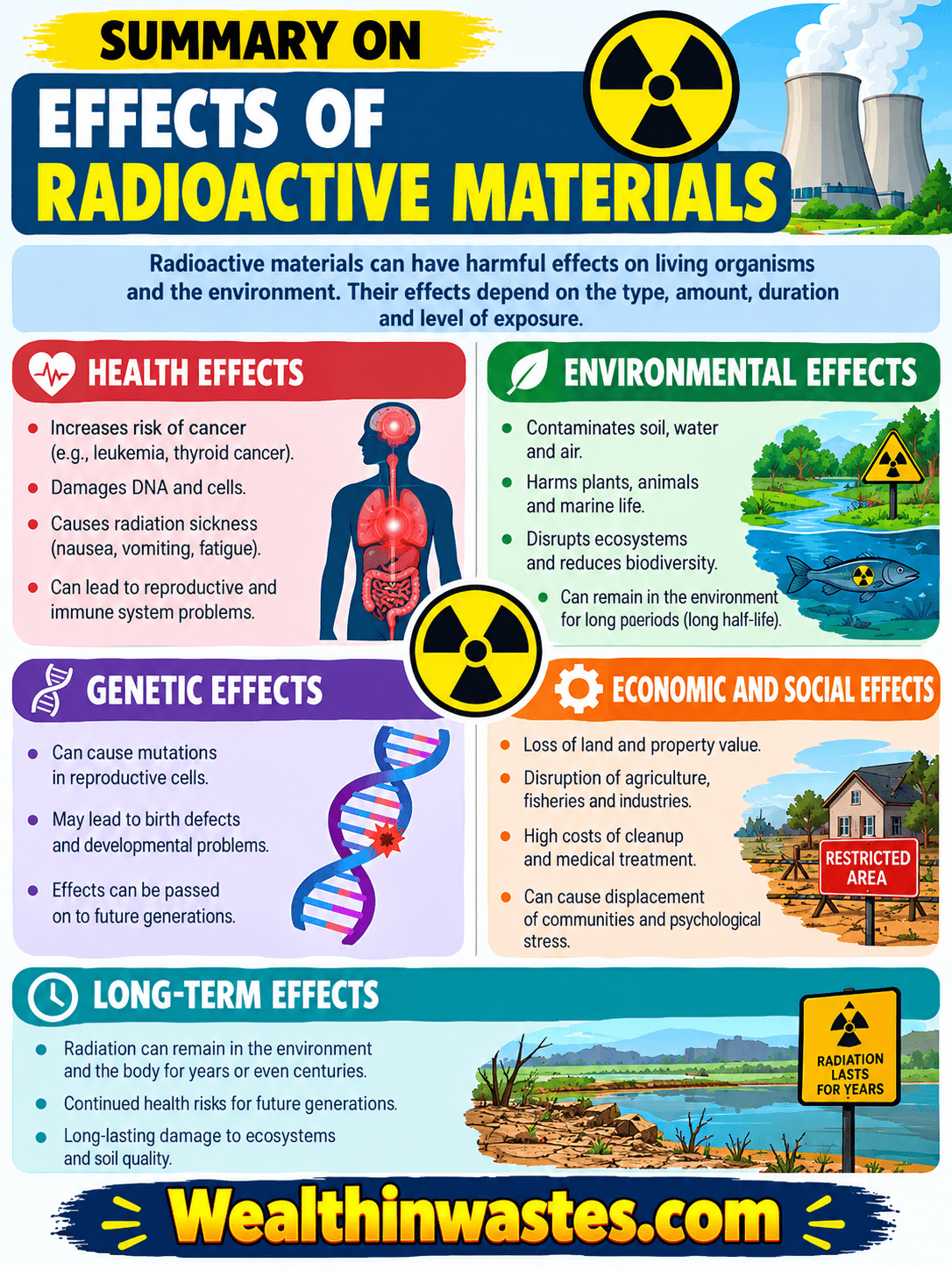
Summary on Effects of Radioactive Materials
| Topic | Summary |
|---|---|
| Cellular Effects | Radiation can damage DNA, kill cells, cause mutations, and impair tissue function. |
| Early Effects | High short-term exposure can cause acute radiation syndrome, skin injury, bone marrow damage, and gastrointestinal injury. |
| Delayed Effects | Radiation can increase the probability of certain cancers and other long-term health effects. |
| Children | Children may face greater sensitivity to some radiation exposures because of developing tissues, body size, and longer remaining lifespan. |
| Fetus | Developing embryos and fetuses can experience serious effects depending on exposure dose and developmental stage. |
| Animals | Radiation can affect animal survival, reproduction, development, and population characteristics. |
| Plants | High exposure can affect plant growth, reproduction, tissues, and survival, although sensitivity varies among species. |
| Protection | Source control, monitoring, shielding, safe storage, controlled transport, and specialized disposal reduce unnecessary exposure. |
Frequently Asked Questions About Effects of Radioactive Materials: Health and Environmental Risks
1. What are the main effects of radioactive materials?
The main effects include cellular damage, tissue injury, acute radiation sickness, increased cancer risk, reproductive effects, developmental effects, and ecological changes after sufficiently high exposure.
2. Can radioactive materials cause cancer?
Yes. Ionizing radiation can damage DNA and increase the probability of developing certain cancers, although individual cancer outcomes depend on dose, age, tissues exposed, and other factors.
3. Are children more sensitive to radiation?
Children can be more sensitive to some radiation effects because their tissues and organs are developing and they have more remaining years during which delayed health effects could appear.
4. Can radiation affect an unborn baby?
Yes. Significant fetal exposure can affect development depending on dose and pregnancy stage, potentially increasing risks of developmental problems or later health effects.
5. Can radioactive materials affect animals and plants?
Yes.Sufficient exposure can affect animal survival, fertility, development, plant growth, reproduction, and population characteristics, although sensitivity differs considerably among species.
6. What determines radiation damage?
Important factors include radiation type, absorbed dose, exposure duration, exposed organs, distance, shielding, radioactive substance, exposure pathway, and biological characteristics of the exposed organism.
7. Why is radiation used to treat cancer?
Radiation can damage cancer-cell DNA, so carefully planned radiotherapy can destroy malignant cells while limiting exposure to surrounding healthy tissues.
8. How can radioactive exposure be reduced?
Exposure can be reduced by controlling radioactive sources, increasing distance, using appropriate shielding, limiting exposure time, monitoring radiation levels, and following professional safety procedures.
9. Should radioactive waste enter ordinary waste bins?
No. Radioactive waste requires assessment and management according to its activity, characteristics, and applicable regulatory requirements before treatment, storage, release, or disposal.
10. Do low radiation doses always cause immediate illness?
No. Low doses generally do not produce acute radiation sickness, although radiation protection recognizes that exposure can contribute to long-term stochastic risks such as cancer.
Do you have any questions, suggestions, or contributions? If so, please feel free to use the comment box below to share your thoughts. We also encourage you to kindly share this information with others who might benefit from it. Since we can’t reach everyone at once, we truly appreciate your help in spreading the word. Thank you very much for your support and for sharing!
Read Also: All You Need To Know About Flowers