


Take a moment to picture your daily routine. From cooking meals to cleaning up after a long day, waste is an unavoidable part of life. Yet, there is one simple tool that quietly keeps everything under control, protecting your environment, your health, and your comfort without demanding attention. That tool is the garbage bag.
At first glance, it may seem like just another household item, something easily replaceable and often overlooked. But when you dig deeper, you realize that garbage bags are far more than disposable liners. They are essential components of waste management, playing a major role in maintaining hygiene, preventing disease, and supporting environmental sustainability.
From homes and offices to hospitals and construction sites, garbage bags serve as the first line of defense against disorder and contamination. Their evolution over the decades has transformed them into durable, versatile, and even eco-conscious tools designed to meet modern demands.
This article takes a deep dive into the world of garbage bags, exploring their origins, benefits, types, environmental impact, and the innovations shaping their future. By the end, you will never look at a garbage bag the same way again.
Table Summary on Reasons Why Garbage Bags Matter More Than You Think
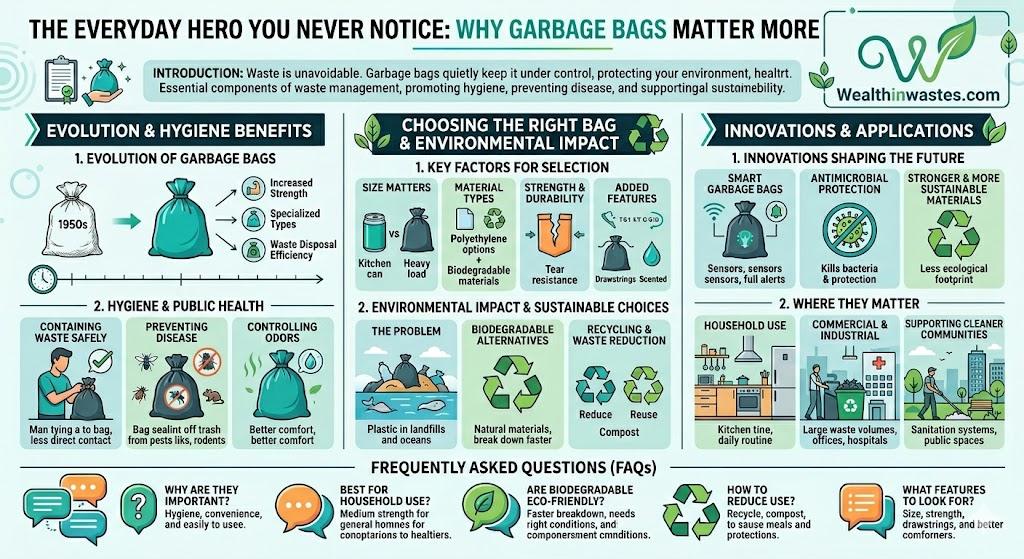
| Aspect | Key Insight |
|---|---|
| Purpose | Essential for safe and efficient waste collection |
| Materials | Includes plastic, biodegradable, and recycled options |
| Benefits | Improves hygiene, convenience, and organization |
| Types | Kitchen, outdoor, recycling, heavy duty |
| Environmental Impact | Can be reduced through eco-friendly choices |
| Innovations | Smart bags, antimicrobial features |
| Usage Areas | Homes, industries, healthcare facilities |
A. Understanding the Evolution of Garbage Bags
1. From Simple Sacks to Smart Solutions
Garbage bags were not always the advanced products we see today. Their journey began in the 1950s when they were introduced as basic plastic sacks designed solely for holding waste. Back then, their function was straightforward: contain trash and prevent spills.
Over time, as human lifestyles evolved and waste production increased, the demand for more efficient solutions led to innovation. Today’s garbage bags are designed with improved materials, enhanced strength, and specialized features tailored to different uses.
Modern garbage bags now support waste disposal efficiency, offering leak resistance, odor control, and flexibility. Some even come with advanced sealing mechanisms that make handling waste cleaner and easier.
2. Expansion into Specialized Types
As needs became more complex, manufacturers began producing different types of garbage bags, each suited for specific purposes. These include:
- Kitchen garbage bags for everyday household waste
- Outdoor bags for yard debris and bulk trash
- Recycling bags for sorting recyclable materials
- Heavy duty contractor bags for construction waste
This diversification ensures that waste is handled appropriately, improving overall waste sorting and disposal practices.
Read Also: The Benefits of Government Waste Recycling Programs
B. Why Garbage Bags Are Essential for Hygiene and Public Health
1. Containing Waste Safely
One of the most important roles of garbage bags is containment. Waste, when left exposed, can quickly become a breeding ground for harmful microorganisms. Garbage bags act as a barrier, preventing direct contact with trash and reducing exposure to harmful substances.
This containment plays a crucial role in public health, especially in densely populated areas where waste accumulation can lead to serious health risks.
2. Preventing the Spread of Diseases
Unmanaged waste attracts pests such as rodents, flies, and cockroaches. These pests are known carriers of diseases and can contaminate food and living spaces.
Proper use of garbage bags helps eliminate this risk by sealing off waste and making it less accessible to pests. This simple act significantly reduces the spread of infections and contributes to a healthier environment.
3. Controlling Odors and Improving Comfort
Modern garbage bags often come with odor control technology. Whether through scented materials or odor-locking layers, these features help maintain a fresh environment.
This is particularly beneficial in homes, offices, and public spaces where cleanliness and comfort are essential. The role of garbage bags in odor control cannot be underestimated, especially in warmer climates where waste decomposes quickly.
C. Choosing the Right Garbage Bag for Your Needs
1. Size Matters More Than You Think
Selecting the correct size is not just about convenience; it directly impacts efficiency. A bag that is too small may tear under pressure, while one that is too large may lead to unnecessary waste.
Choosing the right size ensures optimal use and supports effective household waste management.
2. Understanding Material Types
Garbage bags are made from different materials, each with unique properties:
- Low Density Polyethylene offers flexibility and tear resistance
- High Density Polyethylene provides strength and puncture resistance
- Biodegradable materials break down more easily in the environment
Your choice should depend on your waste type and your commitment to eco friendly products.
3. Evaluating Strength and Durability
Not all garbage bags are created equal. Lightweight bags may work for paper waste, but heavy or sharp objects require reinforced options.
Using the right strength prevents leaks and spills, ensuring a cleaner and safer waste disposal process.
4. Added Features That Make Life Easier
Today’s garbage bags come with features designed for convenience:
- Drawstrings for easy tying and carrying
- Scented options for odor control
- Antimicrobial layers for improved hygiene
These enhancements contribute to better waste handling and overall user experience.
D. Environmental Impact and Sustainable Choices
1. The Problem with Traditional Plastic Bags
Traditional plastic garbage bags can take hundreds of years to decompose. This long lifespan contributes significantly to environmental pollution, especially in landfills and oceans.
Understanding this impact is the first step toward making more responsible choices in environmental sustainability.
2. The Rise of Biodegradable Alternatives
Biodegradable garbage bags are designed to break down more quickly, reducing their long-term impact. Many are made from natural materials such as cornstarch.
While not a perfect solution, they represent progress toward reducing plastic waste and promoting greener habits.
3. Recycling and Waste Reduction Practices
Another effective approach is reducing the number of garbage bags used. This can be achieved through:
- Recycling materials whenever possible
- Composting organic waste
- Reusing bags where appropriate
These practices support a more sustainable lifestyle and contribute to responsible waste reduction.
Read Also: Exploring the Best Garbage Disposal Options
E. Innovations Shaping the Future of Garbage Bags
1. Smart Garbage Bags
Technology is now entering even the simplest aspects of our lives. Smart garbage bags equipped with sensors can notify users when they are full.
This innovation improves efficiency and prevents overfilling, making waste management smarter and more convenient.
2. Antimicrobial Protection
Some modern garbage bags are designed with antimicrobial properties that inhibit the growth of bacteria. This added layer of protection enhances hygiene and reduces health risks.
3. Stronger and More Sustainable Materials
Manufacturers are continuously developing new materials that combine strength with environmental responsibility. These advancements ensure that garbage bags remain effective while minimizing their ecological footprint.
F. The Role of Garbage Bags in Everyday Life and Industry
1. Household Use
In homes, garbage bags simplify daily routines. From kitchen waste to cleaning activities, they make disposal quick and efficient.
2. Commercial and Industrial Importance
Businesses, hospitals, and factories rely heavily on garbage bags to manage large volumes of waste. Their durability and reliability make them indispensable in maintaining operational efficiency.
3. Supporting Cleaner Communities
At a broader level, garbage bags contribute to cleaner streets, safer public spaces, and improved community health. Their role in sanitation systems is vital for modern living.
Frequently Asked Questions on Reasons Why Garbage Bags Matter More Than You Think
1. Why are garbage bags important in daily life?
Garbage bags are essential because they help contain waste, prevent the spread of germs, control odors, and make disposal more convenient. Without them, managing everyday waste would be messy, unsafe, and inefficient.
2. What type of garbage bag is best for household use?
The best type depends on your needs. For general household waste, medium strength kitchen bags work well. For heavier waste, stronger or heavy duty options are more suitable to prevent tearing and leaks.
3. Are biodegradable garbage bags truly eco friendly?
Biodegradable garbage bags are more environmentally friendly than traditional plastic bags because they break down faster. However, their effectiveness depends on proper disposal conditions, such as composting environments.
4. How can I reduce my use of garbage bags?
You can reduce usage by recycling, composting organic waste, and minimizing unnecessary packaging. These practices help lower the overall demand for garbage bags.
5. What features should I look for when buying garbage bags?
Important features include size, strength, material, and added conveniences like drawstrings or odor control. Choosing the right combination ensures efficient and hygienic waste disposal.
Garbage bags may seem like a small part of daily life, but their impact is enormous. From protecting your health to supporting environmental efforts, they are silent contributors to a cleaner and more organized world. Making informed choices about the type and use of garbage bags can significantly improve both your lifestyle and the environment around you.
Do you have any questions, suggestions, or contributions? If so, please feel free to use the comment box below to share your thoughts. We also encourage you to kindly share this information with others who might benefit from it. Since we can’t reach everyone at once, we truly appreciate your help in spreading the word. Thank you very much for your support and for sharing!
Read Also: Compost Bin DIY: A Simple Guide to Sustainable Living