


The transport of pesticides in surface waters describes how these chemicals move through streams, rivers, ponds, lakes, reservoirs, and connected drainage networks after they leave their original agricultural or urban application sites.
Pesticide movement does not follow one simple pathway because each compound interacts with flowing water, suspended particles, dissolved organic matter, sediments, sunlight, microorganisms, and aquatic organisms in several different ways.
Some pesticides travel mainly in the dissolved phase and move with water currents, while others attach strongly to soil, organic matter, clay, or suspended particles and move with transported material.
Rainfall, irrigation return flow, erosion, drainage, spray drift, and accidental releases can introduce pesticides into surface waters. Their concentration, distribution, and persistence then depend on environmental conditions and chemical properties.
Understanding these pathways helps environmental managers, farmers, fisheries operators, water utilities, and regulators predict contamination risks, select monitoring points, and reduce pesticide movement from treated land into receiving waters and sensitive aquatic habitats.
How Pesticides Enter Surface Waters
Several pathways can move pesticides into rivers and other receiving waters. Understanding nonpoint pathways of water pollution helps identify where rainfall, drainage, erosion, and dispersed agricultural activities contribute contaminants.
Runoff provides one of the most important pathways because water moving across a treated surface can dissolve pesticide residues or carry contaminated soil particles into nearby drains, streams, ponds, and rivers.
Agricultural fields can also contribute through agricultural runoff as a pollution source, especially where heavy rainfall follows pesticide application and carries dissolved residues or eroded soil toward connected surface waters.
Erosion adds another pathway. When rainfall detaches soil, sediment-bound pesticides can move with the eroded material. Strong storms can therefore produce substantial contaminant transport even when pesticide water solubility remains relatively low.
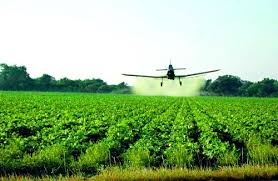
Spray drift can also contribute when droplets or fine particles travel outside the intended treatment area and enter nearby water directly. Good application practices reduce this pathway by controlling weather exposure and equipment use.
Drainage networks connect agricultural fields and urban areas to receiving waters. Water leaving these pathways can carry pesticide residues into larger streams, reservoirs, wetlands, and estuaries, creating downstream exposure beyond the original site.
Groundwater can also contribute to surface-water contamination when dissolved pesticides move below the land surface and later discharge into streams, springs, or other connected waters. This pathway may continue after surface runoff ends.
Because several pathways can operate together, pesticide concentrations often vary strongly across time and location. Monitoring after rainfall, during changing flows, and near likely entry points can improve understanding of transport.
Read Also: Sampling and Sampling Equipment for Water, Soil and Sediment
Pesticide Transport in Dissolved Water

The dissolved phase includes pesticide molecules distributed through the water itself rather than attached to a larger solid. These molecules generally respond to current speed, turbulence, mixing, and overall water movement.
1. Water Flow: Dissolved pesticides generally travel with moving water, making stream discharge and current velocity important controls. Faster flow can carry contaminants farther before degradation, dilution, or other processes reduce concentrations.
2. Dispersion: Water does not move as a perfectly uniform block. Turbulence and differences in current speed spread pesticide concentrations across the water column and along the downstream channel over distance.
3. Dissolved Organic Matter: Some pesticides associate with dissolved organic carbon or colloidal material while remaining mobile.This association can alter apparent transport without causing immediate settling like larger particles would.
4. Solubility: Highly soluble pesticides usually remain more available in water and can move readily during runoff. Low-solubility compounds more often partition toward sediments, organic matter, or suspended solids nearby.
5. Chemical Exchange: Dissolved molecules can attach to suspended particles or return from particles into water. This continuous exchange means a pesticide can alternate between mobile and less mobile forms during transport.
6. Concentration Changes: Dilution, mixing, degradation, and additional inputs change pesticide concentrations as water travels downstream. Therefore, distance from the application area alone cannot reliably predict the concentration at a monitoring point.
Sediment Transport and Pesticide Sorption
Particle-bound pesticides behave differently because they travel with suspended matter rather than simply following the dissolved water phase. Sand, silt, clay, organic debris, fecal particles, and fine aggregates can carry chemicals downstream.
Hydrophobic pesticides have a strong tendency to leave water and attach to organic carbon and other surfaces. This behaviour can concentrate contaminants in bottom sediments, particularly where fine particles and organic matter accumulate.
Some contaminants that accumulate in sediment share behaviours described in sediment-associated contaminant movement, although pesticide chemistry varies widely among individual compounds.
When stream energy decreases, suspended particles settle into depositional zones. Lakes, reservoirs, backwaters, pools, and sheltered areas can therefore collect pesticide-bearing sediments and temporarily remove those chemicals from the flowing water column.
Sediment does not permanently trap every pesticide. Physical disturbance, strong currents, floods, storm runoff, boat traffic, construction, dredging, or changing water levels can resuspend contaminated particles and return associated chemicals to the water.
Resuspension can extend contamination beyond the original application period because old pesticide residues may move again after remaining in sediment for months or years. Sediment therefore functions as both a sink and a transport medium.
Reliable assessment requires representative water, soil, and sediment sampling so analysts can distinguish dissolved concentrations from residues associated with suspended or deposited material.
Sorption strength also affects mobility. Pesticides with strong affinity for soil organic matter or mineral surfaces tend to remain particle-associated, while compounds with weaker attachment can move more readily in dissolved water.
Once resuspended, particle-associated pesticides may redistribute between sediment and water. Some molecules dissolve, while others remain attached to particles that later settle again as flow energy decreases during calmer conditions.
Surface Water Flow and Hydrodynamics
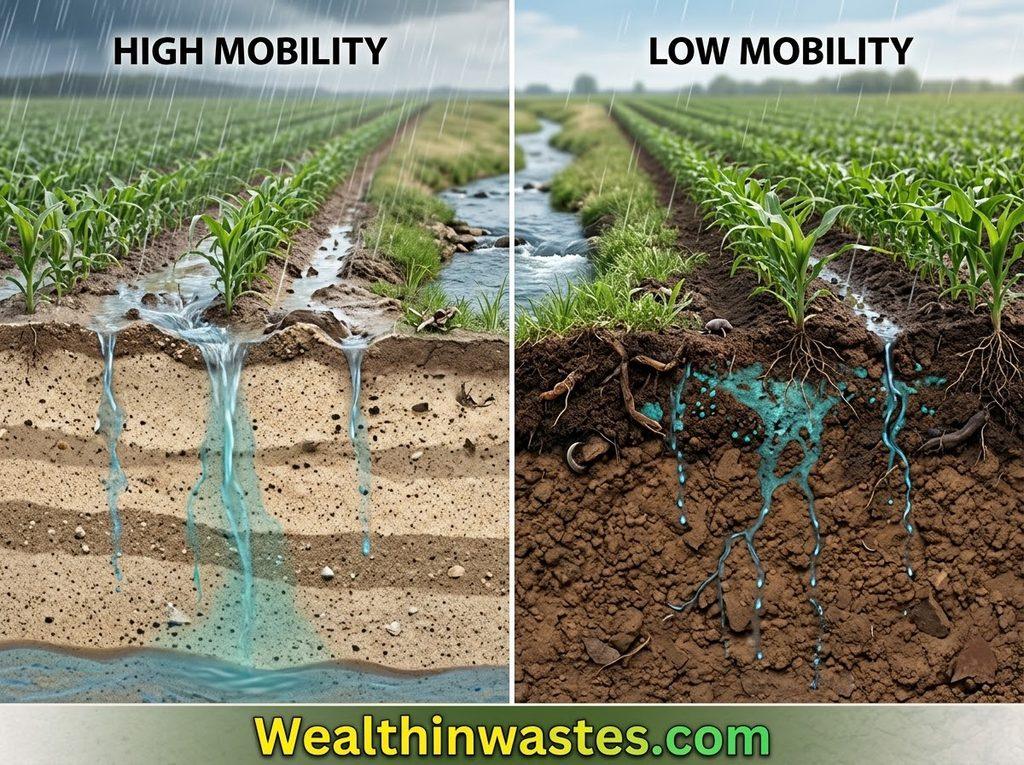
Hydrodynamics determine how quickly water and contaminants move, where particles settle, and when deposited pesticide residues return to the water column. Several physical factors control this behaviour across surface-water systems.
1. Flow Velocity: Faster water can increase downstream movement and keep fine particles suspended. Slower conditions encourage deposition, allowing particle-associated pesticides to accumulate in pools, reservoirs, and other low-energy areas.
2. Turbulence: Turbulent flow increases mixing and can disturb bottom sediments. Strong turbulence therefore promotes redistribution between the dissolved phase, suspended particles, and bed sediment throughout the moving water column.
3. Rainfall Intensity: Intense storms can generate rapid runoff and erosion, delivering pesticide residues and contaminated soil to streams. Storm-driven transport can produce short periods of unusually high pesticide concentrations.
4. Stream Geometry: Channel width, depth, slope, bends, pools, and obstructions influence circulation and settling.These physical features can create alternating areas of pesticide transport, storage, and renewed downstream movement.
5. Reservoir Conditions: Reservoirs and lakes generally have longer water residence times and broader depositional zones. Suspended pesticide-bearing particles may settle there, while mixing and seasonal turnover can later redistribute contaminants.
6. Flood Events: Floods create exceptional transport conditions by increasing discharge, shear stress, and sediment movement. Previously deposited pesticide residues can become mobile again and travel to downstream habitats or water intakes.
Transport in Streams, Lakes, and Reservoirs
Streams usually transport pesticides farther and faster than lakes or reservoirs because water moves through a defined channel. However, local pools, side channels, vegetation, and sediment deposits can slow movement.
In a fast-moving river, a dissolved pesticide can travel downstream while turbulence spreads it across the channel. Flow characteristics and discharge rates influence how rapidly concentrations change as water moves.
Concentrations may fall through dilution, degradation, sorption, and additional mixing along the route. A downstream location can therefore show a different pesticide concentration from the original point of entry.
Lakes and reservoirs create different conditions because water remains in the system longer. Pesticides may settle with suspended sediment, remain dissolved, mix vertically, or move through different zones before leaving the basin.
Understanding connected water inputs also benefits from knowledge of wastewater management and treatment processes, particularly where treated or untreated discharges add contaminants to rivers, lakes, or reservoirs.
Stratification can separate surface and deeper waters when temperature and density differences develop. Such layering can influence where dissolved pesticides remain and how quickly contaminants reach deeper water or outlet structures.
Backwaters and shallow depositional areas can hold pesticide-bearing sediment for extended periods. Later changes in discharge, wind-driven circulation, or reservoir operation may disturb these deposits and move residues downstream again.
During storms, rivers and reservoirs can receive pulses of pesticides from multiple upstream sources. These pulses may create temporary concentration peaks that routine sampling could miss if monitoring occurs at unsuitable times.
The difference between flowing and still water makes site-specific assessment essential. Managers should consider channel conditions, residence time, sediment behaviour, seasonal flow, and likely pesticide properties when evaluating transport pathways.
Factors That Change Pesticide Mobility
The mobility of a pesticide depends on chemical properties and environmental conditions. These factors determine whether a compound remains dissolved, binds to particles, degrades quickly, or persists long enough for repeated transport.
1. Water Solubility: Solubility strongly influences whether a pesticide remains in water or partitions toward solids. More soluble compounds generally have greater dissolved mobility, especially when water flows quickly across treated surfaces.
2. Sorption Affinity: Pesticides that strongly bind to soil particles, organic carbon, or sediment usually move when those materials erode. Their transport therefore depends heavily on suspended solids and sediment dynamics.
3. Persistence: A pesticide that degrades slowly remains available for transport longer. Persistence increases the opportunity for repeated movement during later storms, sediment resuspension events, or sustained discharge conditions downstream.
4. Organic Matter: Organic-rich soil and sediment can provide abundant surfaces for hydrophobic pesticide attachment. Depositional zones with substantial organic material may therefore retain these compounds longer than sandy, low-organic areas.
5.Environmental Conditions: Temperature, pH, sunlight, oxygen, microbial activity, and water chemistry can influence pesticide degradation and phase distribution. Seasonal changes can consequently alter transport patterns within the same water body.
6. Application and Landscape: Application rate, timing, field slope, vegetation cover, soil condition, drainage, and rainfall after treatment affect the amount of pesticide available for runoff or erosion into surface waters.
Pesticide Redistribution and Degradation
Pesticide transport does not mean that a chemical remains unchanged throughout its journey. Water conditions can trigger transformation, while organisms and sediments can redistribute compounds among several connected environmental compartments.
Chemical transformation can alter pesticide molecules through reactions involving water chemistry, oxidation, reduction, hydrolysis, or other processes. The resulting products may behave differently from the original compound in surface waters.
Microbial degradation occurs when microorganisms use or transform pesticide compounds during normal metabolic activity. Warmer conditions, suitable nutrients, oxygen availability, and favourable habitats can affect the speed of biological breakdown.
Photolysis occurs when sunlight provides energy that transforms susceptible pesticide molecules. Surface waters exposed to strong sunlight may therefore experience different degradation patterns from shaded, turbid, or deeper waters nearby.
Sorption remains important during degradation because a pesticide attached to sediment may experience different exposure to sunlight and microbes than a freely dissolved molecule. Partitioning can therefore change environmental persistence.
Water-treatment decisions also depend on treatment technology and water-quality standards, because the effectiveness of a treatment process can vary with contaminant chemistry and its physical association with water or solids.
Bioaccumulation and bioconcentration can move pesticide residues from water into aquatic organisms, particularly when compounds dissolve poorly in water but readily associate with lipids or biological tissues over extended exposure periods.
Henry’s law describes the tendency of a compound to partition between water and air. For sufficiently volatile pesticides, this property can influence losses from surface waters through direct atmospheric exchange.
Public water supply treatment may involve multiple physical and chemical stages, although pesticide removal depends on the particular compound, concentration, water chemistry, and treatment train selected.
Together, degradation and phase-transfer processes determine how long pesticides remain available for downstream transport. A compound may move, settle, dissolve again, transform, volatilize, or enter organisms during its environmental journey.
Read Also: Proper Wastewater Treatment Methods
Monitoring and Reducing Pesticide Transport
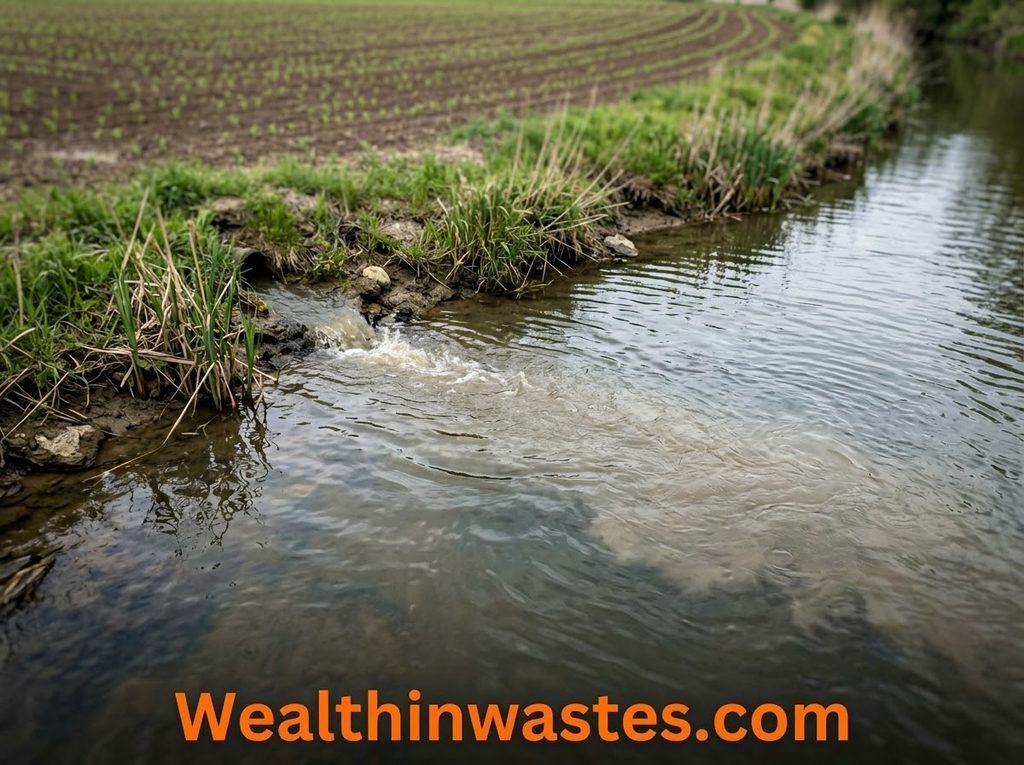
Effective control begins before pesticides reach surface waters. Monitoring should complement preventive management by identifying likely pathways, tracking concentration changes, and revealing whether dissolved or sediment-associated transport dominates.
1. Plan Pesticide Use Carefully: Follow the product label, apply only the required rate, and avoid unnecessary applications. Reducing the amount available on land lowers the quantity that runoff can carry.
2. Protect Soil Surfaces: Vegetative cover, mulching, conservation practices, and erosion control reduce soil loss. Keeping sediment securely on fields also reduces the transport of particle-bound pesticides into nearby waters.
3. Manage Rainfall and Drainage: Avoid applications immediately before intense rainfall when practical. Maintain drainage structures and vegetated areas so runoff slows, infiltrates, and deposits sediment before reaching streams or ponds.
4. Protect Water Buffers: Maintain appropriate vegetated buffer zones beside rivers, streams, drains, and ponds.These areas can slow overland flow, trap sediment, and reduce direct pesticide delivery to surface waters.
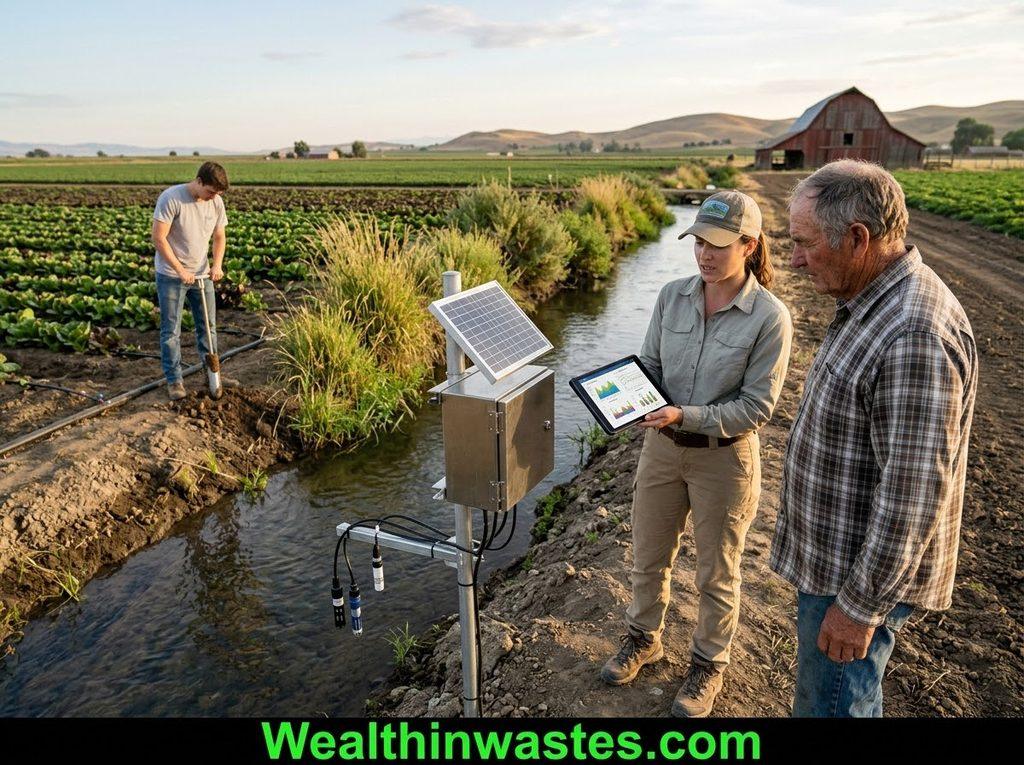
5. Monitor Water and Sediment: Collect representative samples during suitable seasons and flow conditions. Testing both water and sediment can reveal dissolved contamination as well as persistent particle-associated residues over time.
6. Coordinate Response Measures: Farmers, water utilities, fisheries managers, communities, and regulators should share information about pesticide applications, unusual spills, storm events, and monitoring results to improve protection of receiving waters.
For broader water pollution prevention measures, management should combine source reduction, runoff control, careful chemical application, monitoring, and protection of sensitive receiving environments.
Where industrial activities contribute contaminants, industrial wastewater treatment processes can reduce pollutant releases before effluent reaches rivers, lakes, drainage channels, or other connected waters.
Managers can also review available wastewater treatment options when selecting practical controls for contaminated water, taking into account pollutant characteristics, discharge requirements, costs, and the sensitivity of receiving waters.
Water Pollution From Agricultural Runoff provides additional agricultural context on how runoff can carry pesticides, sediments, nutrients, and other contaminants into nearby water bodies and affect aquatic environments.
Summary on Transport of Pesticides in Surface Waters: Key Processes
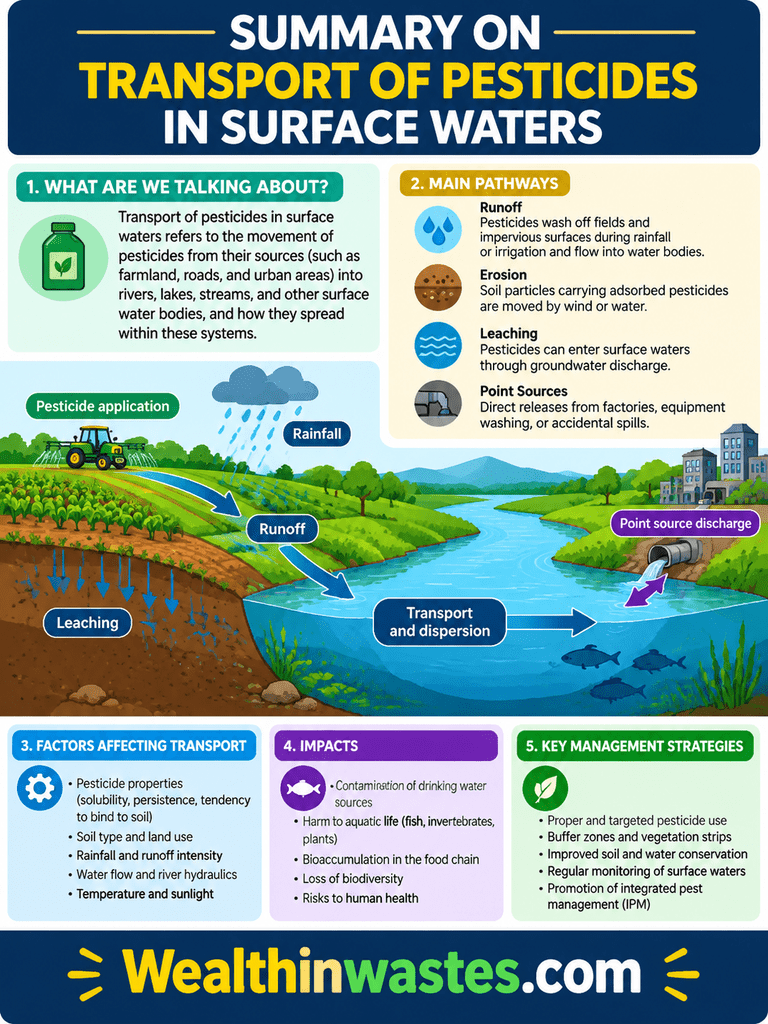
| Aspect | Summary |
|---|---|
| Dissolved Transport | Dissolved pesticides generally move with flowing water and respond strongly to flow, mixing, dispersion, solubility, and degradation. |
| Particle Transport | Particle-associated pesticides move with suspended sediment, soil particles, organic matter, and other solids that water carries downstream. |
| Sediment Storage | Low-energy areas can collect pesticide-bearing sediment and temporarily store residues until erosion, floods, or turbulence cause resuspension. |
| Hydrodynamics | Velocity, turbulence, rainfall, channel shape, reservoir conditions, and floods determine how pesticides move, settle, and redistribute. |
| Chemical Factors | Solubility, sorption affinity, persistence, organic matter interactions, and environmental chemistry strongly influence pesticide mobility and residence time. |
| Degradation | Chemical reactions, microbial activity, sunlight, volatilization, bioaccumulation, and bioconcentration can change pesticide concentration and environmental fate. |
| Risk Reduction | Careful application, erosion control, buffer zones, drainage management, representative monitoring, and coordinated response can reduce pesticide delivery to surface waters. |
Frequently Asked Questions About Transport of Pesticides in Surface Waters: Key Processes
1. What controls pesticide transport in surface waters?
Transport depends on pesticide solubility, sorption, persistence, rainfall, runoff, streamflow, sediment movement, turbulence, water chemistry, and interactions with organic matter and aquatic organisms.
2. Do dissolved pesticides move differently from sediment-bound pesticides?
Yes. Dissolved pesticides generally move with water, while sediment-bound pesticides move with suspended particles and can settle into depositional areas before returning during later disturbance.
3. Why can sediments store pesticides for long periods?
Hydrophobic pesticides often bind strongly to organic matter and fine sediment. Deposited material can protect residues from immediate transport until floods, turbulence, dredging, or erosion resuspend them.
4. Can heavy rainfall increase pesticide concentrations in rivers?
Yes. Heavy rainfall can generate rapid runoff and erosion, causing short-lived pulses of dissolved and sediment-bound pesticides to enter rivers, streams, ponds, and reservoirs.
5.What happens to pesticides after entering a lake or reservoir?
They may remain dissolved, attach to suspended particles, settle into sediment, degrade, volatilize, or redistribute through mixing, circulation, changing water levels, and seasonal physical conditions.
6. How does pesticide degradation affect transport?
Degradation reduces the amount of the original pesticide available for transport, although transformation products may remain environmentally relevant and sometimes behave differently from the parent compound.
7. How can farmers reduce pesticide movement into water?
Farmers can follow label directions, reduce unnecessary applications, protect soil from erosion, maintain vegetated buffers, manage drainage carefully, and avoid applications immediately before intense rainfall.
8. Why should both water and sediment be monitored?
Water samples reveal dissolved contamination, while sediment samples can identify persistent particle-associated residues that remain in depositional areas even when water concentrations appear comparatively low.
Do you have any questions, suggestions, or contributions? If so, please feel free to use the comment box below to share your thoughts. We also encourage you to kindly share this information with others who might benefit from it. Since we can’t reach everyone at once, we truly appreciate your help in spreading the word. Thank you very much for your support and for sharing!