


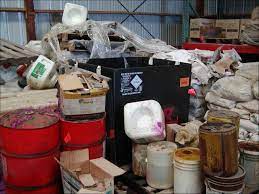
Fumigants help control pests in enclosed spaces and soil, but their hazardous nature demands careful storage, handling, transport, and disposal. Poor management can expose people, animals, food, water, and ecosystems.
Safe fumigant management begins before application and continues until every container, residue, cylinder, and contaminated material receives the correct treatment. Product labels and applicable regulations should guide every decision throughout the process.
Disposing of fumigants requires special attention because some products can release dangerous gases when exposed to moisture or damaged conditions. Workers should never improvise disposal methods for unidentified, leaking, or partially reacted materials.
Proper storage also reduces accidental releases, while correct container management prevents unauthorized reuse and unnecessary contamination. These measures protect workers and communities while supporting responsible pesticide and hazardous waste management practices.
This guide explains the main requirements for storing, handling, and disposing of fumigants safely, including container precautions, residue management, environmental protection, emergency controls, and the role of trained professionals in responsible agricultural and environmental practice.
Why Safe Fumigant Management Matters
Fumigants have powerful pest-control properties, so safe management should begin immediately after purchase and continue through storage, use, residue control, and final disposal. Their volatility makes uncontrolled releases particularly dangerous.
Chemical behavior varies among fumigant products, meaning workers must understand the specific label requirements instead of applying one disposal method universally. Understanding how pesticides move and are absorbed in soil also supports safer environmental decisions.
Environmental protection also requires attention to movement through soil and water, because misplaced pesticide residues can migrate beyond treatment areas. Reviewing soil properties that affect chemical movement and environmental guidance helps reduce contamination risks.
Fumigation may involve space treatments or soil treatments, and each setting creates different storage, exposure, and waste considerations. The chosen product, treatment site, and container design determine the controls workers must apply.
Read Also: Factors Affecting the Mobility of Other Toxicants in Soil
Safe Storage Requirements for Fumigants
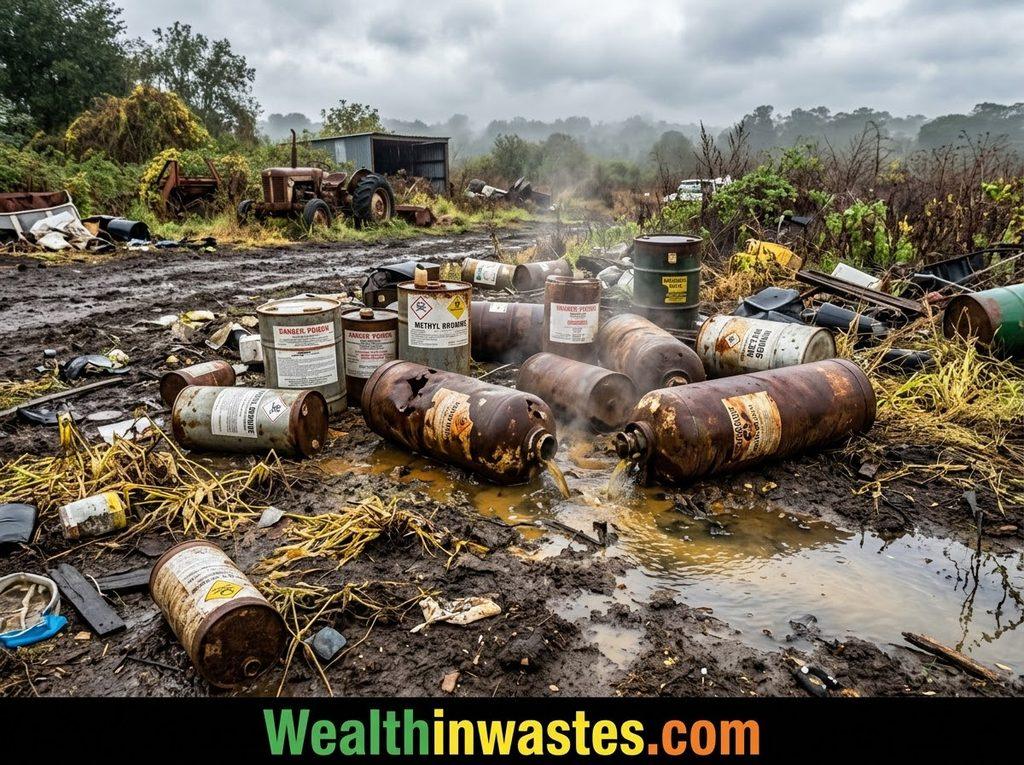
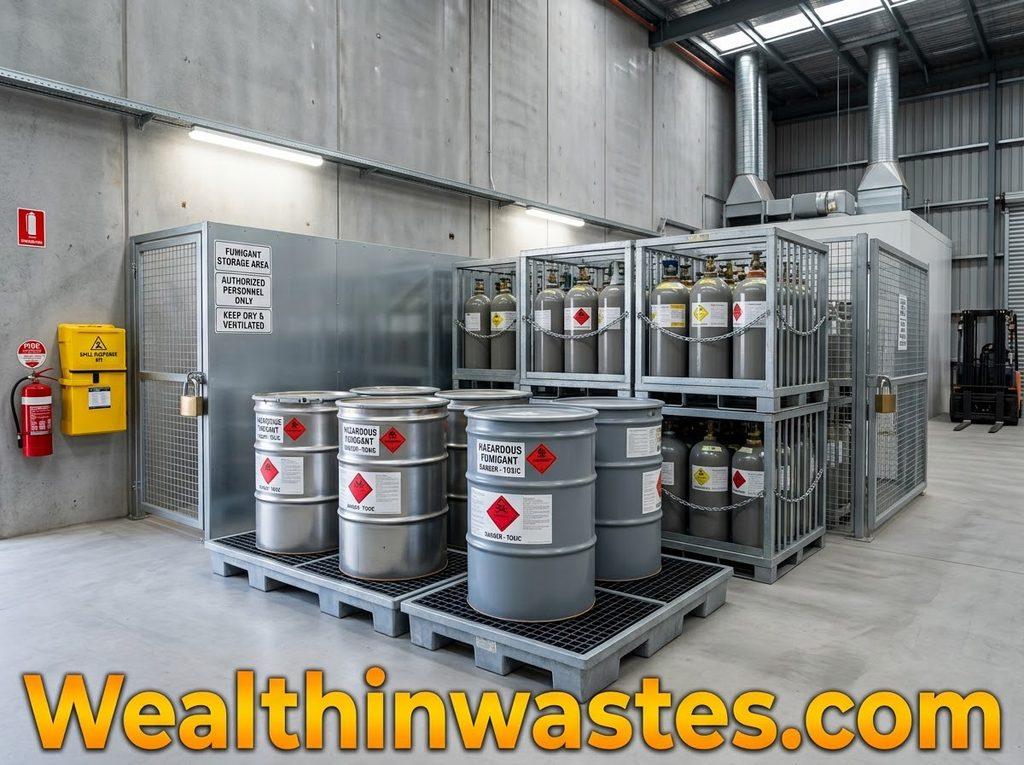
1. Secure Storage Area: Keep fumigants in a locked, dry, well-ventilated location away from heat, ignition sources, food, animal feed, water supplies, and living quarters. Separate storage reduces accidental exposure and contamination.
2. Restricted Access: Limit access to trained and authorized personnel, and keep children, livestock, visitors, and untrained workers away from the storage area. Clear warning signs reinforce access controls and support safer pesticide management practices.
3. Suitable Containers: Keep products in their original, properly labelled containers and maintain closures securely. Do not transfer fumigants into food, beverage, household, or unidentified containers because mistaken identity can create severe exposure hazards.
4. Inventory Control: Inspect containers regularly for damage, leakage, corrosion, or deterioration, and maintain an accurate inventory. Applying responsible pesticide management practices helps identify aging stock early and reduces unnecessary accumulation of hazardous products.
Fumigant Handling and Transport Rules
Fumigant handling demands deliberate movements, appropriate protective equipment, and strict attention to product instructions. Workers should avoid unnecessary contact, prevent container damage, and never handle a compromised package without proper professional direction.
Transport methods should suit the container design and product hazards. Cylinders require secure support during movement, while damaged packages need isolation and specialist assessment.Guidance on hazardous-waste control measures helps reinforce responsible handling decisions.
Good handling also includes controlling application conditions and preventing unintended movement outside the treatment area. Guidance on site conditions that influence pesticide movement can strengthen planning where soil or groundwater contamination could become a concern.
Protective equipment must match the fumigant label and expected exposure conditions, while workers should avoid relying on ordinary clothing or improvised respiratory protection. Professional risk assessment remains essential whenever gas exposure could occur.
Methyl Bromide Cylinder Handling
1. Protect Cylinder Valves: Methyl bromide cylinders require careful handling and secure transport to prevent impacts, dragging, or sliding. Keep the valve protection bonnet and safety cap fitted whenever the cylinder is not prepared.
2. Secure During Transport: Move cylinders with suitable handling equipment that prevents tipping or falling. Workers should never improvise carrying methods, because uncontrolled movement can damage valves, release fumigant, or create serious exposure risks.
3. Return Empty Cylinders: Close empty cylinders securely, restore required protective fittings, and return them through the approved supply or shipping channel. Never repurpose fumigant cylinders for another material, household use, water storage, or transport.
4. Inspect Before Use: Check containers and fittings for visible damage before handling them, and stop work when a cylinder appears unsafe. Understanding hazardous waste characteristics helps explain why damaged chemical containers need specialized controls.
Aluminum Phosphide Container Safety
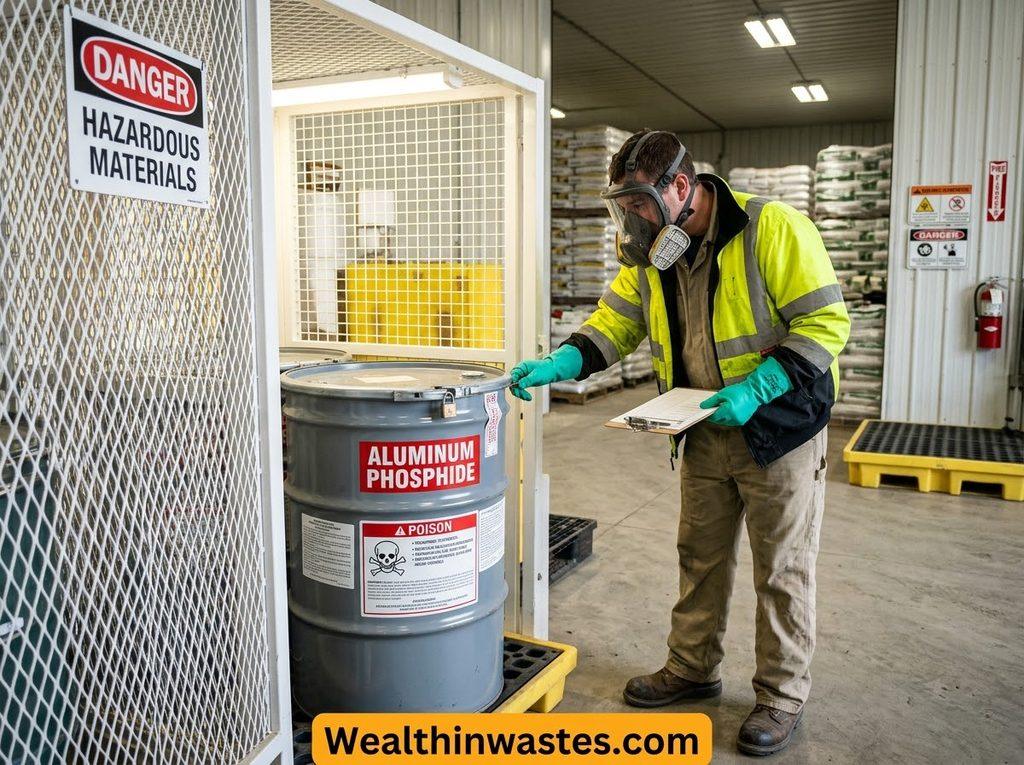
Aluminum phosphide products need responsible chemical waste disposal planning because moisture can trigger phosphine generation. Keep partially used products tightly sealed, clearly identified, and protected from atmospheric moisture until authorized personnel complete approved handling.
Empty containers require product-specific instructions because rinsing is not appropriate for every fumigant container. Some phosphide packaging must remain dry, while other containers may follow controlled cleaning or recovery procedures described on their labels.
Before choosing a disposal route, workers should identify the chemical, packaging, and waste condition accurately. Reviewing proper approaches to waste disposal alongside chemical waste management guidance helps organizations select suitable treatment, recovery, or disposal options.
Partially used containers deserve the same caution as full containers because residues may remain chemically active. Store them securely, mark them clearly, and keep them closed until authorized personnel determine their next safe management step.
Safe Practices for Disposing of Fumigants
1. Follow Product Labels: Use the disposal directions printed on the specific fumigant label and follow applicable local requirements. Never assume that a method suitable for one formulation also applies to another product or container.
2. Manage Residual Dust Carefully: Residues from phosphide products require trained assessment before disposal. Incompletely reacted material may present a continuing gas hazard, so workers should not sweep, wet, mix, or discard questionable residues casually.
3. Use Approved Waste Channels: Empty or contaminated containers, absorbents, protective materials, and hazardous residues should move through approved waste-management channels when labels or regulations require them. proper pesticide container disposal methods can support decisions.
4. Control Contaminated Rinsate: Manage rinsate and liquid waste according to the product label and applicable rules. safe disposal of dilute pesticide waste explains why uncontrolled discharge can threaten people, wildlife, groundwater, or surface water.
Read Also: Sources and Types of Water Pollution
Environmental Risks of Fumigant Disposal
Disposing of fumigants carelessly can contaminate soil, surface water, groundwater, air, and nearby property. Chemical residues may also expose workers, animals, and communities long after the original fumigation activity has ended.
Environmental protection depends on preventing releases, segregating incompatible wastes, securing contaminated materials, and selecting disposal routes that match the waste hazard. Workers can strengthen decisions through hazardous waste management principles and recommended waste disposal methods.
Where pesticide residues reach soil, movement depends on moisture, texture, organic matter, and chemical properties. Reviewing factors that influence pesticide degradation and effects hazardous substances can have on soil and plants provides useful guidance.
Improper disposal can also create liability and cleanup costs, especially when contamination reaches shared water resources or productive land. Preventive waste management therefore protects environmental quality while reducing avoidable financial and operational consequences.
Professional Controls for Fumigant Work
1. Use Trained Personnel: Fumigation should involve competent, appropriately authorized professionals who understand product hazards, application controls, exposure limits, emergency procedures, disposal requirements, and waste minimization processes associated with fumigant work.
2. Prepare Emergency Controls: Establish emergency contacts, evacuation arrangements, spill-response procedures, and access restrictions before work begins. a complete hazardous waste management framework reinforces the importance of preparation, documentation, safe storage, transport, treatment, and disposal.
3. Report Suspected Releases: Treat leaks, damaged containers, unexplained odors, or suspected gas exposure as serious incidents. Keep unprotected people away and contact the appropriate emergency or hazardous-material response service for professional assessment.
4. Keep Complete Records: Document product identity, quantities, storage movements, disposal arrangements, incidents, and contractor activities. Strong records support hazardous waste sources and classifications reviews when organizations examine risks and compliance.
5. Prevent Unnecessary Waste: Responsible fumigant management continues after treatment by securing residues and unused products, avoiding unauthorized reuse, and selecting appropriate disposal channels. waste minimization and reduction approaches support prevention.
6. Complete Disposal Responsibly: Organizations should finish each disposal process through legitimate recovery, treatment, or disposal channels. proper waste treatment and disposal practices support safer endpoints while protecting workers, communities, and the environment.
Summary on Storing, Handling and Disposing of Fumigants
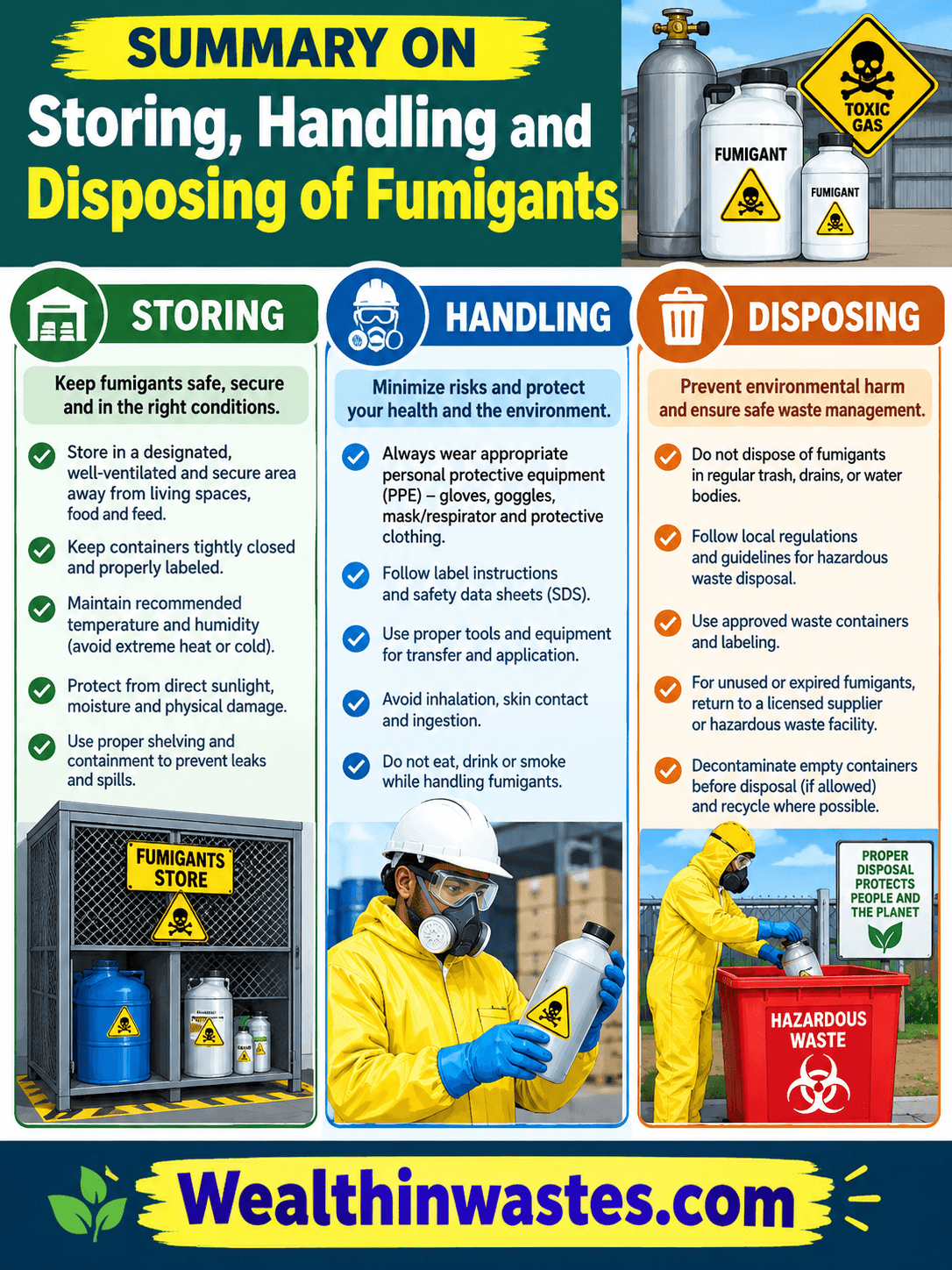
| Aspect | Summary |
|---|---|
| Safe Storage | Store fumigants in locked, dry, well-ventilated areas away from heat, food, feed, water, animals, children, and unauthorized people. |
| Container Control | Keep fumigants in original labelled containers and maintain secure closures. Never reuse pesticide containers for unrelated purposes. |
| Cylinder Safety | Handle fumigant cylinders carefully, protect valves, secure cylinders during transport, and return empty cylinders through approved channels. |
| Phosphide Products | Protect aluminum phosphide products from moisture and manage residues or containers according to the specific product label. |
| Disposal | Use approved disposal procedures for unused products, residues, containers, rinsate, contaminated equipment, and other hazardous materials. |
| Environmental Protection | Prevent fumigant waste from entering soil, groundwater, surface water, air, food supplies, or areas used by people and animals. |
| Emergency Response | Treat leaks, damaged containers, suspected exposure, and unusual releases as serious incidents requiring controlled professional response. |
| Professional Management | Fumigation work should involve trained, competent, and appropriately authorized personnel familiar with product-specific hazards and safety requirements. |
Frequently Asked Questions About Storing, Handling and Disposing of Fumigants
1. Where should fumigants be stored?
Store fumigants in a secure, locked, dry, well-ventilated location away from heat, food, animal feed, water, living areas, children, animals, and unauthorized personnel.
2. Can empty fumigant containers be reused?
No. Fumigant containers should not be repurposed unless the product label specifically provides an approved return, refill, or recovery system.
3. How should damaged fumigant containers be managed?
Restrict access, avoid unnecessary contact, and obtain professional guidance. Damaged or leaking containers can create serious exposure hazards and may require specialized emergency handling.
4. Why does aluminum phosphide require special care?
Moisture can cause aluminum phosphide to generate phosphine gas. Workers should therefore follow the product label carefully and avoid improvised exposure or disposal procedures.
5. Should fumigant residues be discarded with ordinary waste?
No. Fumigant residues and contaminated materials may require specialized hazardous-waste management based on product identity, condition, quantity, and applicable requirements.
6. Who should perform fumigation work?
Trained, competent, and appropriately authorized professionals should perform hazardous fumigation activities, especially where toxic gas exposure, cylinders, or reactive residues create significant risks.
7. Why is improper fumigant disposal dangerous?
Improper disposal can expose people and animals while contaminating soil, groundwater, surface water, air, property, and agricultural resources.
Do you have any questions, suggestions, or contributions? If so, please feel free to use the comment box below to share your thoughts. We also encourage you to kindly share this information with others who might benefit from it. Since we can’t reach everyone at once, we truly appreciate your help in spreading the word. Thank you very much for your support and for sharing!
Read Also: Principles of Pesticide Application for Stored Agricultural Produce Protection