


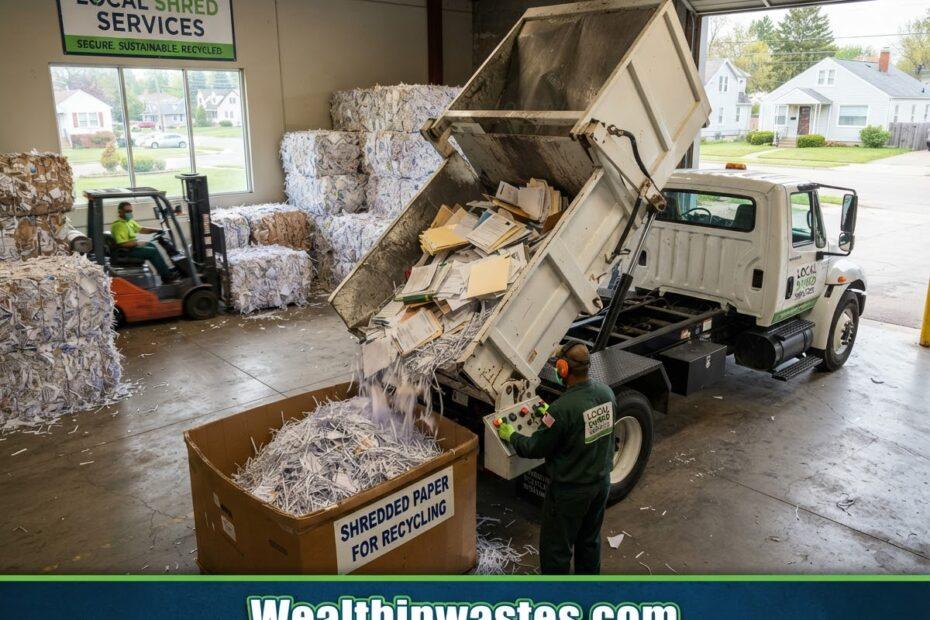
Local Shred Services Near Me is a common search when households or organisations need confidential paperwork destroyed safely. A suitable provider protects information and follows responsible recycling and reuse practices where facilities accept recovered paper.
Nearby companies may offer mobile shredding at your address, secure off-site destruction, scheduled collections or public drop-off events. Availability, accepted materials and booking arrangements vary by location and provider for your area.
This article explains how these services operate, what they can destroy, what to check before booking and how to confirm that paper enters an appropriate recycling stream where local mills accept it.
Because privacy rules apply differently across industries and record types, this article separates general security practice from legal duties affecting particular United States businesses and regulated sectors where they apply.
How Local Shred Services Work

After you request a collection, the provider confirms the volume, service method, access arrangements and materials accepted. Staff then place documents in locked consoles, sealed bins or controlled containers until destruction.
1. On-Site and Off-Site Shredding
On-site shredding uses a mobile truck with industrial equipment at your premises. You can usually watch the operator feed documents into the machine and receive confirmation once the job is complete.
Off-site shredding moves sealed containers to a secure facility for processing. It can suit routine collections or large clear-outs, provided the company documents custody and protects containers throughout transport and handling.
Some providers run staffed drop-off points or community collection events for small loads. Confirm opening hours, volume limits and whether the company supervises destruction before travelling to the site with your papers.
A secure operator records the transfer of containers from collection through destruction and issues supporting paperwork. For sorting and handling, the site’s guides to the recycling process and waste management at source provide useful background.
Read Also: How to Locate a Trash Dumpster Near Me
Benefits of Choosing a Local Shredding Service
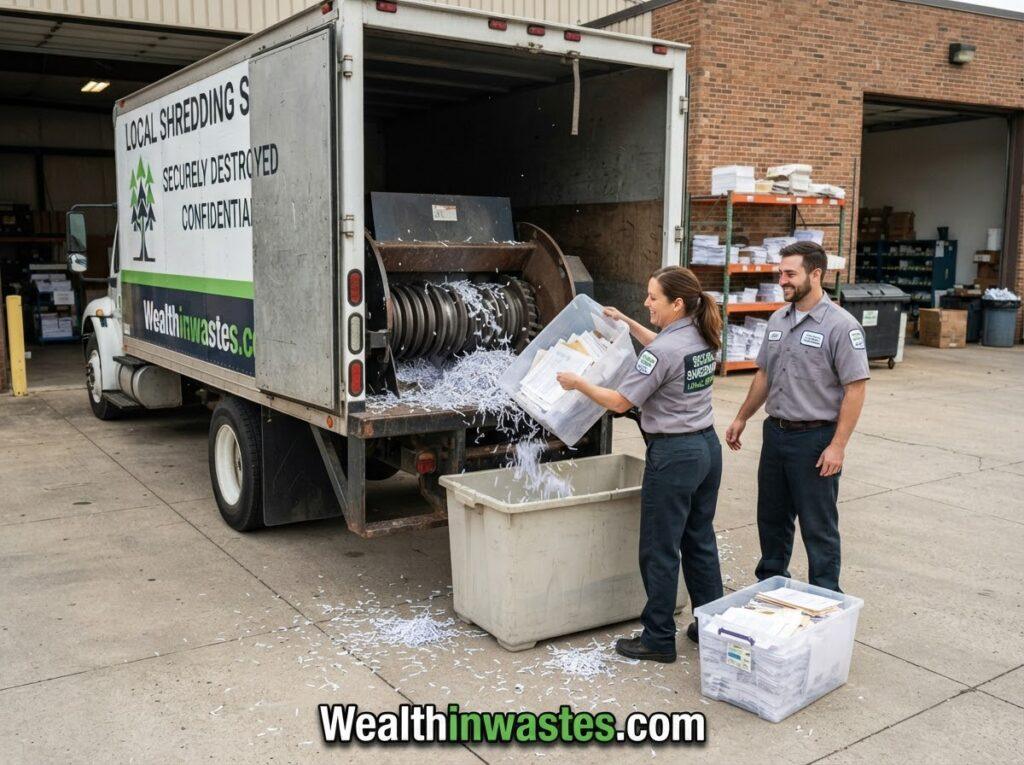
Local providers may simplify collections and reduce the time staff spend arranging document disposal. These practical gains sit within broader proper waste management benefits, but they depend on reliable handling, not proximity alone.
1. Convenient Collection: A nearby operator can reduce the time and travel involved in arranging a purge, especially when the company offers local collection days, short-notice appointments or staffed drop-off points.
2. Lower Internal Workload: Professional crews process large volumes faster than staff using small office machines, allowing employees to focus on normal duties while the provider manages secure collection and destruction.
3. Environmental Planning: Responsible shredders can direct suitable paper into recycling streams. This supports wider integrated waste management, although the outcome depends on material quality, local mill requirements and actual recovery arrangements.
4. Documented Handling: A written process can help businesses track recurring collections, container changes, disposal records and staff responsibilities. It should sit within a wider waste-reduction policy and the broader waste hierarchy.
Documents and Media Local Shred Services Accept
Most local shredding firms focus on paper, but their accepted materials differ. The site’s overview of solid waste types and sources helps explain why you should sort folders, plastics, discs and other items separately.
Paper documents commonly include invoices, bank statements, tax papers, personnel files, medical forms, contracts and printed customer records. Ask whether staples, paper clips, folders and bound files require separate preparation before collection.
Material separation matters because different waste streams need different handling. A practical solid waste classification reference helps explain why paper, electronics and potentially hazardous materials should never be mixed casually.
Some companies also destroy hard drives, solid-state drives, USB devices, CDs and backup media. Ask about their electronic waste management process because data destruction and responsible recovery require separate checks.
For storage devices, ask for a method matched to the media and data risk. The current NIST SP 800-88 Rev. 2 guidance supports programme-based sanitisation and disposal decisions based on information sensitivity.
Businesses may also ask about uniforms, branded products or production records, but these items need specific approval. Review industrial waste sources and suitable waste treatment and disposal options before arranging mixed loads.
How to Choose a Secure Shred Provider
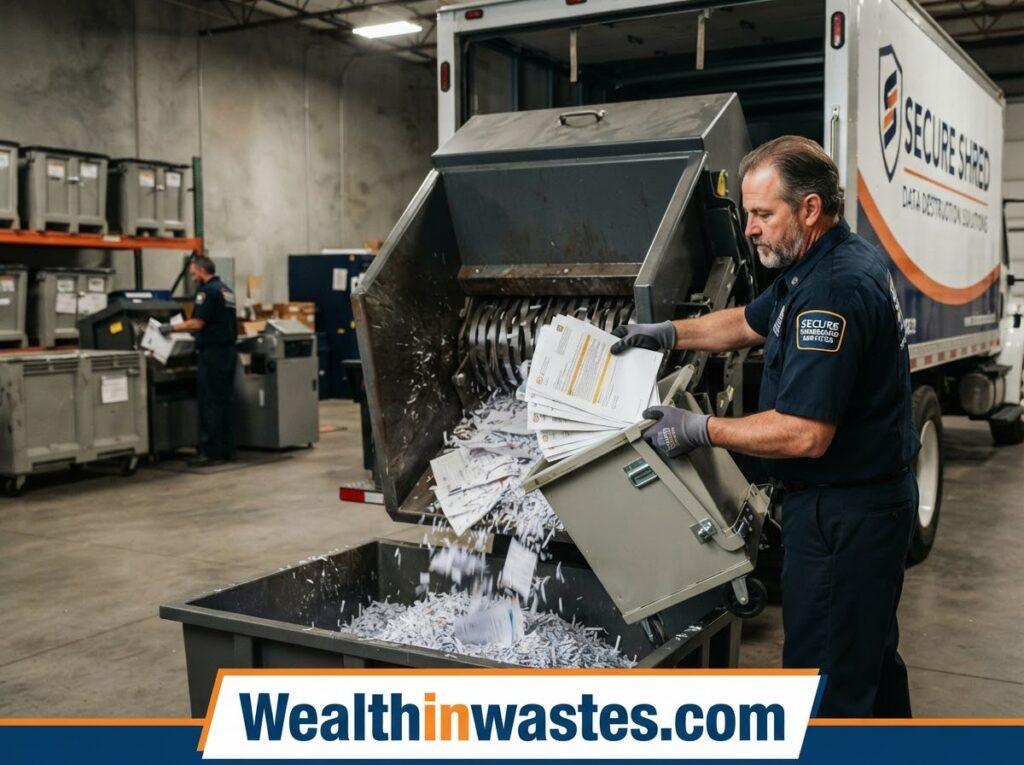
A reliable provider should explain its handling steps before you sign a contract. Clear procedures support the broader objectives of solid waste management while protecting records from unauthorised access during collection and processing.
1. Independent Certification: Ask whether the company holds current i-SIGMA NAID AAA Certification. It adds audited assurance around secure destruction, but you should still review the service scope, locations and exclusions.
2. Chain of Custody: Ask how staff seal containers, record handovers, control transport and restrict facility access. For a refresher on what counts as discarded material, see the site’s solid-waste definition.
3. Certificate of Destruction: Obtain a document stating the service date, provider, material or container details, and completion status. Keep it with your disposal records; it proves the stated job occurred, not universal legal compliance.
4. References and Insurance: Read recent local reviews, request references for recurring contracts and check the provider’s liability cover. Confirm who bears responsibility if containers go missing or an appointment fails.
Local Shred Service Costs and Contracts
Shredding prices depend on document volume, collection frequency, travel distance, service method and the container supplied. Providers may charge by weight, bin, console, collection or minimum service fee, so compare like with like.
1. Request Itemised Quotes: Ask each provider to identify collection charges, container rental, minimum loads, travel costs, taxes and any extra fees for urgent appointments or additional material types before you agree to service.
2. Compare Service Frequency: One-off purges suit office moves or archive clear-outs, while scheduled collections may work better when confidential paperwork accumulates continuously. Match the contract to actual volume rather than estimated maximum capacity.
3. Check Contract Terms: Review cancellation rules, missed-collection procedures, price changes, notice periods and responsibilities for locked containers. Ask whether the quoted rate includes a destruction certificate and recycling or media services.
4. Confirm the Service Boundary: A low quote may cover paper only, with separate fees for hard drives, electronic devices, oversized files or travel outside the company’s usual operating area and availability.
Shredding Laws and Privacy Compliance
In the United States, legal obligations depend on the organisation, the records involved and the laws that apply. Shredding supports secure disposal, but it does not decide when records may be destroyed.
HIPAA requires covered entities and business associates to use reasonable safeguards for protected hea
lth information. HHS guidance on HIPAA disposal identifies shredding as one suitable method for paper records when it renders information essentially unreadable and unreconstructable.
The FTC’s FACTA Disposal Rule covers information from consumer reports and requires reasonable disposal measures against unauthorised access. Businesses should confirm whether their records and activities fall within its scope before relying on it.
Financial institutions, state-regulated organisations and businesses within GDPR’s territorial scope may face additional requirements. Apply the rules that cover your organisation, and document retention schedules, legal holds and approved disposal procedures.
Do not let a shredding appointment replace a retention review. Confirm that records have reached the end of their required retention period and that no audit, investigation or litigation hold prevents destruction.
Paper Shredding and Environmental Sustainability
Environmental benefits arise only when suitable shredded paper reaches a recovery facility that can use it. Learn the paper recycling process, then ask whether local mills accept fine-shredded material from your service provider.
Shredding does not guarantee recycling. A local market, acceptable paper grades and clean fibre matter; review recycling guidance and a basic recycling guide before assuming mills will accept every load.
Recovered paper fibres can enter new manufacturing streams after sorting, screening and pulping. Some mills turn suitable material into newsprint, depending on fibre quality, local demand and available equipment when mills need it.
Other mills make different products from recovered paper, including new paper products and tissue paper. These examples show potential reuse routes, not a guarantee that every local shredding load will qualify.
If a recycler rejects a load because of contamination or unsuitable material, the provider should explain the alternative route. Ask how it minimises residual waste instead of assuming everything becomes new paper.
How to Prepare for a Shredding Appointment
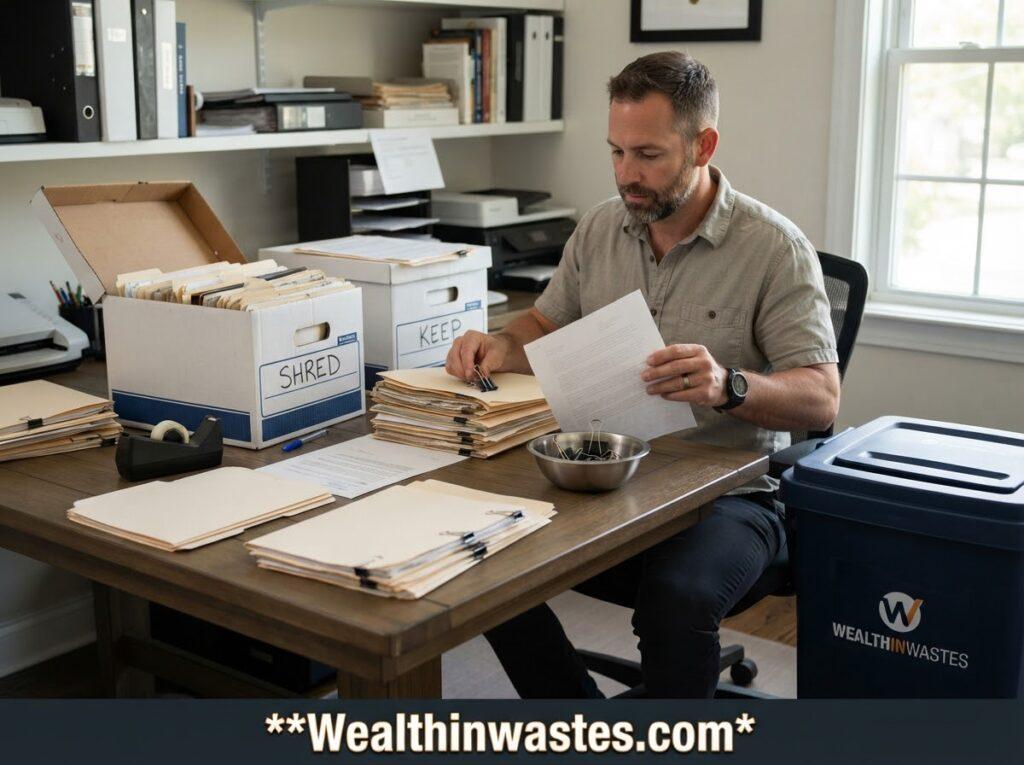
Before collection day, check your records and the provider’s instructions. A little preparation helps prevent accidental destruction, unsafe handling, rejected materials and extra charges for items the company cannot process.
1. Confirm Retention First: Check your retention schedule, pending claims, audits and legal holds before releasing files. Ask the records owner to approve destruction when the documents belong to a business or client.
2. Separate Materials: Remove plastic sleeves, binders, electronic devices and other items the provider has not approved. Keep hard drives and removable media apart so staff can apply the correct destruction method.
3. Keep Documents Secure: Store papers in locked consoles or sealed containers until collection. Limit access to authorised staff, and avoid leaving confidential files unattended in corridors, reception areas or public bins.
4. Request Records: Confirm the collection time, container count, service scope and certificate arrangements. After destruction, retain all supporting records and media-sanitisation reports for audits and future compliance checks with your retention schedule.
Read Also: Health-Benefits and Uses of Crayfish
Summary on Local Shred Services Near Me and Their Importance in Environmental Sustainability
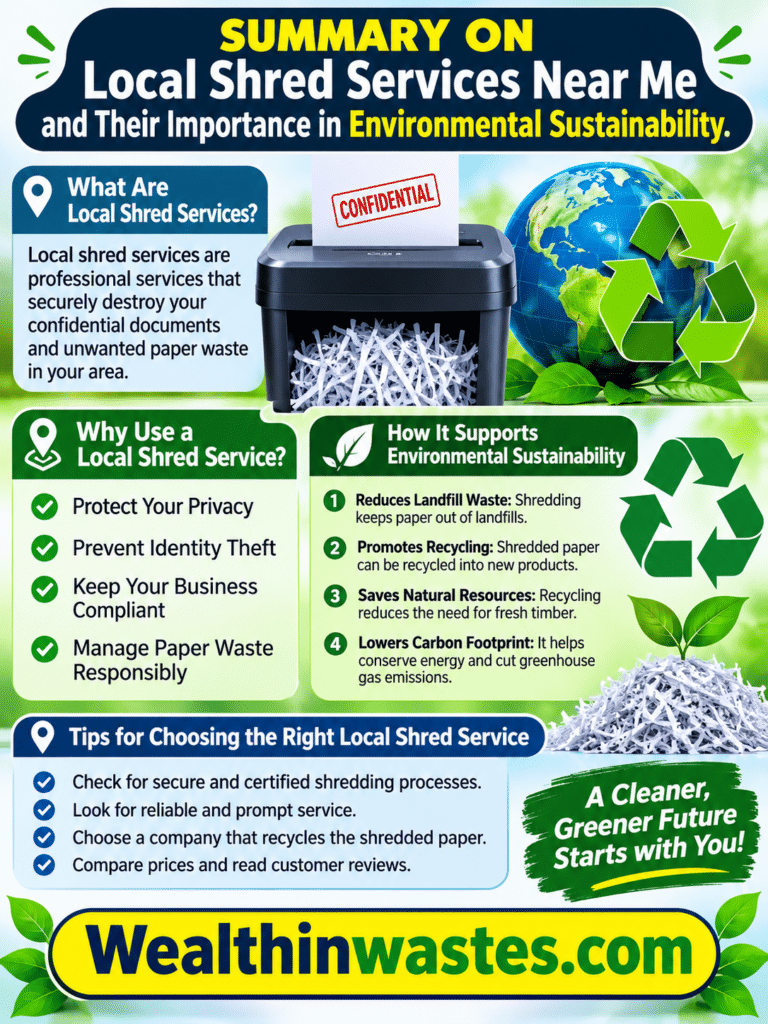
| Topic | Key Takeaway |
|---|---|
| Service Options | Choose mobile, off-site, scheduled or drop-off shredding according to your needs. |
| Document Security | Check certification, chain of custody, secure transport and destruction records. |
| Accepted Materials | Confirm whether the provider handles paper, hard drives and other media separately. |
| Legal Compliance | Follow applicable privacy laws and retention requirements before destroying records. |
| Environmental Responsibility | Confirm whether the provider sends suitable shredded paper to an accepted recycling facility. |
| Costs and Preparation | Compare itemised quotes and prepare documents according to the provider’s instructions. |
Frequently Asked Questions About Local Shred Services Near Me for Secure Document Disposal
1. How Do Local Shredding Services Work?
They collect documents, transport them securely when necessary, destroy them using industrial equipment and arrange suitable disposal or recycling.
2. Is On-Site Shredding Better Than Off-Site Shredding?
Neither is automatically better. On-site shredding provides direct observation, while secure off-site services can handle large volumes efficiently.
3. Can Individuals Use Professional Shredding Services?
Yes. Many providers accept household paperwork through drop-off locations, public shredding events and residential collection services.
4. What Documents Should I Shred?
Consider shredding outdated financial statements, invoices, tax records, medical documents and paperwork containing personal identification information after checking retention requirements.
5. Do Shredding Companies Recycle Paper?
Many arrange paper recycling, but acceptance depends on the paper grade, contamination level, local facilities and recycling contracts.
6. Do Shredding Companies Destroy Hard Drives?
Some offer dedicated media destruction or sanitisation. Ask about equipment, recognised procedures and separate certificates for electronic storage devices.
7. What Is a Certificate of Destruction?
It is a document confirming that a provider completed a specified destruction service on an identified date.
8. How Much Do Local Shredding Services Cost?
Prices vary according to volume, collection method, frequency, location, container requirements and additional media destruction services.
Do you have any questions, suggestions, or contributions? If so, please feel free to use the comment box below to share your thoughts. We also encourage you to kindly share this information with others who might benefit from it. Since we can’t reach everyone at once, we truly appreciate your help in spreading the word. Thank you very much for your support and for sharing!
Read Also: Controlling Food Waste and Recycling in Agriculture