



The impact of forest policy reaches beyond forest resources and wildlife. It shapes rural livelihoods, employment, food security, public revenue and the quality of the environment across Nigeria over time.
Well-designed rules can protect habitats while allowing responsible use of timber, fuelwood, medicinal plants and other natural resources that communities depend on for everyday needs, income and local enterprise within their local economies.
Poorly planned restrictions, weak enforcement or unequal access can undermine ecological sustainability, deepen conflict, encourage illegal exploitation and leave forest-dependent households with fewer practical alternatives, especially where jobs and affordable energy remain scarce.
Nigeria’s National Policy on the Environment recognises forest ecosystems as essential for soil, water, biodiversity and effective environmental management, while recent government initiatives also connect forest protection with climate resilience and livelihoods for future generations.
This article explains how forest and wildlife policy affects governance, employment, tourism, conservation and community rights, then identifies practical improvements that can make its benefits more effective and fair in everyday Nigerian communities.
Meaning and Purpose of Forest Policy
Wildlife and forest policy is a public framework that sets out how forests should be protected, restored, used and monitored. It establishes priorities for timber, wildlife, land rights and long-term public benefits.
Nigeria’s National Policy on the Environment, revised in 2016, recognises forest ecosystems as important for biodiversity, soil and water protection. It calls for restoration, regulated use and community participation across different Nigerian landscapes.
Forest governance turns these broad goals into everyday decisions about permits, patrols, harvesting, budgets and access. It determines whether conservation protects public interests while respecting legitimate local needs within each forest landscape.
Read Also: Challenges of Forest Administration and Administration of Forest Resources
Forest Governance and Community Livelihoods
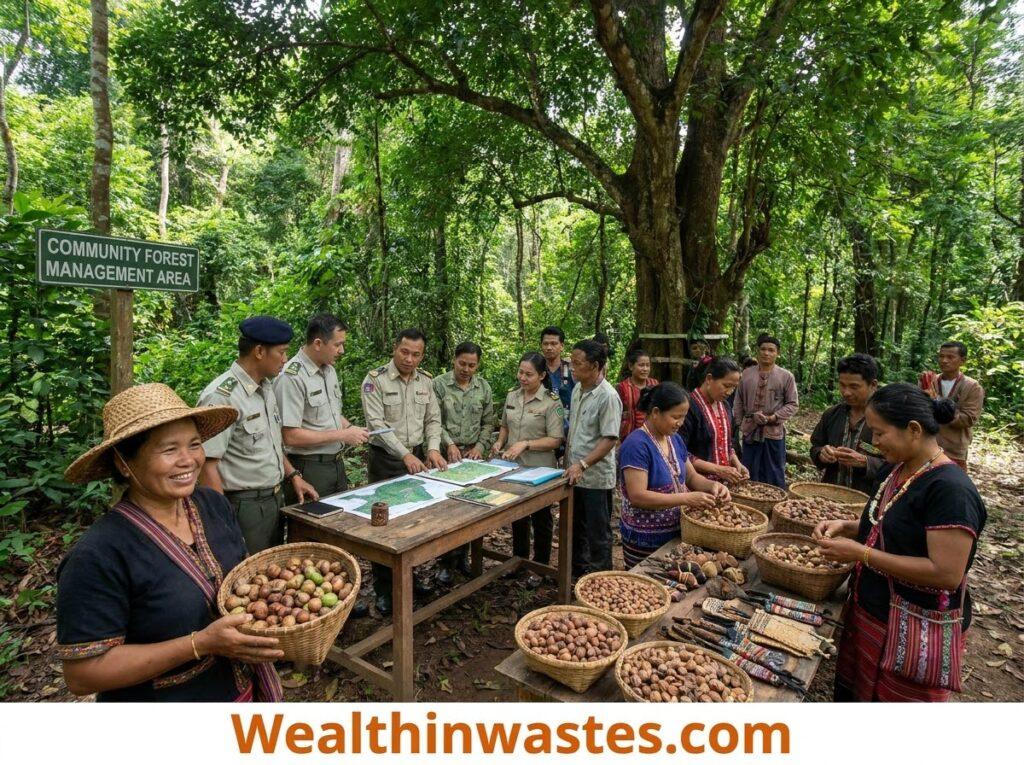
1. Participation: Invite forest-dependent communities to help map resources, agree harvesting limits and review management plans. Participation builds trust and makes it easier to explain restrictions before they affect household income or access to land.
2. Coordination: Federal agencies can coordinate policy and technical support, while the Federal Department of Forestry works with state forestry services on local operations. Clear duties reduce overlapping permits, weak inspections and gaps in accountability across forest reserves and protected areas.
3. Knowledge: Hunters, farmers, traditional leaders and forest product collectors understand seasonal patterns and useful species. Including this knowledge can improve monitoring, restoration choices and resource management within each landscape and strengthen community communication.
4. Fairness: Rules should distinguish illegal exploitation from customary, sustainable use. Where communities see fair access and shared benefits, they have stronger reasons to report fires, poaching and unauthorised logging and resolve resource-use conflicts.
Economic Benefits of Forest Policy
1. Timber: Well-managed forests provide timber and other wood products for construction, furniture, packaging and manufacturing. Harvest limits, regeneration and traceable supply chains help forest-based industries operate without exhausting future resources or damaging local habitats.
2. Jobs: Nurseries, restoration projects, forest surveys, enforcement, sawmilling and sustainable harvesting create work for foresters, technicians, guides and local contractors. Training can improve both productivity and safety in rural and peri-urban communities.
3. Products: Honey, fruits, nuts, medicinal plants, fibres and other forest products can supplement household income. Better processing, storage and market access allow communities to earn more from standing forests rather than relying on timber.
4. Revenue: Lawful permits, forest-based businesses and visitor services can generate public revenue. Transparent fees and reinvestment in local facilities make these gains more visible to neighbouring communities over the long term.
Environmental Protection and Biodiversity

Forests store carbon, support rainfall and local climate patterns, protect soils and help regulate water flows. These services are especially important where farming and settlements depend on stable natural systems throughout the year.
Nigeria’s wildlife diversity depends on connected habitats that provide space to feed, breed and move between seasonal resources. Effective forest and wildlife conservation must protect whole landscapes, not only isolated reserves or individual species.
Clearing trees for farms, roads, settlements or extraction can drive habitat loss, expose soil and disturb streams. Restoration should match local forest types and include native species wherever possible rather than uniform planting everywhere.
Poaching, unsustainable hunting and bush fires also reduce wildlife populations and weaken ecological functions. Enforcement must address these pressures while recognising the livelihood needs that influence people’s decisions in and around forest reserves.
Effects of Weak Forest Law Enforcement
1. Enforcement: When environmental laws, licensing checks, patrols and penalties are inconsistent, illegal logging and wildlife trade become harder to deter. Responsible operators also face unfair competition from businesses ignoring rules and avoiding required costs.
2. Encroachment: Poor boundary records and land-use planning allow farms, roads, mining and settlements to spread into reserve areas. This accelerates agricultural land degradation and reduces the land available for regeneration and wildlife movement.
3. Pollution: Uncontrolled clearing can increase runoff and erosion, while land pollution from waste, chemicals and oil can contaminate forest soils and waterways. These effects threaten wildlife, farming, drinking water and communities that rely on those resources.
4. Monitoring: Weak monitoring makes it difficult to measure tree cover, harvesting, fires and restoration outcomes. Environmental management systems provide records, inspections and transparent reporting so agencies can correct problems early across forest landscapes.
Tourism, Recreation and Cultural Value

Well-protected forests, wetlands and wildlife reserves can attract visitors interested in birdwatching, guided walks, landscape photography and cultural experiences. Tourism works best when conservation remains its central purpose rather than a secondary concern.
Visitor spending can support guides, transport operators, food vendors, accommodation providers and craft producers. Local enterprises gain more when communities participate in planning and receive a fair share of income from tourism activities.
Poorly managed tourism can disturb animals, generate waste and place pressure on trails, water and sensitive habitats. Visitor limits, trained guides and waste controls help protect ecological value over time for residents and visitors.
Community Rights and Shared Management
1. Consultation: Recognise legitimate customary access and involve residents before setting restrictions, changing reserve boundaries or approving projects. Environmental planning helps reduce resentment and gives local knowledge a place in formal decisions.
2. Benefits: Share suitable revenue, training and employment opportunities with nearby communities. Transparent agreements can help residents see conservation as a source of public benefit rather than a burden imposed from outside their settlements.
3. Alternatives: Where restrictions reduce access to fuelwood, farming land or hunting, pair enforcement with realistic alternatives. Skills training, tree nurseries, agroforestry and small forest enterprises can reduce pressure on reserves and support household resilience.
4. Disputes: Provide accessible ways to report disputes, challenge unfair decisions and resolve boundary disagreements. Local committees work best when women, young people, traditional leaders and forest users all have a voice in regular meetings.
Improving Forest Policy Implementation in Nigeria
On 2 September 2026, the Federal Ministry of Environment announced the Securing Nigeria’s Forest Future Country Package, intended to support environmental management best practices, restoration, biodiversity, climate resilience and investment through coordinated action.
1. Funding: Provide forestry agencies with adequate budgets, trained staff, transport, mapping tools and protective equipment. Regular field presence enables officers to monitor reserves, support communities and respond to illegal activities promptly throughout the year.
2. Planning: Prepare management plans from current forest inventories, clear reserve boundaries and measurable targets. Publish progress reports so residents, businesses and oversight bodies can assess whether policy commitments produce results on the ground.
3. Restoration: Prioritise degraded sites, protect remaining natural forest and restore native vegetation. Tree planting should use appropriate local species and include maintenance, survival checks and safeguards against further land conversion after planting seasons end.
4. Enterprise: Support legal timber supply chains, community forestry, sustainable harvesting and small enterprises using non-timber products. Transparent permits and market oversight can reward compliant operators rather than illegal extraction in nearby communities.
5. Monitoring: Track forest cover, wildlife populations, fire incidents, community benefits and restoration success. Use independent reviews and public reporting to update measures when conditions change or projects fail to meet their targets.
Summary on Impact of Forest and Wildlife Policy on the Society
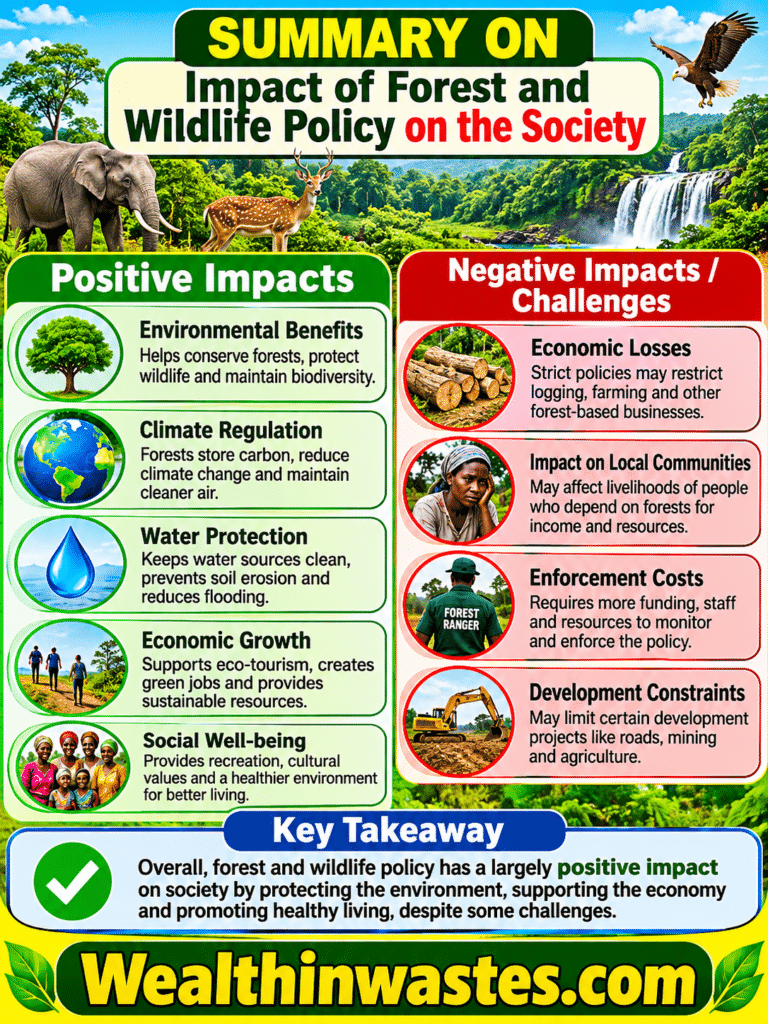
| Policy Area | Positive Impact on Society | Risk of Poor Implementation |
|---|---|---|
| Forest Governance | Better accountability, participation and decision-making. | Exclusion, mistrust and resource conflicts. |
| Economic Development | Employment, forest products, responsible businesses and revenue. | Illegal exploitation and resource depletion. |
| Environmental Protection | Biodiversity conservation, soil protection and climate resilience. | Habitat destruction, erosion and wildlife decline. |
| Tourism | Visitor spending, local enterprises and recreation. | Habitat disturbance, pollution and overcrowding. |
| Community Rights | Shared benefits, local knowledge and fair resource access. | Displacement, unequal restrictions and resentment. |
| Policy Implementation | Effective restoration, monitoring and law enforcement. | Weak institutions, funding shortages and illegal activities. |
Frequently Asked Questions About Impact of Forest and Wildlife Policy on Society in Nigeria
1. What Does Impact of Forest Policy Mean?
It refers to the positive and negative effects forest policies have on communities, employment, the economy, wildlife and environmental protection.
2. Why Is Forest Policy Important in Nigeria?
It helps protect biodiversity, regulate forest resources, support rural livelihoods and maintain essential environmental services.
3. How Does Forest Policy Create Employment?
It supports jobs in forestry, tree nurseries, restoration, timber processing, conservation, research and ecotourism.
4. Can Forest Conservation Improve Rural Livelihoods?
Yes. Sustainable harvesting, agroforestry, tourism and non-timber forest products can provide income while protecting natural resources.
5. What Happens When Forest Laws Are Not Enforced?
Illegal logging, poaching, encroachment, habitat destruction and resource conflicts can increase, damaging livelihoods and ecosystems.
6. How Can Local Communities Participate in Forest Management?
Communities can participate through consultations, forest monitoring, restoration programmes, local management committees and sustainable resource-use agreements.
7. What Is Sustainable Forest Management?
It means using and protecting forest resources in ways that maintain their ecological, economic and social benefits for present and future generations.
Do you have any questions, suggestions, or contributions? If so, please feel free to use the comment box below to share your thoughts. We also encourage you to kindly share this information with others who might benefit from it. Since we can’t reach everyone at once, we truly appreciate your help in spreading the word. Thank you very much for your support and for sharing!
Read Also: Complete Agroforestry Guide for Sustainable Land Management