


Wildlife administrators decide how a country protects, uses and restores its wild animals. Understanding the duties of wildlife administrators helps readers see who regulates hunting, protects habitats and enforces conservation laws.
Their work ranges from long-term planning to everyday tasks such as issuing licences and keeping records. These routine duties shape how well wildlife populations survive under pressure from hunting, land development and weak enforcement.
Wildlife management means keeping certain wildlife populations, including endangered species, at desirable levels using scientific, technical and traditional knowledge. Sustainable management also balances economic, ecological and social values for future generations.
This article explains what administrators do, how protection services work, why enforcement is inconsistent and how clear legal mandates improve accountability. It also highlights the challenges that limit wildlife agencies in practice.
What Wildlife Administrators Do
Wildlife administrations are government bodies that plan, regulate and oversee the use of wild animals. Their mandate usually sits within broader forest and wildlife policy, which sets the rules they apply.
Many administrations answer to higher-ranking bodies where timber or forest industry interests may easily prevail. This dependency can push high-level decisions to ignore the technical arguments in favour of wildlife.
In practice, the autonomy of wildlife policy-makers depends heavily on the personal and political influence of the head of the wildlife service. Staff, funds and equipment also receive low priority.
Read Also: Challenges of Forest Administration and Administration of Forest Resources
Core Duties of Wildlife Administrators
1. Planning and Strategy: Administrators set long-term goals for wildlife populations, translate national policy into practical action plans and decide how to balance conservation, hunting and land use across regions, habitats and local communities.
2. Issuing Licences: Administrators control who may hunt, trap or trade wildlife by issuing licences and permits, which let agencies set seasons, limit the take and monitor harvests of each species throughout the year.
3. Keeping Statistical Records: Reliable, up-to-date records of harvests, licences, populations and infractions show whether management works, helping administrators adjust quotas, identify problems early and justify decisions to higher authorities and the wider public.
4. Processing Infractions: Officers record breaches of wildlife rules, investigate cases and pass them through legal channels, so offenders face consequences and the law keeps its authority among hunters, traders and local communities.
5. Managing Protected Areas: Administrators oversee reserves and other protected areas, controlling access, protecting habitats and monitoring wildlife so that these areas keep supporting healthy populations of endangered and other species over the long term.
Wildlife Management Beyond Hunting
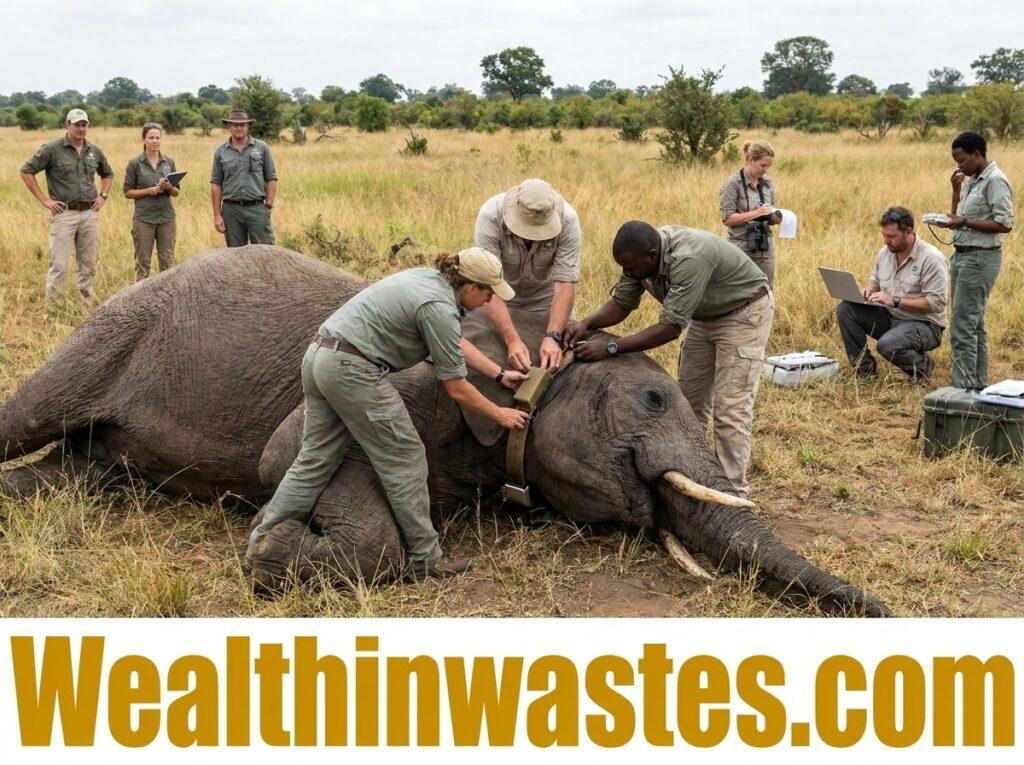
Wildlife management today goes beyond protecting hunting interests or individual species. It treats wildlife as a renewable natural resource and looks at the whole system in a holistic, long-term way.
Administrators therefore weigh economic benefits, ecological needs and social values together. This balance protects the interests of present and future generations instead of favouring short-term gains from one group of users.
Scientific, technical and traditional knowledge all inform decisions. Administrators who combine these sources can often set realistic population targets and gain more support from the communities that live alongside wildlife.
Role of Wildlife Protection Services
1. Ensuring Compliance: Protection services make sure hunters, traders and landowners follow the regulations that govern wildlife use, because rules that nobody applies cannot protect animals or maintain sustainable harvest levels in practice.
2. Educating Hunters: In tropical countries, where most hunters disregard or do not know existing laws, protection services must explain the rules clearly and consistently, because awareness is the first step towards compliance.
3. Patrolling Habitats: Field officers patrol parks, reserves and hunting zones to detect poaching, illegal trade and unlicensed activity. Visible patrols deter offenders and give administrators first-hand information about wildlife populations and threats.
4. Supporting Prosecution: Protection officers gather evidence, document infractions and work with prosecutors and courts so cases reach a conclusion. Without this support, offenders quickly learn that wildlife laws carry little real risk.
Enforcement of Wildlife Legislation
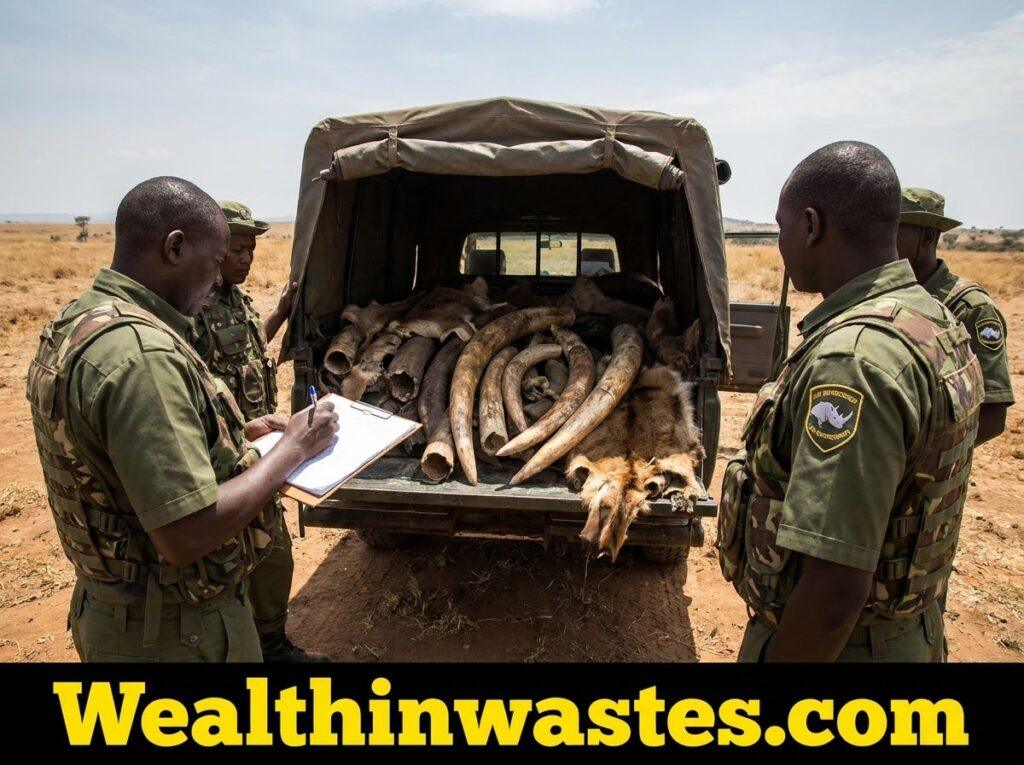
1. Inconsistent Application: Authorities apply and enforce wildlife laws inconsistently across all taxa, so some species receive strong oversight while others depend on weak rules and limited monitoring, which leaves gaps in protection.
2. Overlapping Authority: State authority over the take of resident game species is well defined, yet county, local or housing development ordinances may effectively supersede it. Administrators must therefore coordinate closely with local governments.
3. Land Use Decisions: Decisions on land use, even on public lands, indirectly affect wildlife allocation because development changes habitats. Administrators need a voice in planning so that conservation goals shape these decisions early.
Species-Based Agreements for Endangered Wildlife
Endangered species legislation uses a specialised legal approach to wildlife management. It focuses on identifying and restoring species whose populations have fallen to critically low levels, using defined criteria and listing procedures.
Listing criteria rest on clear, science-based definitions of threatened and endangered species. Both terms require a careful assessment of a species’ current status and the threats to its continued survival.
Recovery relies on two mechanisms. First, government agencies and private developers must consider listed species when designing and building projects, and include protection measures that reduce harm and support long-term survival or recovery.
Second, the law prohibits direct or incidental take of the species. Take covers killing by any means, removing a species from its habitat, destroying critical habitat, or otherwise harming, harassing or injuring the species.
Clear Mandates for Wildlife Authorities
1. Defined Mandates: Legal mandates are provisions that require or allow agencies or persons to act on wildlife resources. The concept is deliberately broad, covering all possible actions, activities, permissions and even prohibitions.
2. Practical Guidance: Mandates usually appear in general terms, which makes practical application difficult because they give no guidance on exercising powers, limits to discretion or decision-making procedures. Clearer provisions would reduce confusion between agencies.
3. Public Accountability: The law should guide how public authorities use discretion, which increases their legitimacy and accountability. Clear procedures let citizens, courts and other agencies understand why administrators made a particular decision.
4. Separated Functions: To protect accountability and avoid conflicts of interest, the law should avoid mixing management or commercial activities with control functions in the same public or private body, which protects impartial oversight.
Challenges Facing Wildlife Administrators
Wildlife agencies often sit under bodies that prioritise forestry or timber revenue, leaving little room for conservation arguments. Similar pressures appear in forest administration, where weak capacity limits effective policy delivery.
Interviews and surveys show that many administrators feel like islands in a sea of public and official indifference, hindered by inappropriate policies and sterile bureaucracies. These pressures seriously hinder progress.
Weak enforcement remains the central problem. Administrators have strengthened wildlife reserves, yet enforcement of wildlife legislation across the country and beyond is still weak, so stronger funding, staffing and political support are essential.
Read Also : Impact of Livestock Diseases and Solutions
Summary on Duties of Wildlife Administrators and Wildlife Protection Services
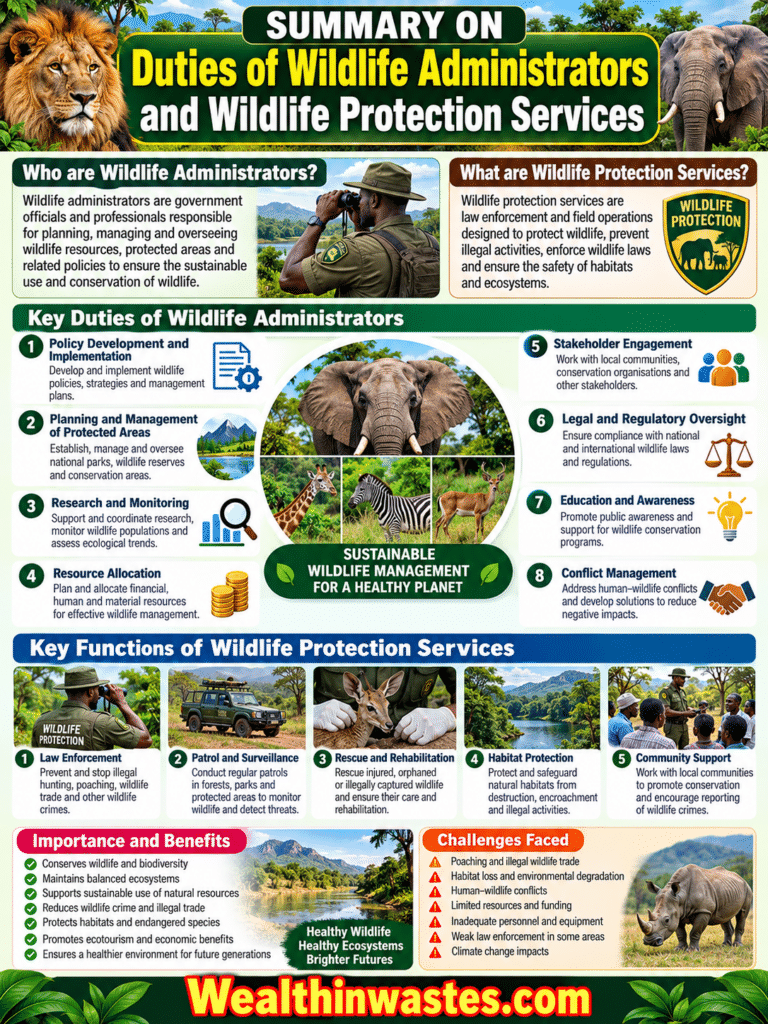
| Topic | Key Point |
|---|---|
| Core duties | Planning, licensing, record keeping, processing infractions and managing protected areas |
| Management approach | Balances economic, ecological and social values for present and future generations |
| Protection services | Secure compliance, educate hunters, patrol habitats and support prosecution |
| Enforcement | Inconsistent across taxa; local ordinances and land use affect wildlife |
| Endangered species | Listing criteria, project safeguards and prohibition of take |
| Institutional clarity | Clear mandates, guided discretion and separated management and control |
| Main challenges | Subordination, low priority for resources and weak enforcement |
Frequently Asked Questions About Duties of Wildlife Administrators: Roles and Challenges
1. What Are the Duties of Wildlife Administrators?
They plan strategy, issue licences, keep statistical records, process infractions and manage protected areas.
2. What Is Wildlife Management?
It keeps wildlife populations, including endangered species, at desirable levels using scientific, technical and traditional knowledge.
3. What Is Sustainable Wildlife Management?
It balances the economic, ecological and social values of wildlife to protect present and future generations.
4. Why Do Wildlife Protection Services Matter?
They ensure compliance with wildlife regulations, which matters most where hunters disregard or do not know the laws.
5. What Does “Take” Mean in Endangered Species Law?
Take includes killing a species by any means, removing it from its habitat, destroying critical habitat, or otherwise harming, harassing or injuring it.
6. Why Is Wildlife Law Enforcement Inconsistent?
Enforcement varies across taxa, and local or development ordinances may supersede state authority over game species.
7. Why Should Wildlife Laws Define Institutional Mandates?
Clear mandates guide discretion, improve accountability and prevent agencies from mixing management or commercial activities with control functions.
Do you have any questions, suggestions, or contributions? If so, please feel free to use the comment box below to share your thoughts. We also encourage you to kindly share this information with others who might benefit from it. Since we can’t reach everyone at once, we truly appreciate your help in spreading the word. Thank you very much for your support and for sharing!
Read Also: Guide to Proper Prevention and Control of Livestock Diseases