


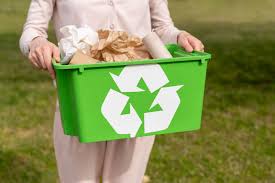
Every home produces waste on a daily basis. From food leftovers in the kitchen to packaging materials from groceries and household items, the amount can quickly become overwhelming if not properly managed. Many people see this waste as useless, but in reality, a large portion of it can be turned into useful resources when handled the right way.
This is where practical knowledge of home waste recycling becomes very important. It is not only about keeping the house clean but also about making smarter decisions that protect the environment, reduce expenses, and promote healthier living habits. When families understand how waste can be reduced, sorted, and reused, they take a meaningful step toward responsible living.
Today, more households are becoming aware that waste management is not only a government or industry responsibility. It starts at home. Simple actions such as sorting waste correctly, reusing containers, and composting food scraps can make a huge difference over time.
By adopting effective waste management practices, every household can contribute to cleaner surroundings and a more sustainable future without needing complicated systems or expensive tools.
Table Summary on What You Need to Know About Home Waste Recycling
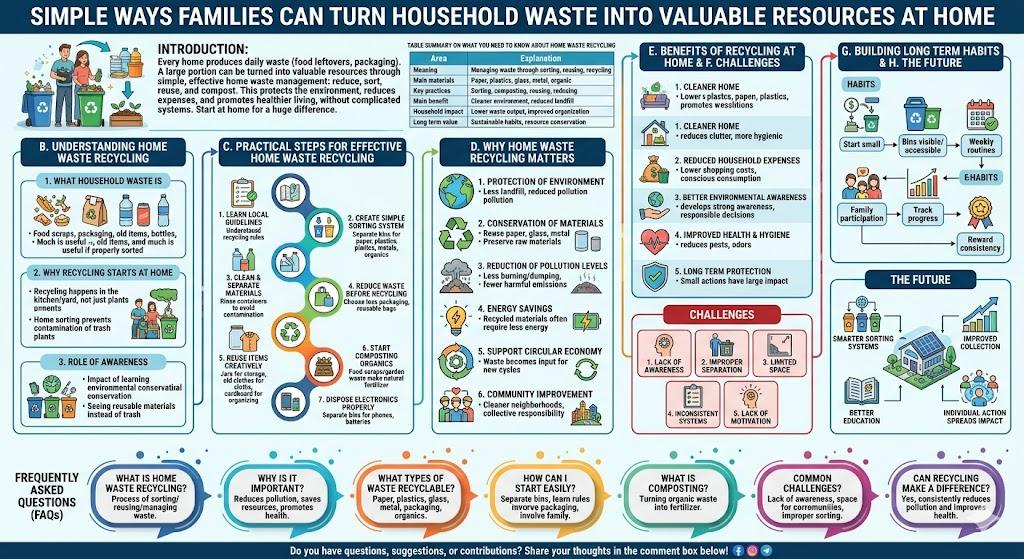
| Area | Explanation |
|---|---|
| Meaning | Managing household waste through sorting, reusing, and recycling |
| Main materials | Paper, plastics, glass, metal, organic waste |
| Key practices | Sorting, composting, reusing, reducing waste |
| Main benefit | Cleaner environment and reduced landfill waste |
| Household impact | Lower waste output and improved organization |
| Long term value | Sustainable living habits and resource conservation |
Read Also: The Wonderful Benefits of Waste Recycling
B. Understanding Home Waste Recycling in Daily Life
1. What household waste really means
Household waste refers to all materials that are no longer needed inside the home. This includes food scraps, packaging materials, broken items, old newspapers, bottles, and other discarded products.
Many people do not realize that a large percentage of this waste is still useful if properly sorted. Through waste separation, households can divide materials that can be reused from those that cannot.
2. Why recycling starts at home
Recycling begins in the kitchen, living room, and backyard, not in industrial plants. When families separate waste correctly, recycling centers can process materials more efficiently.
Without proper sorting, recyclable materials become contaminated and may end up being discarded. This makes home participation extremely important in the entire recycling chain.
3. The role of awareness in household habits
Awareness is the first step toward change. Many families throw everything into one bin simply because they do not understand the impact. Once people learn about environmental conservation, they begin to see waste differently.
Instead of seeing trash, they begin to see reusable materials that can be transformed into new products.
C. Practical Steps for Effective Home Waste Recycling
1. Learn local waste guidelines
Every community has its own recycling rules. Some areas accept certain plastics while others do not. Understanding these rules helps households avoid mistakes and improves recycling efficiency.
2. Create a simple sorting system at home
A recycling system does not need to be complicated. Families can set up separate containers for different types of waste such as paper, plastics, metals, and organic materials.
This simple structure improves waste sorting and makes recycling part of daily routine instead of a difficult task.
3. Clean and separate recyclable materials
Before recycling, containers should be rinsed to remove leftover food or liquids. Dirty materials can spoil entire batches of recyclables and reduce their usefulness.
Proper cleaning improves the quality of recyclable materials and ensures they can be processed effectively.
4. Reduce waste before recycling
Recycling is important, but reducing waste is even more powerful. Families can reduce waste by:
- Choosing products with less packaging
- Using reusable bags instead of single use ones
- Buying only what is needed
- Reusing containers for storage
This reduces the amount of waste that needs to be handled in the first place.
5. Reuse items creatively
Many household items can be reused instead of thrown away. Glass jars can become storage containers, old clothes can be turned into cleaning cloths, and cardboard boxes can be reused for organizing items.
This habit supports resource conservation and reduces unnecessary waste generation.
6. Start composting organic waste
Food scraps and garden waste can be turned into compost instead of being thrown away. Compost enriches soil and supports plant growth.
Through composting, households reduce landfill waste while producing natural fertilizer for gardens or plants.
7. Dispose of electronics properly
Old phones, batteries, and electronic devices should not be thrown into regular bins. They contain materials that can harm the environment if not handled properly.
Using proper electronic waste disposal systems ensures safe handling of these items.
8. Educate everyone in the household
Recycling works best when every family member participates. Children can learn how to separate waste, while adults can guide the process.
This builds long term habits that support sustainable living within the home.
D. Why Home Waste Recycling Matters for Society
1. Protection of natural environment
When households recycle, less waste ends up in landfills. This reduces pollution and helps protect land and water resources.
2. Conservation of raw materials
Recycling allows materials like paper, glass, and metal to be reused instead of extracting new raw materials. This helps preserve natural resources for future generations.
3. Reduction of pollution levels
Less waste means less burning and dumping, which reduces harmful emissions into the air and water systems.
4. Energy savings
Producing new materials from recycled items often requires less energy compared to producing from raw materials. This helps reduce overall energy consumption.
5. Support for circular economy
A circular system ensures that materials are reused instead of wasted. This supports long term waste reduction systems that benefit both households and industries.
6. Community improvement
When more homes recycle, neighborhoods become cleaner and healthier. It also encourages collective responsibility among residents.
E. Benefits of Practicing Recycling at Home
1. Cleaner and more organized home
Proper waste sorting reduces clutter and makes the home environment more organized and hygienic.
2. Reduced household expenses
Reusing items and reducing waste can lower shopping costs over time. Families become more conscious of consumption habits.
3. Better environmental awareness
Households that practice recycling develop stronger awareness of environmental issues and become more responsible in daily decisions.
4. Improved health and hygiene
Proper waste handling reduces pests, odor, and contamination around the home.
5. Long term environmental protection
Small actions at home contribute to large scale environmental improvement over time.
F. Challenges in Home Waste Recycling
1. Lack of awareness
Many households still do not fully understand how recycling works or why it matters.
2. Improper waste separation
Mixing different types of waste reduces recycling effectiveness and causes contamination.
3. Limited space in homes
Some families find it difficult to create space for multiple waste bins.
4. Inconsistent recycling systems
Not all communities have the same recycling facilities, which can cause confusion.
5. Lack of motivation
Some people do not see immediate benefits, which reduces their interest in continuing the practice.
G. Building a Long Term Recycling Habit
Creating a lasting recycling habit requires consistency and simple planning. Families should start small and gradually improve their system over time.
Key actions include:
- Keeping waste bins visible and accessible
- Setting weekly recycling routines
- Encouraging all family members to participate
- Tracking progress in reducing waste
- Rewarding consistency in the household
Over time, these habits become part of daily life and no longer feel like extra effort.
H. The Future of Household Recycling Practices
As awareness continues to grow, more homes are expected to adopt structured recycling habits. Governments and communities are also improving waste collection systems to support households.
The future of home waste recycling will likely include smarter sorting systems, improved collection services, and better education programs for families.
This shift is important because environmental protection begins with individual action. When households take responsibility, the impact spreads across entire communities and cities.
Frequently Asked Questions on What You Need to Know About Home Waste Recycling
1. What is home waste recycling?
Home waste recycling is the process of sorting, reusing, and managing household waste in a way that allows useful materials to be recovered instead of being thrown away. It helps reduce landfill waste and supports cleaner living environments.
2. Why is recycling important for households?
Recycling helps reduce pollution, conserve natural resources, and lower the amount of waste that ends up in landfills. It also promotes healthier living conditions and encourages responsible consumption habits.
3. What types of waste can be recycled at home?
Common recyclable materials include paper, cardboard, plastic bottles, glass containers, metal cans, and certain types of packaging materials. Organic waste can also be composted.
4. How can I start recycling at home easily?
You can start by setting up separate bins for different types of waste, learning your local recycling rules, and encouraging family members to sort waste correctly.
5. What is composting and why is it useful?
Composting is the process of turning food scraps and organic waste into natural fertilizer. It reduces landfill waste and improves soil quality for gardening.
6. What are the common challenges of home recycling?
Some challenges include lack of awareness, limited space, improper sorting, and inconsistent recycling systems in different areas.
7. Can recycling really make a difference?
Yes, when practiced consistently by many households, recycling significantly reduces pollution, saves resources, and improves environmental health.
Home waste recycling is one of the simplest yet most powerful habits any family can adopt. It does not require expensive tools or complex systems, only awareness and consistency. When households take small steps like sorting waste, reusing materials, and composting organic matter, they contribute to a much larger global effort to protect the environment.
By practicing home waste recycling, families not only improve their own living spaces but also play an important role in building a cleaner and more sustainable future for everyone.
Do you have any questions, suggestions, or contributions? If so, please feel free to use the comment box below to share your thoughts. We also encourage you to kindly share this information with others who might benefit from it. Since we can’t reach everyone at once, we truly appreciate your help in spreading the word. Thank you very much for your support and for sharing!
Read Also: Dangers of Mole Rats to Your Farm