



In 1978, UNESCO advanced environmental education as a central part of its environmental education programme, emphasizing knowledge, attitudes, skills, values, and participation needed to respond effectively to environmental challenges.
The purpose of educational intervention is not simply to transfer environmental information. It should help learners understand problems, develop practical abilities, make responsible decisions, and participate in solutions within their communities.
Environmental action becomes stronger when people connect what they learn with everyday choices involving waste, energy, water, land, biodiversity, consumption, pollution, and public responsibilities within their communities.
Effective environmental education can operate through schools, communities, workplaces, media platforms, extension services, civil society groups, and government programmes, allowing messages to reach people with different backgrounds and learning needs.
This approach turns awareness into purposeful participation because informed citizens can recognize environmental risks, evaluate alternatives, cooperate with others, and support practical measures that protect resources and improve community wellbeing.
Why Educational Intervention Matters
Educational intervention gives environmental action a clear foundation by connecting knowledge with behaviour. People respond more constructively when they understand environmental causes, consequences, responsibilities, and practical choices available.
It also helps correct misconceptions that can weaken environmental programmes. Clear teaching can explain how pollution, resource depletion, habitat loss, waste generation, and climate pressures develop, while showing practical ways communities can respond.
Environmental learning should therefore move beyond memorizing definitions. It should encourage observation, questioning, problem solving, cooperation, communication, and reflection so learners can connect classroom concepts with conditions surrounding their homes.
Understanding climate sustainability can strengthen educational programmes because learners see how environmental pressures affect communities, natural resources, livelihoods, and future development choices.
Strong intervention also develops confidence. When people understand an environmental problem and know what actions are possible, they become more willing to participate in community initiatives, support responsible policies, and influence others.
Well-designed educational intervention can produce lasting environmental responsibility because it develops habits alongside knowledge. Repeated learning, practical activities, and community participation help translate environmental principles into everyday decisions and collective action.
Read Also: Soil and Water Conservation in Agriculture
Educational Intervention And Environmental Awareness
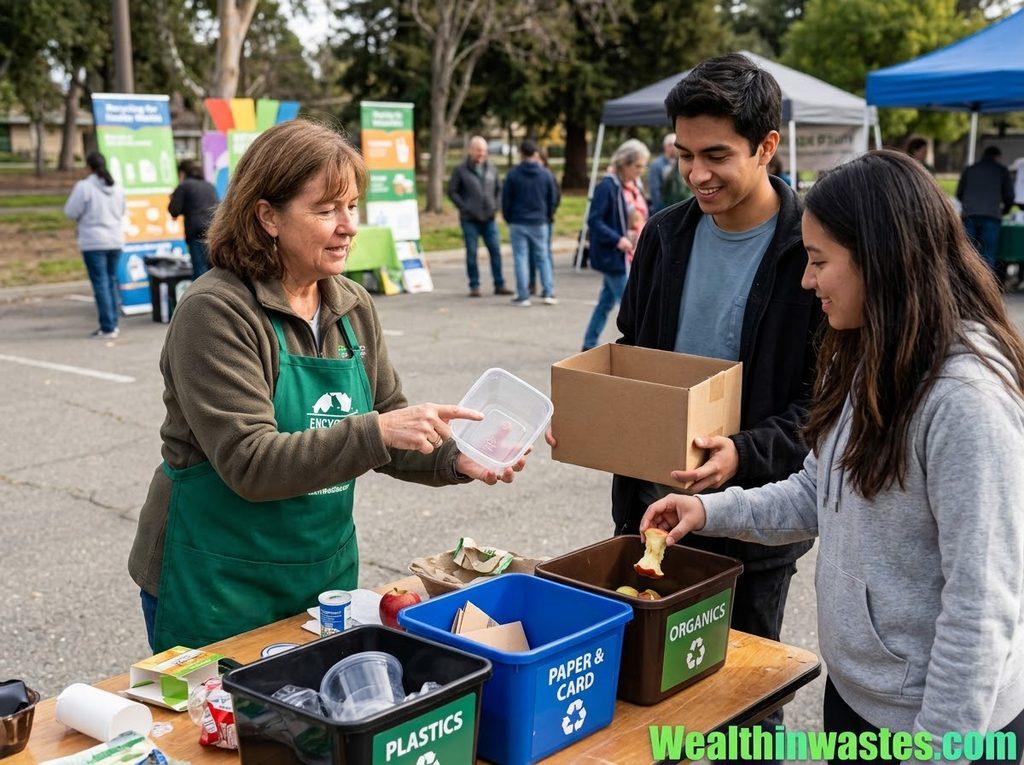
Environmental awareness begins when people recognize the relationship between human activities and ecological conditions. Education provides the explanations needed to understand why certain practices cause harm and how alternative behaviours can reduce pressure.
Awareness programmes should address issues people can observe directly, including littering, blocked drainage, polluted water, soil degradation, disappearing vegetation, excessive consumption, and unsafe disposal of household or industrial materials around them.
1. Community Awareness: Community-based education brings environmental information closer through meetings, workshops, demonstrations, discussions, and local campaigns. These activities address problems while encouraging residents to propose practical solutions suited to local community conditions.
2. School-Based Learning: Schools can introduce environmental concepts through science, social studies, projects, clubs, sanitation activities, gardening, recycling exercises, and field observations. These experiences help students connect environmental knowledge with responsible habits and meaningful participation.
3. Media-Based Education: Radio, television, social media, posters, text messages, and online content can extend environmental messages beyond classrooms. Repeated communication can reinforce important behaviours and reach people who rarely attend formal environmental programmes.
Environmental management in schools can reinforce awareness by connecting classroom knowledge with responsible practices involving waste, energy, water, sanitation, and resource use.
Community awareness also improves when learners understand biodiversity as a shared resource. Educational materials can encourage people to value habitats, wildlife, vegetation, and ecological relationships rather than viewing nature only through immediate economic benefits.
The value of biodiversity provides useful context for explaining why conservation protects ecological functions, cultural connections, natural resources, and opportunities for present and future generations.
Educational Intervention For Sustainable Behaviour

Knowledge alone does not guarantee action because environmental behaviour also depends on values, convenience, social expectations, available infrastructure, and perceived benefits. Educational intervention should address these factors rather than assume information automatically changes behaviour.
People need opportunities to practise sustainable choices. Sorting household waste, conserving water, reducing unnecessary consumption, protecting vegetation, and maintaining clean surroundings can become learning activities that strengthen environmental responsibility through repetition.
Behaviour-focused education should also explain consequences clearly. Learners can compare the short-term convenience of harmful practices with longer-term costs affecting health, agriculture, water quality, biodiversity, community appearance, and household expenditure.
Environmental management best practices can provide practical examples that educators adapt for households, schools, businesses, and community programmes seeking measurable improvements in sustainable behaviour.
Practical demonstrations make environmental messages more convincing. Showing how composting works, how waste separation reduces mixed refuse, or how soil conservation protects farmland allows participants to see useful results rather than hearing only theoretical explanations.
Waste reduction at source can become an educational activity because participants learn how good housekeeping, material changes, product changes, and improved processes reduce unnecessary waste generation.
Social reinforcement also matters. When families, schools, workplaces, religious groups, and community leaders support similar environmental standards, individuals receive consistent messages that make responsible behaviour easier to maintain over time.
Educational Intervention And Collective Environmental Action
Environmental problems often extend beyond individual households, making collective action essential. Education can help people understand shared responsibilities, organize around common concerns, communicate with authorities, and participate constructively in community environmental decisions.
1. Public Participation: Educational programmes can teach residents how to identify local environmental priorities, attend consultations, communicate concerns, and contribute useful evidence. Participation grows when citizens understand responsibilities and legitimate channels for environmental engagement.
2. Community Organization: Training can help neighbourhood groups develop clean-up activities, conservation projects, waste initiatives, monitoring teams, and awareness campaigns. Organized action helps residents combine skills and resources while maintaining responsibility for shared environmental goals.
3. Institutional Collaboration: Environmental education can connect schools, businesses, governments, researchers, nonprofit organizations, and community groups. Cooperation encourages shared planning, improves access to expertise, and helps programmes continue beyond short campaigns or isolated projects across communities.
Community environmental management demonstrates how local education, sustainable practices, and shared responsibility can strengthen environmental protection while building stronger participation among residents.
Collective education also supports informed pressure for improved environmental governance. When communities understand rules, responsibilities, and environmental consequences, they can demand better services and stronger implementation without relying solely on individual household behaviour.
Environmental protection legislation can support this process by establishing responsibilities, standards, enforcement mechanisms, and awareness initiatives that guide both institutions and citizens toward improved environmental performance.
Educational Intervention Through Media Channels

Media channels can make environmental education more accessible because they operate across distance and schedule limitations. Well-planned messages can reach farmers, students, workers, traders, households, and community leaders with locally relevant information.
Radio remains particularly useful where internet access varies, while television can combine explanation with demonstrations. Social media can support rapid sharing, discussion, short educational videos, and community reporting about environmental problems and solutions.
1. Clear Environmental Messages: Media content should use simple language, practical examples, credible information, and specific actions. Messages work better when audiences understand the problem, why it matters, and what they can reasonably do next.
2. Repeated Public Communication: Environmental behaviour often requires reinforcement. Repeated announcements, reminders, campaigns, and educational programmes can keep important issues visible while helping audiences remember practical actions such as proper disposal, conservation, and responsible consumption.
3. Audience-Specific Content: Different groups need different messages. Farmers may require soil and water conservation guidance, schools may need activity-based lessons, businesses need compliance information, while households need practical waste reduction and recycling advice.
The environmental effects of poor waste disposal offer strong examples for public campaigns because people can easily relate pollution, contamination, health risks, and ecosystem damage to everyday waste practices.
Digital communication can also promote rapid learning during environmental emergencies. Messages about flooding, pollution incidents, unsafe disposal, or community clean-up exercises can spread quickly when trusted organizations provide accurate and actionable information.
Effective waste management strategies can guide educational messages toward practical systems involving awareness, compliance, collection, reduction, recovery, and responsible disposal.
Educational Intervention For Environmental Governance
Environmental education supports governance by helping citizens understand laws, standards, responsibilities, procedures, and institutional roles. People who understand these systems can participate more effectively and recognize when environmental obligations require stronger implementation.
Government agencies also need informed personnel who can communicate regulations clearly, monitor environmental conditions, coordinate programmes, and support public engagement. Education therefore benefits both communities and institutions responsible for environmental management.
1. Environmental Policy Literacy: Citizens should understand the purpose of environmental laws, regulations, standards, and enforcement systems. This knowledge helps communities recognize legitimate requirements, support compliance, and communicate concerns when environmental responsibilities are ignored.
2. Accountability And Monitoring: Training can improve community understanding of monitoring, reporting, inspection, and environmental indicators. Better knowledge helps citizens provide useful observations while encouraging institutions and businesses to maintain stronger environmental performance and transparency.
3. Participatory Decision-Making: Education can prepare stakeholders to contribute to consultations, planning processes, assessments, and local environmental projects. Participation improves when people understand evidence, trade-offs, likely consequences, and responsibilities attached to different environmental decisions.
Environmental protection instruments demonstrate how assessment, regulation, planning, and other governance mechanisms can guide decisions that protect resources while allowing responsible development.
Effective governance becomes more responsive when education encourages constructive dialogue. Citizens can move from complaints alone toward informed participation, while authorities gain communities that understand policies and can cooperate with environmental programmes more effectively.
Effective waste management policies provide an example of how clear rules, public awareness, accountability, enforcement, and coordinated implementation can strengthen environmental outcomes at different levels.
Educational Intervention And Environmental Problem Solving
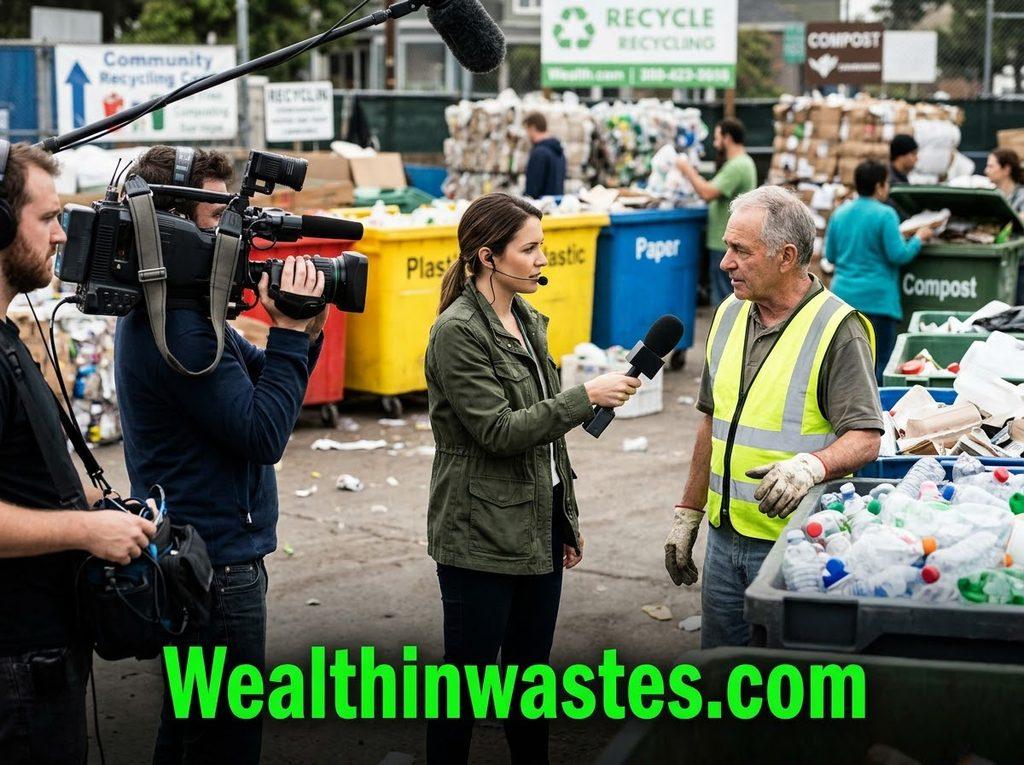
Environmental problems rarely have one simple cause, so educational intervention should develop problem-solving skills rather than provide isolated facts. Learners need to identify causes, assess impacts, compare alternatives, and select practical responses.
Project-based learning can strengthen these abilities through activities such as waste audits, water-use assessments, biodiversity observations, school gardens, community clean-ups, and local environmental surveys that produce evidence for discussion and action.
Education should also encourage critical thinking about trade-offs. A solution may reduce one environmental pressure while creating another, so participants need to consider costs, feasibility, social effects, resource availability, and long-term consequences.
Waste management case studies can support this learning because they allow students and community groups to compare real approaches, evaluate impacts, and identify lessons for future environmental decisions.
Problem-solving activities become stronger when participants evaluate their results. Reviewing what worked, what failed, and what needs adjustment helps communities improve future actions without repeating ineffective approaches or wasting resources unnecessarily.
Different recycling approaches can also serve as learning examples, helping participants understand material recovery, separation, reuse, processing choices, and the environmental value of responsible resource management.
Such learning creates environmental competence. People become better prepared to respond to new challenges because they learn transferable skills that can apply to pollution, waste, conservation, climate risks, resource management, and community development.
Strengthening Educational Intervention For Environmental Action
Successful programmes require planning, suitable teaching methods, relevant materials, committed facilitators, community participation, and ways to measure progress. Without these elements, environmental education may remain informative without producing sustained behavioural change.
1. Start With Local Needs: Programmes should begin by identifying environmental issues that matter most within the target community. Local priorities make education more relevant and allow examples, activities, and solutions to match real conditions.
2. Combine Knowledge With Practice: Teaching should pair explanations with demonstrations, projects, field activities, discussions, and practical exercises. Participants learn more effectively when they test ideas, observe results, and develop confidence through direct experience.
3. Measure Behaviour And Results: Evaluation should examine more than attendance or test scores. Programmes can assess participation, waste practices, resource use, community activities, awareness levels, and visible environmental improvements to determine meaningful change.
Proper waste recycling practices can provide measurable activities for educational programmes, particularly where schools, businesses, households, and communities need practical examples of source separation and material recovery.
Educational intervention should also include feedback from participants. Learners can identify barriers, suggest improvements, and describe how environmental programmes affect their routines, allowing organizers to refine approaches and maintain stronger community support.
The environmental and economic benefits of recycling can strengthen motivation by showing that responsible environmental practices may conserve resources, reduce disposal pressures, and support useful economic opportunities.
Environmental education also needs continuity. Short campaigns can create attention, but repeated learning and reinforcement help sustain habits, strengthen institutions, and keep environmental action active after an initial project or awareness event ends.
Read Also: Go Green Environmental Empowerment
Educational Intervention In Everyday Environmental Action
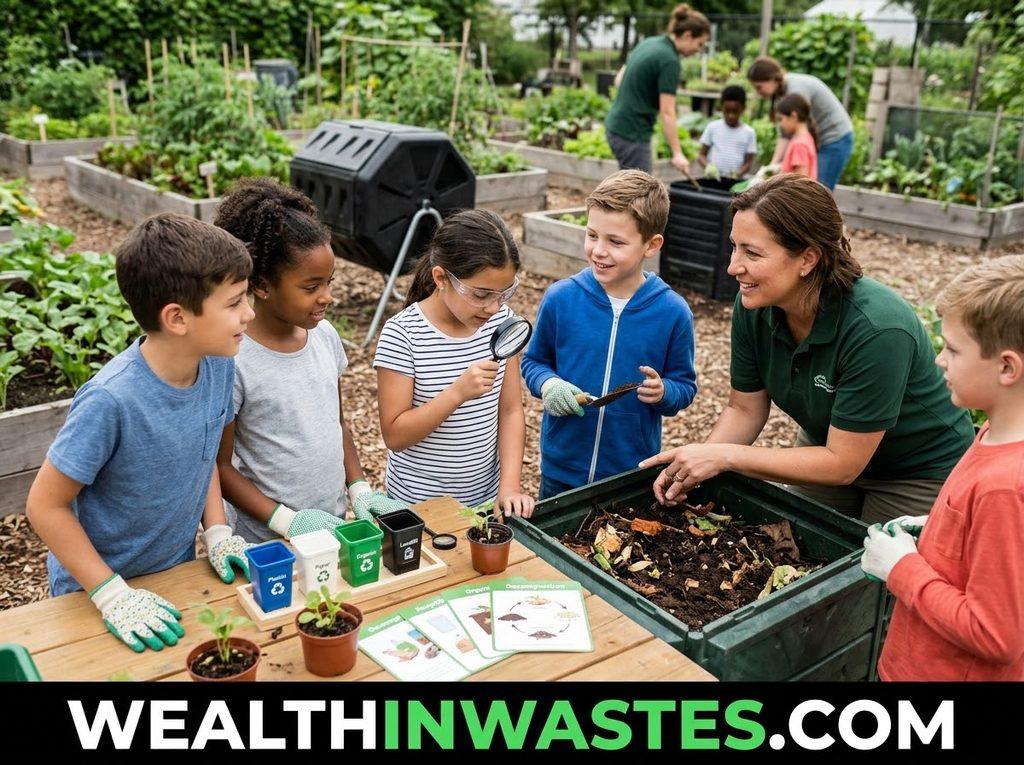
Environmental action becomes meaningful when education reaches daily routines. Household purchasing, waste handling, water use, energy choices, transport decisions, gardening, food practices, and community cleanliness all provide opportunities for responsible behaviour.
Parents and caregivers can reinforce environmental lessons at home by encouraging children to reduce waste, avoid littering, conserve water, care for plants, and understand why community resources require shared protection.
Proper litter management can become a practical household and school lesson because learners can connect clean surroundings with public health, ecosystem protection, community appearance, and responsible behaviour.
Schools can extend lessons through environmental clubs, practical sanitation activities, tree planting, gardens, recycling exercises, and student-led awareness projects. These activities provide visible opportunities for learners to practise responsibility and leadership.
The environmental impact of agricultural wastes can help learners understand how farm residues, animal waste, plastics, and unsafe disposal practices may affect soil, water, air, and ecological health.
Workplaces can support environmental learning through staff orientation, resource-saving guidelines, waste segregation systems, safety communication, and routine monitoring. Such measures help employees understand how daily decisions influence operational efficiency and environmental performance.
Industrial effluent impacts can also provide workplace education examples, particularly for organizations that need stronger understanding of pollution prevention, wastewater management, environmental monitoring, and safe resource use.
Everyday learning should also encourage responsible material choices. Recycling, reuse, repair, careful purchasing, and proper disposal become easier when people understand how consumption patterns influence waste generation and environmental pressure.
Useful products from inert wastes demonstrate how discarded materials can sometimes enter productive systems, supporting educational messages about resource recovery, reuse, innovation, and circular economy principles.
Environmental education can also connect waste reduction with broader development goals. Communities that reduce unnecessary waste, conserve resources, and protect ecosystems create better conditions for healthy living, productive work, and long-term resilience.
Waste management challenges in developing countries provide useful context for teaching how infrastructure, urbanization, population growth, public services, and environmental awareness interact.
Summary on The Role of Educational Intervention in Environmental Action
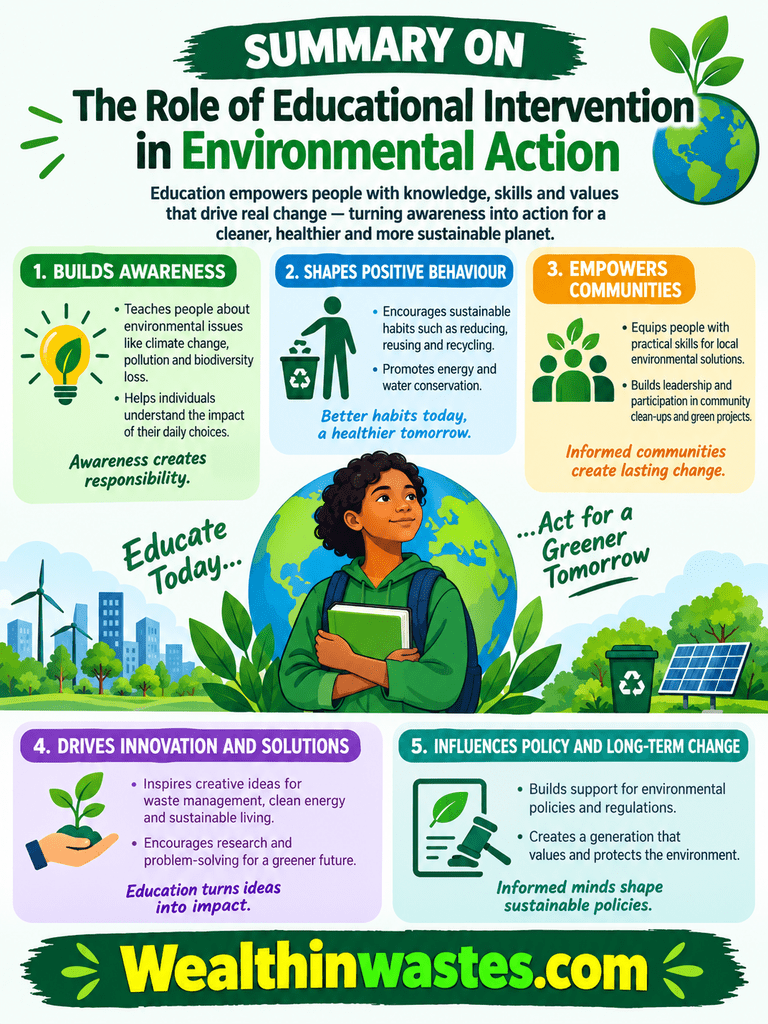
| Key Area | Summary |
|---|---|
| Environmental Awareness | Education helps people understand environmental problems, causes, consequences, and responsible choices. |
| Sustainable Behaviour | Practical learning encourages responsible waste handling, conservation, recycling, and resource use. |
| Collective Action | Education strengthens community participation, collaboration, and organized environmental initiatives. |
| Media Education | Radio, television, social media, posters, and digital platforms expand environmental messages. |
| Governance | Environmental literacy improves public participation, accountability, compliance, and policy understanding. |
| Problem Solving | Educational intervention develops observation, critical thinking, evaluation, and practical decision-making skills. |
| Everyday Action | Environmental lessons become meaningful when applied consistently in homes, schools, workplaces, and communities. |
| Long-Term Impact | Continued education can help turn environmental responsibility into lasting personal and collective habits. |
Frequently Asked Questions About The Role of Educational Intervention in Environmental Action
1. What is educational intervention in environmental action?
It is a planned educational process that builds environmental knowledge, skills, values, awareness, and participation needed to address environmental problems responsibly.
2. Why is environmental education important?
It helps people understand environmental challenges and develop practical behaviours that support conservation, pollution prevention, responsible resource use, and sustainable development.
3. Can educational intervention change environmental behaviour?
Yes. Education can influence behaviour when knowledge combines with practical activities, supportive infrastructure, social reinforcement, clear communication, and opportunities for participation.
4. What role do schools play in environmental action?
Schools can teach environmental concepts while providing practical experiences through clubs, sanitation activities, recycling exercises, gardening, conservation projects, and student-led campaigns.
5. How does media support environmental education?
Media expands environmental messages through radio, television, social media, posters, SMS, websites, videos, and other communication channels that reach diverse audiences.
6. Why is collective environmental action necessary?
Many environmental problems affect shared resources and require cooperation among households, communities, businesses, institutions, and government agencies rather than isolated individual efforts.
7. How does environmental education support governance?
It helps citizens understand environmental laws, responsibilities, standards, participation processes, and accountability mechanisms while improving communication between communities and institutions.
8. What makes environmental intervention successful?
Successful programmes usually combine relevant content, practical learning, local participation, effective communication, capable facilitators, supportive systems, evaluation, and continuous reinforcement.
Do you have any questions, suggestions, or contributions? If so, please feel free to use the comment box below to share your thoughts. We also encourage you to kindly share this information with others who might benefit from it. Since we can’t reach everyone at once, we truly appreciate your help in spreading the word. Thank you very much for your support and for sharing!
Read Also: Concept of Sustainable Development in Agriculture