


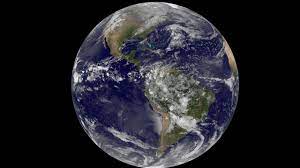
The Earth is the third planet from the Sun and the only known world that supports human life. Its surface provides the physical setting humans experience throughout their daily activities.
Earth’s Surface includes solid land, water bodies, soils, vegetation, and the environments where living organisms interact. These components connect through natural processes that continually reshape landscapes and influence human activities.
The atmosphere surrounds the planet, while the hydrosphere contains its water and the lithosphere forms its rocky outer layer. Together with the biosphere, these systems create conditions necessary for life.
Earth remains a dynamic planet because wind, flowing water, ice, weathering, erosion, tectonic forces, and living organisms continually modify its surface. Human activities also accelerate some changes and create new environmental pressures.
Understanding Earth’s Surface therefore helps people appreciate how land, water, soil, minerals, vegetation, and ecosystems support society. It also encourages responsible use of resources and better protection of environmental conditions.
The Meaning of Earth’s Surface
Earth’s Surface refers to the outermost part of the planet where solid ground, water, soil, vegetation, and living communities interact. It forms the physical environment humans experience throughout their daily activities.
Geographers and environmental scientists examine the surface as an active system rather than a fixed platform. Landforms, soils, water bodies, vegetation, and settlements constantly influence one another across different places.
This perspective supports environmental resource management and encourages responsible use of natural materials while maintaining environmental conditions needed by communities and ecosystems over time for sustainable development and resilience today.
Earth’s Surface contains materials that humans use for food, shelter, energy, transportation, industry, and cultural activities. These resources make the environment useful, while natural resources supplied by nature require careful management.
Landforms also influence where people establish settlements, develop farms, build roads, and locate industries. Plains often support intensive agriculture, while mountains, valleys, coasts, and river basins create different opportunities and environmental challenges.
The concept of Earth’s Surface therefore combines physical geography with human experience. People do not simply occupy land; they continuously interact with water, air, soil, vegetation, and minerals while changing their surroundings.
Read Also: Proper Waste Control Complete Guide
Main Components of Earth’s Surface
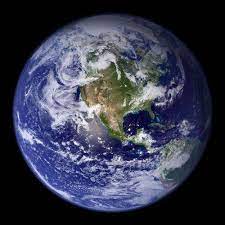
1. Lithosphere: The lithosphere forms Earth’s rigid outer layer and includes rocks, minerals, landforms, and soils. Understanding natural resource types shows how these materials support society, development, and infrastructure projects.
2. Hydrosphere: The hydrosphere includes oceans, rivers, lakes, groundwater, glaciers, and other water forms. Water supports drinking, sanitation, agriculture, industry, transportation, ecosystems, and survival within human communities and natural ecosystems.
3. Biosphere: The diversity of ecosystems reflects how organisms interact with varied environments. Plants, animals, microorganisms, and humans depend on relationships among air, water, soil, sunlight, and nutrients needed for life and ecological balance.
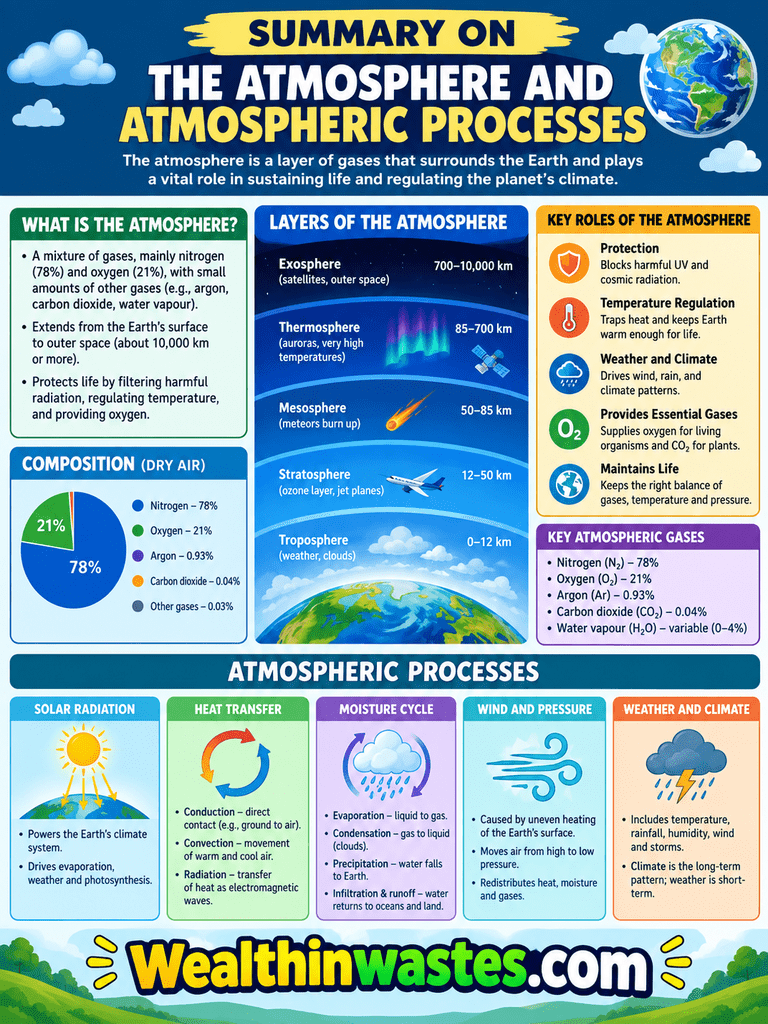
4. Atmosphere: The atmosphere supplies gases needed by organisms and influences temperature, rainfall, wind, and climate. Its interaction with land and water regulates many processes occurring across Earth’s Surface and surrounding environments.
5. Soils: Soils develop from weathered rock, organic matter, water, air, and biological activity. They support vegetation and agriculture while influencing drainage, nutrient cycling, land productivity, and the stability of human settlements.
6. Landforms: Mountains, plains, plateaus, valleys, hills, and coastal features create different physical settings. Their shape, elevation, drainage, and accessibility influence settlement patterns, farming systems, transportation, and environmental risks for communities and ecosystems.
How Earth’s Surface Supports Human Life
Earth’s Surface provides the basic physical conditions that make human settlement possible. People require breathable air, accessible water, fertile soil, food sources, building materials, and suitable spaces for homes locally.
These resources connect directly with human health, economic activity, and community development, while access to suitable land and clean water strongly influences the location and stability of settlements over generations.
Freshwater remains important because households, farms, industries, and ecosystems depend on reliable supplies. Understanding groundwater resources beneath Earth’s Surface helps communities recognize their value, vulnerability, and sustainable use for everyone in changing environmental conditions across communities and seasons.
Soils support crops by providing anchorage, water, air, nutrients, and habitat for organisms. Because agriculture depends heavily on productive land, soil and mineral resources require careful management for continued food production.
Natural ecosystems provide services that people often receive without direct payment, including water regulation, nutrient cycling, habitat, and climate moderation. Biodiversity and ecosystem functions therefore strengthen human well-being and long-term ecological stability.
The surface also provides physical space for transportation networks, marketplaces, schools, industries, recreation, and public facilities. Sound environmental planning helps these developments meet human needs without unnecessarily damaging natural systems.
Natural Processes Shaping Earth’s Surface
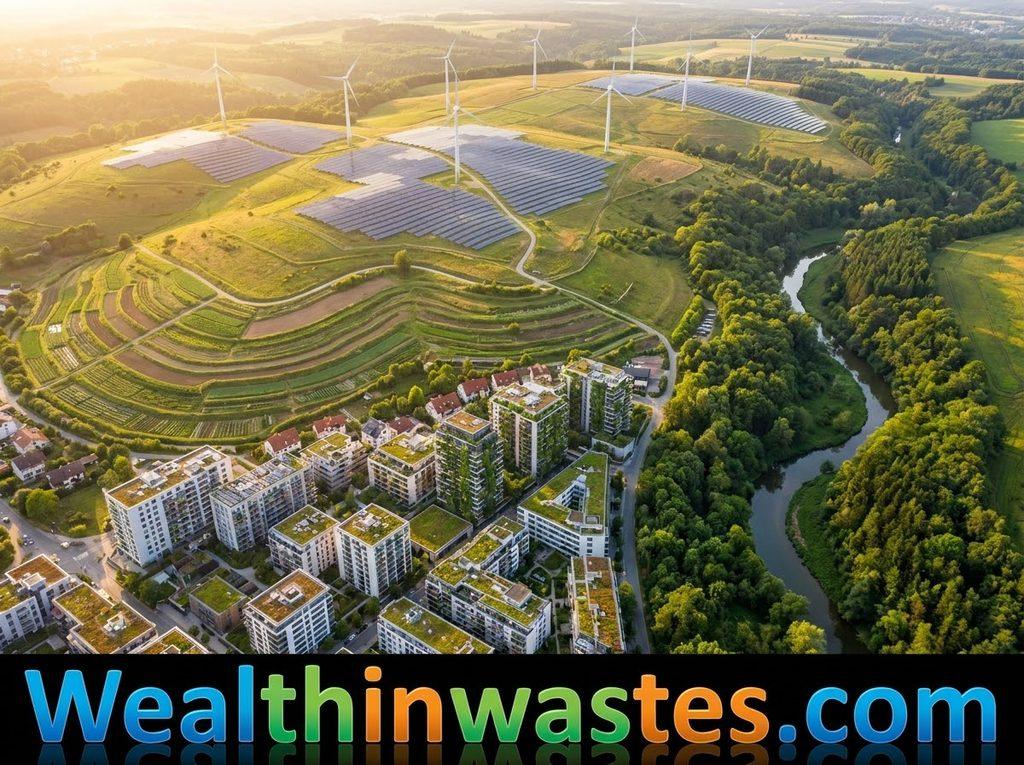
1. Weathering: Weathering breaks rocks into smaller particles through physical, chemical, and biological processes. Over time, it contributes to soil formation and changes the appearance and stability of landforms over long periods.
2. Erosion: Erosion removes and transports soil or rock materials through running water, wind, and ice. Severe erosion can reduce soil productivity and damage farms, rivers, roads, and settlements in vulnerable areas.
3. Deposition: Deposition occurs when transported sediments settle in new locations. Rivers, wind, glaciers, and waves can create beaches, floodplains, deltas, dunes, and other landforms through repeated sediment accumulation over time.
4. Tectonic Activity: Movements within Earth can uplift, fold, fracture, or shift the crust. These processes create mountains, valleys, and faults that influence drainage, settlement, agriculture, and ecosystems. Forests and rangelands interact with these landforms.
5. Water Movement: Rivers, streams, waves, and groundwater continuously move water across and beneath the surface. Their movement can carve channels, transport sediments, reshape banks, and influence the development of surrounding landforms.
6. Living Organisms: Plants, animals, microorganisms, and people also modify the surface. Roots break rocks, organisms form soil, animals disturb sediments, and human communities transform landscapes through settlement, farming, construction, and resource use.
Human Activities Changing Earth’s Surface
Human beings modify Earth’s Surface to meet social and economic needs. Agriculture clears land for crops, construction creates settlements, mining removes minerals, and infrastructure changes natural drainage across landscapes and alters natural environmental functions.
Tree removal can expose soil and reduce habitat, especially where vegetation disappears faster than natural regeneration occurs. The effects of deforestation and vegetation degradation can extend beyond farms and affect wider ecosystems.
Agricultural practices reshape soils through cultivation, grazing, irrigation, fertilization, and residue management. Poor practices may accelerate degradation, while resource conservation and multiple-use planning can reduce unnecessary environmental pressure across rural landscapes.
Human activities generate materials that enter surrounding land and water when poorly managed. Applying waste minimization principles reduces avoidable losses and limits environmental pressure from consumption and disposal activities in growing communities.
Urbanization replaces natural surfaces with roads, roofs, drains, and buildings. These changes can alter runoff, reduce infiltration, fragment habitats, and increase pressure on nearby water bodies when planning does not adequately consider environmental conditions.
Mining and industrial development can reshape terrain and disturb vegetation, soils, drainage, and local habitats. Such projects can produce important economic benefits, but they require responsible planning, monitoring, restoration, and pollution control.
Environmental Problems Affecting Earth’s Surface
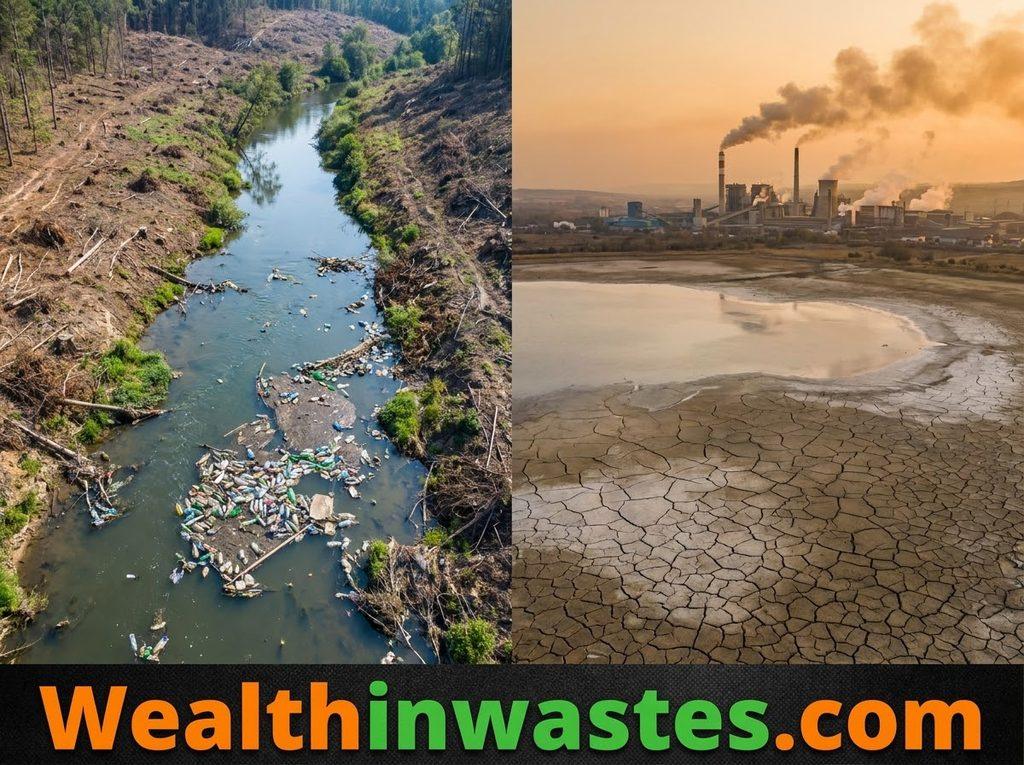
Pollution becomes a major concern when human activities introduce harmful substances or energy into land, water, or air. Environmental pollution from several sources can degrade habitats, affect resources, and create health risks.
Improper waste disposal can leave plastics, chemicals, organic matter, and other materials on land or in water. Effective municipal solid waste management prevents harmful accumulation around homes, communities, and public spaces.
Water bodies can receive contaminants from households, farms, industries, roads, and polluted runoff. Understanding water pollution sources and classifications helps communities identify risks, improve prevention, and protect freshwater resources nationwide.
Oil releases can affect soil, vegetation, surface water, groundwater, wildlife, and livelihoods. The wider effects and fate of oil pollution show why prevention, rapid response, and effective environmental control matter.
Pollution can also move from one environmental compartment to another. Contaminated soil may affect groundwater, polluted runoff may reach rivers, and airborne particles may settle on land, making coordinated environmental management essential.
Poorly managed waste and pollution can reduce the quality of places where people live, farm, work, and obtain water. Preventing contamination is usually more practical and economical than restoring severely damaged environments.
Ways to Protect Earth’s Surface
1. Conserve Vegetation: Protecting forests, grasslands, wetlands, and other plant communities reduces erosion, supports biodiversity, and maintains ecological functions. Tree planting and natural regeneration can restore areas affected by vegetation loss.
2. Protect Soil: Soil conservation includes maintaining vegetation cover, reducing unnecessary disturbance, managing runoff, and using suitable farming practices. These measures help preserve soil productivity and limit movement of valuable topsoil.
3. Recycle Materials: Reducing waste, reusing materials, recycling recoverable items, and disposing of residual waste properly can limit pressure on land and water. Recycling benefits also support resource conservation and reduce disposal pressure.
4. Monitor Conditions: Environmental monitoring programmes provide information about air, water, land, biodiversity, and other indicators. Regular assessment can reveal harmful changes early and support timely protective decisions for communities and natural systems.
5. Control Pollution: Preventing harmful discharges, managing chemicals carefully, and maintaining clean surroundings protect the quality of land, water, and air. Communities should address pollution sources before contamination becomes widespread and costly.
6. Restore Damaged Land: Degraded areas can recover through revegetation, erosion control, responsible soil management, improved drainage, and appropriate land-use planning. Restoration helps return ecological functions and improves the usefulness of damaged environments.
Read Also: Landfills: A Comprehensive Guide to Landfills
Sustainable Use of Earth’s Surface
1. Use Resources Wisely: Sustainable societies avoid unnecessary extraction and consumption. Careful use of land, water, minerals, energy, and biological resources helps maintain Earth’s Surface while supporting present needs and future generations.
2. Reduce Waste: Preventing unnecessary waste lowers pressure on disposal facilities and natural resources. Households, businesses, farms, and industries can improve efficiency by purchasing carefully, reusing materials, repairing products, and reducing avoidable losses.
3. Manage Liquid Waste: Untreated liquid discharges can contaminate land, surface water, and groundwater. Responsible liquid waste management protects environmental quality and reduces risks to people, livestock, crops, and aquatic ecosystems.
4. Plan Disposal Sites: Waste facilities should consider geology, soil, water movement, drainage, climate, access, and nearby ecosystems. Proper selection of waste disposal sites can reduce environmental risks affecting communities and ecosystems.
5. Encourage Sustainable Agriculture: Farmers can maintain productivity through soil conservation, crop rotation, suitable irrigation, organic matter management, and vegetation protection. Such practices reduce degradation and help preserve the productive capacity of agricultural land.
6. Support Environmental Education: People make better environmental decisions when they understand how their actions affect land, water, air, and biodiversity. Education can encourage responsible resource use, pollution prevention, conservation, and community participation.
Summary on The Concept of the Earth’s Surface as the Home of Man
| Aspect | Key Point |
|---|---|
| Earth’s Surface | The outer environment where land, water, air, soil, vegetation, and living organisms interact. |
| Major Components | Lithosphere, hydrosphere, biosphere, atmosphere, soils, and landforms. |
| Human Importance | Provides water, food, land, minerals, building materials, habitats, and spaces for settlement and development. |
| Natural Changes | Weathering, erosion, deposition, water movement, tectonic activity, and biological processes continually reshape the surface. |
| Human Impacts | Agriculture, urbanization, mining, construction, deforestation, waste generation, and industrial activities modify environmental conditions. |
| Protection | Conservation, recycling, pollution prevention, monitoring, restoration, sustainable agriculture, and responsible resource use protect the surface. |
Frequently Asked Questions About The Earth’s Surface: Understanding the Home of Man
1. What is Earth’s Surface?
Earth’s Surface is the outer part of the planet where land, water, soil, vegetation, atmosphere, and living organisms interact and support human activities and ecological processes.
2. Why is Earth’s Surface important to humans?
It provides the land, water, soil, biological resources, minerals, and physical spaces people need for food production, shelter, transportation, employment, settlement, and economic development.
3. What are the main components of Earth’s Surface?
The major components include the lithosphere, hydrosphere, biosphere, atmosphere, soils, landforms, vegetation, water bodies, and the many ecosystems that connect these environmental systems together.
4. How do natural processes change Earth’s Surface?
Weathering, erosion, deposition, tectonic movements, flowing water, waves, wind, ice, and living organisms continually reshape rocks, soils, landscapes, drainage systems, and habitats across different environments.
5. How do humans change Earth’s Surface?
Humans change the surface through farming, mining, construction, urbanization, road development, deforestation, waste disposal, industrial activities, drainage modification, and other forms of resource exploitation.
6. How can Earth’s Surface be protected?
Protection requires conserving vegetation, managing soil, reducing pollution, recycling materials, controlling waste, monitoring environmental conditions, restoring degraded land, and using natural resources responsibly.
Do you have any questions, suggestions, or contributions? If so, please feel free to use the comment box below to share your thoughts. We also encourage you to kindly share this information with others who might benefit from it. Since we can’t reach everyone at once, we truly appreciate your help in spreading the word. Thank you very much for your support and for sharing!
Read Also: Conservation and Management of Natural Resources in Agriculture