


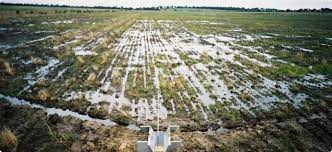
Soil salinization is one of the major forms of land degradation associated with poorly managed irrigation, especially where evaporation exceeds rainfall and dissolved salts gradually accumulate within cultivated soil.
Farmers depend on irrigation to maintain crop production when rainfall becomes insufficient, irregular, or poorly distributed. However, irrigation can create serious soil problems when water application exceeds crop requirements.
Every irrigation source contains some dissolved minerals and salts. When plants absorb water and evaporation removes moisture from the soil surface, these dissolved substances remain behind and gradually increase soil salinity.
Soil salinization becomes more serious when drainage remains poor because excess irrigation water raises the water table and moves salts upward toward the active root zone where crops require healthy moisture.
Waterlogging often develops alongside salinity, creating a difficult growing environment where roots receive insufficient oxygen while plants also struggle to absorb water efficiently from increasingly saline soil.
Understanding the relationship between irrigation, soil salinity, waterlogging, runoff, and erosion helps farmers protect productive land while using available water resources more efficiently and sustainably.
What Is Soil Salinization?
Soil salinization occurs when soluble salts accumulate in soil to concentrations that interfere with normal crop growth. The problem commonly develops where irrigation, evaporation, and drainage remain poorly balanced.
Common soluble salts include compounds containing sodium, calcium, magnesium, chloride, sulfate, and bicarbonate. Their concentration can gradually increase when irrigation water repeatedly enters soil without enough downward movement.
Soil texture, climate, groundwater depth, drainage conditions, irrigation quality, and evaporation rates all influence how quickly salts accumulate. Farmers therefore need management practices suited to local soil and climatic conditions.
Salinity reduces the ability of plant roots to obtain water because dissolved salts increase the osmotic pressure of soil solution. Plants may experience water stress even when the soil appears visibly moist.
Salt accumulation can also disturb nutrient availability and create specific toxicity problems when certain ions reach excessive concentrations. Sensitive crops usually show damage earlier than tolerant crops grown under similar conditions.
Farmers can better understand salinity risk by examining soil moisture movement, drainage, irrigation frequency, and visible crop responses. Reliable assessment also helps distinguish salinity from unrelated nutrient deficiencies.
Understanding soil moisture conditions provides an important foundation because moisture controls salt movement, infiltration, evaporation, and the availability of water around crop roots.
Read Also: Soil Meaning and Soil Properties
How Irrigation Causes Soil Salinization
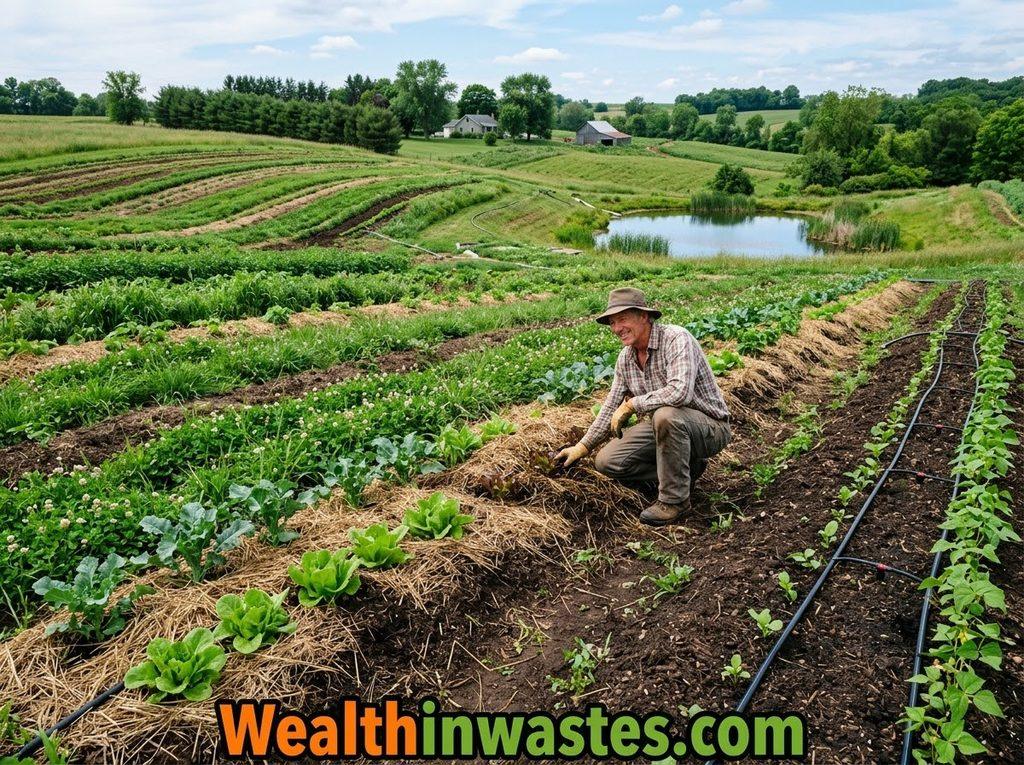
Irrigation causes salinization mainly when applied water contains dissolved salts and evaporation removes relatively pure water from the soil. The remaining salts become progressively concentrated after repeated irrigation cycles.
In rainfed agriculture, regular rainfall can move soluble salts downward and away from shallow root zones. Irrigated agriculture may require deliberate leaching because rainfall alone might provide insufficient natural flushing.
Repeated irrigation without appropriate drainage can therefore create a cycle of salt accumulation. Each irrigation event adds water and dissolved substances, while evaporation and plant transpiration remove much of the water.
Canal seepage can also raise groundwater levels beneath cultivated fields, especially where irrigation channels remain unlined or soils restrict downward water movement. Rising groundwater can transport dissolved salts toward plant roots.
Excessive irrigation does not automatically solve salinity because surplus water may simply raise the water table. Effective management requires enough water to meet crop demand while allowing controlled drainage below the root zone.
Farmers who understand hydrological processes can make better irrigation decisions by considering rainfall, infiltration, soil moisture, groundwater movement, runoff, and drainage together.
Signs And Effects Of Soil Salinization
Early identification of salinity allows farmers to respond before crop losses become severe. Field observations can reveal changes in crop appearance, soil surface conditions, infiltration, and plant distribution.
Common visible signs include poor germination, uneven crop growth, leaf scorching, stunted plants, patchy vegetation, and reduced yields. Salt crystals or whitish deposits may also appear on exposed soil surfaces.
Soil salinity can reduce plant water uptake even when sufficient moisture remains available. Crops therefore behave as though drought exists because roots require more energy to extract water from saline soil.
High concentrations of sodium can damage soil structure by dispersing soil particles. This condition may reduce infiltration and permeability, allowing additional water to remain near the surface and increasing waterlogging risks.
Crop productivity may decline progressively as salinity increases. Germination becomes difficult, plant development slows, flowering may decrease, and final harvests can become uneconomic when sensitive crops occupy severely affected fields.
Salinization also contributes to broader land suitability concerns because productive agricultural land can become less suitable for crops when chemical and physical soil conditions deteriorate.
Waterlogging And Root-Zone Problems
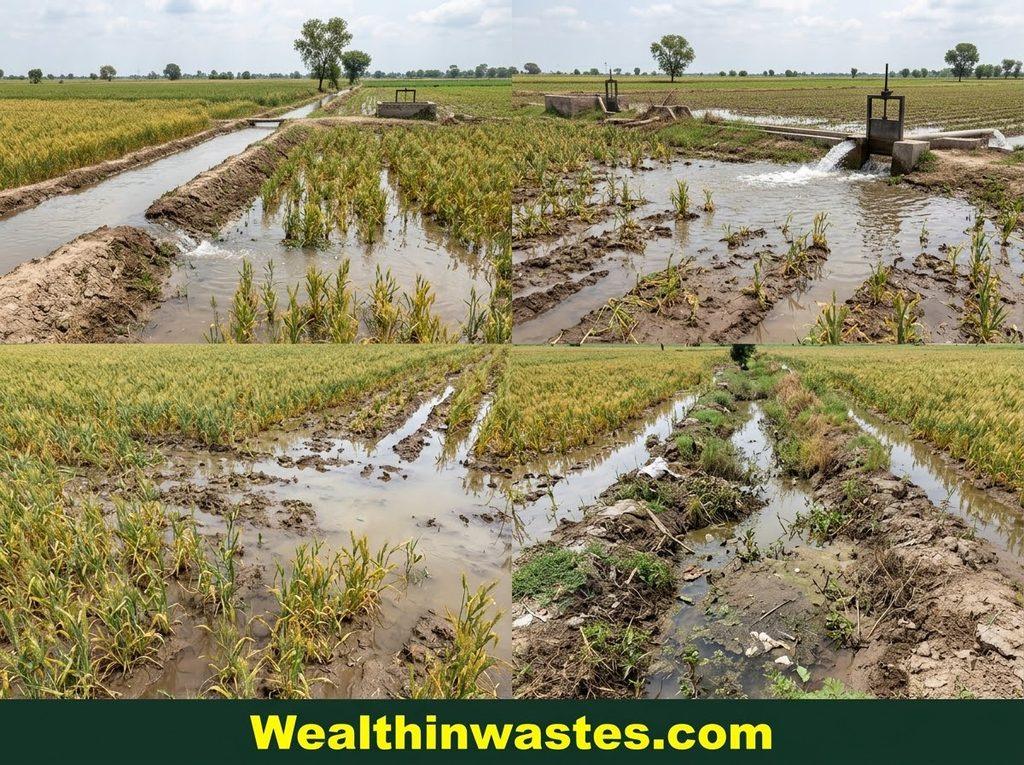
Waterlogging occurs when excess water fills soil pores for extended periods, reducing the air available around plant roots. Irrigated fields commonly experience this problem when water enters faster than drainage removes it.
Plant roots need oxygen for respiration and nutrient uptake. When saturated soil excludes oxygen, root activity declines and crops become more vulnerable to nutrient disorders, disease pressure, poor growth, and premature deterioration.
Waterlogging can also move salts within the soil profile. As groundwater rises, dissolved salts may approach the surface through capillary movement, especially in fine-textured soils with strong upward water movement.
Farmers should therefore treat salinity and waterlogging as connected management problems rather than isolated conditions. Improving drainage can reduce both excess water and the upward movement of dissolved salts.
Poorly drained fields may become difficult to cultivate because heavy machinery can compact wet soil, while repeated saturation can weaken soil structure and restrict infiltration after the field eventually dries.
The relationship between waterlogging and soil erosion processes also matters because poor soil structure, exposed surfaces, and uncontrolled runoff can accelerate further degradation around affected agricultural land.
Major Causes Of Irrigation Waterlogging
1. Excessive Irrigation: Applying more water than crops and soil can effectively use increases deep percolation and raises groundwater levels. Repeated over-irrigation can therefore saturate the root zone and accelerate associated salinity problems.
2. Poor Natural Drainage: Heavy clay soils, shallow restrictive layers, flat terrain, and compacted profiles can slow downward water movement. When irrigation continues under these conditions, excess moisture remains within the root zone.
3. Canal Seepage: Water escaping from irrigation canals can continuously recharge shallow groundwater. Where channels remain poorly maintained or unsuitable for local conditions, seepage can cause nearby farmland to become saturated over time.
4. High Water Tables: Naturally shallow groundwater can limit drainage and bring salts closer to the surface. Irrigation may worsen this condition by adding water faster than the underlying aquifer can accommodate.
5. Soil Compaction: Compacted layers reduce pore spaces and restrict infiltration. Heavy machinery, repeated cultivation, and poor traffic management can therefore encourage surface ponding, slow drainage, and increase the likelihood of prolonged saturation.
6. Inadequate Field Drainage: Without effective surface or subsurface drainage systems, excess irrigation water remains trapped. Proper drainage provides a controlled pathway for surplus water to leave cultivated soil safely.
Farmers can reduce these risks by applying sustainable soil management practices that protect soil structure, maintain organic matter, reduce unnecessary disturbance, and improve the movement of air and water.
Practical Methods To Prevent Soil Salinity
1. Use Irrigation Efficiently: Apply water according to crop requirements, soil moisture conditions, weather, and growth stage. Efficient scheduling prevents unnecessary applications while supplying enough moisture to maintain healthy crop development.
2. Maintain Effective Drainage: Provide suitable surface or subsurface drainage where necessary. Drainage lowers excessive water tables and creates pathways through which salts and surplus moisture can leave the root zone.
3. Monitor Soil Salinity: Regularly inspect fields and test soil or irrigation water when possible. Monitoring allows farmers to detect increasing salt concentrations early and adjust irrigation or drainage practices promptly.
4. Apply Controlled Leaching: Where drainage permits, additional high-quality water can move accumulated salts below the root zone. Leaching works best when farmers combine suitable water application with adequate drainage capacity.
5. Improve Soil Organic Matter: Organic amendments can improve aggregation, infiltration, water retention, and biological activity. Using properly managed compost and organic materials can therefore support healthier soils under irrigation.
6. Select Suitable Crops: Salt-tolerant crops can perform better where salinity cannot immediately be eliminated. Crop selection should consider local climate, soil conditions, irrigation-water quality, market demand, and the severity of salt accumulation.
Adding well-managed organic materials can support these efforts because compost improves soil structure and water retention, helping fields manage moisture more effectively under changing irrigation conditions.
Farmers can also use agricultural organic resources carefully to improve soil physical condition, while avoiding excessive applications that could introduce unwanted nutrients or contaminants into soil and water.
Water Runoff And Soil Erosion
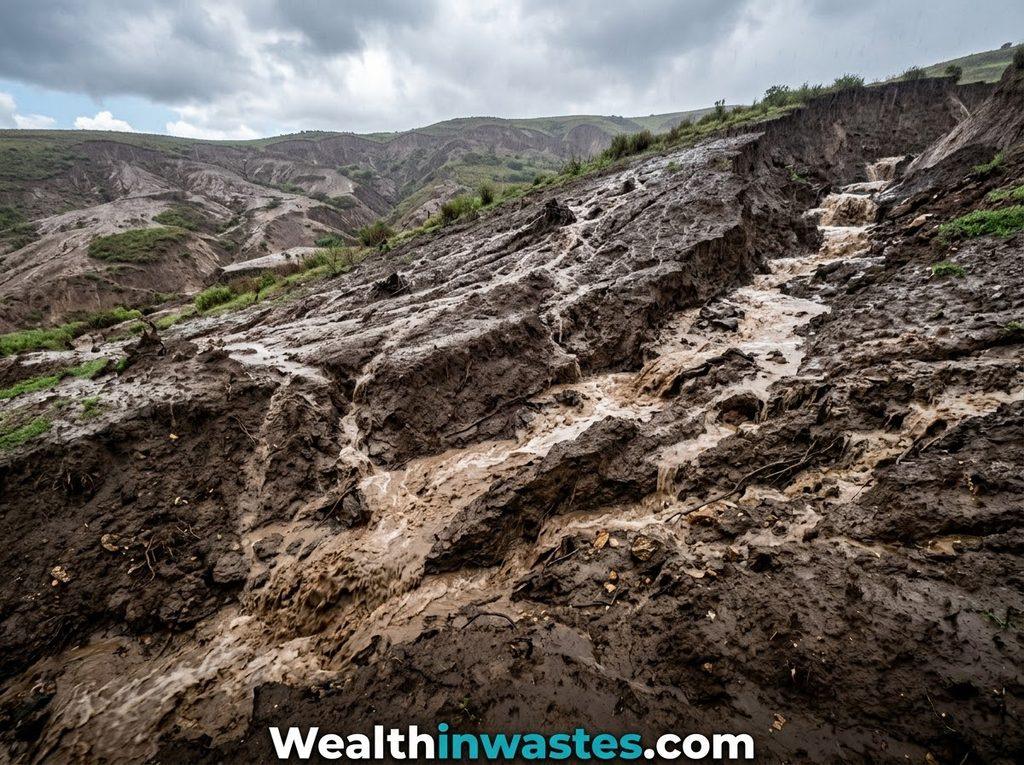
Water runoff occurs when rainfall or irrigation water reaches the soil surface faster than the soil can absorb it. Uncontrolled runoff can transport valuable topsoil, nutrients, organic matter, and agricultural chemicals.
Soil erosion reduces productive soil depth and can expose poorer subsoil. Eroded surfaces may also lose infiltration capacity, allowing more water to move across the field instead of entering the root zone.
Vegetation provides an important protective layer because plant canopies reduce raindrop impact while roots stabilize soil particles. Maintaining suitable ground cover can therefore reduce both runoff speed and soil detachment.
Conservation practices such as mulching, contour farming, strip cropping, cover crops, reduced tillage, and terraces help control runoff. Their effectiveness depends on rainfall intensity, soil type, slope, and farm management.
Farmers should also protect waterways from sediment and agricultural pollutants. Managing field runoff reduces downstream impacts while keeping more soil moisture and nutrients available for crop production.
Good conservation planning should consider soil and water conservation methods together because erosion control, water retention, drainage, and vegetation management influence one another across the farm landscape.
Runoff can also carry pollutants into streams and groundwater, making agricultural wastewater management important for protecting water quality and reducing environmental risks associated with poorly controlled irrigation drainage.
Similarly, understanding water pollution sources helps farmers recognize how sediment, fertilizers, pesticides, and dissolved substances can leave fields through runoff or drainage water.
Read Also: Proper Waste Control Complete Guide
Sustainable Soil And Water Management
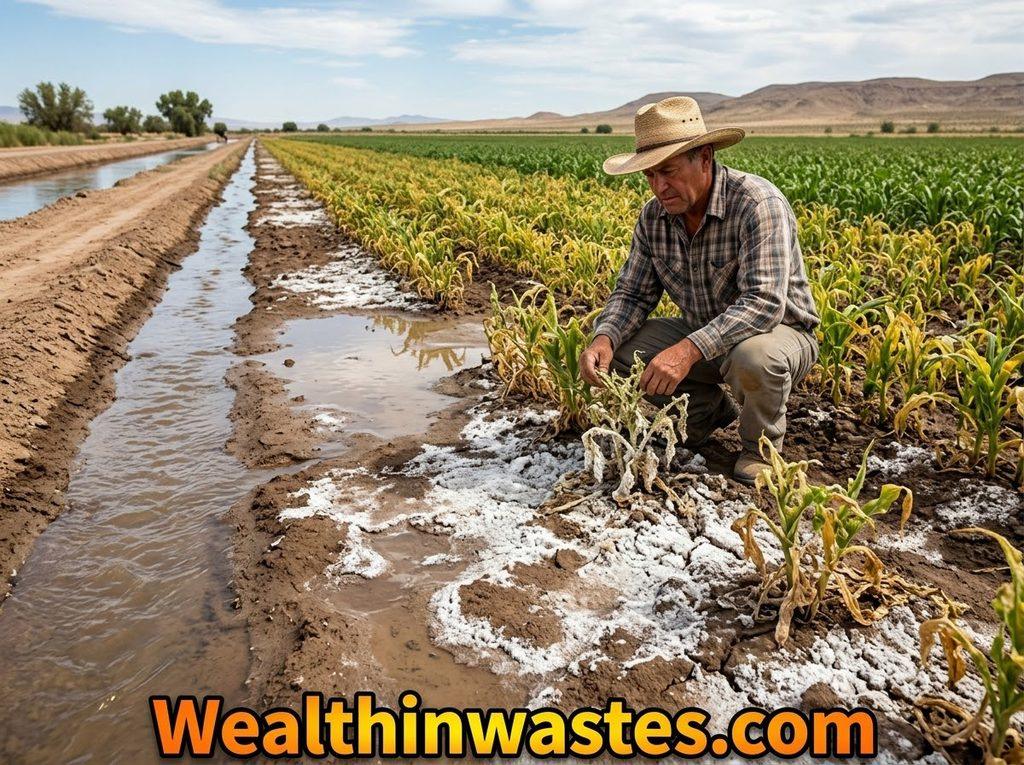
1. Improve Water Management: Match irrigation amounts with crop needs and monitor soil moisture regularly. Avoiding unnecessary applications reduces waste, limits rising groundwater, and helps prevent conditions that encourage salinity and waterlogging.
2. Protect Soil Structure: Minimize unnecessary cultivation and reduce compaction caused by traffic on wet fields. Stable soil aggregates promote infiltration, aeration, root growth, and resistance to erosion under rainfall.
3. Maintain Vegetative Cover: Cover crops, residues, mulches, and suitable perennial vegetation protect the surface from direct rainfall. Vegetative cover also slows runoff, improves infiltration, and contributes organic matter as materials decompose.
4. Protect Water Resources: Farmers should prevent polluted drainage from reaching rivers, ponds, wetlands, and groundwater. Responsible fertilizer use, safe wastewater handling, erosion control, and drainage management protect surrounding water systems.
5. Monitor Groundwater: Where irrigation is intensive, farmers should observe water-table changes and drainage performance. Rising groundwater can signal excessive seepage or irrigation and may indicate increasing salinity risk.
6. Use Integrated Conservation: Combine irrigation management, drainage, soil protection, organic matter improvement, erosion control, and appropriate cropping systems. Integrated measures provide stronger protection than relying on one corrective practice alone.
Farmers can strengthen water efficiency through water conservation practices that reduce unnecessary consumption while maintaining sufficient moisture for healthy crop development.
Watershed-scale planning also matters because farms share drainage pathways with surrounding communities. Watershed management approaches can reduce pollution movement and protect downstream agricultural and ecological resources.
Protecting irrigation sources remains equally important because water-resource protection helps maintain the quality and reliability of water used for farming, livestock, household needs, and environmental functions.
Where treated wastewater becomes an irrigation option, careful management remains essential because wastewater reuse can introduce salts and other constituents that require monitoring before long-term agricultural application.
Good water-quality management also depends on understanding water quality principles, including contamination prevention, appropriate monitoring, safe reuse, and practices that protect water resources from avoidable agricultural pollution.
Soil conservation becomes stronger when farmers combine organic matter management, reduced disturbance, vegetation cover, and suitable drainage. These practices improve resilience while supporting long-term agricultural productivity.
Farmers interested in climate-resilient production can also consider climate-smart sustainability practices because changing rainfall patterns, drought, heat, and extreme events can alter irrigation demand and soil-water relationships.
Managing land carefully also reduces contamination risks because poor agricultural practices and harmful irrigation methods can contribute to soil degradation and the accumulation of unwanted substances.
Responsible management should extend beyond individual fields because environmental pollution pathways can connect agricultural land with surrounding air, surface water, groundwater, ecosystems, and human communities.
Site characteristics also influence drainage and groundwater risk. Understanding soil condition, topography, and drainage factors can help planners identify locations where water movement may create environmental problems.
Finally, composting organic materials can support long-term soil improvement when properly managed. Making compost from suitable organic waste provides another practical way to recycle useful materials while supporting soil health.
Preventing soil salinization is more economical than allowing severe degradation to develop and then attempting expensive rehabilitation. Farmers should therefore monitor irrigation water, soil moisture, drainage, groundwater, and crop performance continuously.
Summary on Causes, Effects of Soil Salinization and Waterlogging in Irrigation Solutions
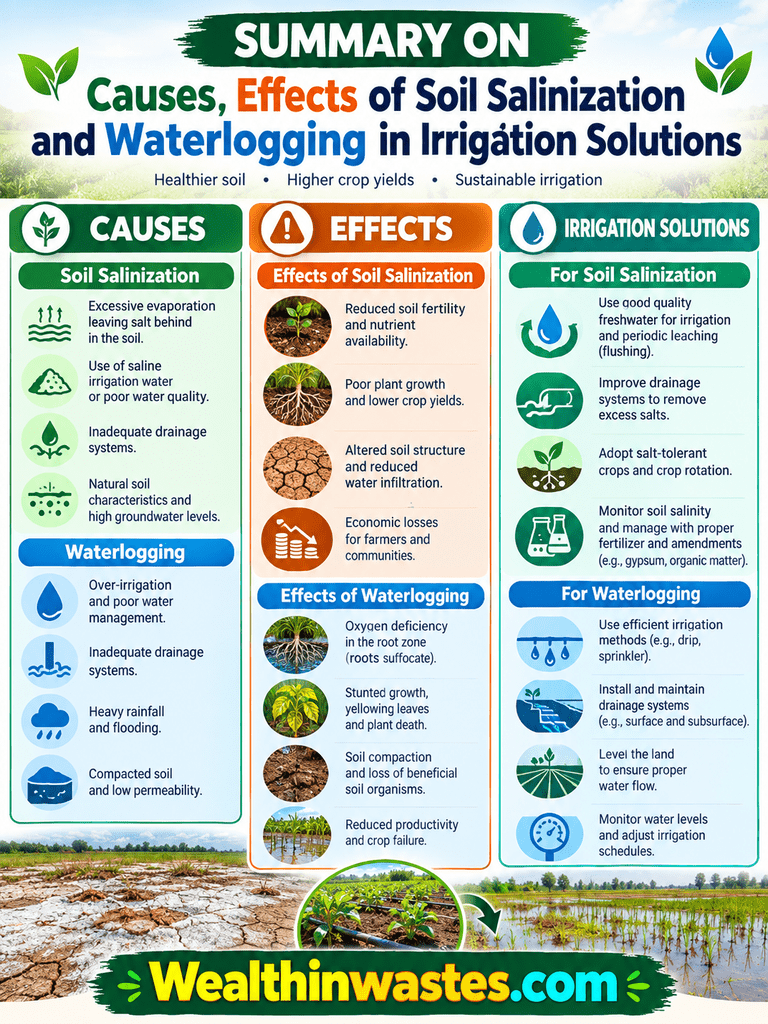
| Section | Main Idea | Why It Matters |
|---|---|---|
| Soil Salinization | Salt accumulates when irrigation water, evaporation, and drainage remain poorly balanced. | Excess salts can restrict plant water uptake and reduce crop productivity. |
| Irrigation | Repeated irrigation can concentrate dissolved salts within cultivated soil. | Efficient water use reduces unnecessary salt accumulation. |
| Waterlogging | Excess water fills soil pores and limits oxygen around roots. | Poor aeration weakens roots and can increase salinity risks. |
| Prevention | Efficient irrigation, drainage, monitoring, leaching, organic matter, and crop selection help manage salinity. | Integrated management protects productive agricultural land. |
| Erosion | Runoff can remove soil, nutrients, organic matter, and agricultural chemicals. | Conservation practices protect soil resources and water quality. |
| Sustainability | Long-term management combines soil, water, drainage, and vegetation practices. | Integrated conservation improves farm resilience and productivity. |
Frequently Asked Questions About Soil Salinization: Causes, Effects and Irrigation Solutions
1. What is soil salinization?
Soil salinization is the accumulation of soluble salts within soil to levels that interfere with normal plant growth and agricultural productivity.
2. Why does irrigation cause soil salinity?
Irrigation water contains dissolved salts, while evaporation and plant transpiration remove water and leave much of the dissolved salt behind.
3. What is waterlogging?
Waterlogging occurs when excess water saturates soil for extended periods, reducing oxygen availability around plant roots.
4. Can drainage reduce soil salinity?
Yes. Effective drainage allows excess water and dissolved salts to move away from the root zone, especially when combined with controlled leaching.
5. What are common signs of salinized soil?
Common signs include poor germination, patchy crop growth, leaf scorching, stunted plants, reduced yields, and white salt deposits on soil surfaces.
6. How can farmers prevent soil salinization?
Farmers can improve irrigation efficiency, maintain drainage, monitor soil and water quality, control groundwater levels, improve soil structure, and select suitable crops.
7. Does excessive irrigation always improve crop production?
No. Excessive irrigation can waste water, raise groundwater levels, increase waterlogging, and accelerate salt accumulation in poorly drained fields.
8. Why is soil erosion related to irrigation management?
Poor irrigation can produce runoff that removes topsoil, nutrients, and organic matter, reducing infiltration and weakening long-term soil productivity.
9. Can organic matter help salinity management?
Properly managed organic matter can improve aggregation, infiltration, water retention, and soil biological activity, supporting better overall soil-water management.
10. Which crops are suitable for saline conditions?
Salt tolerance varies among crops and varieties. Farmers should select locally suitable tolerant crops based on soil tests, irrigation-water quality, climate, and market requirements.
Do you have any questions, suggestions, or contributions? If so, please feel free to use the comment box below to share your thoughts. We also encourage you to kindly share this information with others who might benefit from it. Since we can’t reach everyone at once, we truly appreciate your help in spreading the word. Thank you very much for your support and for sharing!
Read Also: Soil and Water Conservation in Agriculture