


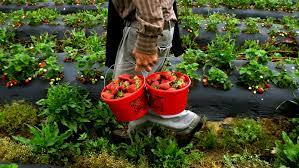
Pesticides support modern agriculture by protecting crops from insects, weeds, fungi, and other damaging organisms. Their use can improve yields, reduce losses, and help maintain dependable food supplies worldwide today.
However, pesticide use can also introduce contaminants into air, soil, water, and food. Poor application practices, accidental contact, and repeated exposure may increase opportunities for harmful health effects in humans.
People can encounter pesticides during application, handling, storage, disposal, occupational activities, or consumption of contaminated food and water. The route of entry influences where exposure begins and how the body responds.
The amount entering the body also matters because toxic effects often change as exposure increases. Toxicology therefore examines both the pathway of exposure and the relationship between dose and response.
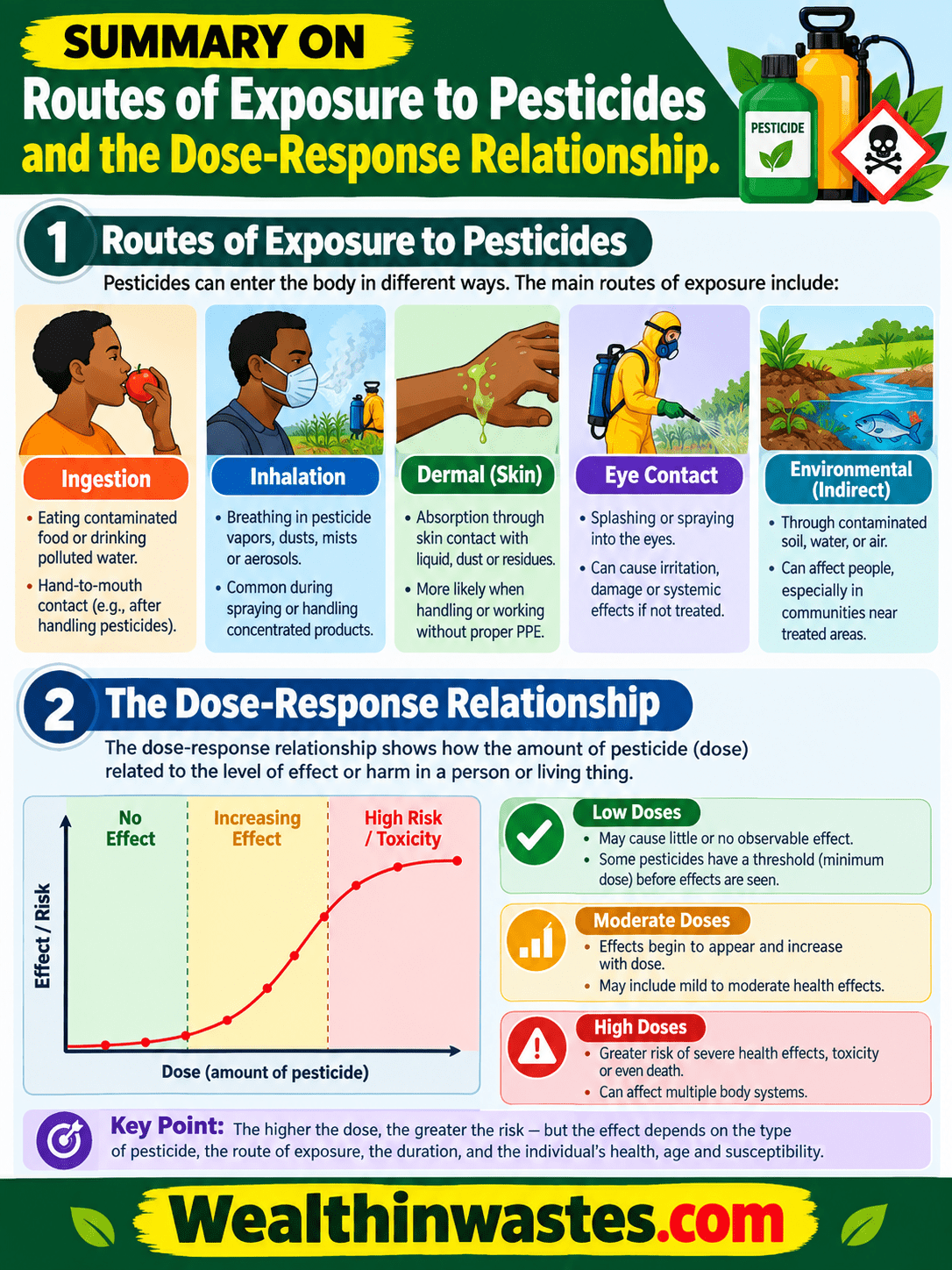
Understanding pesticides and the dose-response relationship helps readers interpret exposure scenarios, compare different dose measures, recognize important risk factors, and appreciate why safe handling and responsible pesticide management remain essential.
Routes of Exposure to Pesticides
1. Inhalation: Respiratory exposure to pesticide vapors, gases, mists, dusts, and aerosols may enter through the nose or mouth. Some material remains in respiratory tissues, while absorbed chemicals can reach the bloodstream and distant organs.
2. Skin And Eye Absorption: Dermal contact may cause irritation, dermatitis, or deeper tissue injury. Some pesticides cross intact skin, while eye exposure can produce severe local effects or permit rapid absorption into circulation.
3. Ingestion: Pesticides can enter the digestive tract through contaminated food and water, hands, equipment, or accidental swallowing. Soluble chemicals may cross intestinal tissues and travel through blood to organs that are sensitive.
4. Injection: Pesticides may enter directly when contaminated needles, sharp objects, broken skin, or high-pressure equipment penetrates tissue. Direct entry can bypass protective barriers and place chemicals rapidly into underlying tissues or circulation.
Read Also: Factors Influencing Pesticide Degradation in Soils
How Pesticides Enter the Body
When a pesticide contacts the body, its effects depend on how much reaches tissues and how quickly absorption occurs. Some exposures remain near the contact site, while others produce systemic effects after distribution.
Respiratory exposure can affect the nose, throat, and lungs before absorption occurs. The severity may depend on particle size, concentration, duration of exposure, ventilation, and the chemical properties of the pesticide.
During dermal exposure, the outer skin barrier can limit absorption, but damaged skin, prolonged contact, solvents, heat, and certain pesticide formulations may increase penetration into deeper tissues and surrounding areas.
Eye contact deserves particular attention because the eyes have delicate tissues and limited protection against chemicals. Splashing, drifting sprays, contaminated hands, or airborne droplets can create significant exposure during pesticide work.
After ingestion, digestive processes can change the availability of a chemical before absorption. Some substances remain poorly absorbed and leave the body, whereas others enter circulation and undergo further transformation.
Pesticides can also move through environmental media before reaching people. Their transport through soil and water pathways can influence indirect exposure through crops, drinking water, livestock, and aquatic foods indirectly.
Understanding soil conditions is important because exposure does not always occur at the original application site. Environmental conditions, persistence, rainfall, irrigation, and degradation can change where residues eventually appear locally.
Pesticides and the Dose-Response Relationship
The dose-response relationship describes how the magnitude or frequency of a biological effect changes as the amount of an exposed substance changes. It provides a foundation for evaluating chemical toxicity.
A dose may produce no observable effect at one level but produce measurable responses at higher levels. Researchers examine these patterns to identify thresholds, effect levels, and changes in response across exposure groups.
In toxicology, the response may involve irritation, enzyme changes, organ injury, developmental effects, behavioral changes, illness, or death. The selected endpoint must match the biological question and exposure conditions under investigation.
Individual responses can differ even when people receive similar doses. Age, body size, genetics, metabolism, health status, nutrition, previous exposure, and interactions with other chemicals can influence individual susceptibility factors.
Exposure timing also matters because a single high dose may produce a different response from repeated smaller doses. The body’s ability to absorb, distribute, transform, and eliminate chemicals changes the resulting internal burden.
A useful dose-response analysis therefore considers both the amount administered and the conditions surrounding exposure. These principles also support assessment of hazardous substance effects across occupational and environmental settings broadly.
The relationship does not mean that every pesticide produces stronger effects at every higher dose. Different chemicals and endpoints can show different patterns, so appropriate hazard classification and toxicological methods remain necessary.
Key Dose Terms in Toxicology

1. Dose Per Body Weight: Toxicology commonly expresses administered amounts as milligrams per kilogram of body weight. This measure allows researchers to compare exposures among subjects with different body sizes under defined conditions.
2. Dose Per Skin Area: Dermal exposure may be expressed as milligrams per square centimeter of skin. This measure helps describe the amount contacting a defined surface and supports comparisons among different exposure scenarios.
3. Airborne Concentration: Inhalation exposure can be expressed using concentration units such as parts per million for gases or milligrams per cubic meter for airborne particles and other contaminants in workplace environments.
4. Exposure Duration: A dose description should indicate how long exposure lasts because an amount received over minutes can have a stronger effect from the amount distributed across days when management practices alter contact opportunities.
5. Total And Internal Dose: Administered dose does not always equal the amount reaching target tissues. Absorption, distribution, metabolism, and elimination can change internal concentrations before biological effects become apparent, complicating comparisons of pesticide hazards.
Factors That Affect Pesticide Dose
1. Concentration: Higher pesticide concentrations can increase the amount available for absorption during comparable contact. In dietary exposure, food residue levels can also influence intake, while formulation, route, and exposure conditions affect actual dose.
2. Contact Time: Longer contact can increase the opportunity for absorption, especially through skin or inhalation. Prompt removal of contamination can therefore reduce the amount available to enter the body during an incident.
3. Route Of Exposure: The same pesticide may behave differently after inhalation, ingestion, or dermal contact. Each route involves different barriers, absorption rates, transport processes, and target organs within the body.
4. Formulation And Physical Form: Powders, vapors, droplets, concentrates, granules, and solutions create different exposure opportunities. Formulation ingredients can also influence how readily an active ingredient moves across biological barriers.
5. Environmental Conditions: Temperature, humidity, wind, rainfall, ventilation, and soil conditions can alter pesticide movement and exposure opportunities. These factors can influence drift, volatilization, runoff, residue persistence, and broader environmental impacts.
6. Personal And Biological Factors: Body size, age, genetics, nutritional status, skin condition, metabolic capacity, and existing health conditions may change susceptibility. People therefore may not experience identical effects from comparable exposures.
Dose, Exposure Duration, and Health Effects

Exposure duration helps distinguish acute events from repeated or long-term contact. Acute exposure may occur during a spill or spray incident, whereas chronic exposure can result from repeated occupational or environmental contact.
The body may respond differently to repeated doses because some substances or metabolites can accumulate, while others clear rapidly between exposures. Toxicologists therefore examine frequency and recovery periods when interpreting observed effects.
Acute effects can include irritation, dizziness, nausea, respiratory symptoms, neurological changes, or other signs that appear relatively soon after exposure. The actual presentation depends strongly on the pesticide and route.
Long-term exposure may be associated with effects that develop gradually, making the source harder to recognize. Investigators therefore consider exposure history, dose estimates, timing, biological measurements, and alternative explanations before drawing conclusions.
Residues in cereals and pulses can also contribute to dietary exposure because these foods may receive pesticide treatments during cultivation or storage. Persistence after treatment determines how much residue remains available.
Animal products may contain residues after livestock consume contaminated feed or water. Residue transfer into meat and dairy products illustrates how pesticides can move indirectly through food systems and reach consumers.
Additional transfer can occur when animals encounter contaminated environments or treated materials. Pesticide residue management in livestock therefore requires attention to feed, water, treatment timing, contamination sources, and withholding periods.
Toxicity, Risk, and Pesticide Exposure
Toxicity describes a chemical’s capacity to cause harm, while risk depends on whether exposure occurs, how much reaches the body, and the circumstances surrounding that exposure. These concepts should not be treated as identical.
A highly toxic pesticide may present limited risk when exposure remains effectively controlled, while a less toxic substance can create substantial concern when people experience frequent, poorly controlled contact repeatedly.
Risk characterization therefore combines information about hazard with exposure assessment. Investigators consider likely routes, concentrations, frequency, duration, population characteristics, and available toxicity evidence before describing potential health consequences carefully and consistently.
Acute toxicity studies often examine effects after short-term exposure, while repeated-dose studies explore outcomes following multiple exposures. Different study designs answer different questions and cannot always be substituted for one another.
Environmental contamination can expand the number of potential exposure routes. Pesticides transported through water, soil, air, food chains, or waste streams may create water pollution effects beyond the original application.
Workplace settings can create repeated contact through mixing, loading, spraying, equipment cleaning, and waste handling. Appropriate training, hygiene, protective equipment, and procedural controls can help reduce unnecessary occupational exposure opportunities.
Waterborne pesticides can create additional environmental exposure pathways. Chemical pollution in water may affect aquatic ecosystems and human uses, while runoff can transport pesticide residues from treated land into surface waters.
Read Also: Understanding the Pathways of Hazardous Substances
Ways to Reduce Pesticide Exposure Risks

1. Follow Product Instructions: Read and follow the pesticide label, including application rates, protective measures, re-entry requirements, and disposal directions. Correct use helps prevent unnecessary doses and reduces accidental exposure.
2. Use Appropriate Protective Measures: Wear the protective equipment specified for the task and keep contaminated clothing away from clean areas. Wash hands and exposed skin promptly after handling pesticides or contaminated equipment.
3. Control Spills And Drift: Prevent leaks, splashes, and spray drift through sound equipment, careful application, suitable weather conditions, and controlled work practices. Respond quickly to spills using established emergency procedures.
4. Manage Pesticide Waste Properly: Keep unwanted products, contaminated materials, and containers under suitable controls. Proper container disposal prevents residues from reaching soil, groundwater, surface water, food, workers, livestock, and wildlife.
5. Handle Leftover Solutions Carefully: Plan applications to minimize leftover mixtures and manage washings responsibly. Dilute pesticide waste should receive appropriate treatment or disposal according to applicable requirements and product instructions.
6. Reduce Unnecessary Pesticide Use: Integrated pest management can limit applications through monitoring, prevention, biological controls, cultural practices, and targeted treatments. Reducing waste generation also lowers exposure during handling and disposal.
Summary on Routes of Exposure to Pesticides and the Dose-Response Relationship
| Section | Main Idea | Why It Matters |
|---|---|---|
| Routes of Exposure to Pesticides | Pesticides can enter through inhalation, skin or eye absorption, ingestion, and injection. | The route affects absorption and potential health effects. |
| How Pesticides Enter the Body | Absorption and distribution determine whether effects remain local or become systemic. | Exposure does not always remain at the original contact site. |
| Pesticides and the Dose-Response Relationship | Biological responses can change as dose changes. | Dose-response analysis supports toxicological evaluation. |
| Key Dose Terms in Toxicology | Dose may be expressed by body weight, skin area, airborne concentration, duration, or internal amount. | Consistent dose measurements support meaningful comparisons. |
| Factors That Affect Pesticide Dose | Concentration, contact time, route, formulation, environment, and individual factors influence exposure. | These factors can alter the amount entering the body. |
| Dose, Exposure Duration, and Health Effects | Acute and repeated exposure can produce different patterns of response. | Exposure history improves interpretation of possible effects. |
| Toxicity, Risk, and Pesticide Exposure | Hazard and exposure combine to determine potential risk. | Risk assessment requires more than toxicity alone. |
| Ways to Reduce Pesticide Exposure Risks | Proper handling, protective measures, spill control, and waste management reduce exposure opportunities. | Prevention limits unnecessary contact with pesticide residues. |
Frequently Asked Questions About Pesticides and the Dose-Response Relationship Explained
1. What does the pesticide dose-response relationship show when scientists compare exposure levels with the frequency or severity of biological effects among exposed individuals under defined study conditions and endpoints?
It shows how response frequency or severity changes as dose changes under defined exposure conditions.
2. What are the principal routes through which pesticides can enter the human body during occupational, accidental, environmental, or dietary exposure among different populations, including workers, consumers, and residents?
They include inhalation, skin or eye absorption, ingestion, and injection, plus indirect environmental exposure pathways.
3. Does a higher pesticide dose always guarantee a stronger or more severe health response in every person experiencing comparable exposure conditions over time, including controlled and real-world situations?
Not necessarily; outcomes depend on chemical properties, route, timing, susceptibility, and the biological endpoint measured.
4. Why does the duration and frequency of pesticide exposure matter when scientists evaluate dose, internal burden, recovery, and possible health effects over time rather than considering only one exposure event alone?
Duration distinguishes short-term incidents from repeated exposure and can change internal burden, recovery, and response.
5. Which factors can change the amount of pesticide absorbed after a person contacts contaminated material through skin, air, food, water, or equipment and therefore influence the internal dose reaching tissues?
Concentration, contact time, route, formulation, environmental conditions, body characteristics, and work practices can alter absorbed dose.
6. How can workers reduce unnecessary pesticide exposure while maintaining effective pest-control, application, handling, storage, and waste-management practices during routine operations while minimizing contact with products, residues, and contaminated equipment?
They should follow labels, use protective measures, control spills and drift, manage waste properly, and limit unnecessary applications.
Do you have any questions, suggestions, or contributions? If so, please feel free to use the comment box below to share your thoughts. We also encourage you to kindly share this information with others who might benefit from it. Since we can’t reach everyone at once, we truly appreciate your help in spreading the word. Thank you very much for your support and for sharing!
Read Also: Safe Handling of Pesticides in Agriculture