



Fruits and vegetables are essential parts of a healthy diet, yet pesticide applications used to protect crops can leave residues when products are misused, poorly timed, or harvested before required intervals have passed.
Pesticide residues may remain on produce surfaces or enter plant tissues, depending on the chemical, crop, application method, environmental conditions, and time between treatment and harvest. These factors influence overall food exposure.
The expansion of international food trade also moves treated agricultural products between regions, making residue management an important part of food safety, farm management, processing, retail handling, and household preparation practices.
Consumers, farmers, processors, regulators, and food businesses can all help reduce pesticide exposure by combining safer production practices with suitable washing, processing, monitoring, and responsible pesticide management throughout the food chain.
This article explains practical preventive measures that can reduce pesticide residues in vegetables and fruits while supporting effective crop protection, environmental stewardship, and safer food production from the field through final consumption.
Why Pesticide Residues Reach Fruits and Vegetables
Pesticide residues reach produce mainly through direct field applications, spray drift, contaminated soil or water, and treatments made too close to harvest. The amount remaining depends on chemical properties, dose, weather, and timing.
Residues may remain on peels, leaves, waxy surfaces, or other external tissues, while some compounds can move into plant tissues. Understanding these pathways helps growers select preventive practices that reduce unnecessary residue formation.
Farmers can reduce exposure by understanding how pesticide movement and plant uptake occur. Soil-to-plant pesticide movement explains how soil properties influence chemical availability, transport, crop exposure, and residue persistence across growing conditions.
Food safety concerns increase when repeated applications, poor records, incorrect dosages, or premature harvesting allow residues to remain above applicable limits. Pesticide residue information for fruits and vegetables provides useful background.
Environmental movement also matters because pesticides can leave treated fields through runoff, leaching, erosion, or drainage. Agricultural water pollution pathways show why preventing movement protects crops, water resources, and surrounding ecosystems.
Residue prevention therefore begins before harvest, not only in the kitchen. Farmers need accurate application decisions, proper records, appropriate harvest intervals, and awareness of how soil and environmental conditions affect pesticide persistence.
Read Also: Pesticide Conversion Mechanisms in the Environment Non-Enzymatic Conversion
Organic Farming and Pesticide Residues
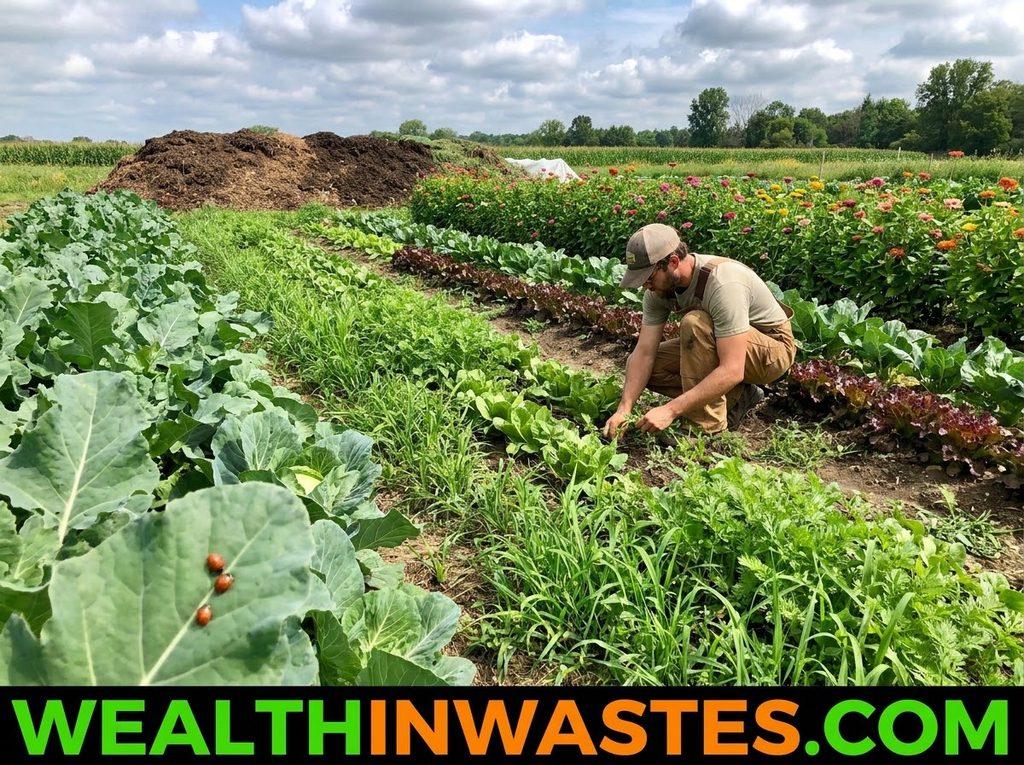
1. Choose verified organic produce: Organic certification requires producers to follow defined production rules and input restrictions, although organic food is not automatically free from every contaminant or environmental source of residue.
2. Build healthy soil systems: Organic matter, crop rotation, biological activity, and balanced fertility can support stronger crops and lower pest pressure, helping farmers avoid unnecessary pesticide applications during production.
3. Strengthen preventive crop protection: Resistant varieties, field sanitation, crop rotation, biological control, scouting, and timely interventions can reduce pest populations before chemical treatment becomes necessary during normal crop production cycles.
4. Use approved inputs correctly: Natural or organic-approved pesticides still require correct identification, dosage, timing, and application methods because inappropriate use can leave residues and create avoidable environmental exposure around farms.
5. Support sustainable soil management: Low-input approaches can improve soil biological activity and resilience. Sustainable soil resource management provides practical guidance for farmers, while soil contamination guidance highlights plant-health risks.
6. Compare production practices carefully: The supplied research summary reports fewer detectable residues in organic crops than conventional crops, making organic production one practical option for reducing dietary pesticide exposure.
Washing Fruits and Vegetables to Reduce Residues
1. Wash under running water: Rinse fruits and vegetables thoroughly, rub firm surfaces with clean hands or a suitable brush, and remove visible dirt before cutting, peeling, or eating the produce.
2. Clean leafy produce thoroughly: Separate leaves when appropriate, rinse them carefully, and discard damaged outer leaves. Washing before cutting or chopping reduces the chance of spreading surface contaminants onto exposed tissues.
3. Use safe washing water: Potable running water should be preferred for household washing. Detergents, bleach, and other unapproved cleaning chemicals should not be applied directly to edible fruits or vegetables.
4. Wash hands and utensils: Clean hands, knives, cutting boards, bowls, and work surfaces after handling unwashed produce. Food contamination pathways explain how contaminants can move during preparation and serving.
5. Recognize washing limitations: Washing can reduce surface residues, but effectiveness varies with pesticide chemistry, formulation, crop surface, contact time, and penetration into plant tissues below exposed surfaces or protective skins.
6. Wash produce before preparation: Cleaning vegetables and fruits before cutting, serving, or cooking helps remove dirt and some residues before edible tissues become exposed. Exposure pathways explain the added benefit.
Food Processing and Pesticide Residue Reduction
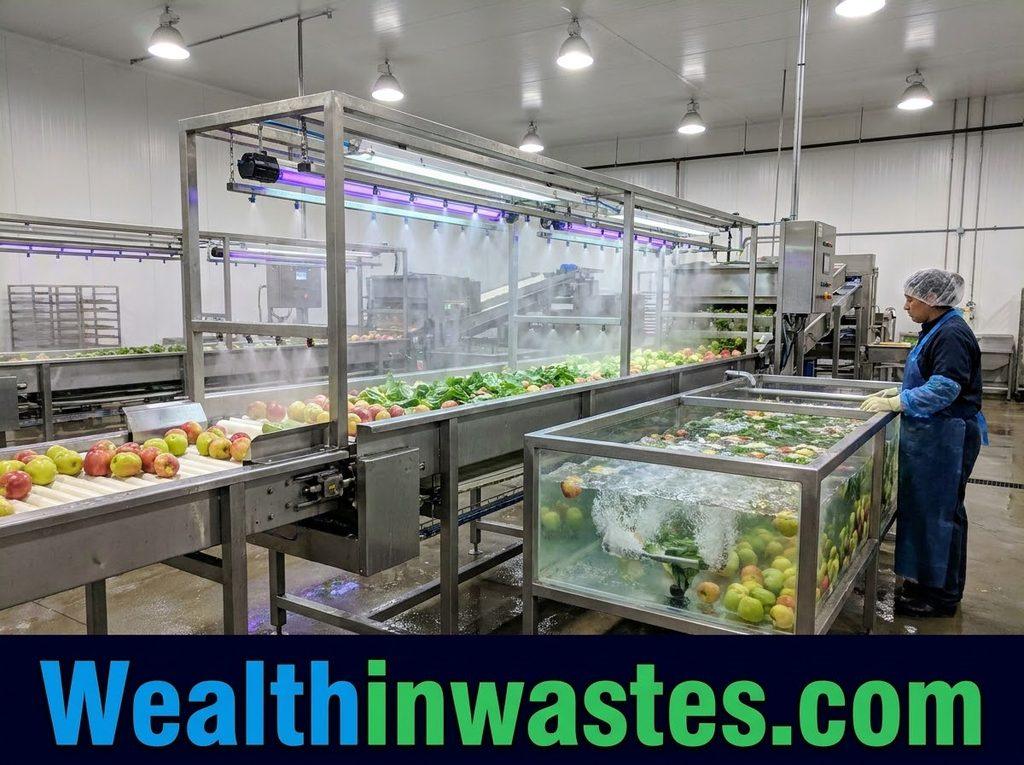
Food processing can reduce pesticide residues through washing, peeling, trimming, blanching, boiling, cooking, fermentation, grinding, or other treatments, although effectiveness differs according to the pesticide, commodity, and processing conditions used.
Peeling can lower residues concentrated on outer surfaces, particularly for produce with edible skins. However, removing skins may also reduce fibre, vitamins, minerals, and other beneficial compounds located near the surface.
Boiling and other cooking methods can reduce some pesticide residues, but they do not guarantee complete removal. The chemical’s stability, cooking temperature, duration, water contact, and food structure influence the outcome.
Husking, trimming, soaking, blanching, fermentation, frying, and grinding may also change residue concentrations. Each method should be considered according to the food product and the properties of the pesticide involved.
Processors should maintain clean equipment, potable water, and hygienic storage areas to prevent cross-contamination. Proper pesticide waste handling also prevents concentrated chemicals from entering processing environments and nearby drainage systems.
Processing should complement good agricultural practices rather than replace them. Food residue management principles emphasize correct pesticide use and harvest controls before crops reach processing facilities, markets, and consumers safely.
Rational Pesticide Use to Reduce Residues
1. Apply pesticides only when necessary: Farmers should confirm pest presence and economic need before treatment. Monitoring and nonchemical controls can prevent unnecessary applications that increase residue risks without improving protection.
2. Select appropriate products: Choose pesticides registered for the crop and target pest, considering label restrictions, residue limits, persistence, environmental conditions, and suitable alternatives before purchasing or applying treatment to fields.
3. Follow label requirements: Accurate rates, dilution instructions, application methods, protective measures, and pre-harvest intervals are essential. Good pesticide management practices reduce losses and unintended movement around treated fields and crops.
4. Calibrate spraying equipment: Properly calibrated equipment delivers the intended dose more consistently and reduces overapplication, uneven treatment, spray drift, waste, and residue risks caused by inaccurate output during field operations.
5. Respect weather and harvest timing: Avoid conditions that encourage drift or runoff, observe the required pre-harvest interval, and monitor persistence. Pesticide degradation factors also influence residue behavior after application.
6. Consider soil and site conditions: Soil moisture, pH, organic matter, and texture influence pesticide movement and persistence. Soil properties affecting pesticide mobility support better site-specific application decisions for growers.
Natural Pesticides and Biopesticides

1. Use microbial biopesticides: Microbial products use organisms or their biological products to control specific pests. Their targeted action can support integrated crop protection while reducing dependence on broad-spectrum chemical treatments.
2. Consider plant-derived products: Botanical materials such as neem-based preparations can provide useful pest-management options. Their performance depends on product quality, concentration, target pest, weather, application timing, and correct use.
3. Integrate biological control: Natural enemies, resistant varieties, traps, crop rotation, sanitation, and scouting can work alongside biopesticides. Integrated pest-management approaches reduce unnecessary chemical treatments throughout the production season effectively.
4. Follow biopesticide labels: Biological and natural products still require approved rates, application methods, storage conditions, target crops, and safety precautions. “Natural” does not automatically mean residue-free, harmless, or risk-free.
5. Monitor results before repeating treatments: Farmers should assess pest levels and treatment effectiveness before applying more product. Site conditions can also influence product performance during changing field conditions over time.
6. Protect beneficial organisms: Select targeted products and application timings that minimize harm to pollinators, natural enemies, soil organisms, and other non-target life within agricultural production systems and surrounding habitats.
Pesticide Laws and Residue Monitoring
Strong pesticide regulation helps control which products enter the market, how they are labeled, where they may be used, and what residue limits apply to different food commodities within food-safety systems.
Authorities can reduce residue problems by registering suitable products, setting maximum residue limits, inspecting farms and markets, testing food samples, investigating violations, and improving traceability throughout the food supply chain.
Agricultural hazardous-substance controls also matter because improper storage, spills, discarded containers, and excessive applications can contaminate soil, water, crops, nearby environments, and food-production areas over longer periods and seasons in farming.
Monitoring programs should cover production, storage, processing, distribution, and retail stages where practical. Land contamination controls can reduce persistent sources that threaten future agricultural production, food safety, and long-term soil health.
Farmers and businesses should keep accurate records of products used, rates, dates, fields, crops, harvests, and corrective actions. These records improve traceability and make residue investigations more effective when problems occur.
Proper enforcement should be supported by farmer education, laboratory capacity, reliable sampling, and transparent corrective procedures. Pollution prevention and control measures strengthen chemical-management programs, traceability, and accountability across the food chain.
Read Also: Degradation and Types of Pesticides in Soils
Farm Practices for Lower Pesticide Residues
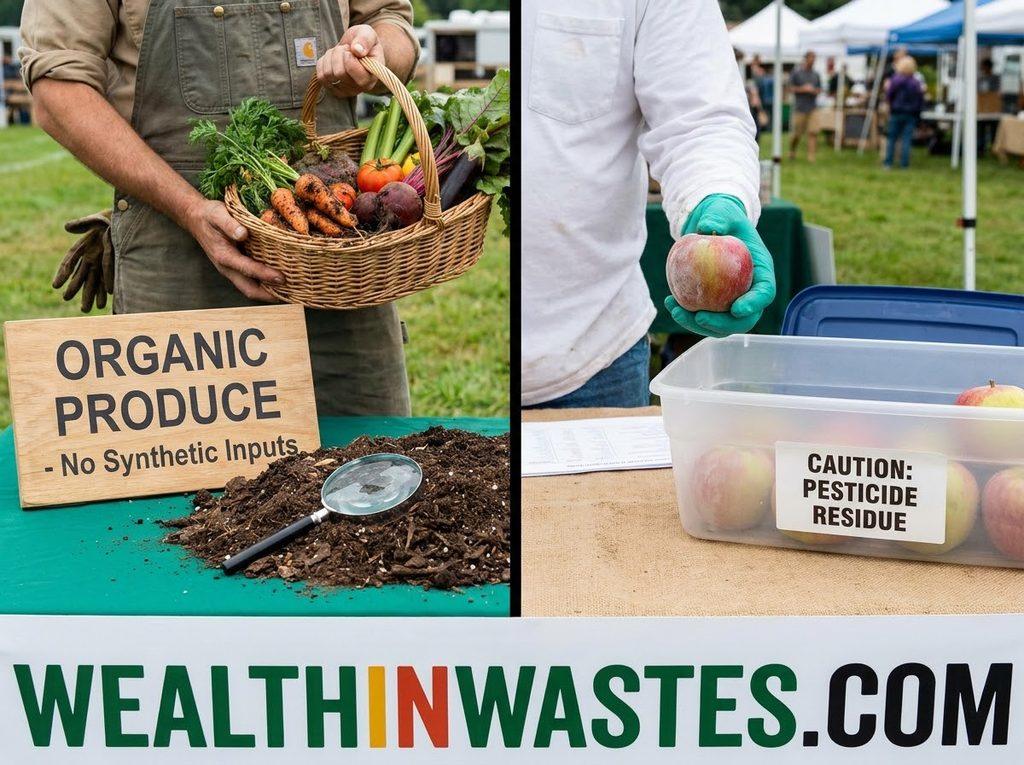
Residue prevention works best when farmers combine chemical, biological, cultural, environmental, and post-harvest practices rather than relying on one intervention. This integrated approach addresses contamination before residues reach consumers and markets.
Crop rotation, field sanitation, resistant varieties, appropriate irrigation, weed control, pest monitoring, and timely harvesting can reduce pressure for repeated pesticide applications. Plant pesticide metabolism also affects how residues change after uptake.
Protecting soil and water matters because residues can move away from treated fields through runoff, leaching, erosion, and drainage. Good field management reduces these transport pathways and protects surrounding resources.
Farmers should prevent contaminated irrigation water from contacting edible crops whenever possible. Good irrigation management, suitable application timing, and runoff prevention reduce opportunities for residues to move beyond treated areas.
Equipment and waste management are equally important. Proper pesticide-container disposal prevents concentrated chemicals from becoming new contamination sources around farms, storage areas, drains, and water bodies after treatment or storage.
Where contamination has already occurred, farmers may need soil testing, crop restrictions, remediation, or professional advice before planting food crops. Prevention remains safer and more practical than relying on cleanup after contamination occurs.
Consumers can further reduce exposure by varying food choices, preparing produce carefully, following safe washing practices, and purchasing from reliable sources. These measures complement controls taken by farmers, processors, regulators, and retailers.
Reducing pesticide residues is therefore a shared responsibility. Responsible agricultural waste management can prevent avoidable chemical contamination from spreading beyond production fields, storage areas, and surrounding farm environments into water.
Summary on Preventive Measures to Reduce Pesticide Residues In vegetables and Fruits
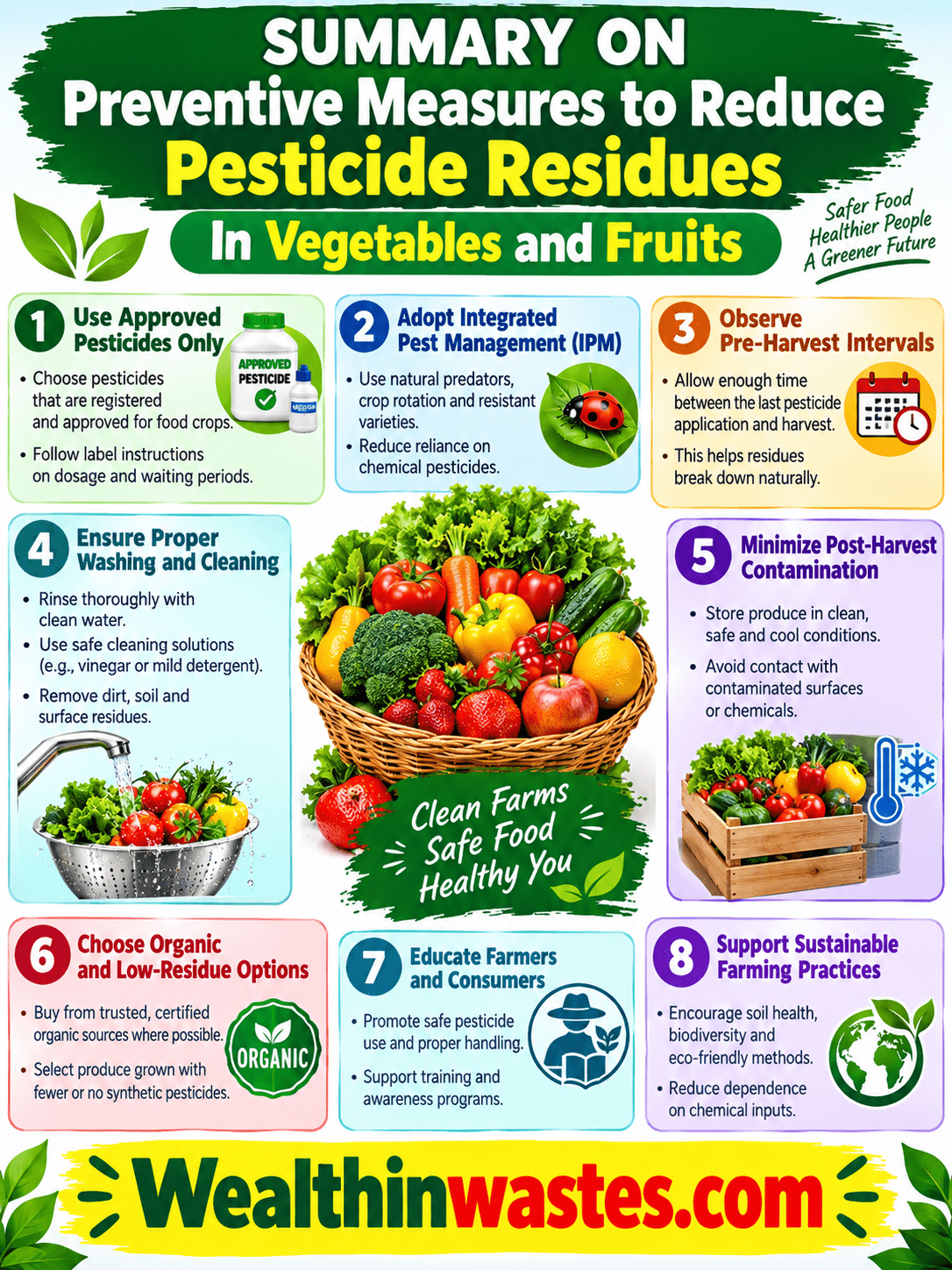
| Preventive Measure | How It Helps Reduce Residues |
|---|---|
| Organic farming | Reduces reliance on many synthetic pesticides through preventive and biological crop management. |
| Washing produce | Removes some surface residues, dirt, and contaminants before preparation or consumption. |
| Food processing | Peeling, trimming, blanching, cooking, and other processes can reduce some residues. |
| Rational pesticide use | Correct products, rates, timing, equipment, and pre-harvest intervals reduce unnecessary residues. |
| Natural pesticides and biopesticides | Can reduce reliance on conventional chemicals when correctly selected and applied. |
| Regulation and monitoring | Residue limits, testing, enforcement, registration, and traceability strengthen food safety controls. |
| Integrated farm practices | Crop rotation, monitoring, sanitation, soil care, water protection, and waste management prevent contamination. |
Frequently Asked Questions About Reduce Pesticide Residues In vegetables and Fruits Safely
1. Can washing remove all pesticide residues?
Washing can reduce some surface residues, but it cannot guarantee complete removal because pesticide properties, produce surfaces, formulations, penetration into tissues, and washing conditions vary considerably among different chemicals and commodities.
2. Does peeling always reduce pesticide exposure?
Peeling can reduce residues concentrated on outer surfaces, although it may also remove fibre, vitamins, minerals, and other beneficial compounds located near or within the skin of fruits and vegetables.
3. Are organic fruits and vegetables residue-free?
No. Organic production restricts specific inputs and practices, but organic produce can still encounter environmental contamination or approved pesticide residues, so proper washing and safe food handling remain useful for consumers.
4. How can farmers lower pesticide residues?
Farmers should use pesticides only when necessary, follow labels, apply correct rates, observe pre-harvest intervals, maintain equipment, monitor pests, and integrate nonchemical control methods whenever suitable for the crop and farm.
5. Can cooking reduce pesticide residues?
Cooking can reduce some pesticide residues, but the effect varies with the chemical, food, temperature, duration, and cooking method. It should complement safe production practices rather than replace them entirely.
6. Why are pesticide laws important for food safety?
Regulation establishes approved uses, labeling requirements, residue limits, testing systems, and enforcement procedures that help keep pesticide applications and food residues within accepted food-safety controls, recognized standards, and monitoring programs.
7. What is the safest way to use biopesticides?
Use registered products according to label directions, recommended rates, target pests, timing requirements, protective measures, and pre-harvest intervals, while integrating biological and cultural controls whenever practical on the farm throughout the season.
Do you have any questions, suggestions, or contributions? If so, please feel free to use the comment box below to share your thoughts. We also encourage you to kindly share this information with others who might benefit from it. Since we can’t reach everyone at once, we truly appreciate your help in spreading the word. Thank you very much for your support and for sharing!
Read Also: Classification and Importance of Vegetables and Fruits in Nigeria’s Agriculture