



Cereals and pulses form a major part of the global diet, while farmers and grain handlers use pesticides to protect harvested products from insects, fungi, weeds, and storage losses after harvest.
However, pesticide applications can leave residues on or within grains, especially when products are used incorrectly, applied too frequently, or handled without observing approved rates, intervals, and storage conditions required for food commodities.
Pesticide residues in cereals and pulses therefore matter because contaminated food can create exposure concerns, affect market acceptance, and increase environmental pressure when chemicals move beyond intended treatment areas during production, storage, or handling.
Residue levels can change according to the pesticide, crop, application method, environmental conditions, storage practices, and time between treatment and consumption or processing of the commodity under ordinary agricultural conditions.
Understanding these factors helps producers protect grain quality while reducing unnecessary chemical exposure, supporting regulatory compliance, maintaining consumer confidence, and improving responsible post-harvest pest management practices across the supply chain.
Sources of Residues in Cereals and Pulses
1. Field Applications: Crops may retain residues after insecticides, fungicides, herbicides, or other approved pesticides are applied during production, particularly when treatment occurs near harvest or application rates exceed label directions.
2. Storage Treatments: Stored grains may receive insecticide treatments or other pest-control products after harvest, creating another possible residue pathway when handlers ignore approved rates, intervals, commodity restrictions, or required treatment records.
3. Contaminated Storage Areas: Old treatment residues can remain on floors, equipment, sacks, structures, or transport surfaces and later contact clean grain during handling, storage, movement, or processing operations without obvious warning signs.
4. Environmental Transfer: Persistent pesticides can move through soil, dust, water, or contaminated materials and eventually reach crops, stored commodities, animals, or processing environments through indirect exposure routes that are difficult to trace.
Research on agricultural sources of hazardous substances shows that careless pesticide handling, excessive application, spills, and discarded containers can introduce chemical hazards around farms and food-production areas during routine farming.
Pesticide residues can affect cereals differently because grains vary in their surface characteristics, moisture content, lipid composition, processing methods, and ability to absorb or retain particular chemical compounds during storage and processing.
The wider topic of pesticide residues in food crops also demonstrates that residue occurrence depends on crop type, pesticide chemistry, treatment frequency, environmental conditions, and harvesting practices used across different production systems.
Information on pesticide residue management in livestock shows that contaminated feed can extend residue concerns beyond harvested grain into animal production, especially when treated cereals or pulses enter feed chains.
Read Also: Roles of Producers and Corporations in Waste Management
Storage Treatments and Grain Residues

1. Residual Protectants: Residual insecticides may protect stored grains from infestation, but incorrect product selection, excessive dosage, repeated treatments, or poor record keeping can increase the chance of unacceptable residues.
2. Fumigation: Fumigants can control insects inside sealed storage systems, yet operators must follow the registered commodity, dosage, exposure period, ventilation requirements, and re-entry restrictions stated on the product label.
3. Grain Contact Surfaces: Treated bags, storage equipment, bins, floors, and transport containers can transfer residues when contamination remains after earlier pesticide use or when cleaning procedures remain inadequate between successive grain lots.
4. Processing Effects: Cleaning, milling, polishing, washing, cooking, or other processing operations can reduce some residues, but removal varies widely with the pesticide, grain, treatment method, processing conditions, and residue location.
Safe fumigant storage and handling require sealed spaces, controlled application, correct exposure periods, and proper ventilation because poor treatment management can affect workers, commodities, surrounding environments, and final residue levels after harvest.
Research on pesticide movement and absorption also shows that pesticides can move between environmental compartments, which matters when contaminated dust, water, or surfaces interact with stored agricultural products during handling and storage operations.
Residues can also reach animal foods indirectly because contaminated grain, oil cakes, or feed ingredients may carry pesticide residues into livestock systems, making control important throughout production and storage chains.
Guidance on pesticide residue contamination of meat and dairy products shows why contaminated crops and stored grains can create secondary residue pathways through feed and livestock products within wider food systems.
Factors That Increase Residue Levels
1. Application Rate: Using more pesticide than the approved rate can increase the amount deposited on crops or storage surfaces and may leave residues that exceed established tolerance or trading requirements.
2. Preharvest Interval: Harvesting too soon after treatment can leave insufficient time for residues to decline, making compliance with the stated preharvest interval essential for crops intended for food and commercial distribution.
3. Weather Conditions: Rainfall, temperature, sunlight, humidity, and wind can influence pesticide movement, persistence, volatilization, and degradation, changing how much chemical remains available on agricultural commodities after treatment and storage conditions.
4. Crop Characteristics: Grain composition, surface structure, moisture, oil content, and processing history can affect pesticide adsorption, penetration, persistence, and subsequent residue concentrations in cereals and pulses during storage and processing operations.
Information on pesticide degradation factors explains how moisture, temperature, soil properties, microbial activity, pesticide chemistry, and environmental conditions can alter persistence and transformation pathways, affecting how long residues remain available.
Likewise, soil properties affecting pesticide mobility can influence whether chemical residues remain near application sites, move with water, or become available for plant uptake before harvest under changing field conditions.
Site conditions such as groundwater depth, permeability, rainfall, and weather also influence pesticide movement, as explained in site conditions affecting pesticide mobility across agricultural landscapes and surrounding production environments under changing field conditions.
Health and Food Safety Concerns
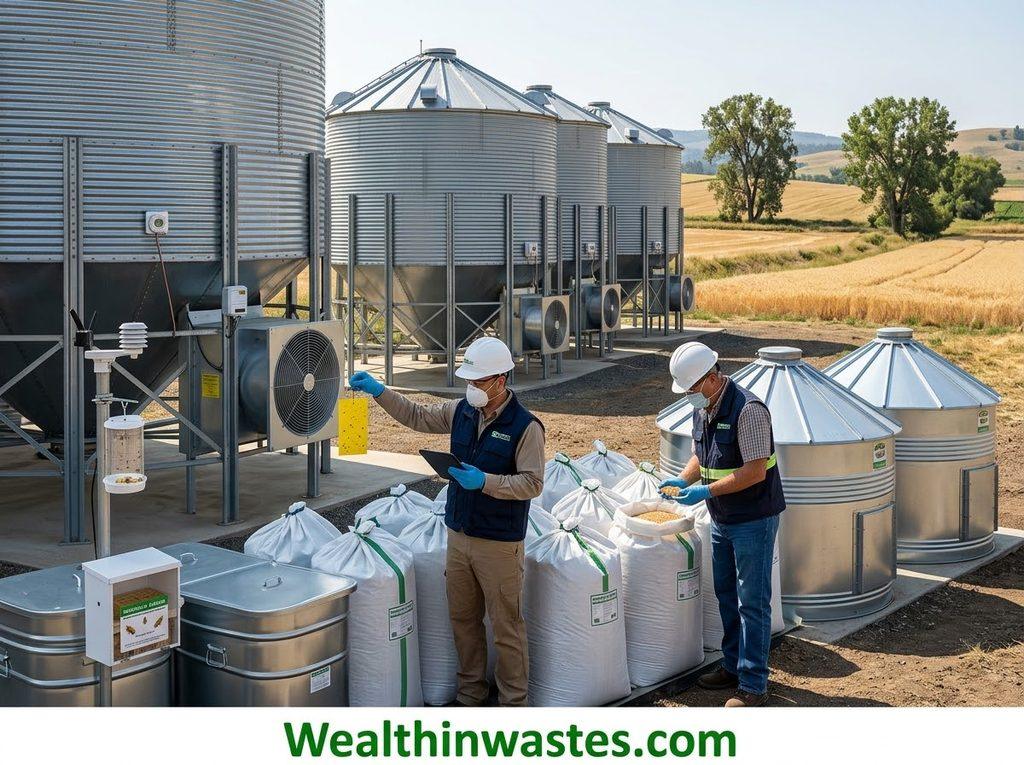
Pesticide residues become a food safety concern when exposure exceeds levels considered acceptable through established risk assessments, especially when consumers repeatedly eat contaminated commodities over prolonged periods and across multiple dietary sources.
Risk depends on the pesticide, dose, exposure frequency, route of exposure, consumer characteristics, and toxicological profile rather than simply the presence or detection of a residue in laboratory testing and monitoring.
Consumers may encounter residues through direct consumption of cereals and pulses, while contaminated grain used in animal feed can create another pathway into livestock products and wider food systems through indirect dietary exposure.
The article on routes of pesticide exposure explains that ingestion, inhalation, dermal contact, and other pathways influence how pesticide hazards can enter the human body, depending on the substance and exposure circumstances.
Laboratory interpretation also matters because residue measurements must distinguish genuine contamination from analytical errors, sample contamination, unsuitable detection methods, or results reported below reliable quantification thresholds established for the testing procedure.
Residues can also influence ecosystems when pesticides move away from treated fields, enter water bodies, or remain in soil, creating exposure opportunities for non-target organisms and agricultural environments beyond the original treatment site.
Research on hazardous substances and aquatic life shows why preventing chemical movement into streams, ponds, drains, wetlands, and groundwater remains an important part of responsible pesticide management and agricultural pollution prevention.
Maximum Residue Limits and Monitoring
Maximum Residue Limits, commonly called MRLs, establish the highest legally tolerated concentration of a specified pesticide residue in or on food or feed when pesticides are used according to approved agricultural practices.
Codex MRLs rely on residue data from supervised trials and toxicological assessments, while national authorities may establish their own requirements based on local registrations, agricultural practices, dietary patterns, and regulatory frameworks.
Producers therefore need to understand the pesticide product, crop, approved use, application rate, preharvest interval, and market destination before treating cereals or pulses intended for sale in domestic or international markets.
Current Codex guidance also recognizes pesticide residues as substances arising from pesticide use, including relevant metabolites, conversion products, reaction products, and impurities considered toxicologically significant for consumer risk assessment and regulation.
Effective monitoring requires representative sampling because residue concentrations may vary within a lot according to treatment patterns, storage conditions, grain mixing, processing, and contamination history across the commodity supply chain.
Guidance on analysis of hazardous substances highlights the importance of appropriate sampling, handling, testing, and interpretation when evaluating chemical exposure in food, environmental materials, and waste samples collected for regulatory purposes.
National monitoring programmes can compare laboratory results with applicable MRLs and investigate commodities that exceed regulatory limits, supporting enforcement, traceability, corrective action, consumer protection, and market confidence in food markets.
Good agricultural practice remains central because regulatory limits do not replace careful chemical management; instead, producers should use approved products correctly and apply only what is necessary for effective pest control.
Management guidance on pesticide management practices reinforces the importance of correct timing, rates, application methods, label compliance, and practices that reduce unintended environmental transport from agricultural fields and storage operations.
Practices That Reduce Residues

1. Follow Labels: Read every pesticide label before use and follow the approved crop, dosage, application method, preharvest interval, protective measures, and restrictions for food commodities to maintain regulatory compliance.
2. Calibrate Equipment: Well-calibrated sprayers and applicators deliver more accurate doses, reducing overapplication, uneven treatment, chemical waste, crop injury, and unnecessary residue accumulation on harvested products during routine application and seasonal maintenance.
3. Observe Waiting Periods: Allow the required interval between pesticide treatment and harvest so residues have adequate opportunity to decline under the conditions expected for that product and crop before consumption.
4. Maintain Clean Storage: Keep stores, bins, floors, equipment, bags, and transport containers clean and dry, while preventing contact between treated surfaces and untreated grain during routine handling operations and transfers.
5. Control Chemical Waste: Handle leftover mixtures, spills, contaminated materials, and empty containers through approved procedures rather than dumping them near food stores, water sources, or cultivated fields where contamination can spread.
Proper disposal guidance for pesticide containers emphasizes avoiding unauthorized reuse and following label-specific instructions for rinsing, handling, storage, return, or disposal, depending on the product formulation, container type, and local requirements.
Waste from pesticide handling requires attention because leftover dilute mixtures should not be released casually into soil, drains, or water bodies where they can create contamination risks. Guidance on dilute pesticide waste disposal provides context.
Growers can also reduce chemical dependence by improving sanitation, controlling moisture, rotating crops where appropriate, monitoring pest populations, and using non-chemical measures as part of integrated pest management programmes on farms.
Research on agricultural waste sources shows how discarded chemical containers and poorly managed farm wastes can create contamination pathways, making waste prevention an important part of residue control and environmental protection.
Testing Pesticide Residues in Grains
Residue testing normally begins with representative sampling of a grain lot, because a small or poorly selected sample may not reflect contamination levels throughout the entire commodity being assessed accurately.
Laboratories then extract target compounds from the sample and use validated analytical techniques capable of identifying and quantifying residues at appropriate sensitivity levels needed for reliable regulatory decision-making and surveillance.
Quality assurance procedures are essential because laboratory errors, cross-contamination, incorrect calculations, poor sample storage, or unsuitable reference standards can produce misleading results that affect enforcement and market decisions across food supply chains.
Analysts may test for individual pesticides or multiple residues simultaneously, depending on the commodity, expected treatment history, regulatory requirements, market specifications, and monitoring programme objectives established before sampling and analysis.
Results should be interpreted alongside the applicable MRL, analytical uncertainty, commodity definition, sampling plan, and intended market, because different jurisdictions can establish different residue requirements for the same commodity and pesticide.
Testing can support export certification, domestic surveillance, processor acceptance, farmer verification, incident investigation, and targeted corrective action when residue concentrations exceed established requirements for specific pesticide-commodity combinations in regulated markets.
Guidance on waste sample handling procedures illustrates why labeling, screening, containment, and safe transport practices matter when chemical samples require laboratory examination or further environmental assessment before results are interpreted.
Related guidance on pesticide residues in livestock systems illustrates why residue monitoring can extend beyond crops when contaminated grain enters animal feed and production chains, affecting animal products as well as human diets.
Monitoring should therefore connect field practices, storage management, sampling, laboratory analysis, traceability, and corrective measures rather than treating residue testing as an isolated activity within the food system or supply chain.
Read Also: Best Waste Materials Management Practices
Safer Storage and Integrated Pest Management

Integrated pest management can reduce reliance on routine pesticide use by combining prevention, monitoring, physical controls, sanitation, resistant materials, biological options, and carefully targeted chemical treatments based on demonstrated pest need.
Dry, clean, well-maintained storage reduces the conditions that support insect development and fungal problems, lowering the pressure to repeatedly treat grain with chemical protectants during prolonged storage periods and routine inventory cycles.
Storage managers should inspect incoming grain, remove infested materials, repair structural gaps, control moisture, clean equipment, and keep treated and untreated commodities clearly separated throughout storage and handling activities in every facility.
Where chemical control remains necessary, users should choose products registered for the specific grain and target pest, then follow label directions without improvising rates, mixing instructions, application timing, or safety precautions.
Good storage practice also protects workers because secure chemical handling, controlled access, ventilation, clear records, protective equipment, and emergency procedures reduce accidental exposure during treatment operations and routine grain handling.
Guidance on pesticide wastes as hazardous wastes reinforces the need to manage chemical residues, empty containers, and related materials carefully rather than treating them as ordinary household or farm refuse at disposal points.
Preventive measures also benefit water quality because pesticides that remain contained at the source are less likely to reach drainage systems, streams, ponds, groundwater, or other sensitive environments near agricultural production and storage facilities.
Additional information on pesticide transport in surface waters explains how dissolved chemicals and particle-bound residues can move with water, highlighting the importance of preventing runoff, sediment transport, and downstream contamination.
Research on pesticide degradation and metabolism in plants explains how oxidation, reduction, hydrolysis, conjugation, and binding processes influence the fate of pesticide residues inside plant tissues after treatment and uptake.
Summary on Pesticide Residues in Cereals and Pulses
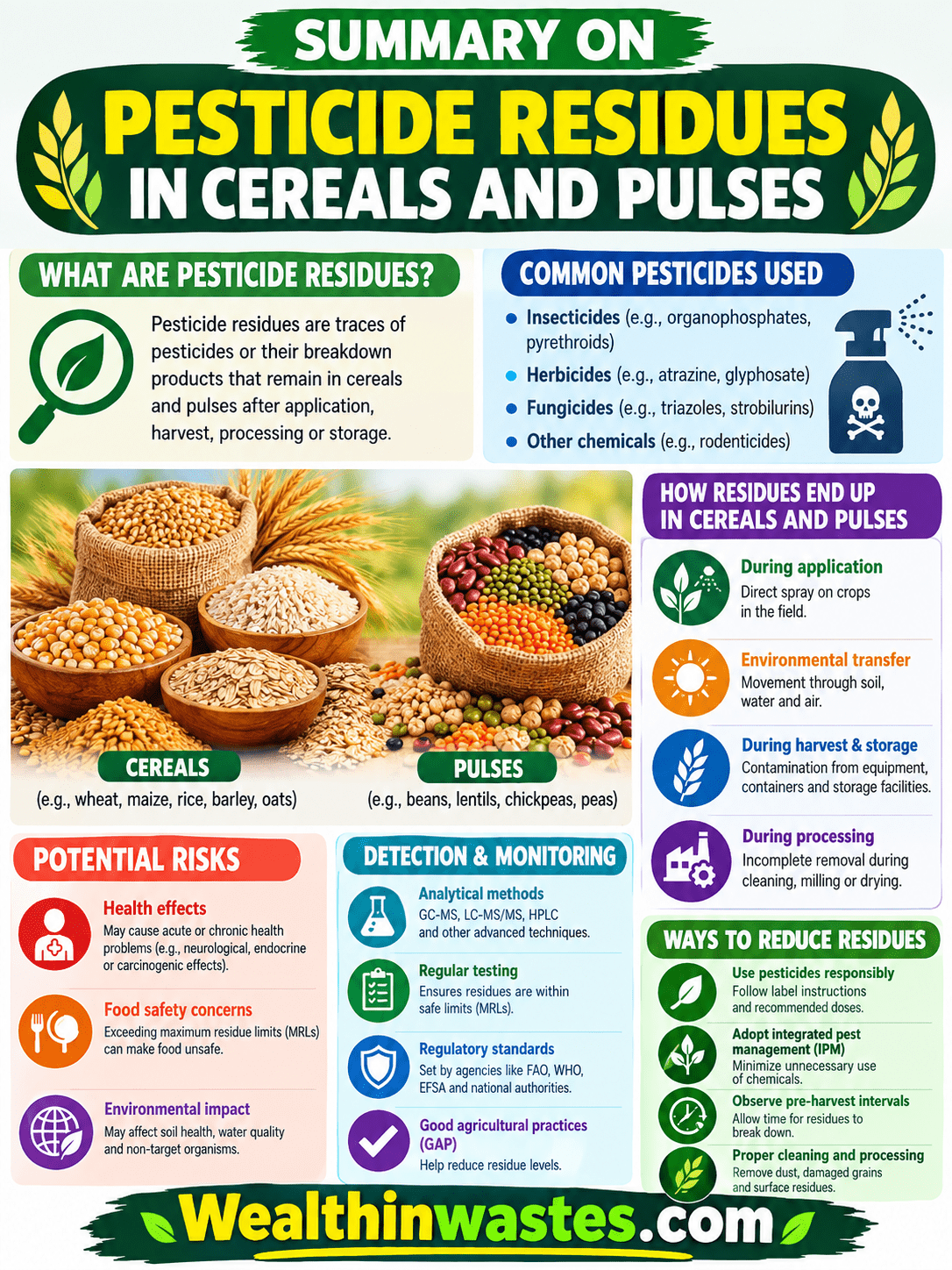
| Section | Main Idea | Why It Matters |
|---|---|---|
| Residue Sources | Field use, storage treatments, contaminated surfaces, and environmental transfer can introduce residues. | Knowing the pathways helps prevent avoidable contamination. |
| Residue Levels | Application rate, waiting periods, weather, and crop characteristics affect persistence. | These factors guide safer pesticide use and harvest timing. |
| Food Safety | Risk depends on pesticide type, dose, exposure, frequency, and toxicological properties. | Residue control supports consumer protection. |
| MRLs | Maximum Residue Limits provide legally recognized concentrations for specific pesticide-food combinations. | Compliance supports lawful trade and food safety. |
| Reduction Measures | Label compliance, equipment calibration, clean storage, waste control, and integrated pest management reduce risks. | Prevention is more effective than correcting contamination after harvest. |
| Testing | Representative sampling and validated laboratory analysis verify residue concentrations. | Monitoring supports enforcement, traceability, and market acceptance. |
Frequently Asked Questions About Pesticide Residues in Cereals and Pulses
1. What are pesticide residues in cereals and pulses?
They are pesticide-related substances that remain in or on grains and pulses after treatment, including relevant metabolites and other toxicologically significant residues.
2. How do residues enter stored grains?
They can enter through approved storage treatments, contaminated equipment or surfaces, incorrect application, accidental transfer, and residues remaining from earlier pest-control operations.
3. What does an MRL mean?
An MRL is the maximum concentration of a specified pesticide residue legally permitted in or on a food or feed commodity under defined agricultural practices.
4. Can processing reduce pesticide residues?
Some processing steps can reduce residues, but effectiveness varies with the pesticide, commodity, processing method, residue location, and chemical properties.
5. How can farmers reduce residues?
Farmers should use registered products correctly, follow label directions, observe preharvest intervals, calibrate equipment, maintain clean storage, and use integrated pest management.
6. Why is residue testing important?
Testing verifies whether residues remain within applicable requirements and supports food safety, market acceptance, regulatory enforcement, traceability, and corrective action.
Do you have any questions, suggestions, or contributions? If so, please feel free to use the comment box below to share your thoughts. We also encourage you to kindly share this information with others who might benefit from it. Since we can’t reach everyone at once, we truly appreciate your help in spreading the word. Thank you very much for your support and for sharing!
Read Also: Principles and Methods of Crop Storage in Agriculture