


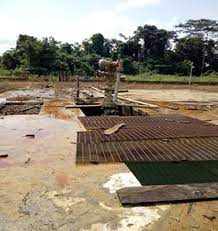
It is a fact that oil exploration supports national income, energy supply, employment, and industrial activity, yet petroleum operations can also create serious environmental pressures when companies or regulators fail to prevent pollution effectively.
Across oil-producing communities, exploration and exploitation may disturb forests, farms, wetlands, waterways, soils, and wildlife habitats through land clearing, drilling, pipeline construction, waste generation, spills, and other operational activities over time.
Oil releases can move beyond their original locations because rainfall, drainage channels, creeks, groundwater, and tidal processes transport contaminants into surrounding soils, sediments, surface waters, and connected ecosystems across wider areas.
When contamination reaches farmland, fishing grounds, streams, or groundwater, communities may face reduced agricultural productivity, poorer fisheries, damaged vegetation, restricted resource use, and increased costs for environmental restoration and household livelihoods.
Gas flaring, poorly managed effluents, equipment failures, vandalism, and deliberate sabotage can further increase environmental risks, making effective monitoring, emergency response, pollution control, and responsible resource management especially important for host communities.
Understanding Oil Exploration Activities
Oil exploration begins with geological investigations that identify structures likely to contain petroleum. Companies may use geological surveys, remote sensing, seismic techniques, exploratory drilling, and other methods before commercial production begins.
These activities require access roads, cleared survey lines, temporary camps, drilling locations, equipment yards, pipelines, and supporting infrastructure. Each development footprint can alter vegetation, drainage patterns, and local habitats, requiring careful soil management.
Seismic surveys can involve vegetation clearing and controlled underground energy sources that help map subsurface formations. Poor planning may disturb wetlands, wildlife movement, agricultural plots, and community access routes during field operations.
Once exploration confirms commercially viable reserves, exploitation introduces production wells, gathering systems, storage facilities, flow stations, roads, pipelines, and other infrastructure. The cumulative footprint can become substantial across producing landscapes.
Understanding these stages helps communities and environmental managers identify where oil pollution, habitat disturbance, waste generation, and land-use conflicts may occur. It also supports stronger environmental planning before projects advance into intensive production.
Read Also: Methods of Disposal of Waste Pesticide Containers
Oil Exploration And Exploitation Processes
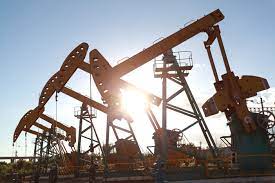
Petroleum operations involve several connected activities, and each can create distinct environmental pressures. The major processes below show how extraction moves from exploration toward production and transportation across oil-producing areas.
1. Seismic Exploration: Companies collect subsurface information through seismic surveys that can require vegetation removal, equipment movement, and access routes. Careful planning reduces disturbance to vegetation, farms, wetlands, and wildlife habitats.
2. Exploratory Drilling: Drilling tests whether underground formations contain commercially recoverable petroleum. The activity generates drilling wastes, requires water and energy, and creates surface facilities that require careful storage, handling, and disposal controls.
3. Oil Production: Producing wells bring crude oil and associated materials to the surface for separation and handling. Spills, leaks, produced water, emissions, and equipment failures can create environmental risks without effective operational controls.
4. Transportation And Storage: Pipelines, tank farms, roads, marine routes, and loading facilities move petroleum toward processing locations. Corrosion, ruptures, accidents, or illegal interference can release petroleum into surrounding land and water, requiring ecosystem planning.
Soil And Land Effects
Oil exploration and exploitation can alter land directly through vegetation removal, earthworks, drilling, construction, traffic, waste handling, and releases involving hazardous substances. The effects become more serious where recovery measures remain inadequate or delayed.
1. Soil Contamination: Crude oil and petroleum products can coat soil particles, alter physical properties, interfere with water movement, and affect microorganisms. Land pollution may support weaker vegetation and reduced agricultural productivity.
2. Land Clearing: Roads, seismic lines, well pads, and facilities require vegetation removal that exposes soil to erosion, compaction, runoff, and habitat fragmentation. Land degradation can expand beyond the original development footprint.
3. Loss Of Farmland: Infrastructure and contamination may reduce the amount of land available for cultivation, grazing, or other traditional uses. Farmers can lose productive plots when pollution persists, increasing economic costs for affected households.
4. Erosion And Sedimentation: Disturbed surfaces become more vulnerable to rainfall runoff and erosion, especially where vegetation cover disappears. Detached soil can enter drains and waterways, increasing sediment loads and affecting downstream habitats.
Water And Fisheries Impacts
Oil contamination can spread through surface water, groundwater, creeks, wetlands, and sediments. Its movement depends on spill size, environmental conditions, drainage patterns, soil characteristics, and the effectiveness of containment efforts.
Petroleum entering rivers and creeks can create visible sheens, introduce water pollutants, affect aquatic organisms, and reduce water suitability for domestic activities, irrigation, livestock use, fishing, recreation, and other community needs.
Groundwater faces particular concern where shallow water tables and permeable soils allow contaminants to migrate beneath the surface. Once contamination reaches groundwater, monitoring and remediation may require sustained technical intervention.
Fisheries can decline when contamination affects spawning areas, nursery habitats, food organisms, or water quality. Fishers may also travel farther to find productive waters, increasing operating costs while reducing household income.
Effluent discharge adds another water pollution source when wastewater contains oil, chemicals, suspended solids, or other pollutants. Strong treatment and discharge controls are therefore important for protecting receiving waters and aquatic ecosystems.
Monitoring programmes can help protect global water quality by identifying changing pollutant concentrations, affected locations, and recovery patterns. Regular sampling of rivers, groundwater, sediments, and biological indicators supports evidence-based environmental management decisions.
Air Pollution and Gas Flaring
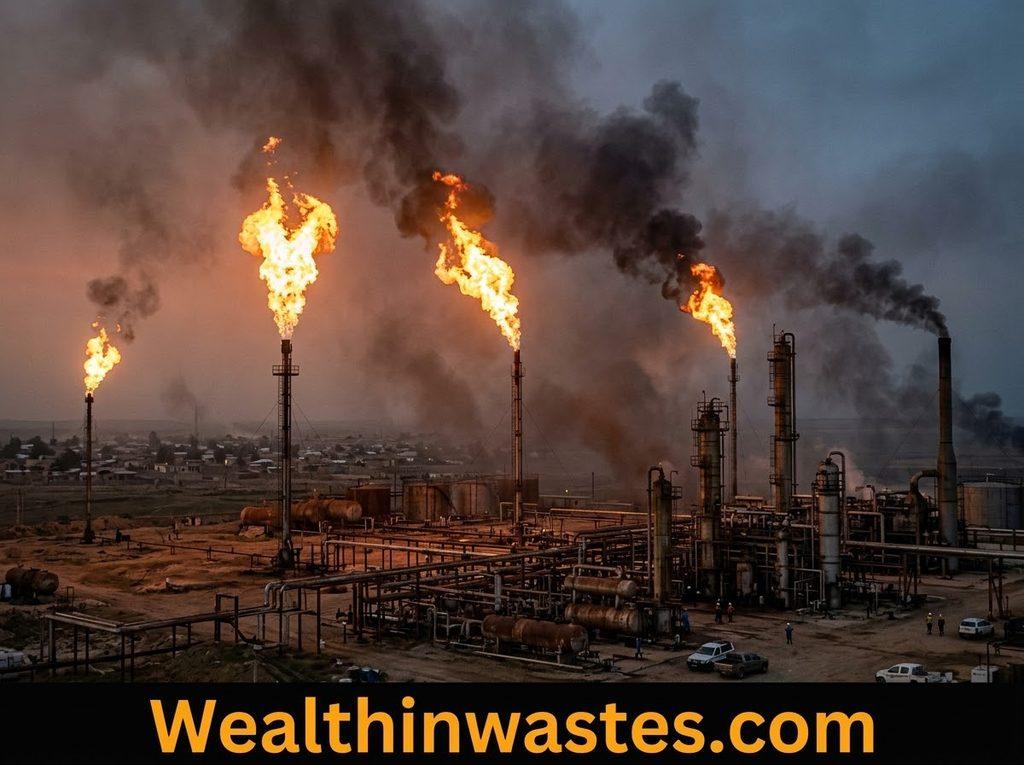
Assessing air quality around petroleum facilities with air quality modelling can help identify emissions from combustion, flaring, fugitive releases, dust, and equipment exhaust, while wind can transport pollutants into nearby communities.
1. Gas Flaring: Routine or emergency flaring burns associated gas and produces heat, light, and atmospheric emissions. Poorly controlled flaring can expose nearby communities and ecosystems to smoke, gases, and persistent noise.
2. Nitrogen And Sulfur Compounds: Combustion can release nitrogen oxides and sulfur dioxide, which contribute to poor air quality and may participate in atmospheric reactions that produce secondary pollutants or acid deposition.
3. Volatile Organic Compounds: Petroleum operations can release volatile organic compounds such as benzene, toluene, and xylene. Some compounds present inhalation concerns and require pollutant assessment, monitoring, leak detection, and appropriate emission-control measures.
4. Local Heat And Vegetation Stress: Flaring produces intense heat that can affect nearby vegetation and local environmental conditions. Repeated exposure may damage sensitive plants and contribute to wider ecological stress around facilities.
Agriculture And Community Livelihoods
Agriculture and fisheries often provide food, income, employment, and cultural value in oil-producing communities. Environmental degradation can therefore create livelihood losses even when contamination occurs beyond individual homes and farms.
Farmers may experience lower crop performance when petroleum contamination changes soil properties, reduces biological activity, or interferes with normal water movement. Nearby industrial waste may add further pressure where industrial activities occur.
Fishing households can face declining catches when polluted waters reduce fish abundance, damage habitats, or restrict access to locations. Reduced catches can affect food supply, market income, and household security through effects of water pollution.
Community livelihoods can also suffer when roads, pipelines, industrial sites, and other facilities divide farmland or restrict traditional access. Effective land-use planning should consider both project needs and existing community resource uses.
Pollution may create additional household costs through lost production, alternative water sources, transportation, healthcare, equipment replacement, and participation in cleanup or monitoring activities. These wider waste impacts can persist after visible contamination disappears.
Environmental management should therefore treat livelihood protection as an important part of project planning. Meaningful community engagement, transparent monitoring, emergency response, restoration, and fair compensation processes can help address documented impacts.
Read Also: Effective Ways to Protect Water Pollution
Biodiversity And Ecosystem Damage
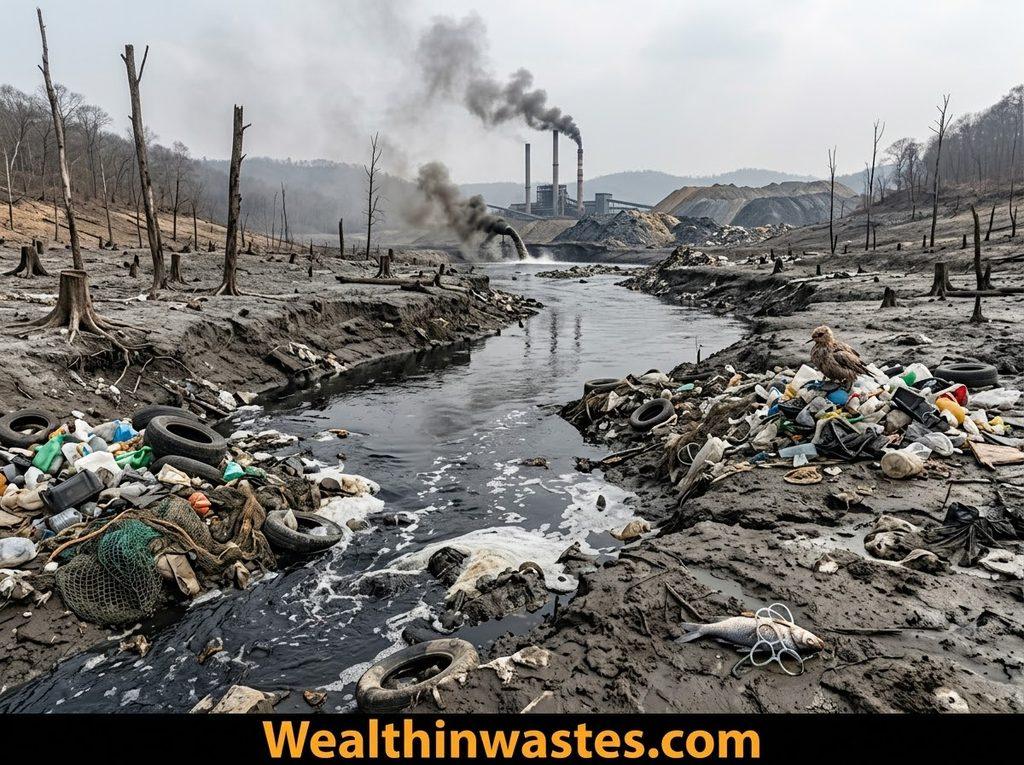
Petroleum activities can affect biodiversity value when vegetation disappears, wetlands become disturbed, waterways receive pollutants, and habitats become fragmented. Ecosystem effects may involve plants, animals, microorganisms, food webs, and ecological processes over time.
1. Habitat Loss: Clearing for roads, well pads, pipelines, and facilities removes vegetation and can reduce available habitat. Habitat fragmentation may separate populations and interrupt feeding, breeding, shelter, and movement patterns.
2. Wildlife Exposure: Animals can encounter contaminated soil, water, sediments, vegetation, or waste materials. Exposure may affect survival, reproduction, movement, and food availability depending on the contaminant and exposure conditions.
3. Wetland Disturbance: Wetlands provide nursery areas, flood regulation, water filtration, and biodiversity support. Construction and petroleum pollution can alter hydrology, vegetation structure, and the ecological functions these environments provide.
4. Food-Web Disruption: Pollution can affect algae, plants, invertebrates, fish, and larger animals, allowing impacts to move through connected food webs. Strong pollution control institutions can help protect lower trophic levels and wider ecosystem stability.
Managing Environmental Risks And Restoration
Environmental risk management should begin before exploration starts and continue through production, transportation, decommissioning, and restoration. Prevention is generally easier when operators identify sensitive areas and potential failure points early.
Regular environmental monitoring can track air, water, soil, biodiversity, and land-use conditions before and during operations. Baseline information makes it easier to detect changes and evaluate whether controls are working.
Spill prevention and pollution abatement require equipment maintenance, pipeline integrity checks, secondary containment, emergency plans, trained personnel, and rapid reporting. These measures reduce the likelihood that releases will spread across areas or contaminate sensitive resources.
Restoration may involve removing contaminated materials, treating soil, controlling pollution sources, replanting vegetation, restoring wetlands, improving water quality, and monitoring ecological recovery. The appropriate response depends on site conditions and contamination characteristics.
Institutions responsible for water pollution prevention have important roles in setting standards, reviewing environmental assessments, enforcing requirements, monitoring compliance, and coordinating responses. Strong institutions can improve accountability when environmental risks involve multiple operators and communities.
Long-term management should combine pollution prevention, community participation, transparent information, ecological restoration, and continuous monitoring. These measures can reduce cumulative environmental pressures while supporting more responsible petroleum resource development over time.
Summary on Key Effects of Oil Exploration and Exploitation Activities
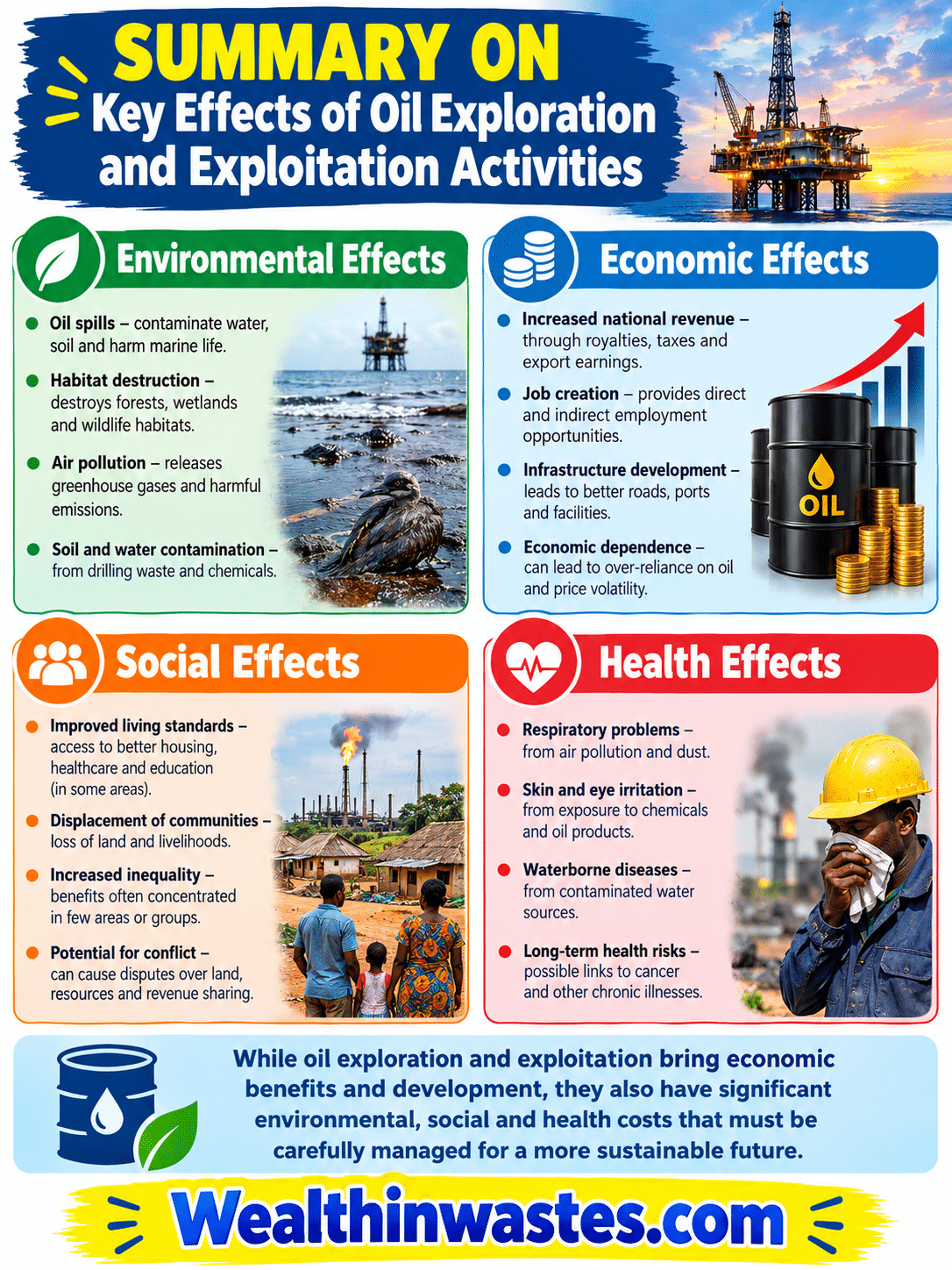
| Section | Main Idea | Why It Matters |
|---|---|---|
| Exploration Activities | Surveys, drilling, and infrastructure shape the project footprint. | Early planning can reduce disturbance. |
| Operational Processes | Production, storage, and transport create pollution pathways. | Controls help prevent releases. |
| Soil And Land | Spills and clearing can degrade productive land. | Soil health supports agriculture. |
| Water And Fisheries | Oil and effluents can contaminate aquatic systems. | Clean water supports fisheries and communities. |
| Air And Flaring | Flaring and emissions affect air quality and vegetation. | Emission controls reduce exposure. |
| Agriculture And Livelihoods | Pollution can reduce farm and fishing productivity. | Livelihood protection supports community resilience. |
| Biodiversity | Habitat disturbance can affect species and food webs. | Ecosystem functions depend on habitat quality. |
| Risk Management | Monitoring, prevention, response, and restoration reduce impacts. | Continuous management supports recovery. |
Frequently Asked Questions About Oil Exploration and Exploitation Activities: Key Effects
1. What are oil exploration activities?
Oil exploration activities include geological surveys, seismic investigations, exploratory drilling, environmental assessments, access construction, and supporting work used to locate and evaluate petroleum resources before commercial production begins.
2. How does oil exploitation affect the environment?
Oil exploitation can disturb land, contaminate soil and water, increase air emissions, damage habitats, reduce agricultural productivity, affect fisheries, and create additional pressure on communities and natural ecosystems.
3. How do oil spills affect agricultural soil?
Oil spills can coat soil particles, interfere with water movement, alter biological activity, damage vegetation, and reduce the productive capacity of farmland until cleanup and ecological restoration occur.
4. Why is gas flaring an environmental concern?
Gas flaring produces heat, light, noise, and atmospheric emissions. Depending on exposure and conditions, these emissions can contribute to air-quality problems, vegetation stress, and environmental pressure near facilities.
5. How can petroleum pollution reach rivers and groundwater?
Petroleum can move through surface runoff, drainage channels, creeks, sediments, and shallow groundwater. Rainfall, soil characteristics, water tables, and delayed containment can increase its spread across environments.
6. What measures can reduce petroleum-related environmental damage?
Prevention measures include equipment maintenance, pipeline monitoring, spill response plans, emission controls, wastewater treatment, environmental monitoring, community engagement, enforcement, and timely restoration of affected land and water resources.
Do you have any questions, suggestions, or contributions? If so, please feel free to use the comment box below to share your thoughts. We also encourage you to kindly share this information with others who might benefit from it. Since we can’t reach everyone at once, we truly appreciate your help in spreading the word. Thank you very much for your support and for sharing!
Read Also: Water and Land Pollution in Agriculture