


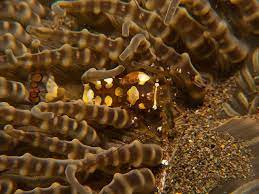
Microbial and parasite ecology examines how microscopic organisms and parasites interact with one another, their hosts, and surrounding physical conditions. It combines ecological principles with microbiology, parasitology, and evolutionary biology to explain natural systems.
These relationships occur in soil, water, air, plants, animals, and human communities. Studying them helps explain disease spread, nutrient cycling, ecosystem stability, and changing organism abundance across environments over time.
Microbes include bacteria, archaea, microscopic fungi, protozoa, and microscopic algae, while parasites live in or on hosts and obtain resources from them. Some cause disease; others support essential ecological processes.
Both groups respond to temperature, moisture, nutrients, habitat structure, and other living influences. Their populations can change quickly when seasons shift, resources become scarce, hosts move, or environmental quality deteriorates.
In farming and public health, this field supports improved soil management, safer water, livestock protection, and informed disease control. It also shows why organisms must be studied alongside living and non-living surroundings.
What Is Microbial and Parasite Ecology?
Ecology studies relationships among organisms and their surroundings, from individual hosts to populations and entire ecosystems. This field combines the levels of biological organisation with microbial and parasite-specific questions in natural systems today.
Microbial ecology focuses on bacteria, archaea, fungi, protozoa, and other microscopic life. Researchers examine how these organisms use resources, exchange materials, cooperate, compete, and affect nearby species within particular habitats.
Parasite ecology explores organisms that obtain food or shelter from hosts, often affecting host growth, behaviour, reproduction, or survival. The living and non-living components of the environment shape these encounters.
Some microbes decompose dead material and release nutrients; others form helpful partnerships with plants or animals. A smaller proportion causes disease, so ecological context helps explain whether a relationship benefits or harms hosts.
Both perspectives also consider evolution, because hosts, parasites, and microbes can adapt to one another over successive generations. Studying their relationships at different scales reveals patterns that isolated laboratory observations may miss.
Read Also: Soil Conservation: Meaning, Categories and Soil Management Practices
Population Ecology of Microbes and Parasites

1. Population Size: Population ecology examines how the abundance, survival, reproduction, and movement of organisms change over time. In microbial studies, a population may consist of one species living within a defined habitat.
2. Resource Availability: Food, moisture, nutrients, suitable hosts, and space can limit population growth. These conditions affecting species distribution help determine where microbes and parasites become abundant across a particular landscape over time.
3. Reproduction and Survival: Microbes may multiply rapidly when warmth, moisture, and nutrients suit them, while parasite populations also depend on host availability. Changes in these conditions can quickly alter population size.
4. Population Characteristics: Researchers compare birth rates, death rates, age or life stages, and genetic variation to describe a population. Long-term evidence of biological change can reveal broader ecological trends.
5. Population Change: Immigration, emigration, new infections, treatment, and seasonal conditions may increase or reduce a population. Ecologists track several influences together rather than attributing every change to one cause.
Population Density and Distribution Patterns
1. Population Density: Density means the number of individuals, cells, or organisms per unit of area, volume, or material. Scientists may report microbial abundance per gram of soil or millilitre of water.
2. Sampling Methods: Researchers collect soil, water, plant, or host samples from selected locations and compare results. routine environmental monitoring helps identify changes that a single sample may miss across repeated sampling periods.
3. Field Estimates: Ecologists may use quadrats for plants and relatively stationary organisms, while mobile animals require direct counts, camera traps, tracks, or other suitable evidence. Each method needs clear sampling boundaries.
4. Distribution Patterns: Organisms may occur in clusters around food, moisture, or hosts; appear evenly spaced through competition; or show no obvious pattern. Parasites often cluster where susceptible hosts gather.
5. Spatial and Seasonal Change: A population may thrive in one habitat yet remain scarce nearby because conditions differ. Careful interpretation of land-use patterns helps explain these ecological contrasts in the same region.
Microbial Communities and Ecological Interactions

1. Decomposition: Bacteria and fungi break down dead plants, animals, and organic waste. Their activity releases nutrients that plants can reuse, connecting microbial communities with soil fertility and wider ecosystem productivity.
2. Mutualism: Some microbes receive food or shelter while helping another organism. For example, root-associated bacteria can supply plants with usable nitrogen, while mycorrhizal fungi help roots absorb water and minerals.
3. Competition: Microbes may compete for nutrients, moisture, attachment sites, or space. Some produce substances that restrict neighbouring organisms, which can affect community composition and sometimes limit harmful microbes in soil or host tissues.
4. Grazing and Predation: Protozoa and other tiny consumers feed on bacteria or fungi, influencing microbial abundance and nutrient release. These feeding relationships connect microscopic organisms to larger food webs within soil and aquatic habitats.
5. Community Balance: No species acts alone; changes in one population can affect several others. Protecting ecosystem resilience and woodland and rangeland habitats supports these interconnected relationships over the long term.
Parasites, Hosts, and Transmission
1. Parasite Dependence: A parasite gains food, shelter, or another benefit from a host, usually causing some cost to that host. The outcome varies with parasite species, infection intensity, host condition, and environment.
2. External and Internal Parasites: Ectoparasites live on the host’s surface, while endoparasites live inside its body or tissues. Examples include ticks, lice, tapeworms, and several protozoan parasites that infect animals or humans.
3. Life Cycles: Some parasites complete their development in one host, while others require several hosts or an intermediate host. Their transmission depends on host contact, vectors, contaminated food, soil, or water.
4. Environmental Transmission: Parasite eggs, cysts, or larvae may reach new hosts through unsafe water, poor sanitation, or contaminated surfaces. Understanding pollution pathways into water helps explain some exposure risks.
5. Host and Community Effects: Infection can reduce growth, reproduction, or survival and may change competition between species. Assessing biological contaminants in water and water contamination sources supports risk reduction.
Environmental Factors That Shape Microbial Ecology
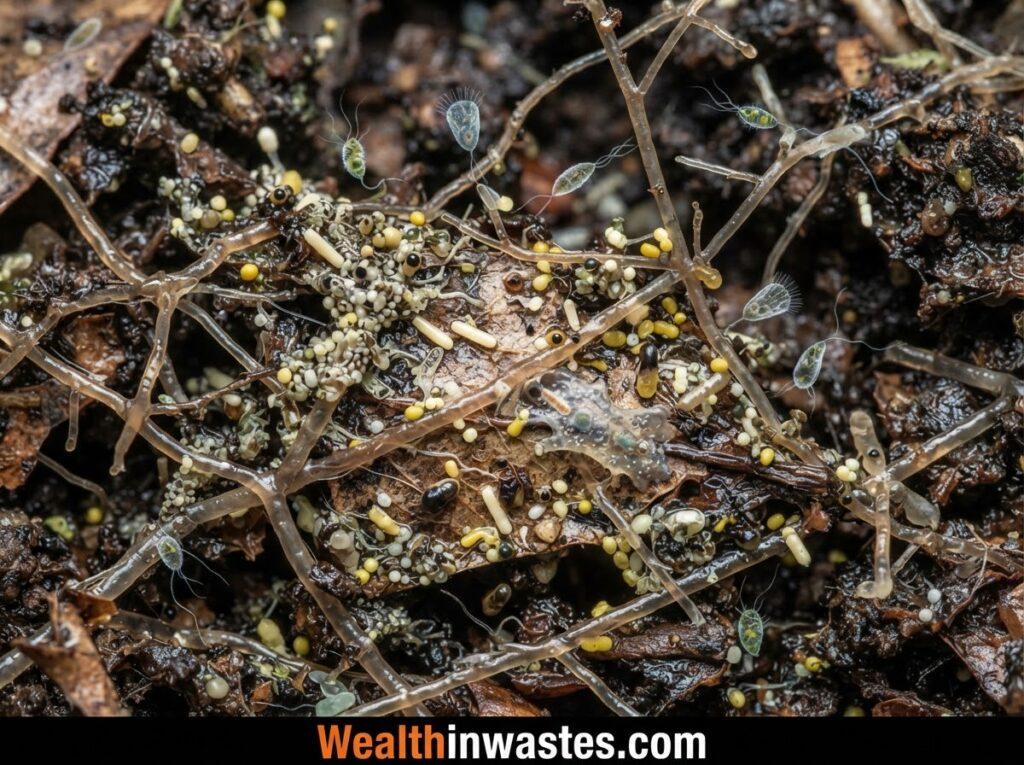
1. Temperature and Moisture: Warmth, humidity, rainfall, and water availability influence microbial growth and parasite development. Conditions outside an organism’s tolerance range can slow reproduction, reduce survival, or prevent transmission altogether.
2. Soil and Water Chemistry: Acidity, salinity, oxygen, and nutrient concentrations determine which organisms can persist. A species adapted to moist, oxygen-poor soil may not thrive in dry or well-aerated conditions.
3. Resources and Hosts: Microbial growth depends on suitable energy sources, while parasites need compatible hosts to complete their life cycles. When food, hosts, or shelter decline, populations may fall or move elsewhere.
4. Habitat Change: Clearing vegetation, draining wetlands, or disturbing soil can alter moisture, temperature, and contact between species. the loss of natural cover may therefore reshape microbial communities and parasite exposure.
5. Pollution and Disturbance: Chemicals, sewage, excessive nutrients, and other contaminants may suppress sensitive organisms while favouring tolerant species. Understanding environmental damage and recovery helps guide practical responses after contamination events.
Methods Used in Microbial and Parasite Ecology
Researchers begin by defining a question, habitat, sampling period, and organism group before selecting suitable analysis methods. Consistent methods allow meaningful comparisons between sites, seasons, host populations, and treatment conditions.
Microscopy helps scientists observe cell shapes, parasite eggs, larvae, and some life stages directly. Culture methods can grow selected microbes for identification, although not every organism grows under routine laboratory conditions.
Molecular tools, including DNA-based tests, can detect organisms that are difficult to culture and help distinguish closely related species. Researchers still interpret results carefully because detecting genetic material does not always prove active infection.
Field studies measure environmental conditions alongside organisms, recording temperature, pH, moisture, host density, and other relevant variables. Research on water-resource pressures shows why sampling location and water quality matter for accurate microbial assessment.
Reliable conclusions require suitable controls, representative samples, safe handling, and repeat observations. Combining laboratory findings with field evidence helps researchers distinguish a temporary fluctuation from a sustained ecological pattern or emerging risk.
Why Microbial and Parasite Ecology Matters
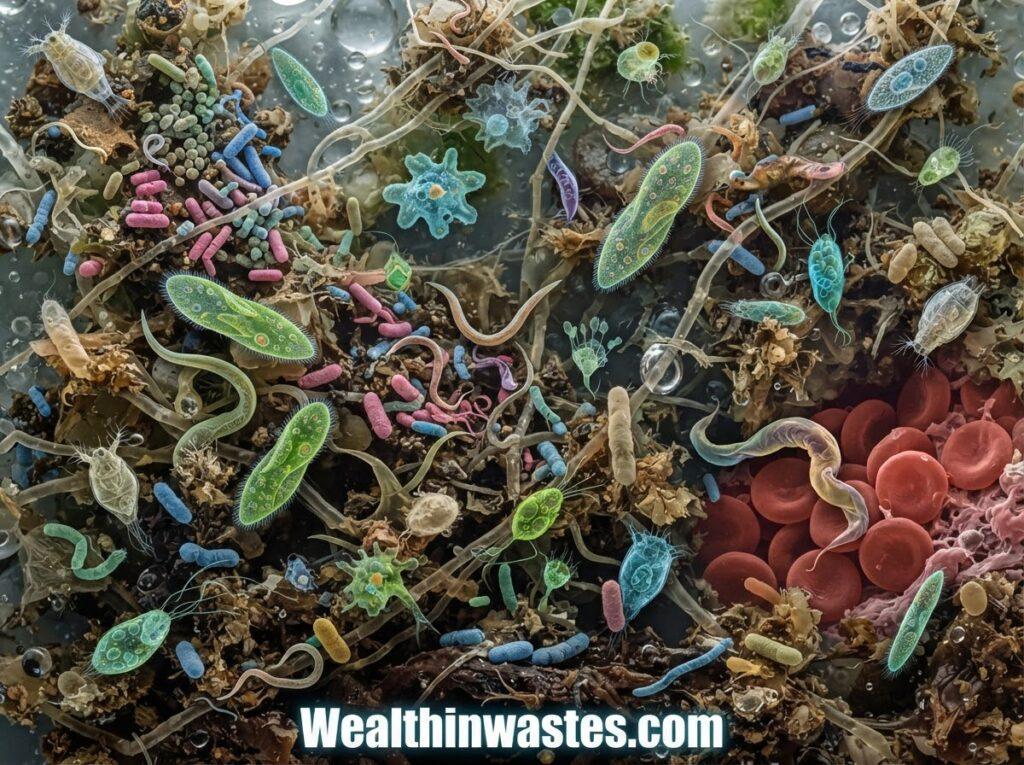
1. Soil Fertility and Crops: Beneficial microbes decompose residues, recycle nutrients, and sometimes protect roots from disease. Farmers who maintain organic matter and suitable moisture can support useful soil organisms and healthier crop growth.
2. Livestock and Fisheries: Parasite ecology helps explain infections that reduce animal weight gain, milk production, fertility, or survival. Understanding life cycles allows farmers and fish producers to target hygiene, stocking, and treatment more effectively.
3. Public Health: Some microbes and parasites spread through unsafe water, food, vectors, or close contact. Recognising major pollution categories helps communities identify conditions that can increase disease exposure in their area.
4. Ecosystem Function: Microorganisms support decomposition, soil formation, nutrient cycling, and aquatic food webs. Monitoring harmful organisms alongside these beneficial roles helps avoid management choices that damage essential ecological processes.
5. Early Intervention: Detecting unusual population changes can prompt investigation before problems spread widely. Practical pollution-control measures can reduce exposure pathways while protecting habitats and the organisms that depend on clean water.
Managing Microbial Risks and Ecological Balance
1. Prevent Exposure: Clean drinking water, safe sanitation, food hygiene, and proper animal care reduce opportunities for harmful organisms to move between hosts. preventive water-protection practices are especially important in high-risk settings.
2. Manage Waste Carefully: Store manure and organic waste appropriately, control runoff, and follow suitable composting procedures. Practical waste-management steps can reduce contamination without removing useful nutrients on farms and at home.
3. Reduce Household Pollution: Keep rubbish, sewage, and chemicals away from wells, streams, and drains. Effective household waste reduction helps limit the movement of contaminants into habitats and protects local biodiversity.
4. Assess Environmental Costs: Decisions should consider health risks, ecosystem effects, and the cost of treatment or restoration. Reviewing the financial consequences of pollution can strengthen prevention planning over the longer term.
5. Use Integrated Control: Combine monitoring, sanitation, habitat management, veterinary advice, and targeted treatment where necessary. Avoid unnecessary chemical use, because poorly chosen interventions may harm non-target organisms or disrupt ecological balance.
Read Also: Types of Conservation, Renewable and Non-Renewable Resources
Summary on Interactions and Impacts of Microbial and Parasite Ecology
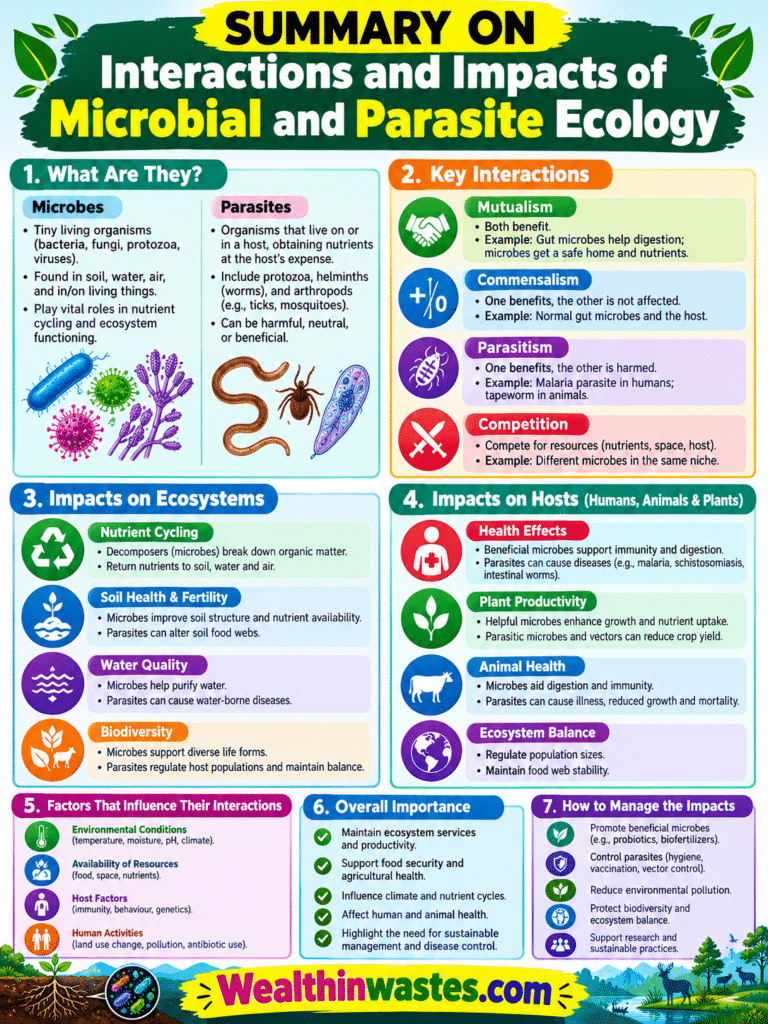
| Topic | Summary |
|---|---|
| Meaning | Studies how microorganisms and parasites interact with hosts and their physical environment. |
| Population Ecology | Explains changes in abundance, survival, reproduction, and movement over time. |
| Density and Distribution | Describes how many organisms occupy an area, volume, or habitat and how they are spread. |
| Microbial Interactions | Includes decomposition, mutualism, competition, grazing, and other ecological relationships. |
| Parasite Ecology | Examines host dependence, life cycles, transmission pathways, and effects on host populations. |
| Environmental Factors | Temperature, moisture, nutrients, habitat conditions, and pollution influence survival and spread. |
| Research Methods | Uses field sampling, microscopy, culturing, molecular tests, and environmental measurements. |
| Practical Importance | Supports agriculture, public health, fisheries, environmental protection, and informed disease management. |
| Risk Management | Combines sanitation, monitoring, responsible waste handling, and targeted control measures. |
Frequently Asked Questions About Microbial and Parasite Ecology
1. What Does Microbial Ecology Study?
It studies microorganisms, their environmental conditions, and their relationships with other organisms.
2. What Is Parasite Ecology?
It examines how parasites interact with hosts, obtain resources, reproduce, and spread through environments.
3. What Is Population Ecology?
Population ecology studies changes in the abundance, reproduction, survival, and distribution of organisms over time.
4. What Is Population Density?
It is the number of organisms per defined unit of area, volume, or material.
5. How Do Microbes Benefit Ecosystems?
They decompose organic matter, recycle nutrients, support soil fertility, and contribute to food webs.
6. Can Parasites Affect Population Distribution?
Yes. Parasites can influence host survival, reproduction, behaviour, and abundance, changing population patterns.
7. Which Environmental Factors Affect Microbes?
Temperature, moisture, acidity, oxygen, nutrient availability, and pollution can influence microbial growth and survival.
8. How Do Scientists Study Microbes and Parasites?
They use sampling, microscopy, culture methods, DNA-based tests, field observations, and environmental measurements.
9. Why Is This Field Important to Agriculture?
It helps farmers understand soil health, crop diseases, livestock parasites, nutrient cycling, and environmental risks.
Do you have any questions, suggestions, or contributions? If so, please feel free to use the comment box below to share your thoughts. We also encourage you to kindly share this information with others who might benefit from it. Since we can’t reach everyone at once, we truly appreciate your help in spreading the word. Thank you very much for your support and for sharing!
Read Also: Classification of Soil Organism
“`