


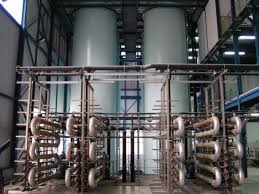
Environmental biotechnology applies microorganisms, plants, enzymes, and other biological systems to prevent pollution, treat waste, recover useful resources, and restore damaged environments. The right method depends on the pollutant and intended result.
People use methods whenever they need to complete a task, solve a problem, or achieve a particular objective. Environmental scientists follow systematic procedures to investigate pollution, manage waste, and protect natural resources.
A method involves more than performing a single action. It includes selecting suitable materials, collecting information, conducting appropriate procedures, interpreting results, and making informed decisions that support the intended environmental outcome.
Environmental biotechnology uses biological processes to address challenges affecting soil, water, air, agriculture, industries, and communities. These methods can support pollution control, contaminated-land restoration, renewable energy production, and resource recovery.
This article explains the major methods used in environmental biotechnology, their applications, advantages, limitations, and selection criteria. It also examines how researchers evaluate existing methods and improve them for changing environmental conditions.
What Is a Method in Environmental Biotechnology?
A method is a systematic sequence of actions used to complete a task or solve a defined problem. In environmental science, methods guide investigation, treatment, measurement, and evaluation under clear, repeatable conditions.
Environmental biotechnology combines biology with technological procedures to manage environmental problems. It draws on biotechnology as a practical environmental tool by applying living organisms, biological materials, and their activities to specific environmental challenges.
These methods operate at different scales, from household composting to industrial wastewater treatment and large contaminated-land restoration projects. Their purpose is to reduce pollution, improve resource efficiency, and support long-term environmental improvement.
An effective environmental method contains critical steps that work together. These steps may include sampling, laboratory analysis, treatment, monitoring, interpretation, and decision-making to achieve a measurable environmental objective safely and consistently.
Some methods use natural biological processes, while others introduce carefully selected microorganisms or employ advanced instruments. Scientists choose an approach according to the problem, available evidence, environmental conditions, and intended results.
Read Also: Factors Influencing Soil Moisture
How to Choose a Suitable Environmental Method
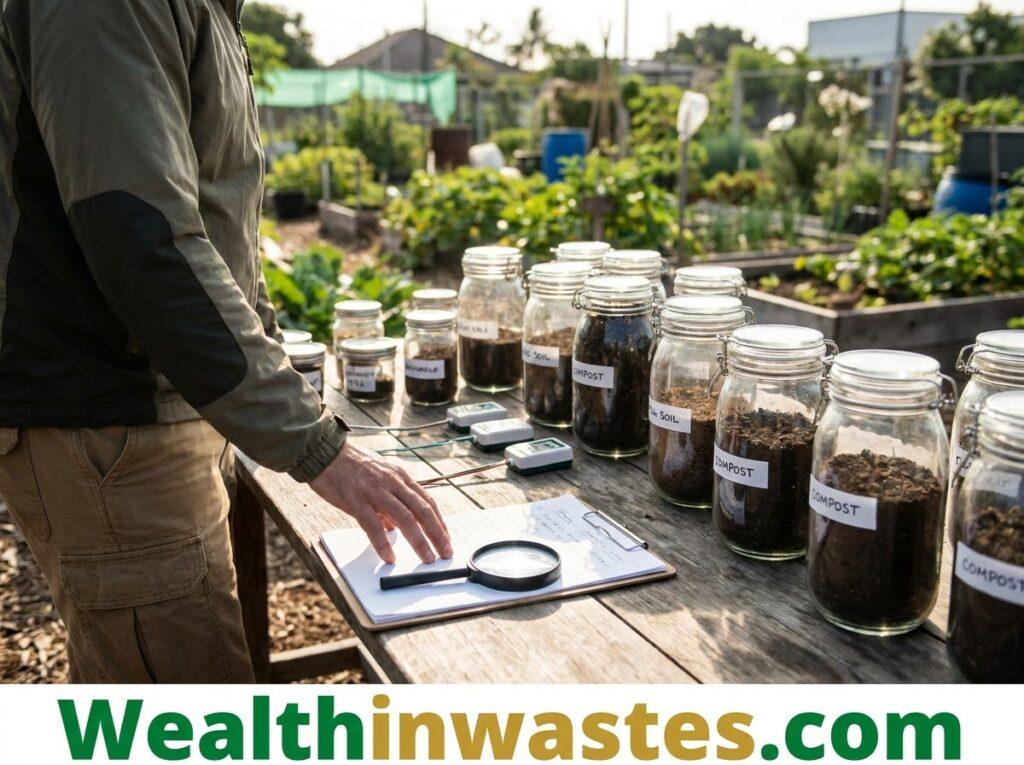
Choosing an appropriate method begins with defining the problem and identifying available techniques. The decision should also consider environmental and public health protection, treatment requirements, safety, and practical limitations.
1. Define the Objective: State the environmental problem clearly and decide what successful treatment means, such as reducing pollutant concentrations, improving water quality, restoring soil functions, or lowering waste generation within an agreed timeframe.
2. Characterise the Problem: Identify the contaminant, its concentration, the affected location, and relevant soil or water conditions. Understanding community responses to environmental pollution also helps identify exposure concerns and local priorities before treatment begins.
3. Establish Baseline Measurements: Collect air, water, soil, or waste samples before treatment. These measurements establish starting conditions and help researchers compare later results when investigating the causes and effects of pollution.
4. Develop a Testable Hypothesis: Predict how a proposed technique should affect the contaminant under defined conditions. For example, researchers may predict that adding suitable microorganisms will reduce a measurable concentration of biodegradable organic pollutants.
5. Conduct a Controlled Trial: Test the proposed method using appropriate equipment, suitable controls, and repeat measurements. A small pilot study helps identify practical difficulties before organisations commit substantial resources to full-scale treatment.
6. Compare Performance and Resources: Evaluate accuracy, precision, treatment effectiveness, cost, expertise, equipment availability, and maintenance requirements. A practical method should achieve the objective while remaining affordable, reproducible, and manageable throughout the treatment period.
Traditional Methods Used in Environmental Biotechnology
Traditional environmental biotechnology uses natural biological activities to manage organic materials, recover resources, and reduce pollution. Many techniques remain useful because microorganisms can transform waste under suitable environmental conditions.
1. Composting: Composting uses microorganisms to decompose biodegradable materials such as crop residues, food scraps, leaves, and animal manure. It converts suitable organic waste into a soil amendment that supports nutrient recycling and soil improvement.
2. Anaerobic Digestion: Anaerobic microorganisms break down organic materials without oxygen, producing biogas and digestate. Properly managed systems can recover energy from suitable organic waste while reducing the amount of material requiring disposal.
3. Microbial Fermentation: Microorganisms transform organic compounds into simpler substances through fermentation. Environmental applications include selected waste-treatment and resource-recovery processes, although the products depend on the organisms, available substrate, and operating conditions.
4. Biological Nitrogen Fixation: Certain bacteria convert atmospheric nitrogen into biologically useful nitrogen compounds. This natural process supports plant nutrition, reduces dependence on some manufactured nitrogen inputs, and contributes to sustainable agricultural production.
5. Activated Sludge Treatment: This wastewater process uses communities of microorganisms to break down biodegradable organic pollutants in aerated treatment tanks. Operators control aeration, mixing, and sludge management to maintain effective biological treatment.
6. Biological Waste Treatment: Carefully managed biological systems use naturally occurring organisms to transform suitable waste components. Understanding biotechnology-based waste management helps explain how treatment facilities can recover resources while reducing environmental pollution.
Bioremediation Methods for Contaminated Land
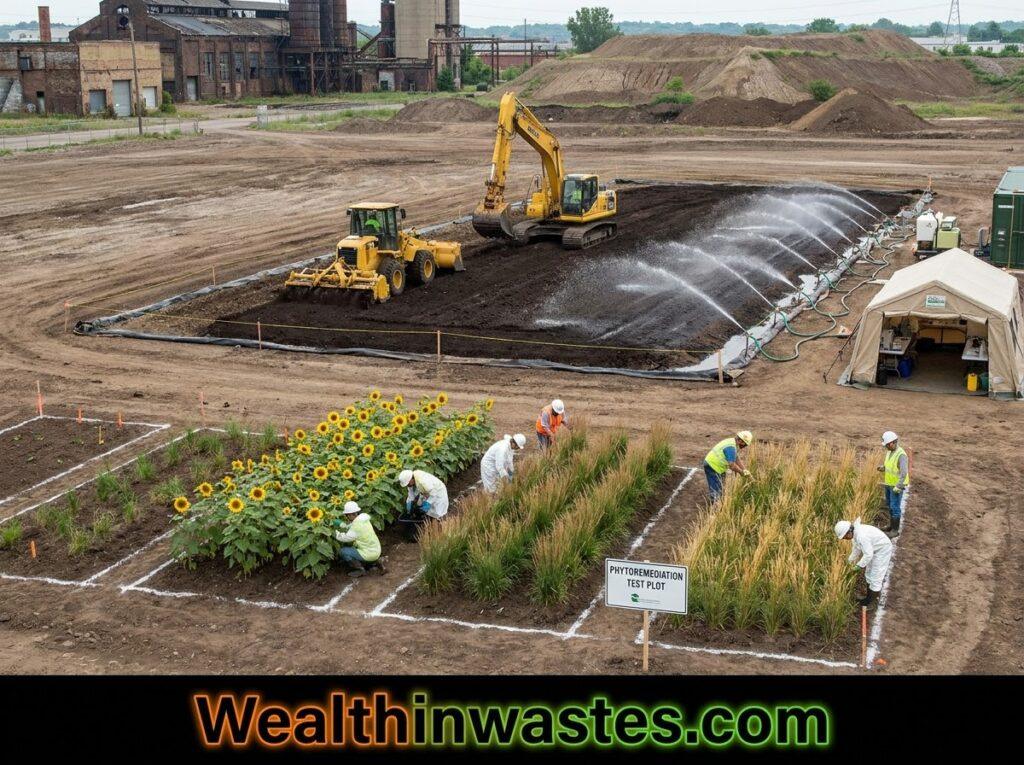
Bioremediation uses microorganisms, plants, or their biological activities to reduce, transform, or contain environmental contaminants. Scientists select the specific technique according to pollutant characteristics, site conditions, treatment objectives, and potential environmental risks.
1. In Situ Bioremediation: This technique treats contamination directly at the affected location without excavating the material. It can reduce soil disturbance and transport requirements when site conditions support effective biological treatment.
2. Bioaugmentation: Bioaugmentation introduces selected microorganisms to supplement existing microbial communities. Specialists may consider it when indigenous organisms cannot achieve the required treatment performance and suitable introduced microorganisms can address the identified contaminants.
3. Biostimulation: Biostimulation improves conditions for microorganisms already present at a contaminated site. Depending on the problem, managers may adjust oxygen, moisture, nutrients, or other environmental factors to encourage biological degradation.
4. Bioventing and Biosparging: Bioventing supplies air to suitable contaminated soil to support microbial activity, while biosparging introduces air below the water table. Both methods require careful assessment of groundwater conditions and contaminant movement.
5. Landfarming and Biopiles: These methods treat excavated or contained contaminated soil while encouraging microbial degradation. Operators manage aeration, moisture, nutrients, and temperature to support treatment of suitable petroleum hydrocarbons and other biodegradable compounds.
6. Phytoremediation: Phytoremediation uses plants and associated microorganisms to remove, contain, or stabilise certain contaminants. Its effectiveness depends on plant suitability, root depth, contaminant availability, climate, and the intended future use of the land.
Successful remediation requires accurate site investigation because the causes of land pollution influence the treatment needed. Researchers must also understand how hazardous substances affect soil and evaluate whether biological treatment can manage the identified risks.
Researchers should also examine the different components of land contamination before selecting microorganisms or plants. Biological methods cannot destroy every contaminant, and some pollutants require physical or chemical treatment alongside remediation.
Methods for Treating Wastewater and Air
Environmental biotechnology provides several methods for treating polluted water, wastewater, and contaminated air. These techniques rely on microbial activity, filtration, or biological contact systems to reduce specific pollutants before environmental release.
1. Aerobic Biological Treatment: Aerobic microorganisms use oxygen to break down biodegradable pollutants in wastewater. Treatment tanks, aerated lagoons, and related systems provide conditions that support microbial growth and reduce organic pollution.
2. Anaerobic Wastewater Treatment: Anaerobic microorganisms treat suitable organic wastewater without supplied oxygen. Some systems recover biogas during treatment, making this technique particularly useful where concentrated biodegradable waste streams can support energy recovery.
3. Biofiltration: Biofiltration passes polluted air or water through a medium supporting biological activity. Microorganisms attached to the medium can transform suitable contaminants, including certain odorous compounds and biodegradable pollutants, under controlled operating conditions.
4. Constructed Wetlands: Constructed wetlands combine vegetation, microorganisms, soil, and engineered water flow to improve wastewater quality. They can remove or transform some pollutants, although designers must match the system to the wastewater characteristics and available land.
5. Bioscrubbers and Biotrickling Filters: These systems bring contaminated air into contact with liquids or biologically active surfaces. Microorganisms then transform suitable pollutants, while operators manage moisture, airflow, nutrients, and contact time.
6. Microbial Treatment Verification: Operators measure relevant pollutants before and after treatment to determine actual performance. Understanding waste sources and their environmental impacts helps identify suitable treatment objectives and monitoring requirements.
Effective wastewater management also requires preventive measures against water pollution and careful monitoring of treated effluent. These practices help limit contaminant releases and reduce the environmental and public health consequences of water pollution.
Modern Tools in Environmental Biotechnology
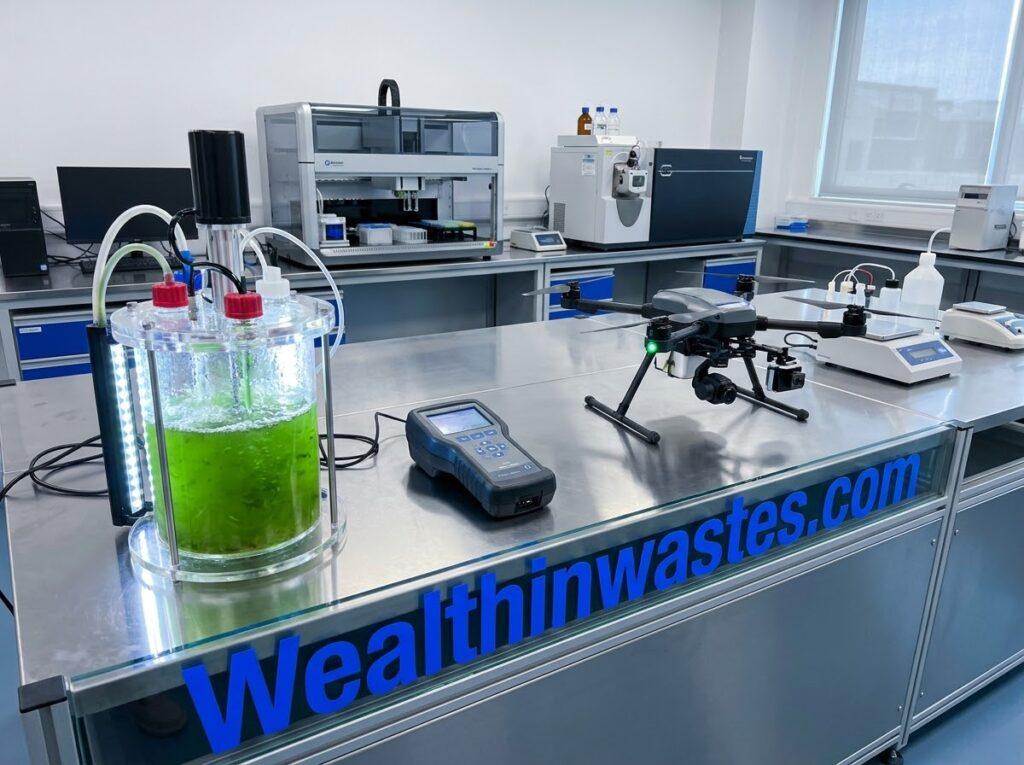
Modern environmental biotechnology combines biological knowledge with molecular techniques, specialised instruments, and computer-assisted analysis. These tools help researchers identify biological processes, monitor contamination, and develop targeted solutions for difficult environmental problems.
1. Genetic Engineering: Genetic engineering changes an organism’s genetic material to produce selected characteristics. Researchers investigate engineered microorganisms for specific environmental applications, subject to appropriate safety assessments, regulatory requirements, and containment measures.
2. Molecular Biology Techniques: DNA-based methods help scientists identify microorganisms, investigate microbial communities, and detect selected biological indicators. These techniques improve understanding of which organisms exist at a site and what biological processes they may perform.
3. Biosensors: Biosensors combine biological recognition components with measurement systems to detect particular substances. Depending on their design, they can support rapid monitoring of selected contaminants, helping researchers identify changes that require further investigation.
4. Microbial Community Analysis: Modern laboratory techniques examine microbial diversity and functional potential in soil, water, and treatment systems. Researchers use these findings to improve treatment conditions and understand why some biological processes perform better than others.
5. Nanotechnology-Assisted Environmental Treatment: Certain engineered nanomaterials can support contaminant detection, adsorption, or treatment processes. Researchers must assess their performance, toxicity, persistence, recovery, and disposal to prevent new environmental problems.
Modern technologies should protect living organisms while improving treatment efficiency. Understanding the value of biodiversity helps scientists recognise why environmental interventions must protect ecological relationships, not simply remove a measured pollutant.
Advanced techniques also require responsible oversight because poorly designed interventions may create unexpected consequences. Researchers should consider environmental damage and its possible consequences before introducing unfamiliar biological or nanotechnology-based solutions.
How to Test and Improve an Environmental Method
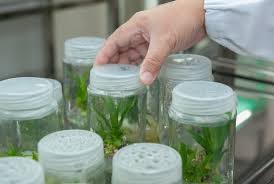
Researchers evaluate environmental methods through systematic experiments and practical trials. They compare predicted outcomes with measured results, identify weaknesses, and make adjustments that improve treatment effectiveness, reliability, safety, and resource efficiency.
1. Define Performance Indicators: Select measurable indicators that match the treatment objective, such as pollutant concentration, microbial activity, oxygen demand, treatment duration, or waste volume. Clear indicators make results easier to interpret.
2. Check Site Suitability: Examine climate, soil, groundwater, drainage, available space, and nearby communities before installation. Reviewing environmental factors affecting site selection helps identify conditions that could reduce treatment performance or increase pollution risks.
3. Measure Accuracy and Precision: Accuracy describes how closely a result approaches the true value, while precision describes how closely repeated measurements agree. Reliable sampling and appropriate laboratory procedures help researchers evaluate both qualities.
4. Evaluate Cost and Resources: Compare treatment costs, equipment, expertise, spare parts, energy requirements, and maintenance needs. A technically effective method may prove impractical when the organisation cannot support its operation throughout the required treatment period.
5. Conduct Pilot Studies: Test a proposed method on a smaller scale to identify operational problems before expansion. Pilot studies reveal whether the treatment works under realistic conditions and whether adjustments can improve performance.
6. Monitor and Revise: Continue sampling throughout treatment and compare results against established targets. Lessons from different waste disposal systems also demonstrate why design, operating conditions, monitoring, and maintenance must match the environmental risks.
Benefits and Limitations of Environmental Biotechnology
Environmental biotechnology can reduce pollution, support waste recovery, and improve the use of biological resources. Some methods operate under relatively mild conditions and produce useful outputs, such as compost, biogas, or treated water.
Biological treatment can also reduce dependence on some physical or chemical processes. However, performance depends on temperature, moisture, acidity, oxygen, nutrients, microbial activity, and the chemical characteristics of the pollutants involved.
Not every contaminant responds to biological treatment, and certain persistent chemicals or heavy metals require different management strategies. Some methods also need extensive monitoring, specialist equipment, and sufficient time to achieve the intended outcome.
Environmental safety must remain central to every treatment decision. Practitioners should evaluate possible toxic by-products, microbial risks, groundwater movement, residual contamination, and the safe handling of treated materials before declaring a site suitable for reuse.
Effective environmental protection requires methods that suit local conditions and available resources. Better planning also supports the management of urban environmental degradation by connecting treatment technologies with pollution prevention, infrastructure, monitoring, and responsible resource management.
In conclusion, the methods used in environmental biotechnology range from traditional microbial processes to advanced molecular tools. Selecting a suitable approach requires clear objectives, reliable evidence, realistic costs, and continuous performance monitoring.
Read Also: Basic Environmental Concepts and Theories
Summary on Methods Used in Environmental Biotechnology
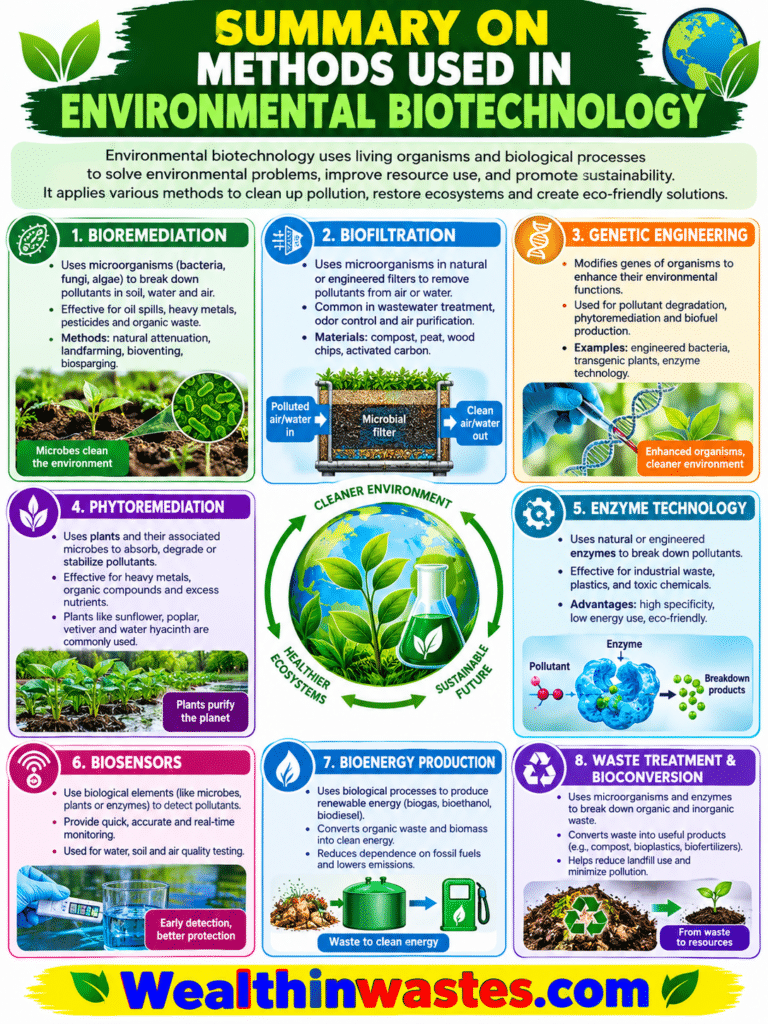
| Method | Main Application | Important Consideration |
|---|---|---|
| Composting | Organic waste treatment and soil improvement | Moisture, aeration, temperature, and material balance |
| Anaerobic Digestion | Organic waste treatment and biogas production | Oxygen-free conditions, feedstock quality, and process stability |
| Bioremediation | Treatment of contaminated soil and selected water environments | Contaminant type, microbial activity, and site conditions |
| Phytoremediation | Plant-assisted treatment or containment of selected contaminants | Plant suitability, contaminant uptake, and treatment duration |
| Wastewater Treatment | Reduction of biodegradable pollutants in wastewater | Oxygen supply, microbial health, and effluent quality |
| Biofiltration | Biological treatment of suitable air or water pollutants | Contact time, moisture, airflow, and filter performance |
| Genetic and Molecular Tools | Microbial identification, monitoring, and targeted research | Technical expertise, validation, biosafety, and regulation |
| Scientific Method | Selection, testing, and improvement of environmental techniques | Accuracy, precision, cost, resources, and reproducibility |
Frequently Asked Questions About Methods Used in Environmental Biotechnology
1. What Is Environmental Biotechnology?
Environmental biotechnology uses microorganisms, plants, enzymes, and other biological systems to control pollution, treat waste, recover resources, and restore contaminated environments safely and effectively.
2. Which Method Treats Contaminated Soil?
Bioremediation, phytoremediation, bioventing, biopiles, and landfarming can treat suitable contaminated soils. The correct method depends on the pollutant, site conditions, and intended land use.
3. How Does Bioaugmentation Work?
Bioaugmentation introduces selected microorganisms into a treatment system to improve its ability to break down specific contaminants when existing microbial communities cannot achieve sufficient treatment performance.
4. Is Composting an Environmental Biotechnology Method?
Yes. Composting uses microorganisms to decompose biodegradable materials into compost. It supports organic waste management, nutrient recycling, and soil improvement when operators manage the process properly.
5. How Do Scientists Choose the Right Method?
Scientists consider treatment objectives, contaminant characteristics, accuracy, precision, cost, available expertise, equipment, environmental conditions, safety requirements, and results from preliminary experiments before selecting a method.
6. What Are the Limitations of Environmental Biotechnology?
Some methods require long treatment periods, specialised expertise, or strict environmental controls. Persistent contaminants may resist biological treatment and require physical or chemical alternatives.
Do you have any questions, suggestions, or contributions? If so, please feel free to use the comment box below to share your thoughts. We also encourage you to kindly share this information with others who might benefit from it. Since we can’t reach everyone at once, we truly appreciate your help in spreading the word. Thank you very much for your support and for sharing!
Read Also: Proper Farm Waste Management Guide