


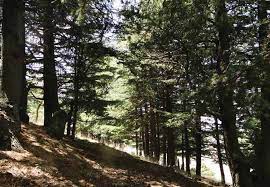
Forests and rangelands are vital components of terrestrial ecosystems, supporting water supplies, soil stability, biodiversity, livestock production, livelihoods, climate regulation, and many economic activities across rural and urban communities worldwide.
Together, these landscapes connect ecological processes with human needs by storing carbon, moderating temperatures, protecting watersheds, supplying renewable materials, supporting wildlife, and providing grazing resources where crop production faces environmental limitations.
Forests contain complex communities of trees, shrubs, animals, fungi, and microorganisms, while rangelands mainly contain grasses, shrubs, trees, and other plants adapted to environmental constraints in different climates throughout the world.
Although they differ in vegetation and management needs, forests and rangelands both influence rainfall infiltration, water retention, nutrient cycling, erosion control, habitat quality, and the long-term productivity of surrounding agricultural landscapes.
Understanding the importance of forests and rangelands therefore helps farmers, communities, policymakers, and environmental managers make better decisions about conservation, production, restoration, land use, and sustainable natural-resource management for future generations.
Forests and Rangelands Overview
1. Connected Ecosystems: Forests and rangelands function as connected ecological systems because water, nutrients, wildlife, vegetation, and human activities frequently move between these landscapes and surrounding farms.
2. Natural Resource Base: Both landscapes supply valuable resources, including timber, fuelwood, fodder, food, medicinal materials, wildlife habitats, carbon storage, fertile soils, and water regulation services for communities.
3. Climate Influence: Vegetation affects temperature, humidity, wind movement, evaporation, carbon storage, and rainfall infiltration. Maintaining healthy plant cover can therefore improve environmental stability across agricultural and pastoral regions.
4. Support for Livelihoods: Millions of households rely directly or indirectly on forests and rangelands for livestock, crops, forest products, employment, grazing resources, cultural activities, and household income.
5. Conservation Importance: Protecting these ecosystems preserves species, genetic resources, soils, water systems, and ecological processes while reducing the long-term damage associated with destructive land-use practices.
6. Need for Balance: Sustainable management must balance human needs with ecological limits because uncontrolled harvesting, conversion, overgrazing, and poorly planned development can weaken ecosystem functions and reduce productivity.
Read Also: Complete List of Recyclable Wastes (Waste Recyclables)
Forest Resources and Global Trends
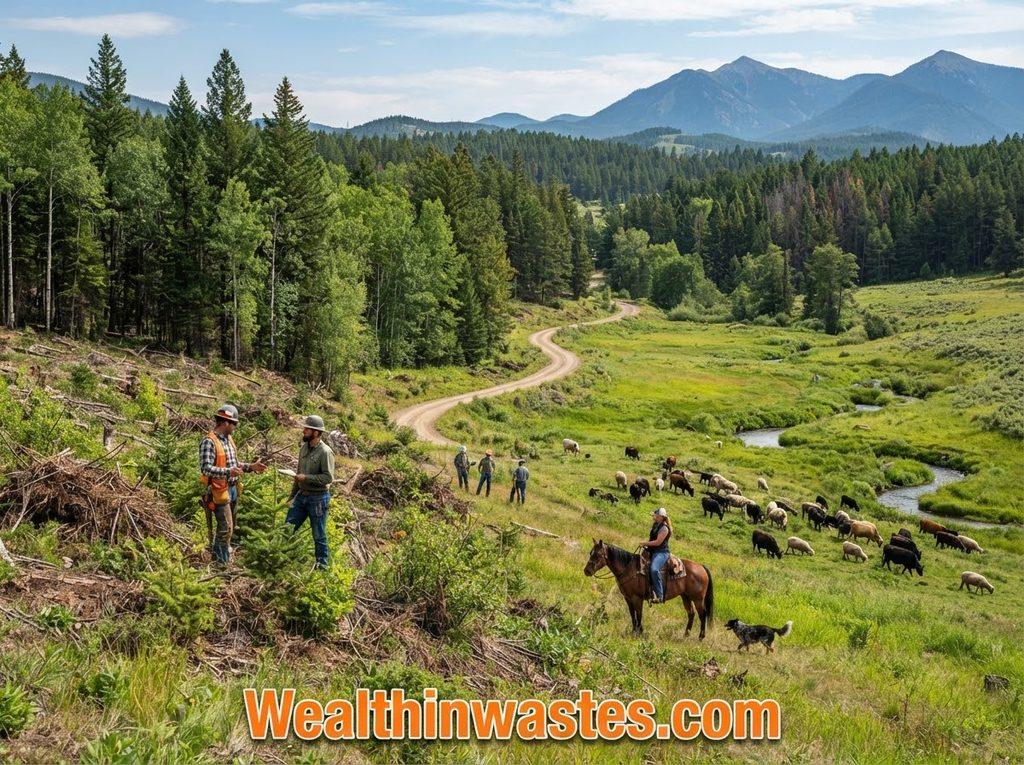
Forests covered roughly four billion hectares around 2010, according to the source material, while continuing pressures from agricultural expansion, logging, fires, infrastructure development, and settlement reduced forest cover considerably.
Global forest assessments showed that annual forest loss remained substantial, although the rate declined compared with the 1990s. Tree planting and forest regeneration helped reduce net losses during the following decade.
Primary forests remain especially valuable because they contain complex habitats and genetic resources. Their continued decline can damage biodiversity, ecological resilience, and the ability of forests to perform essential environmental functions.
Forest distribution differs widely across regions, and national trends can contrast sharply. Some countries gained forest area through plantations and regeneration, while others experienced persistent losses caused by land conversion.
Land conversion remains a major pressure because expanding farms, settlements, roads, industries, and infrastructure can replace natural vegetation. Readers can better understand this pressure through land-use planning and land-cover management.
Forest conservation also forms part of wider natural-resource conservation efforts, especially where communities depend upon renewable resources and where degradation threatens future environmental and economic opportunities.
Importance of Forests for Water and Soil
1. Water Regulation: Forests influence the hydrological cycle by intercepting rainfall, improving infiltration, slowing runoff, and supporting groundwater recharge. Their vegetation and soils help regulate how water moves through catchments after seasonal rainfall events.
2. Erosion Control: Tree roots stabilize soil and improve its structure, while litter layers reduce direct rainfall impact and protect exposed ground. These processes limit erosion, preserve nutrients, and reduce sediment movement into rivers.
3. Watershed Protection: Forested watersheds contribute to reliable freshwater supplies by storing water within soils, vegetation, wetlands, and groundwater systems. Healthy catchments can also moderate floods, maintain streamflow, and improve downstream water quality.
4. Hazard Reduction: Forests can reduce some water-related hazards, including landslides, flooding, drought impacts, desertification, and salinization. Their protective functions become especially important where communities depend heavily on rainfall or natural water sources.
5. Cleaner Water: Healthy forest soils and vegetation can trap sediments and some pollutants before they enter streams. This makes forest protection an important part of water-resource protection and development.
6. Better Soil Moisture: Forest cover reduces excessive runoff while increasing opportunities for rainfall to enter soil profiles. Good vegetation management therefore complements broader soil and water conservation practices across vulnerable landscapes.
Economic and Ecological Value of Forests
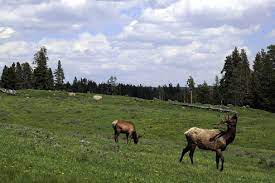
Forests provide timber, fuelwood, fruits, fibres, medicinal materials, gums, resins, dyes, and many other products. These resources support household needs, local enterprises, manufacturing activities, and rural employment in forest-dependent communities.
Forest ecosystems also provide habitat for wildlife and preserve genetic diversity that can support future crop improvement, medicine discovery, ecological restoration, and adaptation to changing environmental conditions.
By storing carbon in trees, roots, litter, and soils, forests contribute to climate regulation. Their vegetation also moderates local temperatures, influences humidity, and reduces wind speeds across surrounding landscapes.
Forests can improve soil fertility through litter decomposition and nutrient cycling. Fallen leaves, branches, and organic residues add material to soils, supporting microorganisms and improving conditions for plant growth.
These combined benefits make forests valuable natural assets rather than simple sources of timber. Effective management recognizes their environmental, economic, social, cultural, and agricultural contributions at the same time.
These benefits become clearer when forests are considered alongside biodiversity conservation and ecosystem value, because species, habitats, genetic resources, and ecological functions often support several human needs simultaneously.
Rangelands and Their Main Characteristics
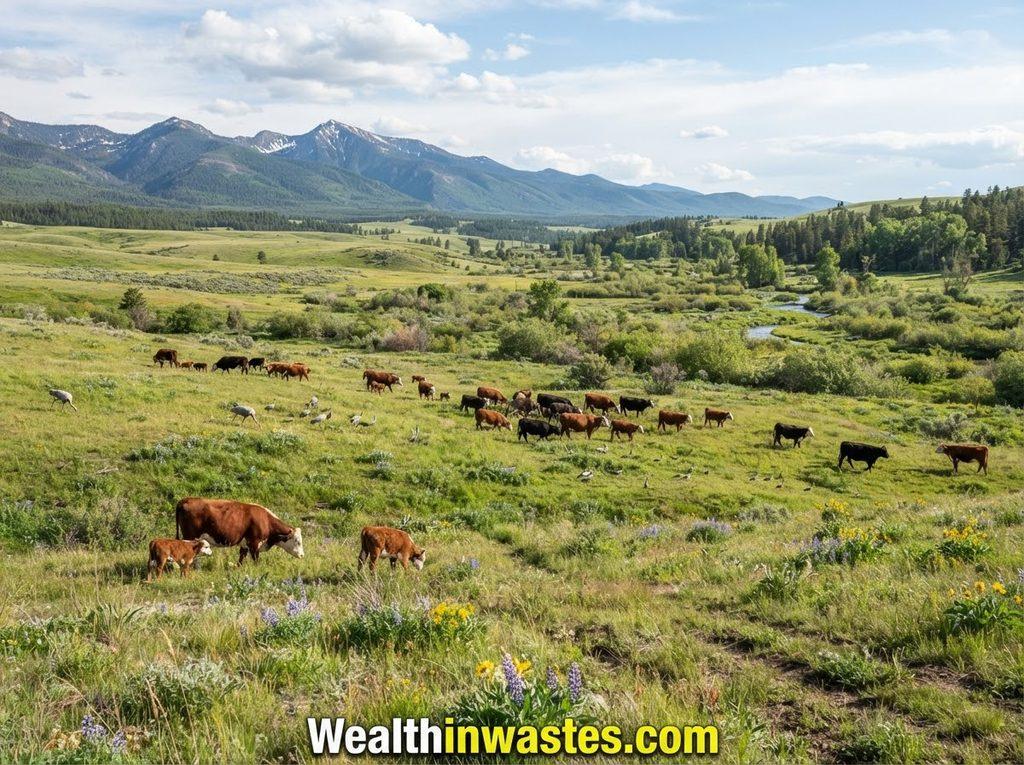
1. Wide Distribution: Rangelands occur across many latitudes and commonly support relatively low biomass production because rainfall, temperature, soil conditions, or water availability limit vegetation growth in many regions.
2. Diverse Vegetation: They cover extensive portions of drylands, grasslands, steppes, highlands, and pastoral landscapes. Their vegetation often includes perennial grasses, annual plants, shrubs, trees, and other species suited to variable conditions.
3. Complex Ecology: Rangelands can appear simple from a distance, yet they contain complex ecological relationships. Plants, herbivores, predators, insects, soil organisms, and water systems interact continuously within these diverse landscapes.
4. Difficult Assessment: Global estimates indicate that rangelands cover a major share of terrestrial land. Precise measurement remains difficult because definitions, data quality, land conversion, degradation, and seasonal vegetation changes complicate assessment.
5. Fragile Resources: Mismanaged rangelands can lose vegetation cover, soil organic matter, biodiversity, water retention capacity, and productivity. Maintaining healthy plant communities therefore remains essential for both ecosystem services and pastoral livelihoods.
6. Water Dependence: Because rainfall and soil moisture strongly influence rangeland productivity, seasonal drought can quickly reduce available forage. Understanding climate effects on land resources helps explain this vulnerability.
Importance of Rangelands for Livestock and Biodiversity
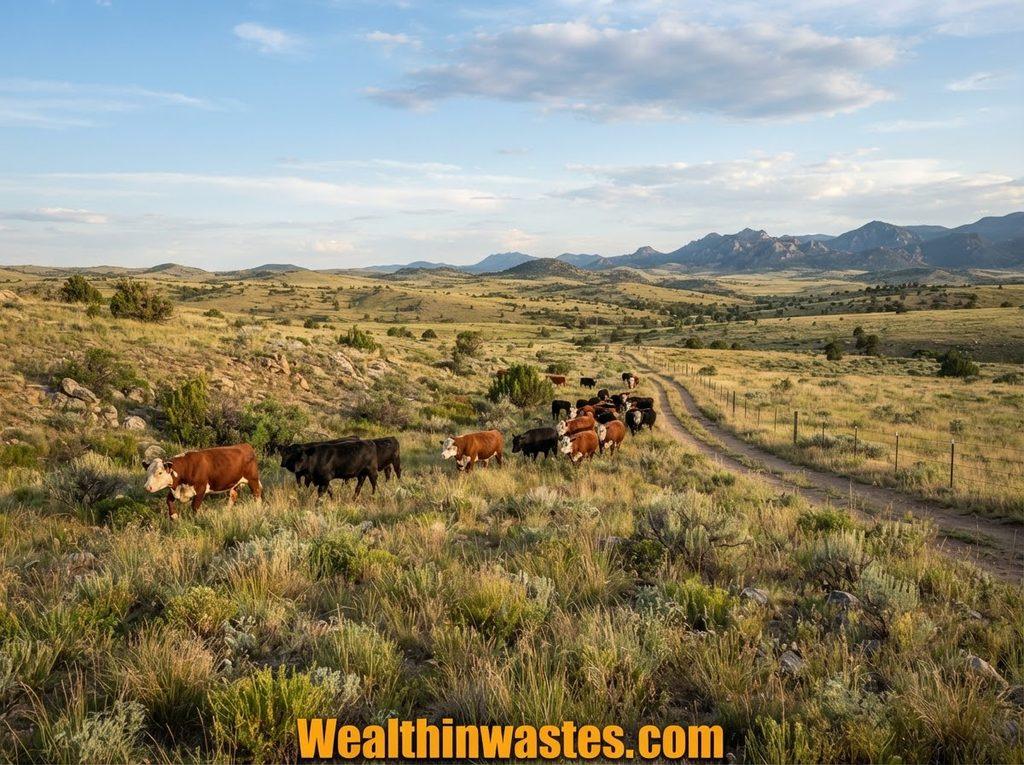
1. Livestock Feed: Rangelands provide feed for cattle, sheep, goats, camels, and other grazing animals. For many pastoral and mixed-farming communities, these areas remain fundamental sources of livestock nutrition and household income.
2. Wildlife Habitat: Rangelands support wildlife habitats and provide space for many plant and animal species. Their grasslands also sustain pollinators, insects, birds, and other organisms that contribute to wider ecosystem stability.
3. Water Infiltration: The vegetation in rangelands helps capture rainfall, reduce runoff, and encourage water infiltration. Healthy plant cover can therefore support soil moisture, groundwater recharge, stream protection, and resistance to erosion.
4. Genetic Resources: Rangelands conserve plant genetic resources that may become useful for livestock feeding, ecological restoration, breeding, medicine, and adaptation to drought or other environmental pressures in future production systems.
5. Ecosystem Services: Ecosystem services from rangelands include carbon storage, water regulation, pollination, soil protection, recreation, wildlife support, and cultural values. Recognizing these services strengthens arguments for better conservation and management practices.
6. Pastoral Security: Healthy grazing areas reduce pressure on livestock keepers by sustaining forage and water resources. Their condition also relates closely to renewable-resource management and conservation within pastoral landscapes.
Challenges Facing Forests and Rangelands
1. Land Conversion: Rangeland users often face demographic pressure, agricultural expansion, land enclosure, climate variability, drought, insecurity, and competition for water and grazing resources in vulnerable pastoral regions.
2. Climate Variability: Pastoral communities have developed flexible systems such as seasonal movement and livestock diversification to cope with variable resources. However, these traditional strategies can become harder to maintain when access routes and grazing areas disappear.
3. Drought Stress: Repeated drought can reduce pasture growth, livestock body condition, milk production, reproductive performance, and household food security. Reliable water points and well-managed grazing systems can help communities respond more effectively.
4. Unsuitable Cultivation: Converting dry grasslands into cropland can create serious degradation when soils cannot sustain intensive cultivation. Historical examples show that unsuitable land use may cause erosion, dust problems, declining fertility, and economic losses.
5. Overgrazing: Overgrazing can occur when stocking pressure exceeds the capacity of vegetation to recover. It reduces plant cover and may expose soil to wind and water erosion, especially during prolonged dry periods.
6. Deforestation: Forest loss can accelerate soil erosion, habitat destruction, water disruption, and carbon emissions. The wider environmental consequences are discussed in deforestation and vegetation degradation research.
Read Also : Top Wastewater Management Companies in the World
Sustainable Management of Forests and Rangelands
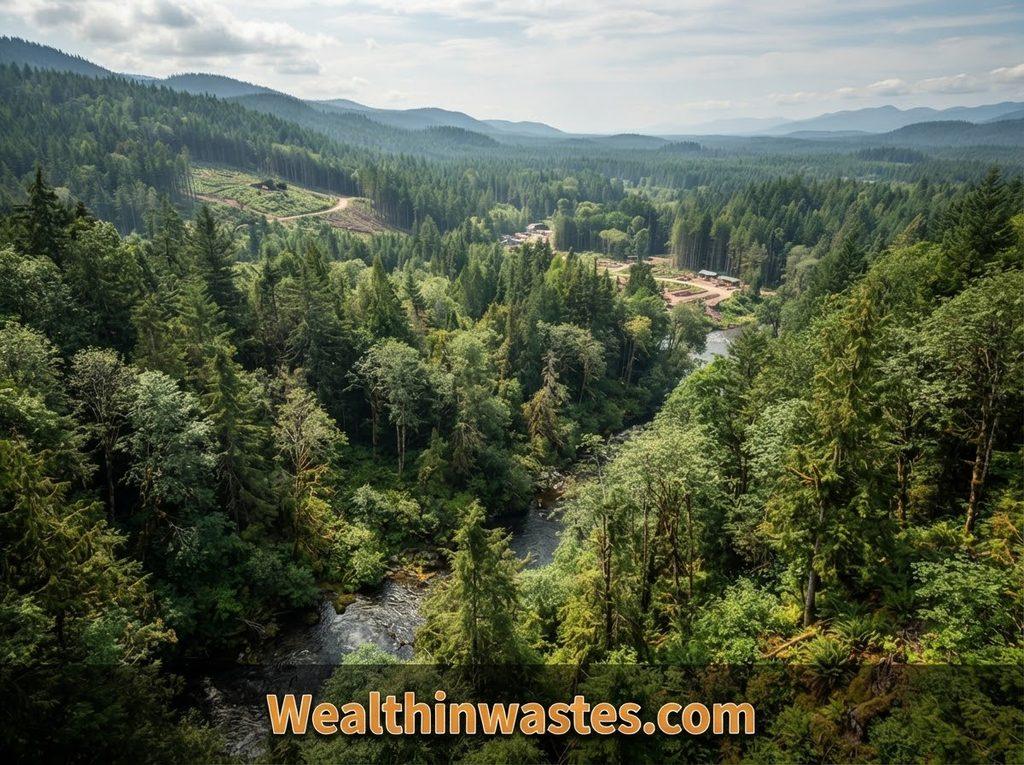
1. Local Assessment: Sustainable forest and rangeland management begins with understanding local soils, rainfall, vegetation, water resources, land rights, livestock needs, and community priorities before selecting management practices.
2. Forest Regeneration: Afforestation, reforestation, natural regeneration, agroforestry, controlled harvesting, and fire management can improve forest resilience. Managers should also protect valuable natural forests and maintain ecological corridors wherever possible.
3. Grazing Management: Rangeland management can include rotational grazing, appropriate stocking rates, pasture restoration, water development, reseeding, invasive-species control, and protection of sensitive areas during recovery periods.
4. Community Monitoring: Communities can strengthen conservation by combining local knowledge with scientific monitoring. Regular assessment of vegetation cover, soil condition, water availability, wildlife, and livestock performance helps managers detect problems early.
5. Supportive Policies: Strong policies should recognize legitimate community needs while preventing destructive land conversion. Clear access arrangements, restoration incentives, extension services, and enforcement can support long-term stewardship across shared landscapes.
6. Integrated Practices: Effective management should connect conservation with livelihoods. Climate sustainability and ecosystem resilience improve when resource users receive practical conservation options and long-term incentives.
Forests, Rangelands and Sustainable Agriculture
Forests and rangelands support agriculture beyond the boundaries of farms. They influence water availability, pollination, soil processes, climate conditions, livestock feed, and the stability of surrounding production systems.
Farmers can integrate trees into agricultural landscapes through agroforestry, windbreaks, boundary planting, silvopasture, and conservation planting. These approaches can create additional products while protecting soils and improving local microclimates.
Rangelands complement crop production by supplying grazing resources, especially where rainfall or soil constraints limit crop cultivation. Integrating livestock with cropping systems can also improve nutrient cycling and resource use.
Protecting natural vegetation can reduce pressure on farms by maintaining nearby sources of fodder, fuelwood, non-timber products, wildlife habitat, and water regulation services.
Sustainable agriculture therefore depends on landscape-level planning. Farms, forests, rangelands, wetlands, rivers, and settlements should be managed as connected components rather than isolated land uses across the landscape.
Farmers can strengthen this connection through organic soil improvement, while broader resource planning can benefit from environmental management practices that reduce unnecessary pressure on ecosystems.
Water protection also remains essential because farms depend on reliable supplies. Communities can learn more about water and waste management, particularly where runoff, wastewater, and pollution threaten rivers or groundwater.
Preventing pollution strengthens landscape health because contaminated runoff can damage soils, vegetation, livestock, aquatic organisms, and human water supplies. The discussion of water pollution sources provides additional environmental context.
Responsible waste handling also supports conservation by reducing materials that may enter natural ecosystems. Practical waste recycling processes can reduce pollution while conserving resources needed for production.
Similarly, communities can improve resource efficiency through waste recycling and resource recovery, helping reduce environmental pressures that indirectly affect forest soils, water systems, and surrounding agricultural landscapes.
Where wastewater threatens natural resources, appropriate treatment can protect receiving environments. Farmers and communities can consult wastewater treatment approaches when managing contaminated water flows.
Industrial activities also require careful oversight because polluted discharges can affect streams, soils, and ecosystems. Information on industrial wastewater treatment explains why controlled effluent management matters.
Domestic wastewater creates similar concerns around settlements and farms. Effective onsite wastewater treatment can reduce contamination risks and protect nearby groundwater, surface water, soils, and ecological habitats.
Proper wastewater characterization can further improve management because flow volumes and pollutant concentrations influence treatment requirements. The guide on wastewater characteristics and flow rates provides useful background.
In agricultural regions, these environmental connections demonstrate why forests and rangelands should remain central to land-use decisions, watershed planning, livestock development, biodiversity conservation, and long-term food production strategies.
Communities can also reduce land pressure by diverting organic materials from disposal sites into useful soil amendments. Composting organic waste can support soil improvement while strengthening circular resource use.
Where households generate large quantities of biodegradable waste, food-waste management can help conserve resources and reduce materials that might otherwise contribute to environmental pollution.
Natural resources remain limited relative to growing human demands, making responsible natural-resource management essential for maintaining forests, rangelands, soils, water resources, and productive agricultural systems.
Landscape management should therefore consider farming, forestry, livestock, settlement, water, biodiversity, and waste management together. Such coordination improves resilience and creates stronger foundations for sustainable agricultural and environmental development.
Forests and rangelands remain indispensable natural assets because their ecological services support agriculture, livestock, biodiversity, water security, soil protection, livelihoods, and environmental resilience across generations.
Summary Importance of Forests and Rangeland
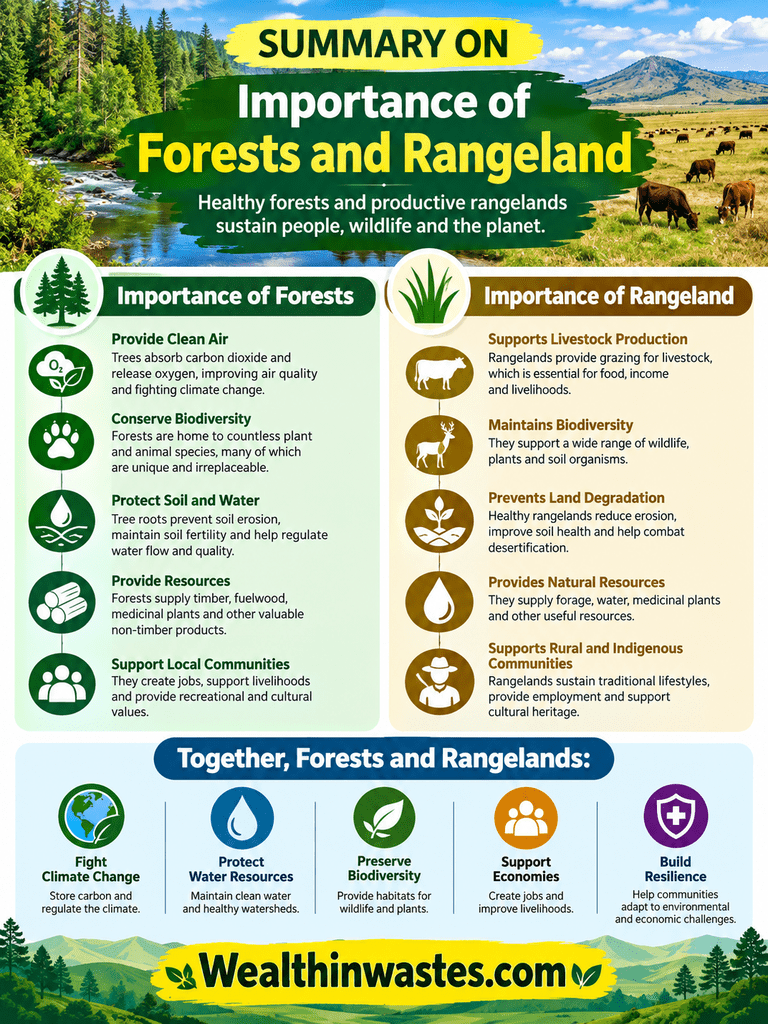
| Section | Main Idea | Why It Matters |
|---|---|---|
| Forests and Rangelands Overview | Both ecosystems connect natural processes with human needs. | They support resources, livelihoods, biodiversity, and environmental stability. |
| Forest Resources and Global Trends | Forest areas face conversion and degradation pressures. | Understanding trends supports better conservation decisions. |
| Forest Water and Soil Importance | Forests regulate water and protect soils. | Healthy watersheds support water security and agriculture. |
| Forest Economic and Ecological Value | Forests provide products, habitats, carbon storage, and genetic resources. | These services create ecological and economic benefits. |
| Rangeland Characteristics | Rangelands contain vegetation adapted to environmental constraints. | They provide valuable grazing and ecosystem resources. |
| Rangeland Importance | Rangelands support livestock, wildlife, water, and biodiversity. | They sustain pastoral livelihoods and ecological functions. |
| Major Challenges | Land conversion, drought, overgrazing, and deforestation create pressure. | Degradation can reduce productivity and ecosystem resilience. |
| Sustainable Management | Conservation requires assessment, restoration, monitoring, and supportive policies. | Good management protects resources while supporting communities. |
| Agriculture Connection | Forests and rangelands influence water, soil, livestock, and farm productivity. | Landscape planning strengthens sustainable agricultural development. |
Frequently Asked Questions About Forests and Rangelands: Importance and Environmental Value
1. What are forests and rangelands?
Forests are tree-dominated ecosystems, while rangelands are landscapes dominated by grasses, shrubs, scattered trees, and vegetation adapted to grazing and environmental constraints.
2. Why are forests important?
Forests regulate water, protect soils, store carbon, support biodiversity, provide useful products, and create habitats that sustain people, wildlife, and agricultural systems.
3. Why are rangelands important to farmers?
Rangelands provide grazing resources for livestock and support pastoral livelihoods while also contributing to biodiversity, water infiltration, soil protection, and ecological stability.
4. How do forests help water resources?
Forests intercept rainfall, reduce runoff, improve infiltration, support groundwater recharge, protect streams, and help maintain water quality across watersheds and surrounding agricultural areas.
5. What threatens rangelands?
Major threats include overgrazing, drought, agricultural expansion, land enclosure, climate variability, vegetation loss, poor management, and competition for water and grazing areas.
6. How can forests be conserved?
Forest conservation can involve natural regeneration, reforestation, agroforestry, fire management, controlled harvesting, habitat protection, sustainable land use, and community participation.
7. How can rangelands be managed sustainably?
Useful approaches include rotational grazing, suitable stocking rates, pasture restoration, water management, reseeding, invasive-species control, monitoring, and protection of recovering areas.
8. How do forests and rangelands support agriculture?
They influence water availability, soil fertility, livestock feed, pollination, climate conditions, biodiversity, erosion control, and the resilience of surrounding agricultural landscapes.
9. Why is sustainable management important?
Sustainable management helps maintain ecosystem functions, protect livelihoods, conserve biodiversity, reduce degradation, and ensure that forests, rangelands, soils, and water remain useful for future generations.
Do you have any questions, suggestions, or contributions? If so, please feel free to use the comment box below to share your thoughts. We also encourage you to kindly share this information with others who might benefit from it. Since we can’t reach everyone at once, we truly appreciate your help in spreading the word. Thank you very much for your support and for sharing!
Read Also: Forest Resources in Agriculture