


Forests are extensive plant communities where trees and other woody vegetation dominate the landscape. They support plants, animals, fungi and microorganisms while supplying materials and ecological services that communities depend upon.
These natural ecosystems occur in different climatic regions, ranging from tropical rainforests and mangrove forests to temperate woodlands and dryland forests, each supporting distinctive plant and animal communities.
Across Nigeria, forests provide timber, fuelwood, medicinal plants, fruits, vegetables and other valuable materials. Many rural households depend on these resources for food, shelter, traditional medicine, employment and additional income.
Beyond their economic importance, forests protect natural habitats, regulate environmental conditions, support biodiversity and contribute to soil and water conservation. Their continued existence therefore benefits both present communities and future generations.
Understanding forest resources helps people appreciate the relationship between humans and nature. It also explains why responsible harvesting, environmental education and effective conservation remain essential for sustainable development.
Definition and Scope of Forest Resources
Forest resources refer to all useful materials, biological products and environmental services that people obtain from forests. These resources include trees, shrubs, herbs, wildlife, water resources, fruits, seeds and medicinal plants.
In the wider classification of natural resources, forest resources belong to the renewable biological resources that support human survival, economic production and ecological stability when people manage them responsibly.
Forests also represent important natural capital because they supply raw materials, maintain ecological processes and support productive activities. Their relationship with the natural environment and economic activities explains their wider importance.
These resources have direct and indirect values. Timber, food and medicinal products provide tangible benefits, while biodiversity protection, climate regulation and watershed conservation support human welfare through essential ecosystem services.
People generally classify forest resources into timber products, non-timber forest products, wildlife resources and ecosystem services. Each category provides different materials and benefits that contribute to human development.
Read Also: Deforestation and Implications of Vegetation Degradation
Types and Examples of Forest Resources

Forest resources consist of different biological materials and natural services. Understanding their major categories helps explain their usefulness and the importance of managing forest ecosystems for present and future needs.
1. Timber Products: Timber products include hardwood and softwood obtained from forest trees. People use these materials for furniture, building construction, roofing, flooring, paper production, furniture manufacturing and domestic fuel.
2. Non-Timber Forest Products: These resources include wild fruits, nuts, mushrooms, medicinal herbs, honey, gums, resins, fibres, bamboo, raffia and rattan. They provide household materials, food and commercial opportunities.
3. Wildlife Resources: Wildlife resources include wild mammals, birds, reptiles, insects, fish and other organisms. These species contribute to ecological balance, food supplies, scientific research, tourism and biodiversity conservation.
4. Environmental Services: Forests provide valuable ecological services, including carbon storage, soil protection, water regulation, pollination and habitat support. These functions strengthen the ecological value of forest ecosystems and sustain surrounding landscapes.
Some forest products have particular importance in tropical African communities. Species such as Irvingia gabonensis and Parkia biglobosa provide edible seeds, fruits and other useful materials.
Forest products also vary according to vegetation, climate and soil conditions. The relationship between forest and rangeland ecosystems demonstrates the diversity of natural resources across different landscapes.
Benefits of Forest Resources to People
Forest resources contribute significantly to human welfare by meeting basic needs and supporting economic development. Their benefits extend to households, agricultural communities, businesses and national economies in several ways.
1. Food and Nutrition: Forests provide wild fruits, nuts, mushrooms, edible leaves, roots, seeds and vegetables. These foods supplement household diets and improve access to diverse nutritional sources, especially in rural communities.
2. Medicine and Healthcare: Many forest plants contain natural substances that traditional practitioners and pharmaceutical researchers use in medicinal preparations. Leaves, roots, bark and seeds provide valuable materials for healthcare development.
3. Shelter and Construction: Timber and other woody materials provide important construction resources. Builders use suitable forest products for doors, roofing structures, furniture, flooring, household equipment and other essential building components.
4. Employment and Income: Forestry creates economic opportunities through logging, timber processing, furniture production, honey collection, mushroom cultivation and handicrafts. These activities support household earnings and contribute to local economic development.
5. Recreation and Tourism: Forest reserves and wildlife habitats attract visitors interested in nature photography, hiking, birdwatching and relaxation. Properly managed forest and wildlife resources can support nature-based tourism.
6. Scientific Research: Forest ecosystems provide opportunities for studying medicinal plants, animal behaviour, genetics and environmental processes. Research findings can improve agriculture, healthcare, biodiversity protection and the sustainable use of natural resources.
Forests also support educational activities and traditional knowledge. Their wildlife tourism and recreational value encourages people to appreciate nature while creating additional opportunities for local businesses.
These benefits demonstrate the importance of considering the multiple-use value of natural resources when planning forest development, economic activities and conservation programmes within different communities.
Ecological Importance of Forest Ecosystems
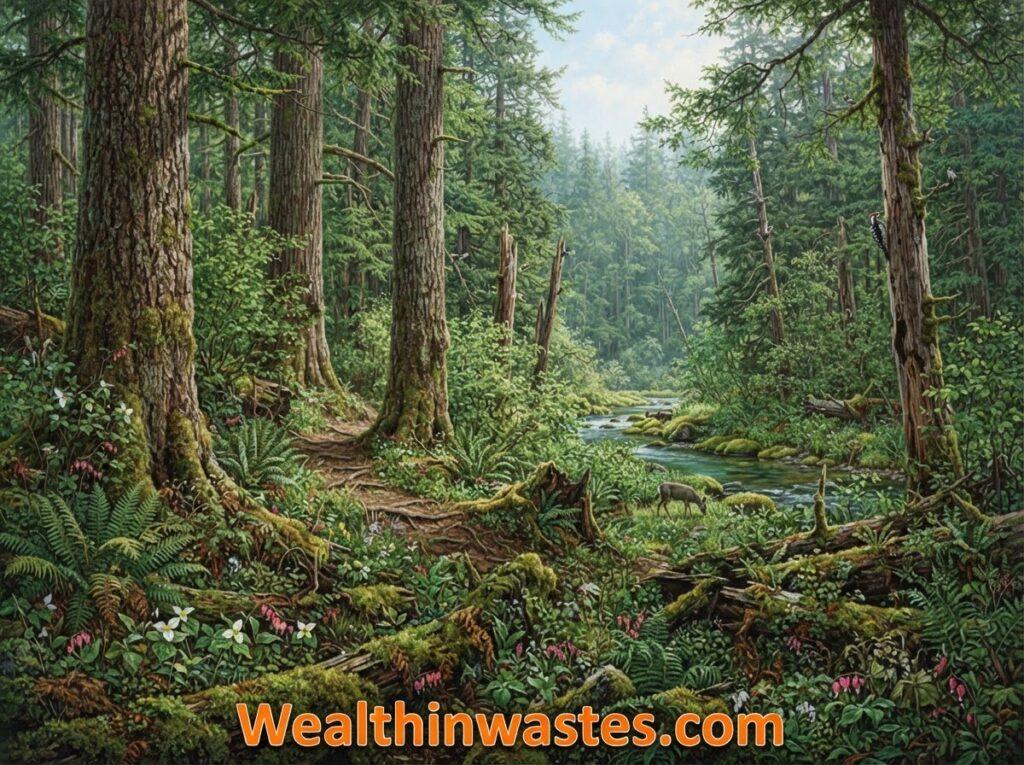
Forests perform essential ecological functions that maintain environmental stability. Their vegetation, animals and microorganisms interact continuously, supporting natural processes that sustain life and improve environmental conditions across different regions.
1. Biodiversity Protection: Forests provide habitats for numerous plant and animal species. They maintain genetic diversity and ecological relationships that support the wider process of biodiversity conservation and species survival.
2. Climate Regulation: Trees absorb atmospheric carbon dioxide during photosynthesis and store carbon in their trunks, roots and surrounding soils. These processes contribute to climate regulation and help limit environmental impacts associated with global warming.
3. Water Conservation: Forest vegetation intercepts rainfall, protects watersheds and influences water movement through landscapes. These functions support effective water resource management and help maintain healthier freshwater environments.
4. Soil Protection: Tree roots hold soil particles together and reduce erosion caused by wind and rainfall. Fallen leaves also add organic matter, improve soil structure and support nutrient cycling processes.
5. Wildlife Habitat: Forests provide animals with food, shelter, breeding locations and protection from environmental disturbances. Different vegetation layers support different species, making habitat diversity important for wildlife survival.
These ecological functions connect forests with surrounding agricultural and aquatic ecosystems. Protecting natural vegetation therefore supports environmental resilience, reduces ecosystem degradation and improves the ability of landscapes to recover.
Economic and Social Value of Forest Resources
Forest resources support economic development through raw materials, employment, household income and commercial activities. Their benefits extend beyond timber production to include several industries and community-based enterprises.
1. Industrial Development: Timber, pulp, fibres, gums and resins supply raw materials for manufacturing industries. Furniture makers, paper producers, construction businesses and textile manufacturers depend on suitable forest materials.
2. Rural Livelihoods: Rural households collect and process fruits, medicinal plants, honey, mushrooms and other forest products. These activities supplement farming income, support household consumption and create small-scale business opportunities.
3. Agricultural Support: Forest vegetation supplies fodder, organic materials, shade and useful products for farming communities. Responsible forestry can complement agricultural production and strengthen resource conservation and management.
4. Cultural and Social Values: Certain forests serve as sacred sites, traditional gathering places and locations of historical importance. They preserve indigenous knowledge, strengthen community identity and maintain relationships between people and nature.
However, economic development should not encourage excessive extraction. Understanding the obstacles to sustainable resource use helps decision-makers balance commercial interests with environmental protection.
Human Activities That Threaten Forest Resources
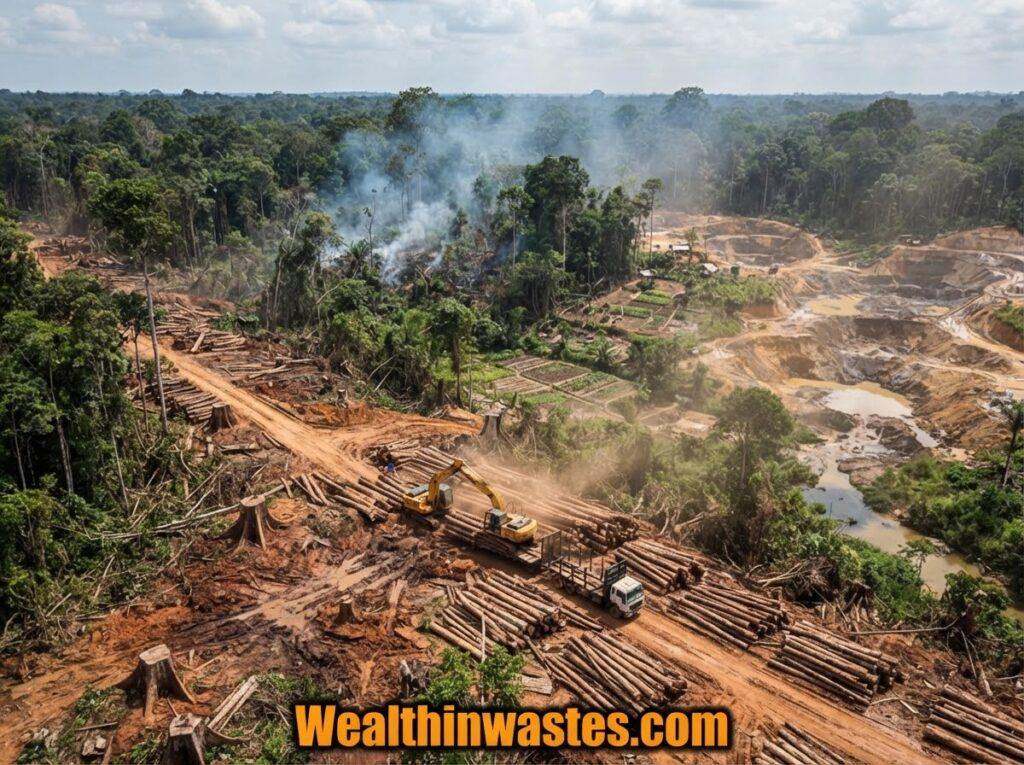
Human activities influence the availability and condition of forest resources. Some activities provide economic benefits, but uncontrolled exploitation can damage vegetation, destroy habitats and reduce the ability of forests to regenerate.
1. Deforestation: Clearing forests for farming, settlements, roads and infrastructure removes important vegetation cover. Extensive land-cover change and deforestation reduce habitat availability and weaken ecological functions.
2. Illegal Logging: Unauthorised tree felling removes valuable species faster than natural regeneration can replace them. Poor harvesting practices also damage surrounding vegetation and increase pressure on remaining forest populations.
3. Bush Burning and Wildfires: Uncontrolled fires destroy vegetation, kill wildlife and damage organic soil materials. Repeated burning can prevent natural regeneration and expose large areas to erosion and environmental degradation.
4. Agricultural Expansion and Overgrazing: Excessive land clearing and uncontrolled livestock grazing reduce natural vegetation. These activities can increase soil degradation and create additional pressure on soil protection and mineral resource management.
5. Poaching and Wildlife Exploitation: Illegal hunting reduces animal populations and disrupts ecological relationships. Excessive wildlife collection also threatens breeding populations, reduces genetic diversity and weakens the balance of forest ecosystems.
These threats often occur together, making forest degradation more difficult to control. Effective environmental planning must therefore address land use, harvesting practices, habitat destruction and human activities collectively.
Sustainable Forest Management and Conservation
Sustainable forest management involves using forest resources responsibly while maintaining their ecological, economic and social values. It ensures that present activities do not prevent future generations from enjoying these resources.
1. Afforestation: Afforestation involves establishing forests on suitable land that previously lacked recent forest cover. Planting appropriate tree species can improve vegetation cover, support wildlife and strengthen environmental protection.
2. Reforestation: Reforestation involves restoring tree cover on previously forested land. It helps rebuild damaged habitats, improve soil protection and recover ecological functions after deforestation or other destructive activities.
3. Controlled Harvesting: Forest operators should follow suitable harvesting limits and allow adequate regeneration between extraction periods. Responsible harvesting protects valuable trees while maintaining a continuous supply of renewable resources.
4. Forest Reserves: Governments should establish and protect designated forest areas against illegal logging, excessive hunting and uncontrolled land conversion. These reserves help conserve renewable and non-renewable natural resources through appropriate environmental planning.
5. Agroforestry: Agroforestry combines trees with crop production or livestock farming. This approach can diversify farm income, provide shade, protect soil, supply useful materials and support responsible environmental use and sustainable development.
6. Environmental Monitoring: Regular forest assessments help identify illegal activities, vegetation loss, wildlife decline and other environmental problems. Monitoring enables authorities and communities to evaluate conservation progress and improve management decisions.
Community Participation and Wildlife Protection

Effective forest conservation requires cooperation between governments, local communities, traditional institutions, conservation organisations and other stakeholders. Local participation improves decision-making because residents understand their environment and depend on its resources.
1. Community Education: Environmental education equips residents with knowledge about conservation, responsible harvesting and wildlife protection. Programmes built around community environmental education encourage responsible attitudes and practical participation.
2. Wildlife Policies and Laws: Governments should establish clear regulations against illegal logging, poaching and destructive land use. Effective wildlife policies and conservation laws provide guidance for protecting natural habitats.
3. Protected Habitats: National parks, game reserves, wildlife sanctuaries and biosphere reserves provide important protection for threatened species. Properly managed wildlife sanctuaries also create opportunities for research and conservation.
4. Cooperative Conservation: Communities can participate in tree planting, forest patrols, habitat restoration and sustainable harvesting programmes. Following a practical forest and wildlife conservation approach strengthens protection efforts.
Wildlife requires suitable food, water, shelter and sufficient space to survive. Maintaining different vegetation types and connected habitats therefore encourages wildlife diversity and supports healthy forest ecosystems.
When communities benefit fairly from conservation, they have stronger reasons to protect natural resources. This cooperation can reduce illegal exploitation, improve livelihoods and preserve forest resources for future generations.
Read Also: Latest Business Ideas with Little or No Capital To Start – Part 2
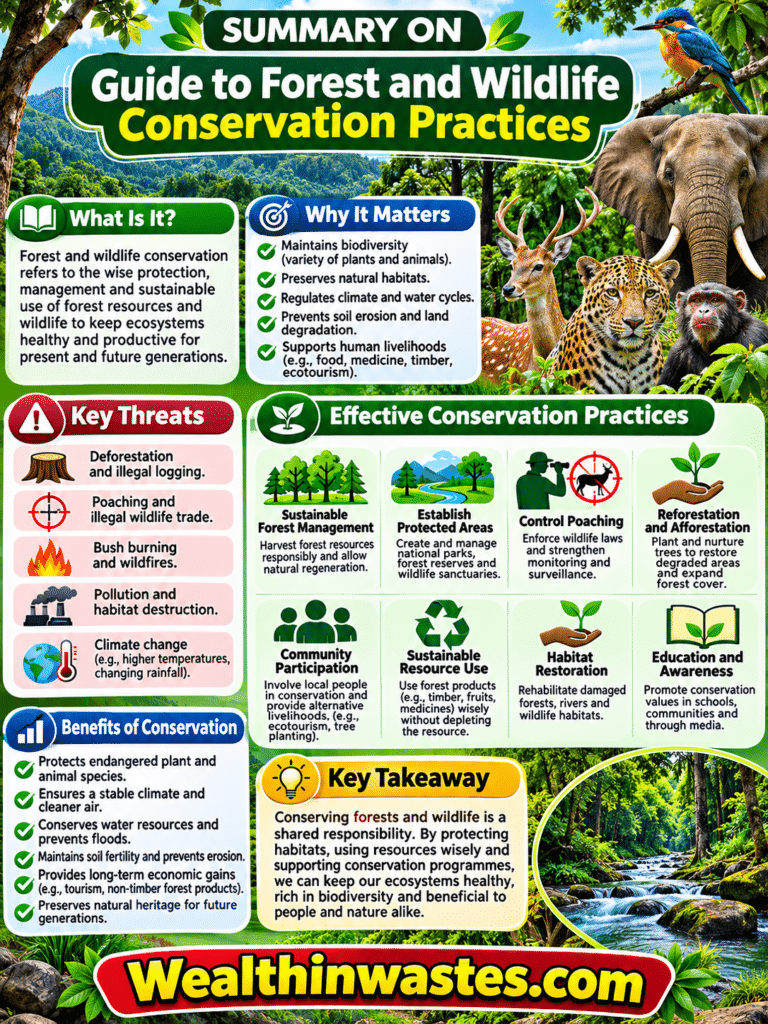
Summary on Forest Resources and Their Benefits to People and Nature
| Aspect | Summary |
|---|---|
| Definition | Forest resources comprise useful products and environmental services obtained from forest ecosystems. |
| Timber Products | Provide wood for construction, furniture, paper, boards and domestic fuel. |
| Non-Timber Products | Include fruits, nuts, mushrooms, herbs, honey, fibres, gums and resins. |
| Wildlife Resources | Support biodiversity, food supplies, research and ecological balance. |
| Human Benefits | Provide food, medicine, shelter, employment, income and recreational opportunities. |
| Environmental Benefits | Protect soil, regulate water, store carbon and maintain wildlife habitats. |
| Economic Importance | Supply industrial raw materials and support businesses and rural livelihoods. |
| Major Threats | Include deforestation, illegal logging, wildfires, overgrazing and poaching. |
| Conservation Methods | Include afforestation, reforestation, agroforestry, controlled harvesting and protected reserves. |
| Community Participation | Promotes environmental education, responsible resource use and wildlife protection. |
Frequently Asked Questions About Forest Resources and Their Benefits to People and Nature
1. What are forest resources?
Forest resources are useful products and ecological services obtained from forests, including timber, fruits, wildlife, medicinal plants, fibres and water regulation.
2. What are the main types of forest resources?
The main types include timber products, non-timber forest products, wildlife resources and environmental services that support human activities and ecological stability.
3. Why are forest resources important to people?
They provide food, medicine, building materials, fuel, employment, household income, recreation and essential environmental services that improve human welfare.
4. What are non-timber forest products?
They are forest products other than timber, including wild fruits, mushrooms, honey, medicinal herbs, nuts, bamboo, raffia, gums and resins.
5. How do forests protect the environment?
Forests absorb carbon dioxide, protect soil from erosion, regulate water movement, maintain biodiversity and provide habitats for wildlife and other organisms.
6. What activities threaten forest resources?
Major threats include deforestation, illegal logging, uncontrolled burning, agricultural expansion, overgrazing, pollution and excessive hunting of wildlife.
7. How can people conserve forest resources?
People can support tree planting, reforestation, controlled harvesting, protected reserves, sustainable farming, environmental education and responsible wildlife management.
8. What is the difference between afforestation and reforestation?
Afforestation establishes trees on land without recent forest cover, while reforestation restores trees on land that previously supported forests.
9. How do forests support agriculture?
Forests provide fodder, organic materials, shade, pollination habitats and soil protection, helping agricultural communities maintain productive and sustainable farming systems.
10. Why is wildlife conservation important?
Wildlife conservation protects species, maintains food chains, supports biodiversity, preserves natural habitats and safeguards ecological processes for future generations.
Do you have any questions, suggestions, or contributions? If so, please feel free to use the comment box below to share your thoughts. We also encourage you to kindly share this information with others who might benefit from it. Since we can’t reach everyone at once, we truly appreciate your help in spreading the word. Thank you very much for your support and for sharing!
Read Also: Forest Resources in Nigeria