


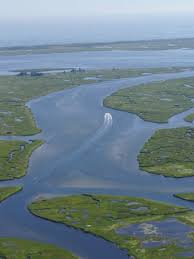
There is a unique and fascinating place on Earth where freshwater rivers embrace the vast salty oceans. This meeting point creates a rich and dynamic environment known as brackish water. These zones, commonly found in estuaries, are among the most productive ecosystems on the planet. They support diverse wildlife, provide breeding grounds for fish, and act as natural filters that improve water quality.
Yet, despite their importance, estuaries are under serious threat. Human activities have dramatically altered these delicate environments, introducing pollutants that disrupt ecological balance and endanger marine life. What makes the situation even more concerning is that much of this pollution does not originate in the ocean itself, but from land based activities far upstream.
Understanding the causes of pollution in estuaries is critical for protecting these ecosystems and ensuring sustainable use of coastal resources. In this article, we explore what brackish water is, the importance of estuaries, and the major factors contributing to their pollution, with a focus on how human actions are shaping their future.
Table Summary on Estuary and Coastal Pollution of Brackish Water
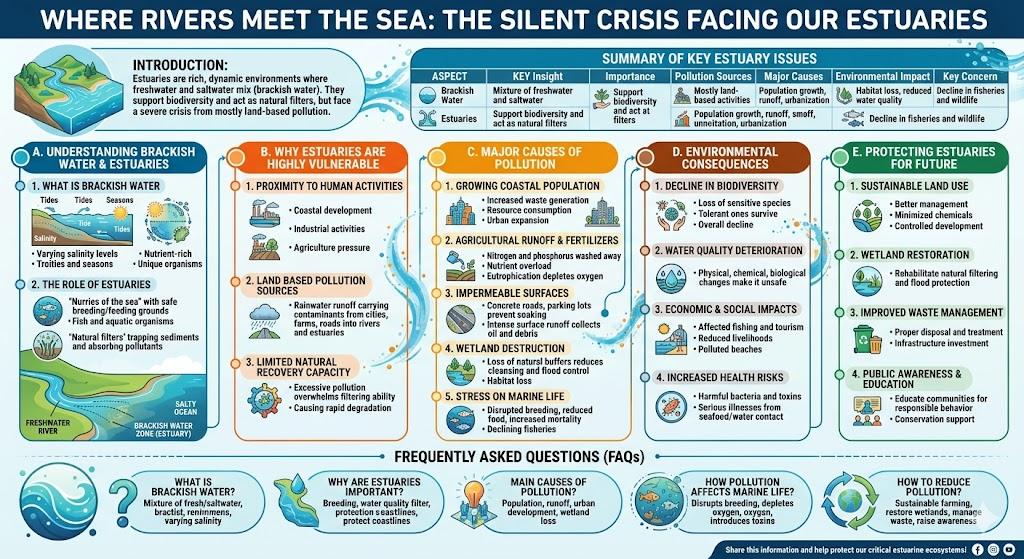
| Aspect | Key Insight |
|---|---|
| Brackish Water | Mixture of freshwater and saltwater |
| Estuaries | Transition zones between rivers and oceans |
| Importance | Support biodiversity and act as natural filters |
| Pollution Sources | Mostly land based activities |
| Major Causes | Population growth, runoff, urbanization |
| Environmental Impact | Habitat loss, reduced water quality |
| Key Concern | Decline in fisheries and wildlife |
A. Understanding Brackish Water and Estuaries
1. What is Brackish Water
Brackish water is formed when freshwater from rivers mixes with saltwater from the ocean. This creates a unique environment with varying salinity levels that can change with tides and seasons.
These conditions make brackish water habitats incredibly rich in nutrients, supporting a wide range of organisms. Many species have adapted specifically to survive in this balance, making these ecosystems biologically significant.
The concept of brackish water ecosystems highlights the delicate equilibrium required to sustain life in such environments.
2. The Role of Estuaries in Nature
An estuary is the area where a river flows into the ocean, creating an intertidal zone influenced by both freshwater and marine systems. These regions are often referred to as nurseries of the sea because they provide safe breeding and feeding grounds for fish and other aquatic organisms.
Estuaries also serve as natural filters. They trap sediments, absorb pollutants, and improve overall water quality protection before water enters the ocean.
However, their position at the intersection of land and sea makes them highly vulnerable to pollution.
B. Why Estuaries Are Highly Vulnerable to Pollution
1. Proximity to Human Activities
One of the main reasons estuaries face significant pollution is their location. A large portion of the global population lives near coastal areas, placing immense pressure on these environments.
Urban development, industrial activities, and agriculture all contribute to increasing levels of coastal pollution in estuarine regions.
2. Land Based Pollution Sources
Studies show that a vast majority of pollution in estuaries originates from land. Rainwater runoff carries pollutants from cities, farms, and roads directly into rivers, which eventually flow into estuaries.
This process makes estuaries the final collection point for a wide range of contaminants, including chemicals, waste, and sediments.
3. Limited Natural Recovery Capacity
Although estuaries have natural filtering abilities, excessive pollution can overwhelm these systems. When the rate of contamination exceeds their capacity to absorb and process pollutants, environmental degradation occurs rapidly.
Read Also: Exploring the Causes and Effects of Pollution
C. Major Causes of Pollution in Estuaries
1. Growing Human Population Near Coastlines
A significant portion of the world’s population lives within close proximity to coastlines. This concentration of people increases waste generation, resource consumption, and environmental pressure.
As urban areas expand, more pollutants are introduced into nearby water systems, contributing to estuarine degradation.
2. Agricultural Runoff and Fertilizer Use
Modern agriculture relies heavily on fertilizers rich in nitrogen and phosphorus. While these nutrients support crop growth, excess amounts are often washed away by rain.
This runoff enters rivers and eventually reaches estuaries, leading to nutrient overload and a process known as eutrophication. This condition depletes oxygen levels and harms aquatic life, making nutrient pollution a major concern.
3. Expansion of Impermeable Surfaces
Urbanization introduces surfaces such as concrete roads, pavements, and parking lots. These impermeable surfaces prevent water from soaking into the ground.
Instead, rainwater flows over these surfaces, collecting pollutants like oil, heavy metals, and debris before carrying them into water bodies. This increases the intensity of surface runoff pollution.
4. Destruction of Coastal Wetlands
Wetlands act as natural buffers, absorbing excess water and filtering pollutants before they reach estuaries. However, human activities such as construction, land reclamation, and drainage have led to widespread destruction of these critical habitats.
The loss of wetlands reduces the ecosystem’s ability to cleanse water and manage floods, accelerating habitat loss and environmental decline.
5. Stress on Coastal Waters and Marine Life
Pollution does not just affect water quality; it has far reaching impacts on marine organisms. Fish, shellfish, and other wildlife depend on clean estuarine environments for survival.
Contaminated water disrupts breeding patterns, reduces food availability, and increases mortality rates. Over time, this leads to declining fisheries and weakened ecosystems, highlighting the severity of marine ecosystem damage.
Read Also: Air Pollution and Different Types of Air Pollution
D. The Environmental Consequences of Estuarine Pollution
1. Decline in Biodiversity
Pollution alters the natural balance of estuarine ecosystems, leading to the loss of sensitive species. As pollution levels rise, only the most tolerant organisms survive, reducing overall biodiversity.
2. Deterioration of Water Quality
The introduction of pollutants affects the physical, chemical, and biological characteristics of water. This makes it unsuitable for drinking, recreation, and even industrial use.
3. Economic and Social Impacts
Communities that rely on fishing and tourism are directly affected by declining water quality. Reduced fish populations and polluted beaches can lead to economic losses and reduced livelihoods.
4. Increased Health Risks
Polluted estuarine waters can harbor harmful bacteria and toxins, posing risks to human health. Consumption of contaminated seafood or contact with polluted water can lead to serious illnesses.
E. Protecting Estuaries for Future Generations
1. Sustainable Land Use Practices
Reducing pollution begins with better land management. Implementing sustainable agricultural practices, minimizing chemical use, and controlling urban development can significantly reduce runoff.
2. Restoration of Wetlands
Rehabilitating coastal wetlands can restore their natural filtering capabilities. These ecosystems play a vital role in improving water quality and protecting against flooding.
3. Improved Waste Management Systems
Proper waste disposal and treatment can prevent pollutants from entering water systems. Investing in infrastructure and promoting responsible practices are key to reducing environmental pollution control.
4. Public Awareness and Education
Educating communities about the importance of estuaries encourages responsible behavior. When people understand the value of these ecosystems, they are more likely to support conservation efforts.
Frequently Asked Questions on Estuary and Coastal Pollution of Brackish Water
1. What is brackish water and where is it found?
Brackish water is a mixture of freshwater and saltwater, commonly found in estuaries where rivers meet the ocean. It has varying salinity levels that support unique ecosystems.
2. Why are estuaries important to the environment?
Estuaries provide breeding grounds for marine life, improve water quality by filtering pollutants, and support biodiversity. They also protect coastlines from erosion and flooding.
3. What are the main causes of pollution in estuaries?
The main causes include population growth near coastlines, agricultural runoff, urbanization, destruction of wetlands, and land based pollution sources carried by water runoff.
4. How does pollution affect marine life in estuaries?
Pollution disrupts breeding, reduces oxygen levels, introduces toxins, and can lead to the death of aquatic organisms. It also reduces food availability and damages habitats.
5. What can be done to reduce estuarine pollution?
Effective measures include sustainable farming practices, restoring wetlands, improving waste management systems, and raising public awareness about environmental protection.
Estuaries are among the most valuable ecosystems on Earth, yet they are increasingly threatened by human activities. Protecting them requires a collective effort, combining scientific knowledge, responsible practices, and strong environmental policies. By taking action today, we can preserve these vital habitats and ensure that future generations continue to benefit from their richness and beauty.
Do you have any questions, suggestions, or contributions? If so, please feel free to use the comment box below to share your thoughts. We also encourage you to kindly share this information with others who might benefit from it. Since we can’t reach everyone at once, we truly appreciate your help in spreading the word. Thank you very much for your support and for sharing!
Read Also: Everything You Need to Know About Extinction of Animals