


Water continually moves between the Earth’s surface and the atmosphere through the hydrologic cycle. One important process involves liquid water changing into vapour and returning to the atmosphere.
This process, known as evaporation, occurs over oceans, rivers, lakes, streams, wet soil and other moist surfaces. It also affects agricultural production, freshwater availability and environmental conditions.
Some precipitation evaporates before reaching the ground, while additional water returns to the atmosphere after rainfall reaches the land. Vegetation also releases water through transpiration, contributing atmospheric moisture.
Evaporation and transpiration operate together in vegetated environments, forming a combined process called evapotranspiration. Their rates depend on atmospheric conditions, available energy, wind movement and surface moisture.
Understanding evaporation helps farmers, hydrologists and environmental managers estimate water losses, plan irrigation and assess available water supplies. Accurate measurements also support research into the continuous movement of water.
Defining Evaporation and Evapotranspiration
Evaporation is the physical process through which liquid water changes into water vapour and enters the atmosphere. It occurs at the surfaces of oceans, lakes, rivers, wet soil and leaves.
The process involves water molecules gaining sufficient energy to escape from a liquid surface. Solar radiation supplies much of this energy, although heat from surrounding air and other sources also contributes.
Evaporation depends on the vapour pressure difference between a moist surface and the surrounding air. A greater difference generally encourages water molecules to escape into the atmosphere more rapidly.
When evaporation and condensation occur simultaneously, the net rate depends on their relative magnitudes. As air approaches saturation, the capacity for further net evaporation decreases considerably under otherwise unchanged conditions.
Transpiration occurs when plants absorb water through their roots and release water vapour through microscopic openings called stomata. These openings regulate water loss while allowing plants to exchange gases during photosynthesis.
Water lost through transpiration creates a demand that encourages further absorption through plant roots. Moisture then moves from the soil through plant tissues towards the leaves, supporting growth and temperature regulation.
Evaporation from soil and plant transpiration frequently occur simultaneously, making their separate contributions difficult to distinguish under natural field conditions. Scientists therefore use evapotranspiration to describe their combined water loss.
This relationship matters particularly in agriculture, where crop water requirements influence irrigation schedules, production costs and yields. Healthy soil structure also supports moisture retention, as explained in soil resource management.
Read Also: Factors Influencing Soil Moisture
Factors That Control the Evaporation Process
Several environmental conditions determine how quickly water evaporates from exposed surfaces. The most important factors influence the energy available for evaporation, the moisture content of the air and the movement of water vapour.
1. Solar Radiation: Solar radiation supplies the energy that allows water molecules to escape from liquid surfaces. Strong sunshine generally increases evaporation, particularly over exposed water bodies and bare soil.
2. Temperature: Higher surface and air temperatures generally increase evaporation because water molecules gain energy more readily. Rising temperatures can intensify water losses, particularly during hot weather and prolonged dry periods.
3. Atmospheric Humidity: Dry air generally promotes faster evaporation because it can receive additional water vapour. Humid air reduces the vapour pressure difference, limiting net evaporation under comparable surface and temperature conditions.
4. Wind Speed: Wind carries moist air away from an evaporating surface and replaces it with relatively drier air. However, extremely dry or turbulent conditions may complicate the relationship between wind speed and evaporation.
5. Surface Water Availability: Evaporation declines when soil dries because less water remains available near the surface. Maintaining suitable soil moisture helps crops meet water requirements, while rising environmental temperatures can increase evaporative demand.
6. Surface Characteristics: Water depth, soil texture, vegetation cover and exposure influence evaporation rates. Environmental conditions and responsible resource management, discussed in ecological sustainability, affect how landscapes retain and release moisture.
7. Atmospheric Conditions and Season: Evaporation often increases during sunny, hot and windy periods and decreases during cool, humid weather. Seasonal rainfall patterns and drought also influence water conservation needs.
8. Regional Climate: Differences in temperature, humidity, rainfall and wind produce different evaporation rates across locations. These variations can affect freshwater availability and increase competition during drought, as discussed in climate-related water challenges.
Potential and Actual Evapotranspiration
Potential evapotranspiration describes the atmospheric demand for water from a surface with adequate moisture. It estimates how much water could leave through evaporation and transpiration when water availability does not restrict the process.
Actual evapotranspiration represents the amount of water that genuinely leaves the soil and vegetation. It reflects atmospheric demand together with available moisture, plant characteristics, rooting depth and other environmental conditions.
Actual evapotranspiration often approaches potential evapotranspiration when soil moisture remains sufficient and vegetation grows actively. However, it usually falls below potential evapotranspiration when drought, poor root development or limited water supply restricts water loss.
Farmers can use these measures to estimate irrigation requirements and determine whether rainfall supplies enough water for crop development. Understanding practical water conservation measures helps reduce avoidable losses during dry periods.
Potential evapotranspiration varies with atmospheric energy, wind and humidity, while actual evapotranspiration also depends strongly on surface moisture. The interaction between land conditions and vegetation influences natural environmental systems.
Regional differences in climate, soil and land use also influence evapotranspiration. Understanding land suitability and water availability can help planners assess agricultural potential and develop effective water management strategies.
Methods for Measuring Evaporation
Scientists use several methods to estimate evaporation from water bodies and land surfaces. The appropriate method depends on the measurement objective, available equipment, required accuracy, environmental conditions and resources.
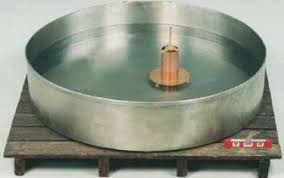
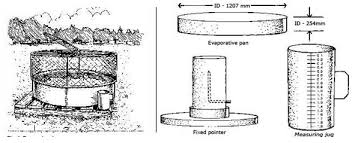
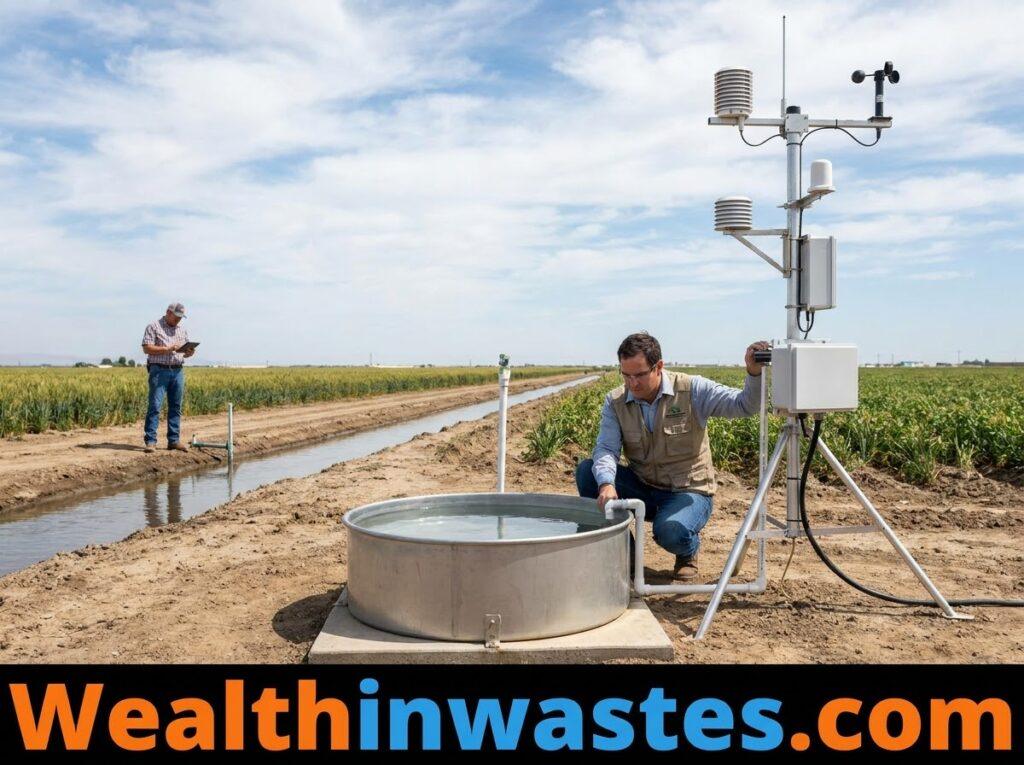
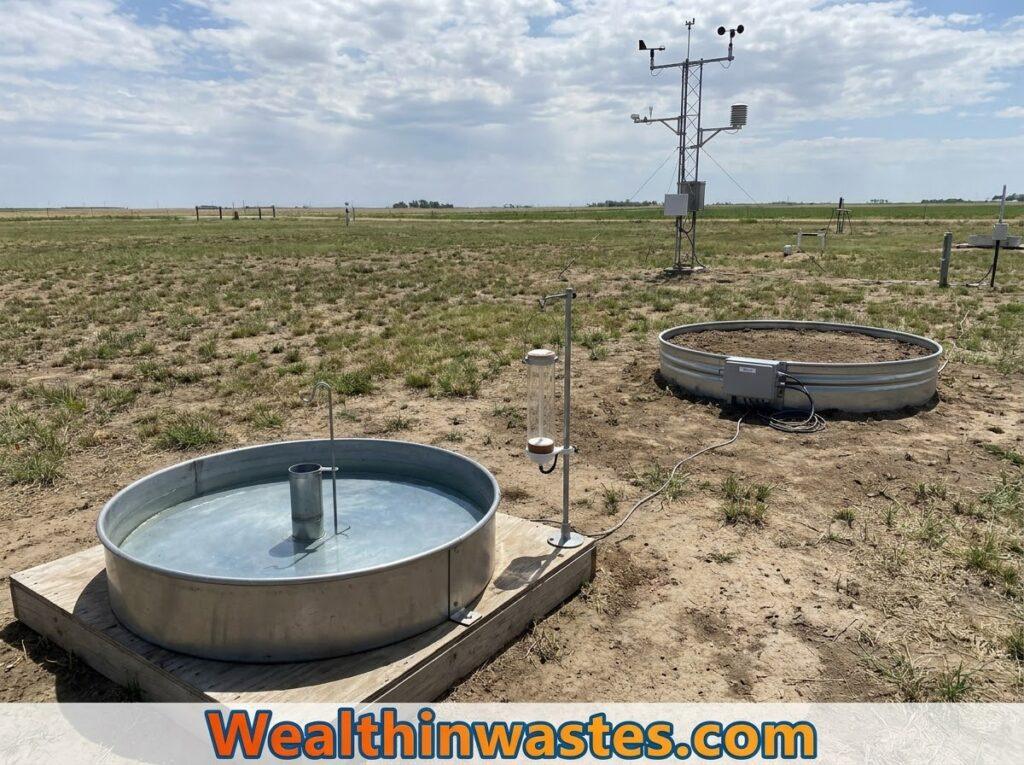
1. Evaporation Pans: An evaporation pan holds water in an exposed container, allowing observers to measure changes in water level over time. These measurements help estimate evaporation under surrounding weather conditions.
2. Class A Pan: The United States Weather Bureau Class A pan is a widely recognised standard for pan evaporation observations. Its measurements help estimate evaporation from larger water bodies and well-watered vegetation.
3. Water-Level Readings: Observers measure the change in pan water level over a known period, accounting for rainfall and added water. Accurate records help distinguish evaporation from other changes in water depth.
4. Pan Coefficient: Researchers commonly multiply pan evaporation by a suitable pan coefficient to estimate reference or lake evaporation. The coefficient accounts for differences between the exposed pan and the surface under investigation.
5. Site Selection: Pan placement matters because shading, nearby buildings, vegetation and wind exposure can influence readings. Suitable siting helps produce more representative measurements for freshwater resource assessment.
6. Automated Recording: Instruments can record pan water levels automatically and transmit readings to monitoring stations. Continuous records help researchers compare evaporation patterns over different hours, days and seasons.
7. Measurement Limitations: Pan evaporation does not directly equal evaporation from a lake or evapotranspiration from a field. Researchers must consider exposure, heat storage, surrounding conditions and appropriate correction methods.
8. Supporting Water Studies: Evaporation estimates become more useful when combined with rainfall, temperature and water-level observations. These records support water resource planning and broader environmental investigations, including water management research.
Lysimeters for Measuring Evapotranspiration
Lysimeters measure water movement through soil and estimate water loss from soil surfaces and vegetation. Researchers use them to investigate soil-water-plant relationships under controlled conditions that resemble normal field environments.
1. Weighing Lysimeters: A weighing lysimeter contains a soil block inside a supported container fitted with sensitive weighing equipment. Changes in weight help researchers estimate water loss between measurements.
2. Non-Weighing Lysimeters: These devices estimate water movement through changes in soil-water storage and measured inputs or drainage. They generally cost less, but reliable results require accurate moisture and water-balance measurements.
3. Water-Balance Measurements: Researchers record rainfall, irrigation, drainage and changes in stored soil water. They use these measurements to estimate evapotranspiration, accounting for other important water gains and losses.
4. Field Representativeness: The soil and vegetation inside a lysimeter should resemble the surrounding field. Researchers maintain similar crop cover and management to reduce differences between instrument readings and actual field conditions.
5. Continuous Monitoring: Automated weighing lysimeters can record changes at frequent intervals, allowing detailed analysis of daily water loss. This information helps researchers examine crop responses to changing weather and soil moisture.
6. Salinity and Drainage Studies: Evapotranspiration measurements support investigations into irrigation losses, water balance and salt accumulation. These concerns connect with water resource management and soil salinity and waterlogging.
7. Accuracy and Cost: Weighing lysimeters can provide accurate short-term measurements, but installation, maintenance and calibration require substantial resources. Their findings also depend on suitable design and representative field conditions.
Practical Uses of Evaporation Measurements
Evaporation measurements support irrigation scheduling by helping farmers estimate how quickly water leaves the soil and crops. This information helps them apply suitable quantities without wasting valuable water.
Hydrologists combine evaporation data with rainfall and runoff observations to estimate water availability within catchments. Such assessments support reservoir management, drought planning and watershed management.
Farmers can also reduce unnecessary soil evaporation by maintaining suitable surface cover. Applying organic mulch, including recycled wood materials, protects soil moisture, as explained in practical mulch production.
Environmental monitoring benefits from accurate estimates because changing water losses can affect freshwater supplies, aquatic habitats and agricultural production. Combining evaporation records with rainfall observations supports more informed environmental decisions.
Water managers also consider surface water quality when evaluating evaporation and storage. Suitable monitoring and pollution prevention measures help protect rivers, lakes and reservoirs that supply households, farms and ecosystems.
Finally, researchers can combine evaporation records with meteorological data to improve water-balance estimates and assess environmental changes. These studies support rainfall-related environmental assessments and long-term resource management.
Read Also: Soil Conservation: Meaning, Categories and Soil Management Practices
Summary on Definition and Measurement of Evaporation and Evapotranspiration
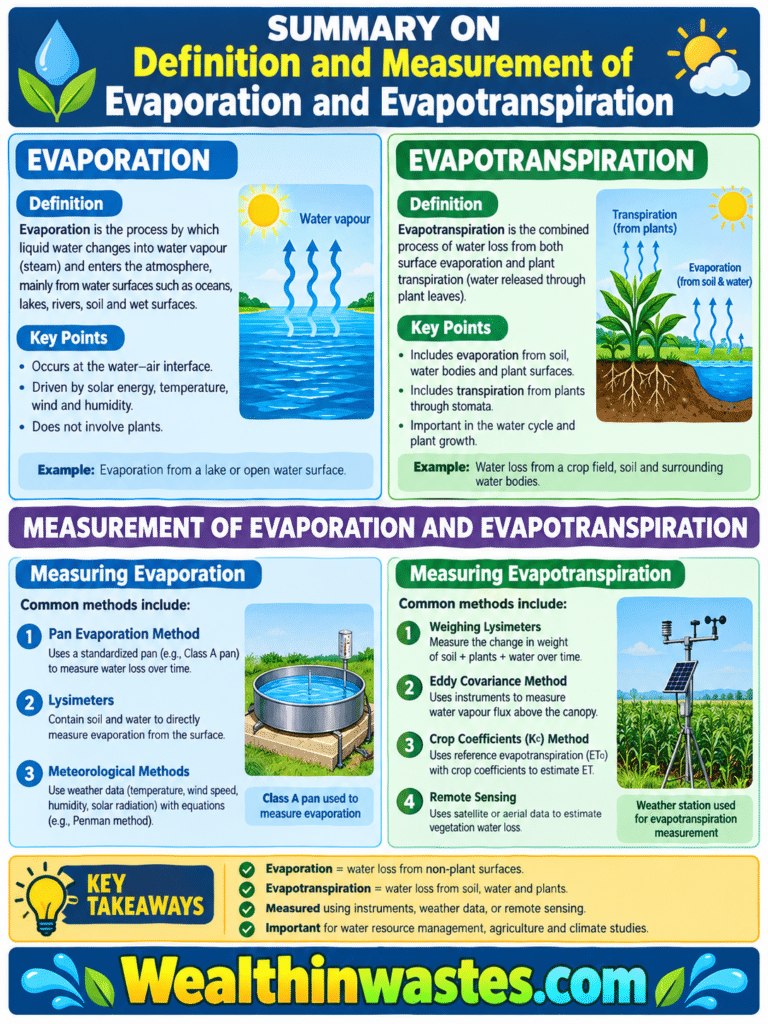
| Topic | Summary | Importance |
|---|---|---|
| Evaporation | Liquid water changes into water vapour. | Returns surface water to the atmosphere. |
| Transpiration | Plants release water vapour through their leaves. | Supports plant water movement and contributes atmospheric moisture. |
| Evapotranspiration | Combines evaporation and plant transpiration. | Helps estimate crop water demand. |
| Controlling Factors | Radiation, temperature, humidity, wind and surface moisture affect rates. | Explains variations in water loss. |
| Evaporation Pans | Measure changes in exposed pan water levels. | Help estimate evaporation from larger surfaces. |
| Lysimeters | Measure soil-water changes and help estimate evapotranspiration. | Support accurate field water-balance studies. |
| Practical Applications | Data supports irrigation, catchment planning and environmental monitoring. | Improves water management and conservation. |
Frequently Asked Questions About Evaporation: Definition, Measurement and Evapotranspiration
1. What Is Evaporation?
Evaporation occurs when liquid water changes into water vapour and enters the atmosphere. Solar energy, temperature, humidity, wind and surface moisture influence its rate.
2. What Is Evapotranspiration?
Evapotranspiration combines water lost through evaporation from soil and other surfaces with water released by plants through transpiration. It helps determine crop water requirements.
3. Which Factors Increase Evaporation?
Strong solar radiation, higher temperatures, dry air and suitable wind conditions generally increase evaporation. The availability of surface moisture determines whether evaporation can continue.
4. How Do Evaporation Pans Work?
Evaporation pans hold exposed water while observers measure water-level changes over time. After accounting for rainfall and water additions, the readings help estimate evaporation rates.
5. What Is a Lysimeter Used For?
A lysimeter measures changes in soil-water storage and helps estimate evapotranspiration. Weighing models track weight changes, while other designs use water-balance measurements to estimate water loss.
6. Why Is Evaporation Measurement Important?
Evaporation measurements help farmers schedule irrigation, estimate crop water demand, assess reservoir losses and improve water planning. They also support drought assessment and hydrological research.
Do you have any questions, suggestions, or contributions? If so, please feel free to use the comment box below to share your thoughts. We also encourage you to kindly share this information with others who might benefit from it. Since we can’t reach everyone at once, we truly appreciate your help in spreading the word. Thank you very much for your support and for sharing!
Read Also: Hydrologic Cycle and Its Importance in Agricultural Water Management