


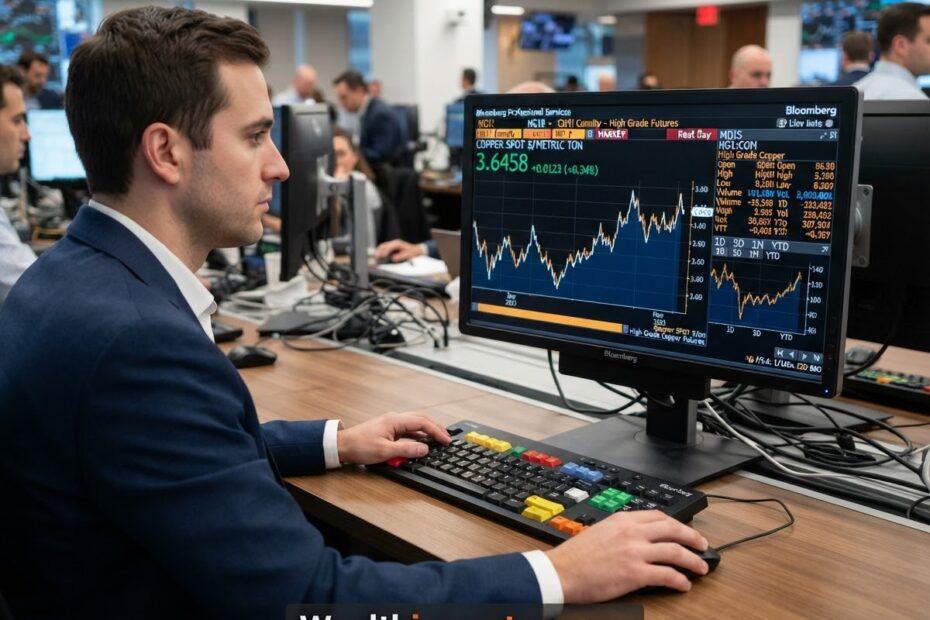
Copper Bloomberg is a search phrase people use for Bloomberg’s copper prices, market coverage and analysis. The service helps traders and businesses follow a metal whose price responds to industry, policy and investment decisions.
Bloomberg combines commodity quotations and market reporting, but the figures available depend on the product, subscription and exchange. Understanding the benchmark, contract month and unit is essential before comparing any quoted price.
This article explains how to locate copper information on Bloomberg, distinguish London Metal Exchange and COMEX contracts, interpret supply-and-demand drivers, and use forecasts without treating them as guaranteed outcomes for future market decisions.
Copper’s significance extends beyond trading floors because it is used in power networks, buildings, electronics and electric vehicles. Its recovery through metal recycling companies also links market trends to resource efficiency.
Copper Bloomberg Coverage Explained
People searching for Copper Bloomberg are usually looking for a benchmark quotation, Bloomberg market page, analysis or Terminal data. It is not the name of a separate copper exchange or trading product.
1. Market Quotations: Bloomberg’s public commodities pages list selected benchmark information, including price, daily change, unit, contract month and timestamp. Access to full intraday history and institutional datasets depends on paid products.
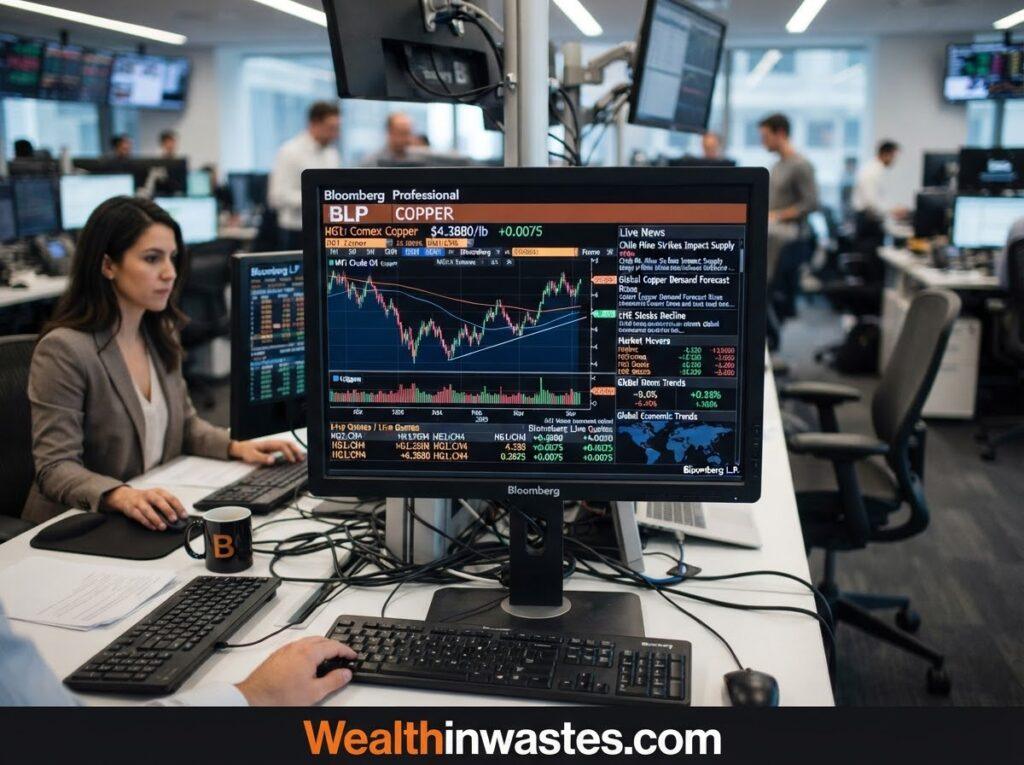
2. Professional Tools: Bloomberg Terminal users can analyse futures curves, historical prices, related securities and market news. Exact functions and data entitlements vary according to subscription, exchange permissions and the user’s market-data package.
3. News and Research: Bloomberg reporting adds context through coverage of mine disruptions, tariffs, inventories, producer decisions and demand from manufacturing or electrification. News explains price moves, although headlines alone do not establish trading signals.
Copper is also a mining-community issue, not simply a financial quote. Readers assessing a producer can consider the social impacts of mining projects, including pressure on land, water, jobs and local livelihoods.
Read Also: Why Battery Recycling Matters More Than Ever
How to Find Copper Prices on Bloomberg

Start with Bloomberg’s commodities market pages, then locate the copper entries under industrial metals. The public table can help identify the benchmark and latest displayed quote before deeper research or subscription tools.
1. Identify the Benchmark: Check whether the row refers to COMEX copper, LME three-month copper or another instrument. Similar labels can represent different delivery terms, pricing units and market locations.
2. Read the Unit: Bloomberg may show COMEX copper in US cents per pound and LME copper in US dollars per metric tonne. A number without its unit is not a meaningful comparison.
3. Check the Contract Month: Futures prices refer to a stated delivery month, while continuous symbols combine or roll contract data. Record the specific month before comparing prices across dates or providers.
4. Confirm the Timestamp: Note the exchange time, quote delay and trading session. A current-looking screen may combine prices last updated at different moments, particularly outside overlapping London and US trading hours.
The table is useful for a quick market check, but professional users should confirm delayed-data labels, licensing terms and the source exchange. Never assume every public quote is real-time or executable.
LME and COMEX Copper Benchmarks
LME copper prices provide a widely used global reference for physical metal, with official prices determined through the exchange’s market process. Its daily reports also distinguish cash and forward delivery dates.
COMEX HG futures provide a major US benchmark. Each standard contract represents 25,000 pounds of copper and is quoted in US dollars and cents per pound, so currency and weight conversions matter.
Bloomberg can place these benchmarks beside other commodities, but the underlying contracts remain different. Compare equivalent dates and units, then account for freight, grade, location and currency when examining physical premiums.
| Benchmark | Price Quotation | What It Represents |
|---|---|---|
| London Metal Exchange (LME) | US dollars per metric tonne | International reference for physical copper and exchange-traded contracts. |
| COMEX Copper (HG) | US cents per pound | Major US copper futures benchmark, with 25,000 pounds per standard contract. |
| Spot or Cash Copper | Depends on the market | Current physical-market pricing rather than a specific future delivery contract. |
| LME Three-Month Copper | US dollars per metric tonne | Forward copper pricing for the three-month prompt date. |
For accurate comparisons, consult the LME official prices and the COMEX contract specifications. These sources clarify pricing conventions and settlement arrangements.
What Moves Global Copper Prices

Global copper prices respond to both immediate trading conditions and longer-term expectations. The following factors help explain why a daily quote can move even when mines and factories have not changed overnight.
1. Chinese Demand: China is a major copper user, so changes in construction, manufacturing, grid spending and industrial activity can shift expectations for refined metal consumption and import demand overall.
2. Electrification and Data Centres: Electric vehicles, renewable power, transmission networks and data-centre infrastructure require copper-rich wiring and equipment. BloombergNEF identifies these areas as additional sources of long-term demand projects.
3. Mine Disruptions: Strikes, weather, accidents, lower ore grades, water shortages and permitting delays can restrict concentrate production. Traders react when they expect less supply than buyers need, while industrial waste sources add compliance costs.
4. Inventories and Smelting: Exchange warehouse stocks, scrap supply, smelter maintenance and treatment charges reveal tightness between mining, refining and manufacturing. Falling visible stocks can intensify concern, but miss private inventories.
5. Currency and Trade Policy: Copper is commonly priced in US dollars, so exchange-rate shifts can alter affordability for non-dollar buyers. Tariffs, export rules and shipping disruptions can redirect flows between regions.
Environmental regulation can also affect mine costs, output and investment decisions. Reports on the impact of industrial wastes show why pollution controls and remediation obligations may matter to producers and surrounding economies.
Copper Mining Supply and Recycling Trends
Copper supply begins with mining, but the material chain includes ore concentration, smelting, refining, fabrication and recovery. Each stage has different costs, bottlenecks and environmental responsibilities for producers and buyers.
Mining and processing can generate waste rock, tailings, dust and wastewater. Responsible hazardous waste management protects workers, nearby communities and the environment while reducing the risk of costly operational interruptions.
Specialist recyclers collect, grade and prepare these materials for smelters or specialist processors. Collection quality, sorting and traceability shape whether scrap can return to productive use throughout the supply chain.
A reliable waste recycling process separates suitable copper-bearing scrap from mixed materials, removes contaminants and directs recovered metal to appropriate facilities. Material quality affects recovery rates, processing costs and the value received.
Discarded circuit boards, cables and electrical equipment can contain recoverable copper alongside other metals. Responsible electronic waste management helps keep these materials in controlled recovery channels instead of unsafe disposal routes.
Comparisons with aluminium recycling show why recovery economics differ between metals. Copper’s value, product design, contamination and collection systems influence whether scrap can compete with newly mined material in a given market.
Bloomberg’s coverage of scrap and mine output can be considered alongside the waste management hierarchy, which prioritises prevention, reuse and recycling before disposal. These choices can influence long-term secondary copper availability.
Reducing avoidable material losses supports resource efficiency and supply resilience. Practical waste reduction measures can preserve copper-bearing equipment, improve manufacturing yields and increase the quantity of clean scrap available for recovery.
Copper Market Data and Forecasts

Forecasts should be read as dated scenarios, not promises. The International Copper Study Group’s 14 October 2026 outlook estimates a refined copper surplus of 104,000 tonnes in 2026 and 368,000 tonnes in 2027.
That near-term balance differs from Bloomberg’s 22 October 2026 analysis, which warns of a structural supply gap as grids and digital infrastructure expand. Its 2026 outlook identifies a $332 billion investment need.
ICSG also forecasts global mine output growth of 1.3% in 2026 and 3.1% in 2027, while refined usage growth is estimated at 1.5% and 2.5%. Those estimates may change.
Investors should compare forecast dates, mine supply, secondary production, inventories and assumptions about Chinese demand. A projected surplus in one period does not rule out tighter markets later in the decade.
| Research Source | Forecast Period | Main Finding |
|---|---|---|
| ICSG, October 2026 | 2026 | Projected refined copper surplus of 104,000 tonnes. |
| ICSG, October 2026 | 2027 | Projected refined copper surplus of 368,000 tonnes. |
| BloombergNEF | Long-term outlook to 2050 | Identifies copper as the main exception to sufficient transition-metal supply capacity and estimates a $332 billion investment requirement. |
| Bloomberg Professional Services | Long-term demand analysis | Highlights AI infrastructure, power grids, electrification and supply-chain security as important demand drivers. |
These findings should not be treated as competing spot-price predictions. ICSG examines near-term refined copper production and usage, while BloombergNEF examines longer-term supply capacity and energy-transition requirements.
Copper Insights for Investment Decisions
1. Define the Exposure: Decide whether the objective is to monitor physical metal, hedge future purchases, invest in mining companies or gain diversified commodity exposure. Each route carries different risks and costs.
2. Compare Instruments: Copper futures, exchange-traded products, mining shares and commodity indices do not track the metal in exactly the same way. Review fees, roll effects, leverage and company-specific exposure.
3. Match the Time Horizon: Short-term traders may focus on price momentum, inventory reports and contract spreads. Long-term investors should also assess project pipelines, recycling capacity, capital expenditure and demand scenarios.
4. Use Hedging Carefully: Manufacturers and producers may use futures to reduce exposure to adverse price moves. A hedge can offset part of a physical price change, but introduces basis and margin risks.
Businesses assessing scrap-related opportunities should consider local feedstock, collection and processing access. A suitable recycling centre needs clear acceptance rules, reliable sorting and safe handling arrangements before committing investment capital.
Risks in Copper Market Analysis
1. Verify the Waste Stream: Mine operators should use documented evidence and suitable testing. Waste determination methods help classify residues before storage, treatment, transport or disposal decisions are properly finalised.
2. Understand Disposal Limits: Landfill facilities differ in design and permitted uses. The different types of landfills explain why ordinary solid waste sites are not substitutes for engineered mine-tailings facilities.
3. Weigh Disposal Trade-offs: Landfills can provide controlled disposal for suitable waste, but they require land, monitoring and long-term management. The advantages and disadvantages of landfills matter when evaluating alternatives.
4. Consider Environmental Effects: Poorly managed residues can contaminate soil, water and air, creating costs beyond the mine boundary. The general impact of wastes on the environment provides useful wider context.
5. Classify Hazardous Streams: Mining and refining may generate residues requiring special controls. Sources and classification of hazardous waste help explain why each stream needs a documented, evidence-based, separate assessment.
6. Check Material Properties: Corrosive, reactive, ignitable or toxic residues require suitable controls. The characteristics of hazardous wastes help distinguish materials needing specialised handling from ordinary household and industrial refuse.
7. Define Solid Waste Correctly: Rock, packaging, scrap and process residues should not be grouped automatically. The concept and definition of solid wastes support clearer inventories and management responsibilities at each facility.
8. Separate Different Materials: Industrial residues require different handling routes. A sound classification of solid waste can distinguish recoverable material from contaminated waste and reduce unsafe mixing during storage and transport.
9. Select Suitable Treatment: Recycling is not appropriate for every residue, and disposal should follow assessment. Proper waste treatment and disposal methods protect workers, communities and the wider environment over time.
Read Also: Grow care for rhodes grass chloris gayana kunth
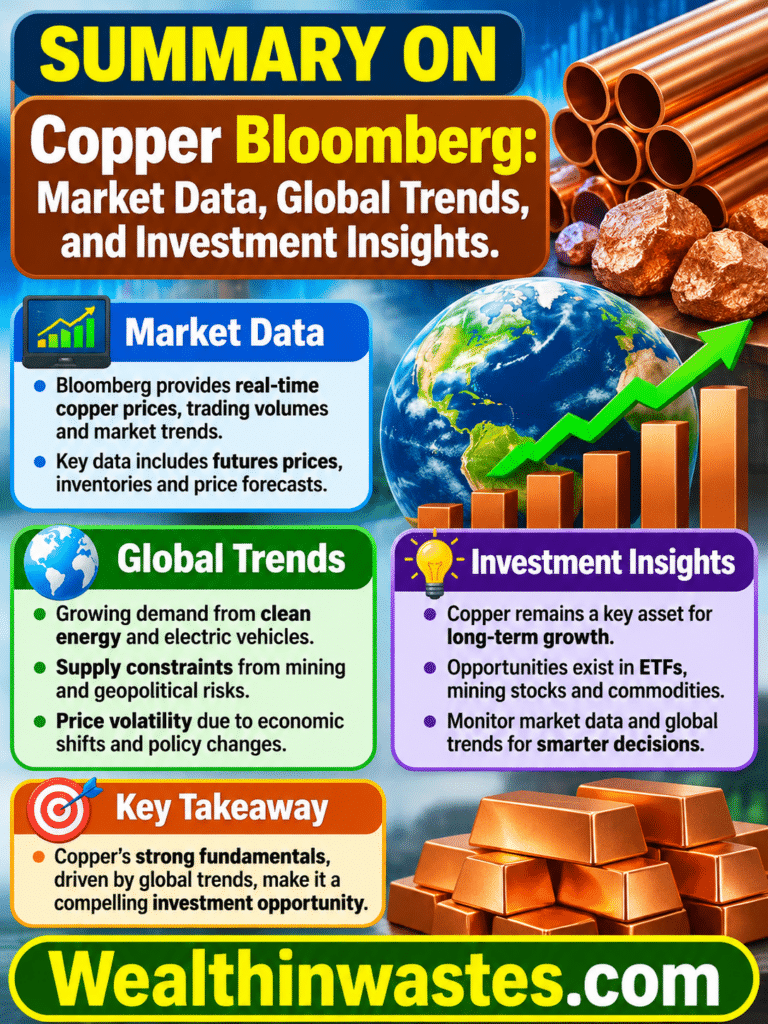
Summary on Copper Bloomberg: Market Data, Global Trends, and Investment Insights
| Topic | Key Takeaway |
|---|---|
| Copper Bloomberg | Provides copper market quotations, financial news, data and professional analysis. |
| Market Benchmarks | LME and COMEX use different pricing units and contract specifications. |
| Price Influences | Chinese demand, mining output, inventories, electrification, currency movements and trade policy affect prices. |
| Global Supply | Mine production, refining capacity, operational disruptions and recycling determine available supply. |
| Market Forecasts | Short-term refined copper balances can differ from longer-term supply and demand projections. |
| Investment Decisions | Futures, ETFs, mining shares and commodity indices provide different forms of copper exposure. |
| Market Risks | Volatility, currency movements, contract specifications and environmental liabilities require careful assessment. |
| Recycling | Recovering copper from scrap and electronic waste can support secondary metal supply. |
Frequently Asked Questions About Copper Bloomberg Market Prices, Data and Global Trends
1. What Is Copper Bloomberg?
Copper Bloomberg refers to Bloomberg’s copper market information, including pricing, futures quotations, financial news, research and professional analytical tools.
2. Can I Check Copper Prices on Bloomberg for Free?
Yes. Bloomberg provides selected commodity quotations publicly, although comprehensive historical data and professional Terminal features require appropriate subscriptions.
3. What Is the Difference Between LME and COMEX Copper?
LME copper is commonly quoted in US dollars per metric tonne, while COMEX copper futures use US cents per pound.
4. What Does HG Represent in Copper Trading?
HG is the commodity code for standard COMEX copper futures traded through CME Group.
5. What Factors Influence Global Copper Prices?
Industrial demand, Chinese economic activity, mine production, inventories, currency movements, geopolitical events and electrification influence copper prices.
6. Why Do Copper Market Forecasts Differ?
Analysts use different assumptions, reporting periods, supply estimates, demand scenarios and economic models when preparing their forecasts.
7. Is Copper a Good Investment?
Copper offers exposure to industrial growth and electrification, but its price remains volatile. Investors should assess their risk tolerance, investment horizon and chosen instrument.
Do you have any questions, suggestions, or contributions? If so, please feel free to use the comment box below to share your thoughts. We also encourage you to kindly share this information with others who might benefit from it. Since we can’t reach everyone at once, we truly appreciate your help in spreading the word. Thank you very much for your support and for sharing!
Read Also: Water and Land Pollution in Agriculture