


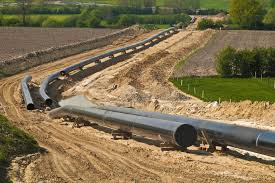
Conflicts in Resources Conservation arise when communities, governments, businesses, and conservation agencies compete over land, forests, wildlife, water, and minerals or other resources that support livelihoods and ecological balance within shared landscapes.
Natural resources provide food, income, cultural identity, energy, and essential ecosystem services. However, restrictions on harvesting, unclear tenure, unequal benefits, and growing demand can turn conservation objectives into local disputes.
Effective conflict control therefore requires more than enforcing boundaries or penalties. It depends on fair rules, trusted communication, community participation, reliable information, and practical alternatives that protect livelihoods over the long term.
Resource conservation works best when decisions recognize both ecological limits and human needs. A clear understanding of natural resources, local rights, and shared benefits gives conservation programmes a stronger foundation.
What Conflicts in Resource Conservation Mean
A conservation conflict occurs when stakeholders disagree about who may access a resource, how much they may use, which activities are acceptable, or who should receive the benefits. These disputes can be direct or indirect.
The issue is not always opposition to protecting nature. Residents may support conservation but reject rules that limit farming, fishing, grazing, fuelwood collection, or cultural practices without consultation, compensation, or viable alternatives.
Conservation decisions also carry economic assumptions about resource value, ownership, and public benefit. Transparent decisions should recognize local knowledge alongside ecological evidence and long-term community interests in every planning process.
The dispute may begin with a boundary or permit but often reflects deeper concerns about respect, security, representation, and benefit distribution. Identifying these concerns helps mediators address causes rather than symptoms from the outset.
Natural resources include forests, wildlife, soil, water, minerals, and other assets that sustain communities and ecosystems. Effective resource conservation and management must balance ecological health with community needs over time.
Natural resources differ in how they regenerate and who depends on them. Understanding resource categories helps planners match restrictions, seasonal access, and restoration obligations to ecological conditions and local practices.
No single rule will suit every landscape. Forest-dependent communities, pastoralists, fishers, farmers, and tourism operators may value the same place differently, so plans should map users and practical needs before setting limits.
Read Also: Methods of Disposal of Waste Pesticide Containers
Main Causes of Conservation Conflicts

Several pressures often overlap in conserved areas, making disputes harder to resolve. These causes commonly trigger disagreement between residents, conservation agencies, private operators, and government authorities across regions at protected sites.
1. Land-Use Pressure: Competing demands for farms, settlements, roads, grazing, timber, and protected habitats can leave too little space for users. Poor zoning and rapid land conversion intensify pressure and make soil conservation practices harder to coordinate.
2. Multiple-Use Resource Demands: A forest, wetland, river, or grassland supplies water, fuelwood, food, recreation, grazing, and habitat. Conflicts emerge when rules treat renewable and non-renewable resources alike or exclude uses without fair negotiation.
3. Ownership and Access Disputes: Unclear boundaries, overlapping customary and statutory claims, disputed leases, and weak records create uncertainty. People may resist conservation when they believe authorities or outside investors have ignored legitimate rights or community history.
4. Population and Consumption Pressure: Population growth, migration, urban demand, and rising consumption increase pressure on fuel, farmland, water, and wildlife. Scarcity can heighten competition, particularly where public services and alternative incomes remain limited for vulnerable households.
5. Unequal Benefits and Costs: Restrictions can impose immediate costs on residents while tourism, businesses, or distant consumers receive benefits. Perceived unfairness, weak compensation, and limited participation may deepen distrust and encourage non-compliance over time.
6. Poor Communication and Unclear Rules: Weak communication, sudden rule changes, unclear enforcement, and rumours can turn manageable disagreements into serious disputes. Regular briefings and reliable complaint channels help residents understand decisions and challenge mistakes peacefully.
How Conservation Conflicts Affect People and Nature
Unresolved disputes can encourage illegal harvesting, poaching, land clearing, retaliatory fires, and damage to infrastructure. Such actions weaken conservation outcomes and make everyday cooperation between residents and authorities more difficult in protected areas.
Communities may lose access to traditional foods and medicinal plants, grazing routes, or sacred places. When agencies overlook customary knowledge and rights, conservation programmes can damage trust across generations and weaken local stewardship.
Habitat fragmentation, overharvesting, pollution, and reduced vegetation can threaten species and ecosystem services. The resulting decline in biodiversity can undermine livelihoods, soil stability, water quality, and resilience to climate shocks for nearby households.
Conflicts also create financial costs through security, legal proceedings, delayed projects, restoration, and lost tourism or production. Early mediation usually costs less than allowing a dispute to escalate into violence.
Women, young people, and poorer households may experience different consequences because they often have fewer formal land titles or fewer ways to influence decisions. Inclusive assessments reveal who carries hidden burdens.
Repeated confrontations can undermine local cooperation, discourage investment, and make residents less willing to report environmental damage. This weakens early warning and delays restoration when problems arise in the affected area.
Community Participation in Conflict Control
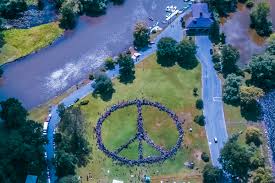
Community-based conservation gives residents a meaningful role in setting priorities, shaping rules, monitoring outcomes, and sharing benefits. It works best when participation begins before boundaries and restrictions become fixed or investments are approved.
Participation must give residents genuine influence rather than merely invite them to meetings. Agencies should publish proposals early, explain constraints, record objections, and show how community feedback changes final environmental management practices.
1. Shared Decision-Making: Create local committees that include Indigenous and customary leaders, women, young people, farmers, pastoralists, fishers, and other users. Publish responsibilities and ensure underrepresented groups can influence conservation policy and appeal unfair outcomes.
2. Recognition of Community Rights: Map customary access, seasonal routes, sacred sites, and existing uses before introducing restrictions. Verify claims transparently, respect lawful rights, and resolve overlapping claims through mediation rather than force wherever possible.
3. Fair Benefit Sharing: Share conservation revenue and project opportunities through agreed public criteria. Community funds may support clinics, schools, water points, roads, scholarships, or restoration, with spending reports available to residents for regular review.
4. Indigenous Knowledge and Stewardship: Invite community members to document seasonal changes, species locations, traditional practices, and resource pressures. Use their knowledge alongside field research to develop rules people understand, trust, and can help enforce.
5. Local Mediation: Establish locally trusted mediators or joint committees to handle complaints before tensions escalate. Set clear timeframes, keep written records, and refer serious rights violations to independent authorities for fair review.
Practical Measures to Prevent Resource Conflicts
Effective conflict prevention follows current environmental management trends: clear rules, realistic alternatives, fair enforcement, and channels for complaints. Authorities should assess who gains, who bears costs, and how decisions affect livelihoods before acting.
Agreements should set practical limits, explain permitted uses, and identify responsible officers. Periodic review gives residents and managers a chance to correct unclear rules before small misunderstandings become entrenched grievances.
1. Accessible Conservation Rules: Write rules in plain language, translate them into local languages, and explain where, when, and why restrictions apply. Post maps and contacts for questions to prevent rumours and confusion before enforcement begins.
2. Sustainable Livelihood Alternatives: Support skills training, sustainable farming, beekeeping, restoration work, handicrafts, carpentry, and other locally viable activities. Connect training with tools, markets, mentoring, and finance so alternatives produce reliable income throughout the year.
3. Fair and Proportionate Enforcement: Apply penalties consistently and proportionately, while distinguishing deliberate commercial exploitation from subsistence needs and accidental violations. Provide warnings, appeals, and mediation options so enforcement does not deepen grievances or undermine trust.
4. Restoration and Community Infrastructure: Invest in erosion control, rehabilitation, clean water, proper waste control, and shared infrastructure where pressures cause harm. Waste minimization can improve land productivity and reduce pressure on protected areas directly.
5. Fair Compensation: Create fair compensation or benefit-sharing arrangements when conservation restricts customary access or imposes measurable losses. Use clear eligibility criteria, timely payments, and public records to reduce rumours and allegations of favouritism.
Technology and Local Knowledge for Conservation

Geographic information systems (GIS), satellite imagery, drones where lawful, and field surveys can identify land-use change, habitat pressure, fires, and encroachment. Accurate maps help stakeholders examine evidence instead of relying on rumours.
Remote sensing and community reporting can flag unusual clearing, wildlife decline, polluted waterways, or damaged vegetation early. Managers should share findings clearly, protect personal data, and verify reports before taking action.
Digital tools cannot settle disputes alone. Community mapping sessions, public meetings, and traditional knowledge help explain how people use landscapes, while accessible records support transparent decisions and continuing evaluation in practice.
Environmental monitoring should also track pollution sources, waste, and runoff, since those pressures can reduce useful land and water. Linking field observations with information on environmental impacts of waste improves priorities and accountability.
GIS maps can overlay land ownership, settlement patterns, grazing routes, water points, habitat zones, and proposed projects. This shared picture can expose competing claims early and support practical choices about access and boundaries.
Mobile reporting systems may help residents submit complaints or observations quickly, but managers should offer offline and in-person alternatives. Technology must remain accessible to people with limited connectivity, literacy, or device access.
Monitoring results become useful when residents can understand and challenge them. Public dashboards, village meetings, and printed maps can support shared interpretation, while independent checks improve confidence in sensitive findings.
Read Also: Conflicts in Resource Conservation and Multiple Use Value of Natural Resources
Governance and Livelihoods for Lasting Solutions

Lasting control depends on institutions that coordinate conservation, local government, resource users, researchers, and private operators. Clear responsibilities, budgets, grievance procedures, and periodic reviews help maintain trust and prevent repeated disputes.
Long-term planning should connect conservation goals with services, education, and livelihoods. Investment in local infrastructure can reduce dependence on fragile resources, provided communities help choose priorities and maintain the resulting facilities.
1. Joint Monitoring and Review: Set measurable indicators for habitat condition, resource access, livelihood benefits, complaints, and conflict incidents. Review results publicly at agreed intervals and adjust rules when evidence shows unintended harm or unfair outcomes.
2. Accessible Grievance Procedures: Offer safe channels for reporting abuse, boundary disputes, exclusion, or compensation concerns. Set response deadlines, document outcomes, and provide independent appeal routes where local power imbalances could silence residents unfairly.
3. Fair Land-Use Planning: Coordinate zoning, development approvals, environmental assessments, and community consultations before projects begin. Transparent site-selection criteria and planning for waste streams can prevent disputes around facilities, roads, extraction, protected boundaries, or tourism ventures nearby.
4. Transparent Accountability: Publish budgets, conservation benefits, enforcement data, and restoration progress. When agencies and community representatives are accountable to the same agreed goals, conservation can support ecological health and social wellbeing for everyone.
5. Independent Oversight: Use independent audits or third-party reviews when disputes involve powerful interests, public funds, or allegations of misconduct. Credible oversight can restore confidence and show whether conservation promises produce measurable benefits.
Summary on Control of Conflicts in Resources Conservation
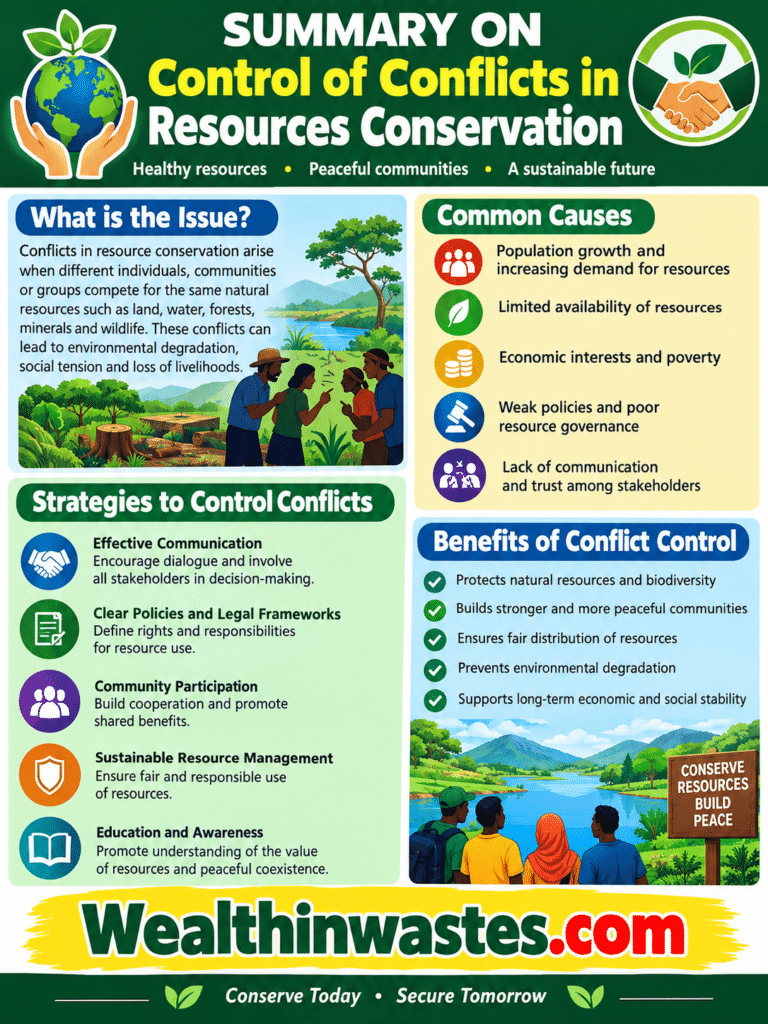
| Topic | Main Points | Expected Outcome |
|---|---|---|
| Meaning | Disagreements over resource access, ownership, permitted activities, and benefits. | Clearer understanding of conservation disputes. |
| Causes | Land-use pressure, competing demands, disputed ownership, population growth, and unequal benefits. | Better identification of underlying problems. |
| Community Participation | Shared decisions, local knowledge, consultation, and fair benefit distribution. | Greater public trust and cooperation. |
| Conflict Prevention | Clear rules, mediation, proportionate enforcement, compensation, and livelihood alternatives. | Fewer disputes and improved compliance. |
| Technology | GIS, remote sensing, field surveys, and accessible community reporting. | Earlier detection of environmental changes. |
| Governance | Transparent planning, grievance procedures, monitoring, and independent oversight. | Fairer decisions and stronger accountability. |
| Long-Term Conservation | Ecological protection, sustainable resource use, and improved community livelihoods. | Healthier ecosystems and lasting conservation results. |
Frequently Asked Questions About Control of Conflicts in Resources Conservation
1. What are conflicts in resource conservation?
Conflict control combines fair resource rules, community participation, transparent benefit sharing, mediation, and environmental monitoring. It seeks to protect ecosystems while addressing the legitimate needs and rights of local resource users.
2. What causes conservation conflicts?
Common causes include land-use pressure, competing resource demands, unclear ownership, population growth, unequal benefit sharing, and restrictions that affect livelihoods without prior consultation, viable alternatives, or fair compensation for affected residents.
3. Why should local communities participate?
Local communities contribute practical knowledge, identify seasonal resource use, monitor change, help shape rules, report problems, and strengthen trust when they share decisions and conservation benefits fairly with all groups.
4. How can technology help?
GIS, satellite imagery, remote sensing, and community reporting can identify land-use changes and emerging problems early. Authorities must verify findings, explain the evidence clearly, and protect residents’ personal information during investigations.
5. Which alternative livelihoods can help?
Useful alternatives include sustainable farming, beekeeping, carpentry, tailoring, handicrafts, restoration work, and responsible tourism, supported by training, tools, market access, mentoring, suitable financing, and continuing advice for participants during transition periods.
6. How can authorities prevent disputes?
Authorities should clarify boundaries, recognize legitimate rights, consult residents, disclose decisions, share benefits fairly, apply proportionate rules, and provide independent grievance and appeal mechanisms that users can access safely without fear of retaliation.
7. What indicates successful conflict control?
Successful conservation reduces ecological damage while maintaining fair access, stronger livelihoods, public trust, fewer disputes, and reliable cooperation between communities, government institutions, and conservation managers over the long term in shared landscapes.
Do you have any questions, suggestions, or contributions? If so, please feel free to use the comment box below to share your thoughts. We also encourage you to kindly share this information with others who might benefit from it. Since we can’t reach everyone at once, we truly appreciate your help in spreading the word. Thank you very much for your support and for sharing!
Read Also: Conservation and Management of Natural Resources in Agriculture