


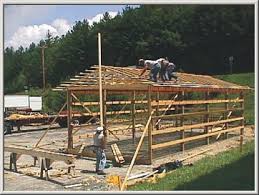
A pesticide store should protect people, products, property, and the surrounding environment from avoidable risks. Good construction therefore starts with fire resistance, secure access, ventilation, dryness, and effective containment measures.
The store should also prevent spilled products from reaching drains, soil, groundwater, surface water, food, feed, animals, or unauthorized users. These safeguards become especially important when concentrates or hazardous formulations remain onsite.
Construction decisions should match the maximum quantity and types of pesticides expected in storage. Materials, floor design, bunding, doors, windows, ventilation, and security measures should support safe daily handling practices.
A well-designed pesticide store also makes inspection, stock control, cleaning, emergency response, and maintenance easier. Planning these features before construction reduces weaknesses that could become serious problems during leaks or fires.
The requirements discussed here focus on general store principles from the supplied guidance. Local building, fire, environmental, occupational safety, and pesticide regulations should also be checked carefully before construction begins.
Read Also: Guide to Safe Use of Pesticides
General Principles for Pesticide Stores
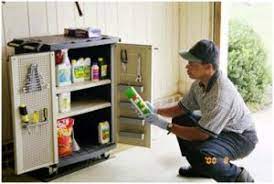
1. Fire Resistance: The store, including doors but excluding the roof, should use materials capable of resisting fire for at least thirty minutes where the applicable standard requires this level.
2. Spill Retention: The store should contain leakage or spillage from the maximum expected stock, using a properly designed bund or equivalent containment system that prevents escape beyond the storage area.
3. Impermeable Construction: Bunds and floors should use sound, non-fragile materials that resist liquid penetration, including suitable metal, concrete, masonry, stone slabs, or properly sealed concrete products without compromising integrity.
4. Continuous Bunding: The containment boundary should extend around the entire store perimeter without openings that allow liquids to escape through entrances, exits, drains, service points, or construction joints under normal conditions.
5. Secure Access: Doors, lids, and windows should remain secure when the store is unattended, limiting access to authorized people and reducing accidental exposure, theft, vandalism, or misuse of pesticides.
6. Suitable Environment: The completed store should remain dry, frost-free, adequately ventilated, and protected from conditions that could damage containers, alter products, or increase risks to workers and property throughout operations, including water protection considerations.
Choose a Safe Pesticide Store Location
1. Distance From Water: Select a location that reduces opportunities for spilled pesticides to reach wells, drains, streams, ponds, boreholes, or other water resources through direct flow or drainage pathways.
2. Flood Protection: Avoid locations exposed to flooding, persistent standing water, or poor drainage because water entering a pesticide store can damage containers and increase contamination risks during emergencies and unexpected rainfall.
3. Separation From Living Areas: Keep the store away from homes, animal housing, food areas, offices, and other occupied spaces to reduce the consequences of accidental releases, vapour exposure, or fire.
4. Vehicle Access: Provide practical access for deliveries, inspections, emergency response, and safe movement of containers without creating unnecessary routes through offices, livestock areas, food stores, or heavily occupied spaces.
5. Stable Ground: Construct the store on a stable, level foundation that can support the building, stored products, shelving, containment structures, and expected handling equipment without settlement or cracking over its working life.
6. Environmental Sensitivity: Consider nearby vulnerable land and water resources when choosing the store site because local environmental conditions may require stronger containment, additional separation distances, or stricter controls than ordinary storage.
Build a Fire-Resistant Pesticide Store
A strong pesticide store starts with walls, doors, floors, and supporting materials selected according to the fire-resistance requirements that apply to the intended facility and stored products in practice for the facility.
Fire-resistant construction helps slow the spread of fire and provides valuable time for people to leave the area, emergency services to respond, and stored chemicals to remain safely contained during an incident.
The roof may follow different construction requirements from the walls and doors, depending on the governing standard. Designers should therefore confirm the applicable fire specification before choosing suitable construction materials and considering hazardous substance properties.
Materials should also tolerate routine handling and cleaning without creating fragile surfaces, cracks, gaps, or joints that could weaken containment. Durable construction supports both fire protection and long-term maintenance practices.
Where existing buildings are converted into pesticide stores, the converted area should still satisfy the same essential principles. Renovation should not create hidden weaknesses in floors, walls, openings, or service routes.
A professional construction assessment should consider fire risk, stored pesticide characteristics, emergency access, ventilation, electrical installations, and local requirements carefully while considering potential environmental damage from accidental releases.
Provide Pesticide Store Spill Containment
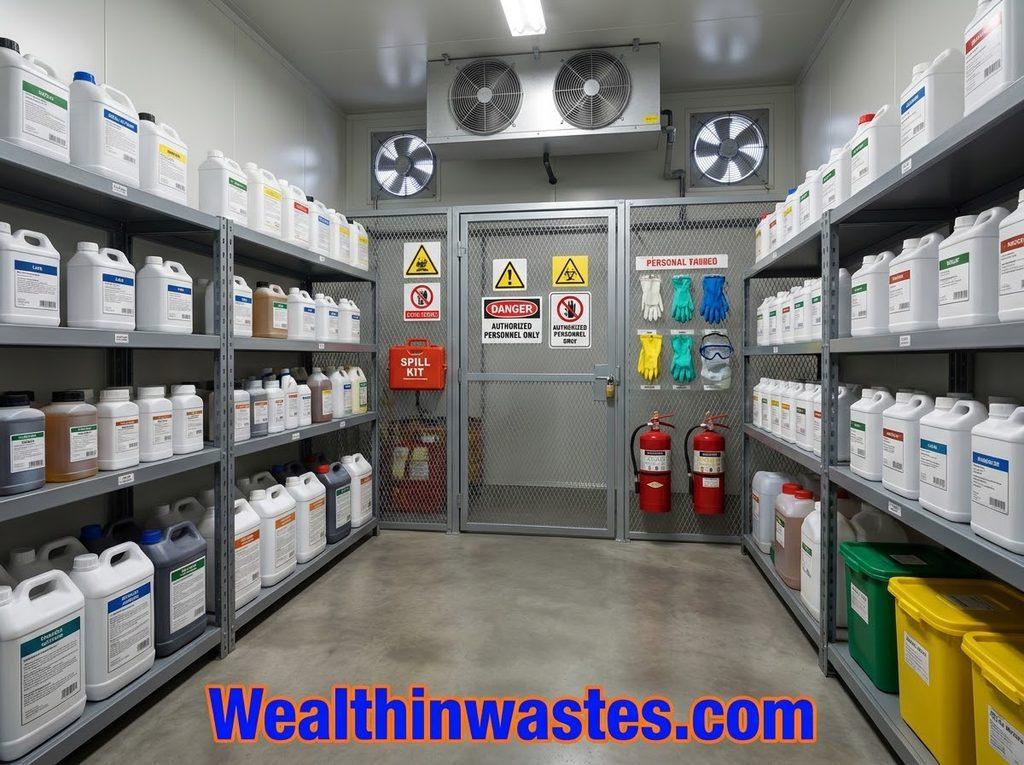
1. Calculate Capacity: Determine the maximum quantity likely to be stored and size the secondary containment accordingly, applying the relevant local standard and any enhanced requirement for environmentally sensitive locations.
2. Seal the Floor: Use a floor that resists penetration and remains easy to inspect and clean. Seal joints, cracks, edges, and construction interfaces where liquids might otherwise escape safely.
3. Protect the Perimeter: Extend the bund around the complete storage perimeter so spilled material remains inside the containment area rather than escaping beneath doors or through wall openings during incidents.
4. Protect Service Openings: Design entrances, pipe penetrations, drains, cables, and other service routes so they do not create gaps through which contaminated liquids can leave the contained area accidentally, reducing residue contamination during storage.
5. Use Suitable Materials: Select non-fragile materials that resist the stored liquids. Suitable options may include concrete, masonry, stone products, or compatible metal systems designed for chemical containment protection where required.
6. Use Secondary Containers: Where appropriate, suitable metal tanks, cabinets, or other engineered containment units can provide secondary containment, provided their condition, capacity, compatibility, and cleanliness are confirmed first beforehand.
7. Verify Reused Tanks: Before converting a storage tank into a store or bund, confirm it is suitable, uncontaminated, and safely purged of flammable liquids or gases before any storage begins.
Provide Ventilation and Dry Conditions
A pesticide store should remain adequately ventilated so harmful vapours do not accumulate unnecessarily. Ventilation design should support safe air movement without creating openings that undermine security or containment measures.
Dry conditions protect containers, labels, shelving, electrical equipment, floors, and stored products from moisture-related damage. Good construction should therefore prevent roof leaks, rising damp, condensation, and water entry during storage.
Frost protection may also matter in climates where low temperatures can damage containers or alter product condition. The required protection should reflect the pesticide labels and local environmental conditions involved for that location.
Ventilation openings should receive careful attention because they can become routes for unauthorized entry, rainwater, insects, or spilled liquids. Screens, secure fittings, and suitable positioning can help control these risks effectively.
Storage conditions should never depend on improvised heating or ventilation that could introduce ignition sources. Equipment installed inside the store should match the hazards present and comply with applicable safety requirements.
Regular inspection of ventilation, moisture barriers, roofs, walls, and openings helps identify defects before they affect stored pesticides. Early maintenance keeps the store safer and reduces costly repairs substantially where possible.
Secure Pesticide Store Access
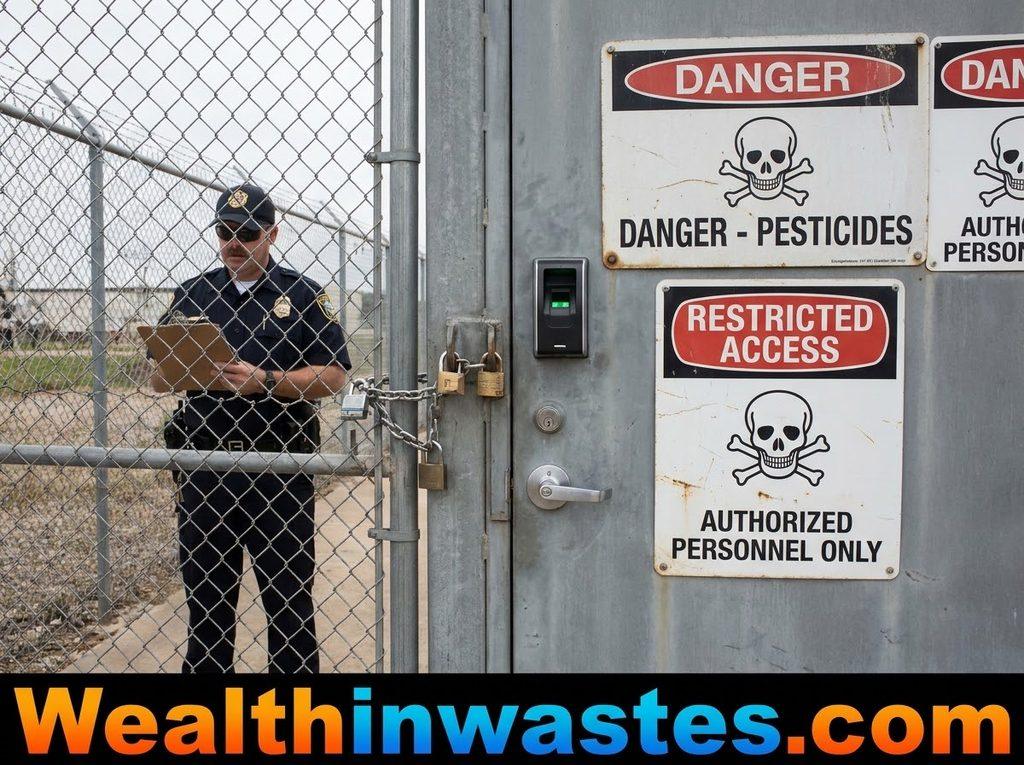
1. Install Lockable Doors: Use strong doors with reliable locking arrangements that prevent unauthorized access when the pesticide store is unattended, while still allowing quick emergency exit when required safely.
2. Secure Windows: Fit windows and other openings with secure, durable arrangements that discourage entry while maintaining the ventilation and lighting needed for safe inspection and storage activities during inspections.
3. Control Keys: Limit keys, access cards, or other entry controls to authorized personnel. Clear responsibility for access reduces accidental entry and improves accountability for stored products at all times.
4. Mark the Store: Display appropriate warning signs on the exterior so workers, visitors, emergency personnel, and nearby occupants understand that hazardous pesticide products are stored inside the building clearly.
5. Restrict Unrelated Storage: Do not use the pesticide store for food, animal feed, clothing, household goods, or unrelated materials because such mixing can increase contamination and handling risks significantly.
6. Protect Against Tampering: Inspect doors, locks, windows, and security fittings regularly. Promptly repair damage that could allow unauthorized access, theft, vandalism, or accidental contact with pesticide containers promptly when necessary.
Design Pesticide Store Floors Doors and Services
The floor should support the intended stock and handling activities while remaining resistant to pesticide penetration. A sound, sealed floor also makes routine inspection, cleaning, and spill response easier over time.
Doors should open and close reliably without damaging the bund or reducing containment performance. Thresholds and surrounding joints need careful detailing so liquid cannot escape during a spill incident as needed.
Service routes require particular attention because pipes, cables, drainage arrangements, and ventilation systems can create unintended openings. Each penetration should remain sealed or otherwise designed to preserve containment throughout during construction.
Lighting should allow workers to read labels, inspect containers, identify leaks, and move safely around the store. Electrical installations should suit the environment and comply with applicable safety requirements properly.
Shelving and storage arrangements should keep containers stable and accessible without obstructing doors, ventilation points, emergency routes, or containment features. Heavy or vulnerable containers should receive appropriate support throughout use.
Construction should also provide enough working space for inspection, stock rotation, cleaning, and safe handling. Crowded stores are harder to inspect and can make leaks or damaged containers more difficult to manage.
Read Also: Storing, Handling and Disposing of Fumigants
Maintain Safe Pesticide Store Conditions
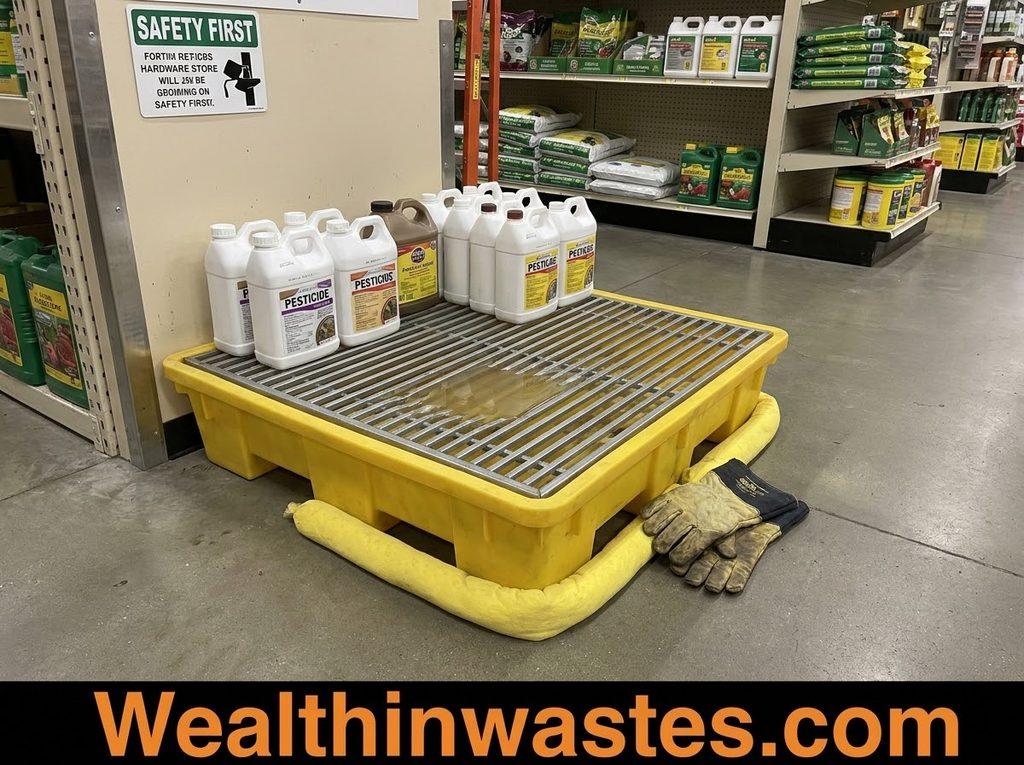
1. Inspect Regularly: Check floors, bunds, walls, roofs, doors, locks, windows, shelves, and ventilation points routinely so defects can be repaired before they compromise containment, security, or storage conditions over time.
2. Check Containers: Inspect pesticide containers for leakage, corrosion, swelling, breaks, tears, damaged closures, or deteriorating labels and hazardous substance characteristics. Separate damaged products safely and address the underlying cause without delay during routine inspections.
3. Keep the Store Clean: Remove dirt, damaged packaging, and unnecessary materials. Clean working areas using procedures appropriate for pesticide contamination and prevent residues from spreading beyond controlled spaces, including during cleanup and waste handling.
4. Maintain Emergency Readiness: Keep emergency procedures, contact information, appropriate response materials, and access arrangements available so workers can respond quickly to spills, fires, injuries, or suspected releases when necessary.
5. Review Maximum Stock: Monitor inventory so stored quantities do not exceed the containment capacity, building design, or approved storage conditions. Excess stock can create significant safety and environmental weaknesses.
6. Follow Product Labels: Store pesticides according to their label directions and applicable regulations because certain products may require special temperature, ventilation, segregation, containment, or handling arrangements for safe storage.
Summary on Construction of a Pesticide Store and General Principles Applying to all Stores
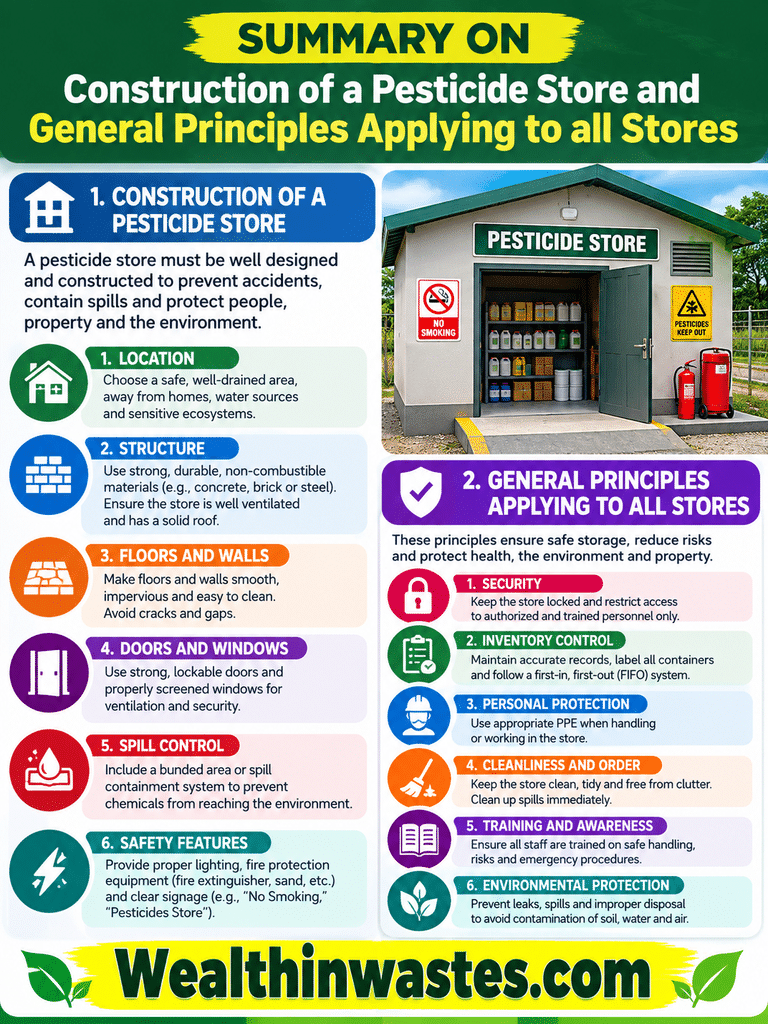
| Section | Main Idea | Why It Matters |
|---|---|---|
| General Principles | Fire resistance, containment, security, dryness, and ventilation. | Creates a safer foundation for pesticide storage. |
| Store Location | Select stable areas away from water, flooding, and occupied spaces. | Reduces exposure and contamination risks. |
| Fire-Resistant Construction | Use suitable durable materials and meet applicable fire standards. | Helps limit fire spread and structural failure. |
| Spill Containment | Provide continuous, impermeable secondary containment. | Keeps leakage and spills inside controlled areas. |
| Ventilation and Dryness | Control vapours, moisture, condensation, and frost. | Protects products, workers, and building components. |
| Security | Use locks, secure openings, warning signs, and controlled access. | Prevents unauthorized handling and accidental exposure. |
| Floors and Services | Seal floors and protect entrances, service penetrations, lighting, and shelving. | Maintains containment and supports safe operations. |
| Maintenance | Inspect structures, containers, stock levels, cleanliness, and emergency readiness. | Keeps the store safe and functional over time. |
Frequently Asked Questions About Construction of a Pesticide Store: Key Safety Principles
1. What is the purpose of a pesticide store?
A pesticide store provides a secure, dry, ventilated, fire-resistant location where pesticides can remain contained and protected from unauthorized access, damage, and environmental contamination.
2. How much spill should the store contain?
The supplied guidance specifies containment for at least 110% of the maximum stored quantity, rising to 185% in environmentally sensitive areas where applicable.
3. Which materials are suitable for bunding?
Suitable materials include sound concrete, masonry, stone slabs, compatible metal, and properly sealed construction materials that resist liquid penetration and remain structurally reliable.
4. Should pesticide stores remain locked?
Yes. Doors, lids, windows, and other access points should remain secure when the store is unattended, with entry limited to authorized personnel.
5. Why should bunding remain continuous?
A continuous bund prevents leaked pesticides from escaping through entrances, drains, service openings, wall joints, or other breaks in the containment boundary.
6. Can an existing tank provide containment?
A suitable existing tank may provide containment when its condition, compatibility, cleanliness, capacity, and safe removal of flammable residues have been properly confirmed before conversion.
7. Why is ventilation important in a pesticide store?
Ventilation helps prevent unnecessary accumulation of harmful vapours, supports safer working conditions, and helps maintain suitable storage conditions without compromising security or containment.
8. Where should a pesticide store be located?
The location should be stable, protected from flooding, separated from occupied areas, and positioned to reduce the chance that spills can reach sensitive water or environmental receptors.
Do you have any questions, suggestions, or contributions? If so, please feel free to use the comment box below to share your thoughts. We also encourage you to kindly share this information with others who might benefit from it. Since we can’t reach everyone at once, we truly appreciate your help in spreading the word. Thank you very much for your support and for sharing!
Read Also: Safe Handling of Pesticides in Agriculture