


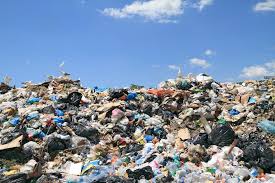
Hazardous wastes can threaten human health, animals, ecosystems, and valuable natural resources when people handle, store, transport, or discard them carelessly. Their dangers depend on their physical and chemical properties.
Unlike ordinary household rubbish, hazardous waste can ignite, corrode materials, react violently, or release poisonous substances into air, soil, and water. Recognising these properties supports safer decisions at home, farms, businesses, and industries.
The United States Environmental Protection Agency commonly classifies hazardous waste through four characteristics: ignitability, corrosivity, reactivity, and toxicity. These characteristics help determine whether a waste requires controlled handling and specialised disposal.
Households also generate hazardous materials, including fluorescent lamps, batteries, paints, solvents, pesticides, cleaners, automotive products, and unwanted medicines. Keeping these materials separate from ordinary refuse reduces unnecessary exposure and disposal risks.
This article explains the major characteristics of hazardous wastes, how they create danger, where they occur, and the practical steps households, businesses, and communities can take to manage them safely.
Hazardous Waste Characteristics Explained
Hazardous waste refers to discarded material that presents a substantial physical, chemical, biological, or environmental danger because of its composition, concentration, or ability to cause harmful effects to people and ecosystems.
Not every dangerous-looking substance automatically qualifies as hazardous waste under every legal system. Regulations use specific tests, lists, concentrations, and treatment requirements to determine classification. A household waste guide helps residents separate ordinary rubbish.
The four widely recognised characteristics provide a practical starting point for understanding hazardous wastes. They describe whether a material can burn, corrode, react dangerously, or poison people and environmental systems.
These characteristics can overlap within one waste stream. A discarded solvent, for example, may burn easily while also containing toxic compounds, creating several hazards requiring careful segregation, storage, transport, and treatment.
Understanding these characteristics helps workers identify risks before handling materials. It supports better labelling, emergency planning, protective equipment selection, spill prevention, and safer final disposal decisions during daily operations at facilities.
Good classification improves the wider waste management system, because managers can match materials with safer treatment and disposal methods while reducing exposure, pollution, and handling errors across communities in daily operations.
Read Also: Types of Wastes: Solid Waste, Liquid Waste and Gaseous Waste
Four Core Characteristics Of Hazardous Wastes
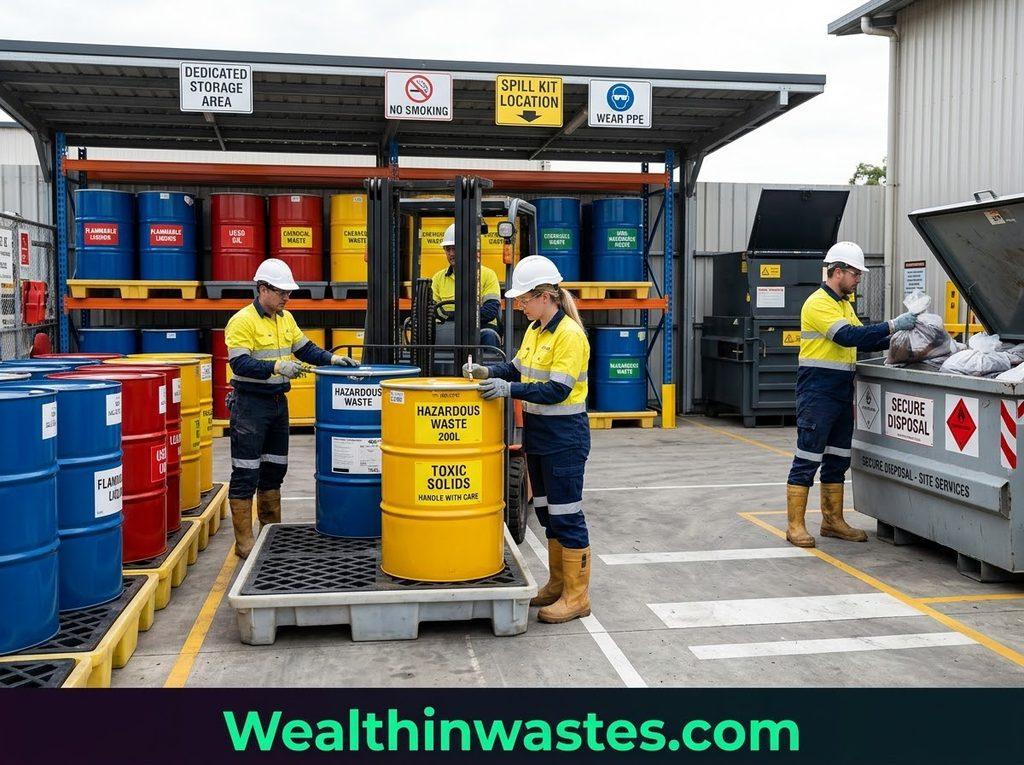
1. Ignitability: Ignitable waste can catch fire under relatively ordinary conditions, spread flames, or create fire hazards during storage and transport. Flammable liquids, certain solids, gases, and oxidising materials may qualify.
2. Corrosivity: Corrosive waste can damage living tissue, containers, equipment, or infrastructure through strong acidic or alkaline action. Certain wastes also corrode steel, making unsuitable storage containers unsafe and vulnerable.
3. Reactivity: Reactive waste can undergo unstable chemical changes, explode, release dangerous gases, or react violently with water, heat, or other materials. Such behaviour can create immediate emergency conditions and threaten nearby workers.
4. Toxicity: Toxic waste contains substances capable of causing harmful biological effects after exposure. Some contaminants can leach into soil and groundwater, creating longer-term environmental and public health risks. The water pollutants article explains pathways.
5. Combined Hazards: One waste stream may exhibit several characteristics simultaneously. A solvent containing poisonous compounds can burn readily, requiring controls for fire and toxic exposure. A waste recycling and disposal guide supports separation.
How Corrosive Waste Damages Materials And Health
1. Chemical Burns: Corrosive wastes can cause severe skin and eye burns after contact. They may also damage nearby surfaces, equipment, pipes, floors, and containers when handlers lack appropriate protection.
2. Acidic Wastes: Acidic residues may arise from industrial processes, laboratories, battery handling, metal treatment, and cleaning operations. Their low pH can damage materials and harm organisms when uncontrolled releases reach the environment.
3. Alkaline Wastes: Highly alkaline residues can come from manufacturing, chemical processing, and cleaning activities. Strong bases can injure tissue and damage materials, so suitable containers and careful handling remain essential.
4. Environmental Damage: Corrosive releases can alter soil and water chemistry. Significant discharges may change acidity or alkalinity, affect aquatic organisms, damage vegetation, and interfere with normal biological processes. Waste reduction can limit avoidable residues.
5. Safer Management: Use compatible containers, careful transfer procedures, protective equipment, emergency washing facilities, prompt spill control, and source reduction. Consider environmental factors affecting disposal sites before final disposal decisions.
Why Reactive Waste Requires Strict Control
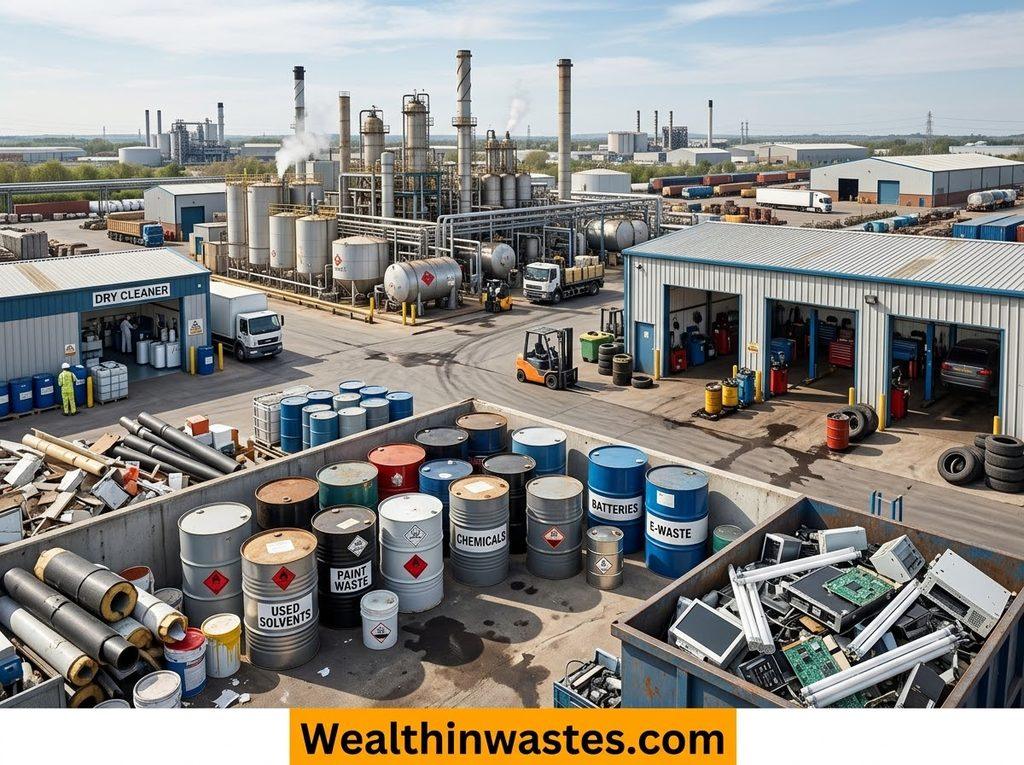
1. Explosive Potential: Some reactive wastes can explode when exposed to heat, pressure, shock, or unsuitable chemicals. Their instability makes ordinary storage practices dangerous, especially where incompatible materials share one container.
2. Water Reactions: Certain reactive wastes produce heat, gases, or other hazardous products when they contact water. Wet conditions, leaking roofs, flooding, or unsuitable cleaning practices can therefore increase risks.
3. Heat Sensitivity: Unstable waste may react when temperatures rise, even without direct flames. Facilities should monitor storage conditions and prevent unnecessary heat exposure when handling materials with known reactive properties.
4. Gas Release: Chemical reactions can generate hazardous gases rapidly, creating pressure, poisoning hazards, or oxygen displacement. Enclosed spaces deserve special attention because accumulated gases can reach dangerous concentrations without obvious warning.
5. Incompatible Mixing: Reactive materials should remain separated from substances that could trigger dangerous reactions. Industrial waste can contain unstable residues, so industrial waste sources need careful segregation. Proper waste reduction can prevent reactive residues.
Toxicity And The Long-Term Environmental Threat
1. Toxic Substances: Toxic waste contains chemicals that can harm organisms after inhalation, ingestion, skin contact, or other exposure routes. Examples may include certain heavy metals, solvents, pesticides, and industrial chemicals.
2. Leaching: Toxic compounds can move from waste through water and soil. Poorly designed disposal areas may allow contaminants to reach groundwater, creating persistent pollution that becomes difficult and expensive to reverse.
3. Bioaccumulation: Some persistent pollutants can accumulate inside organisms faster than their bodies eliminate them. Concentrations may increase through food chains, exposing predators and people to contaminants originating from earlier environmental releases.
4. Human Exposure: People may encounter toxic wastes during collection, storage, transport, treatment, recycling, or informal disposal. Strong controls over waste sources can identify exposure pathways and prevent repeated contact.
5. Water Protection: Preventing toxic releases protects drinking-water sources, fisheries, agriculture, and aquatic ecosystems. Water pollution sources and classifications explain why contaminants entering waterways can create wide environmental consequences across connected systems.
Common Sources Of Hazardous Wastes
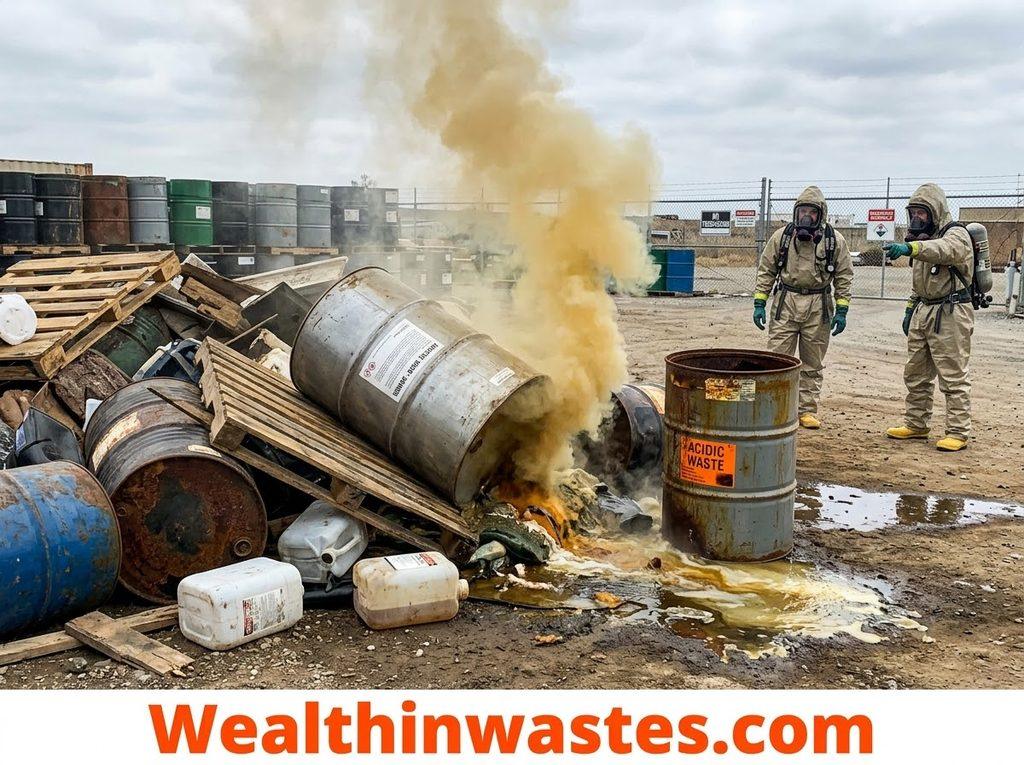
Households commonly generate hazardous materials through maintenance, cleaning, gardening, healthcare, vehicle care, and electrical use. Paints, solvents, batteries, pesticides, fluorescent lamps, and unwanted medicines require care before storage or disposal.
Industrial facilities generate hazardous residues during manufacturing, chemical processing, metal treatment, petroleum operations, and equipment cleaning. These materials may include acids, alkalis, solvents, oils, contaminated packaging, and toxic metals across many activities.
Agriculture can also produce hazardous waste through pesticide containers, veterinary medicines, disinfectants, fuel residues, batteries, and other chemicals. Proper separation prevents contamination and protects crops, livestock areas, soil, and water.
Healthcare facilities produce wastes that may contain infectious, pharmaceutical, chemical, or sharps-related hazards. Guidance on products derived from medical wastes shows why specialised handling remains important in hospitals and related facilities.
Electronic equipment may contain hazardous components such as batteries, metals, and other substances that require controlled recovery or disposal. Safe e-waste disposal practices help reduce uncontrolled releases during dismantling activities.
Industrial waste deserves particular attention because hazardous substances may appear throughout production systems. A closer look at industrial waste and its environmental impacts shows how pollution risks can develop across different stages.
Health And Environmental Effects Of Hazardous Wastes
Hazardous wastes can harm workers first when exposure occurs during collection, sorting, storage, transportation, treatment, or disposal. Risks depend on the substance, dose, exposure route, duration, and surrounding conditions in homes, workplaces, and communities.
Short-term exposure may cause burns, breathing difficulties, headaches, dizziness, poisoning, eye injuries, or other acute effects. Emergency response becomes especially important when a release happens in enclosed or heavily populated areas.
Long-term exposure can create persistent health concerns, particularly when toxic substances remain in soil, water, buildings, equipment, or biological tissues. Prevention therefore offers greater protection than relying on cleanup afterward.
Environmental damage can spread beyond the original disposal location. Contaminated runoff may reach rivers, while polluted groundwater can move underground. Proper ways of controlling water pollution explains measures for limiting contamination and protecting ecosystems.
Plants, animals, and microorganisms can also suffer when hazardous substances change habitat conditions or enter food chains. Pollution can reduce biodiversity, damage ecological functions, and interfere with productive land and water resources.
These consequences show why hazardous waste management belongs within broader environmental planning. Understanding sources and types of pollution on the environment helps connect individual waste decisions with wider ecological risks.
Read Also: Water and Land Pollution in Agriculture
Safe Handling Storage And Disposal Practices
1. Identify The Waste: Determine what the material contains, where it came from, and which hazardous characteristics it may possess. Accurate identification prevents incompatible handling decisions and supports suitable treatment selection.
2. Keep Waste Separate: Segregate hazardous materials according to their properties and incompatibilities. Separation reduces accidental reactions, prevents contamination of ordinary recyclables, and makes emergency response easier. The waste management hierarchy also supports careful segregation.
3. Use Compatible Containers: Choose containers that can safely hold the material without leaking, reacting, weakening, or failing. Inspect containers regularly and replace damaged packaging before a release occurs during movement.
4. Label Clearly: Labels should identify contents, hazards, dates, and handling requirements according to applicable rules. Clear identification prevents confusion and helps workers respond correctly during routine storage, transport, or emergencies.
5. Select Approved Disposal Routes: Hazardous waste should reach facilities, collection programmes, or contractors authorised to manage the particular material. Proper waste treatment and disposal methods provide useful context for choosing safer management options.
Ways To Reduce Hazardous Waste At Source
Source reduction remains one of the most effective ways to lower hazardous waste risks because it prevents dangerous materials from entering the waste stream in the first place through prevention and smarter purchasing.
Businesses can reduce generation by improving purchasing decisions, controlling inventory, preventing spills, maintaining equipment, using precise quantities, and replacing hazardous inputs with safer alternatives whenever performance requirements allow without sacrificing product quality.
Households can also reduce unnecessary hazardous waste by buying only required quantities, storing products correctly, using products according to instructions, and choosing less hazardous alternatives where practical for routine household activities.
Reusing suitable materials can extend product life, while authorised recycling can recover useful components from selected waste streams. However, reuse or recycling should never expose people to unacceptable chemical or physical hazards.
Good prevention supports the principles described in waste minimization and reduction processes, where organisations examine material flows and prevent unnecessary losses before treatment or disposal becomes necessary within normal operating systems.
At community level, collection programmes, public education, producer responsibility, and convenient drop-off services can discourage unsafe dumping. Roles of producers and corporations in waste management explains why responsibility extends beyond households.
Organic household materials should also remain separate from hazardous items. Compostable materials belong within appropriate organic treatment systems, while hazardous chemicals require controlled routes. Waste composting illustrates this important separation.
Summary on Characteristics of Hazardous Wastes
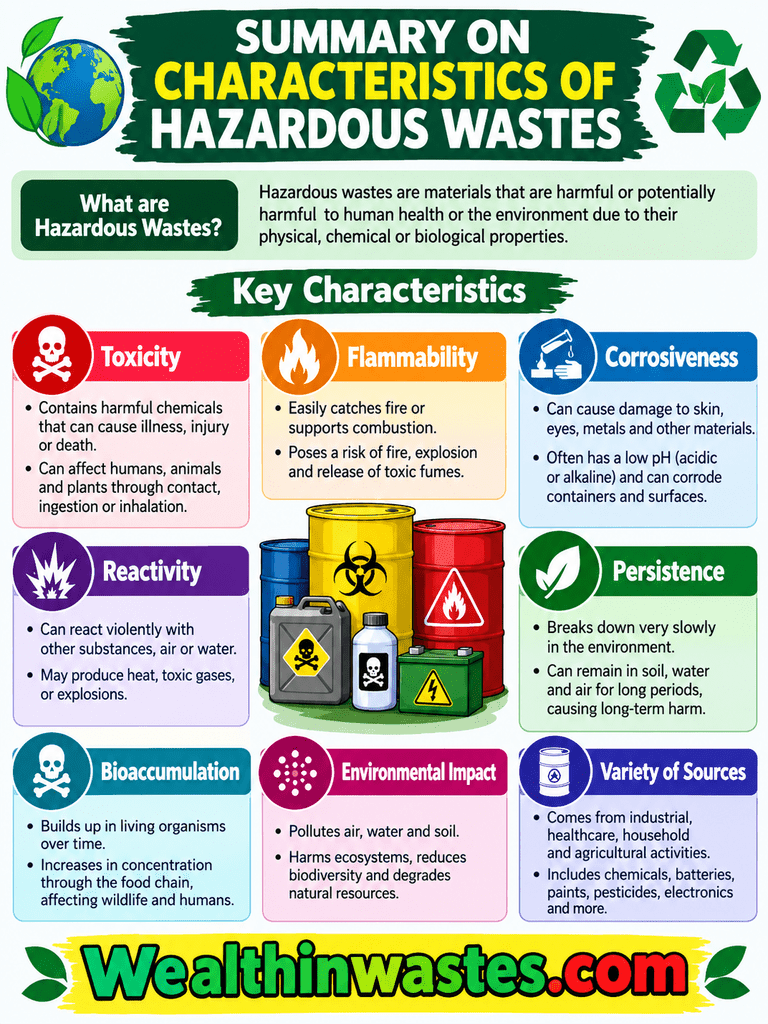
| Aspect | Summary |
|---|---|
| Ignitability | Waste can catch fire readily or support combustion under specified conditions. |
| Corrosivity | Waste can burn tissue, damage containers, or corrode certain metals. |
| Reactivity | Waste can react dangerously with heat, water, pressure, shock, or incompatible substances. |
| Toxicity | Waste can harm organisms through exposure and may contaminate soil or groundwater. |
| Sources | Households, farms, industries, healthcare facilities, laboratories, garages, and electronic equipment can generate hazardous wastes. |
| Main Risks | Hazardous waste can cause fires, chemical injuries, poisoning, pollution, ecosystem damage, and persistent contamination. |
| Safe Management | Identify, segregate, label, store, transport, treat, recover, recycle, or dispose of materials through suitable controlled routes. |
| Reduction | Prevent unnecessary generation through safer purchasing, inventory control, spill prevention, reuse, and suitable substitution. |
Frequently Asked Questions About Characteristics of Hazardous Wastes: Key Risks Explained
1. What are the four main characteristics of hazardous waste?
The four main characteristics are ignitability, corrosivity, reactivity, and toxicity. A waste may show one characteristic or several at the same time.
2. What makes waste ignitable?
Ignitable waste can catch fire readily, support combustion, or create a fire hazard because of its physical and chemical properties.
3. Why is corrosive waste dangerous?
Corrosive waste can burn skin and eyes, damage containers and infrastructure, and change soil or water chemistry after uncontrolled release.
4. How can toxic waste affect groundwater?
Toxic substances can leach through waste and soil, reach groundwater, and create persistent contamination that may affect drinking water and ecosystems.
5. Should hazardous waste enter ordinary household bins?
Hazardous materials should stay separate from ordinary household rubbish because normal collection and disposal systems may not safely manage their specific hazards.
6. How can households reduce hazardous waste?
Households can buy appropriate quantities, choose safer products, prevent spills, store materials correctly, and use authorised collection or drop-off services.
7. What should businesses do with hazardous waste?
Businesses should identify hazards, segregate materials, use compatible containers, label waste clearly, train workers, and use authorised treatment or disposal channels.
8. Can hazardous waste be recycled?
Some hazardous materials can undergo specialised recovery or recycling, but only when the process safely controls exposure, contamination, reactions, and residual waste.
Do you have any questions, suggestions, or contributions? If so, please feel free to use the comment box below to share your thoughts. We also encourage you to kindly share this information with others who might benefit from it. Since we can’t reach everyone at once, we truly appreciate your help in spreading the word. Thank you very much for your support and for sharing!
Read Also: Proper Waste Reduction Process