


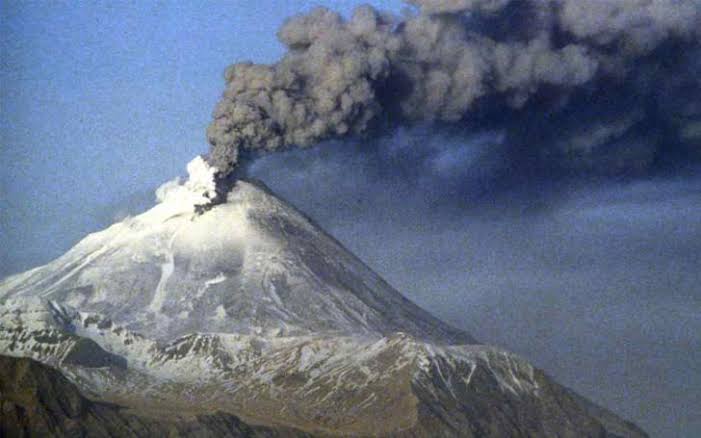
Every single day, without even realizing it, human activities are shaping the health of our planet. From the food we grow to the way we travel, build, and dispose of waste, our actions leave behind a trail of environmental consequences. While development has improved our quality of life in many ways, it has also introduced serious environmental challenges that can no longer be ignored.
Pollution is not just something that happens in distant industrial zones or heavily populated cities. It is happening everywhere, affecting the air we breathe, the water we drink, and the soil that produces our food. What makes it even more concerning is that much of this pollution is caused by routine human activities that seem harmless on the surface.
In this comprehensive guide, we will explore how human actions contribute to different forms of pollution, including air, water, and land contamination. We will also examine the sources, effects, and long-term consequences of these activities, helping you understand why environmental protection is now more important than ever.
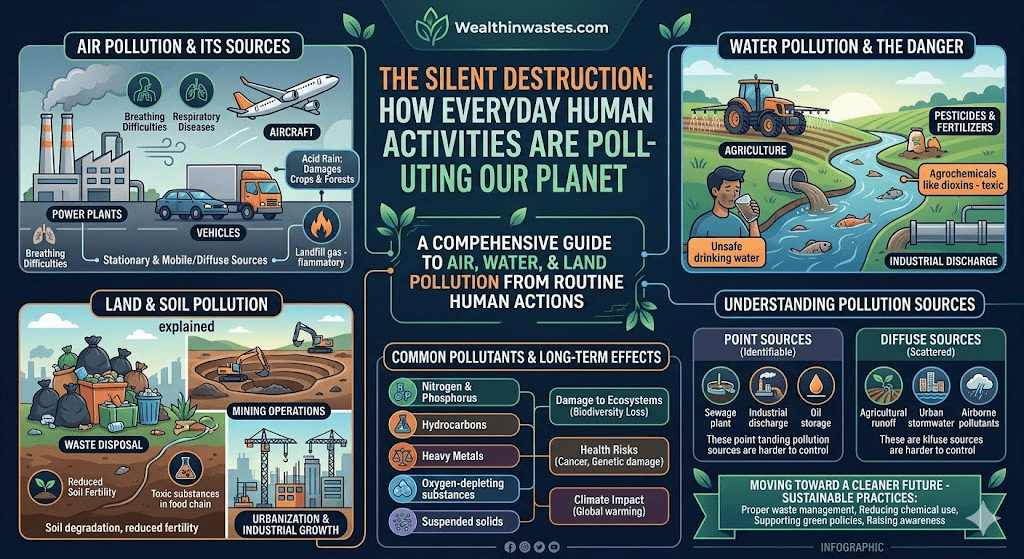
Table Summary on The Silent Destruction How Everyday Human Activities Are Polluting Our Planet
| Pollution Type | Major Sources | Key Pollutants | Environmental Impact |
|---|---|---|---|
| Air Pollution | Industries, vehicles, biomass burning | Carbon gases, particulates, chemicals | Respiratory issues, climate change |
| Water Pollution | Agriculture, chemicals, waste runoff | Pesticides, fertilizers, toxins | Unsafe water, aquatic life destruction |
| Land Pollution | Waste disposal, mining, urbanization | Heavy metals, hydrocarbons | Soil degradation, reduced fertility |
| Source Types | Point and Diffuse | Various pollutants | Widespread contamination |
| Main Cause | Human activities | Multiple toxic substances | Ecosystem damage |
A. Understanding Human Driven Environmental Pollution
1. What Is Environmental Pollution?
Environmental pollution refers to the introduction of harmful substances into natural environments, causing damage to ecosystems and human health. These substances can be chemical, physical, or biological in nature.
Human activities are the primary drivers of modern pollution. Industrialization, urbanization, agriculture, and poor waste management have significantly increased the volume of pollutants entering the environment.
2. Why This Issue Matters Today
The impact of environmental pollution is no longer limited to isolated regions. It has become a global issue affecting climate systems, biodiversity, and public health.
From rising respiratory diseases to contaminated water supplies, the consequences are becoming more visible and more dangerous.
B. Air Pollution and Its Widespread Impact
1. What Is Air Pollution?
Air pollution occurs when harmful substances are released into the atmosphere. These pollutants can originate from natural sources, but human activities are the dominant contributors today.
This form of pollution affects not just outdoor environments but also indoor spaces such as homes, schools, and workplaces.
2. Effects on Health and Environment
Air pollution has serious consequences, including:
- Breathing difficulties and respiratory diseases
- Increased risk of cancer
- Damage to plants and animals
- Disruption of entire ecosystems
It also leads to acid rain, which damages buildings, crops, forests, and aquatic systems.
3. Major Sources of Air Pollution
Stationary Sources
These are fixed sources of pollution, often linked to industrial activities. Examples include:
- Power plants and factories
- Cement and fertilizer production facilities
- Oil refineries and metal smelting industries
- Waste incinerators and heating systems
These sources release large amounts of harmful gases and particles into the atmosphere.
Mobile and Diffuse Sources
Unlike stationary sources, these are spread out and often harder to control. They include:
- Motor vehicles and transportation systems
- Aircraft and marine vessels
- Agricultural burning and forestry practices
- Household products like paints and aerosols
In many developing regions, burning of biomass such as wood and crop waste is a major contributor to air pollution.
4. Hidden Dangers of Methane and Other Gases
Landfills produce methane gas, which, although not directly toxic, is highly flammable and can displace oxygen in enclosed spaces. This creates a risk of suffocation and explosions.
Read Also: Concept and Definition of Pollution
C. Water Pollution and Its Dangerous Consequences
1. How Water Becomes Polluted
Water pollution occurs when harmful substances enter rivers, lakes, and oceans, making them unsafe for use and harmful to aquatic life.
Agriculture is one of the leading contributors to water contamination, mainly due to the use of chemicals.
2. The Role of Agrochemicals
Herbicides and pesticides are widely used to increase agricultural productivity. However, these chemicals often contain toxic substances that can be extremely dangerous.
For example:
- Some herbicides contain dioxins, which are highly toxic
- Even small amounts can cause serious health issues
- Long-term exposure may lead to cancer and genetic damage
3. Real World Consequences
Rainfall can wash fertilizers and pesticides from farmland into nearby water bodies. This leads to:
- Contamination of drinking water
- Harm to aquatic organisms
- Disruption of ecosystems
The long-term effects can include reduced biodiversity and unsafe water supplies.
D. Land and Soil Pollution Explained
1. What Causes Land Pollution?
Land pollution occurs when waste materials and harmful substances degrade the quality of soil. Human misuse of land is the primary cause.
Major contributors include:
- Improper waste disposal
- Industrial activities
- Mining operations
- Poor agricultural practices
2. Impact on Soil and Food Production
Healthy soil is essential for agriculture. However, pollution reduces soil fertility and affects crop productivity.
Contaminated soil can also introduce harmful substances into the food chain, posing risks to human health.
3. Urbanization and Industrial Growth
Rapid urban development and industrial expansion have significantly increased soil pollution. Construction activities, waste dumping, and chemical spills all contribute to land degradation.
E. Understanding Pollution Sources
1. Point Sources
Point sources are identifiable and localized sources of pollution. Examples include:
- Sewage treatment plants
- Industrial discharge points
- Oil storage facilities
These sources are easier to monitor and regulate.
2. Diffuse Sources
Diffuse sources are scattered and less direct. They include:
- Agricultural runoff
- Urban stormwater
- Airborne pollutants
These sources are more challenging to control because they originate from multiple locations.
F. Common Pollutants from Human Activities
Human activities release a wide range of harmful substances into the environment. Some of the most common include:
- Nitrogen and phosphorus from fertilizers
- Hydrocarbons from oil and fuel
- Heavy metals from mining
- Oxygen-depleting substances from waste
- Suspended solids from industrial processes
These pollutants contribute to long-term environmental damage and health risks.
G. Long Term Effects of Pollution
1. Damage to Ecosystems
Pollution disrupts natural systems, affecting plants, animals, and microorganisms. This leads to loss of biodiversity.
2. Health Risks
Exposure to polluted air, water, and soil can cause serious health issues, including respiratory diseases, cancer, and genetic disorders.
3. Climate Impact
Certain pollutants contribute to global warming and climate change, making environmental challenges even more complex.
H. Moving Toward a Cleaner Future
Reducing pollution requires a collective effort from individuals, governments, and industries.
Some practical steps include:
- Proper waste management
- Reducing chemical use in agriculture
- Supporting environmentally friendly policies
- Raising awareness about pollution
By adopting sustainable practices, we can minimize environmental damage and protect future generations.
Frequently Asked Questions on The Silent Destruction How Everyday Human Activities Are Polluting Our Planet
1. What are the main causes of environmental pollution?
The main causes include industrial activities, agriculture, transportation, mining, and poor waste management practices.
2. How does air pollution affect human health?
Air pollution can cause respiratory problems, increase the risk of cancer, and lead to other serious health conditions.
3. Why is water pollution dangerous?
Water pollution contaminates drinking water, harms aquatic life, and disrupts ecosystems, making it unsafe for human use.
4. What is the difference between point and diffuse pollution sources?
Point sources are specific and identifiable, while diffuse sources are scattered and harder to control.
5. How does land pollution affect agriculture?
It reduces soil fertility, affects crop yield, and can introduce harmful substances into the food chain.
6. What can individuals do to reduce pollution?
Individuals can reduce pollution by managing waste properly, using fewer chemicals, conserving resources, and supporting sustainable practices.
Do you have any questions, suggestions, or contributions? If so, please feel free to use the comment box below to share your thoughts. We also encourage you to kindly share this information with others who might benefit from it. Since we can’t reach everyone at once, we truly appreciate your help in spreading the word. Thank you very much for your support and for sharing!
Read Also: What You Need to Know About Osteospermum