


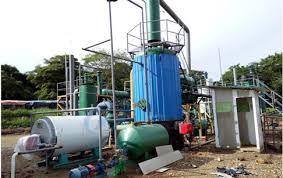
Waste motor oil builds up in garages, workshops, farms, and vehicle maintenance facilities. Rather than pouring it away, responsible operators can send it to approved recovery facilities where specialists assess reuse and fuel options.
However, turning used engine oil into road-ready diesel is not a simple home project. Used oil contains wear metals, additives, water, and contaminants that basic filters cannot reliably remove completely.
Industrial recovery methods may involve settling, filtration, dehydration, distillation, or thermal conversion, depending on the oil and intended product. Operators control emissions, residues, temperature, and product quality throughout the process.
This guide outlines four broad industrial stages, explains pyrolysis and transesterification, and highlights safer alternatives. It does not present household heating or filtering as a reliable way to produce diesel.
What Waste Oil Can Become After Processing
Waste motor oil is a petroleum-based waste stream produced by cars, trucks, generators, farms, and workshops. Managing it properly fits within a broader responsible waste-management system that prioritizes resource recovery.
Used oil can contain soot, water, metal particles, degraded additives, and other contaminants. These characteristics distinguish it from other waste streams and influence its safe collection, treatment, and possible recovery into useful products.
Depending on its composition and applicable regulations, a specialist may recover lubricating base oil, produce an industrial fuel product, or send the material into an appropriate refinery process. The objectives of proper waste management include resource conservation, pollution prevention, and protection of public health.
According to the US Environmental Protection Agency’s guidance on used-oil recycling, used oil can undergo re-refining, fuel processing, or other suitable recovery operations. However, these routes do not automatically produce certified road diesel.
Read Also: Concept / Definition of Solid Wastes
Four Steps in Industrial Waste Oil Conversion
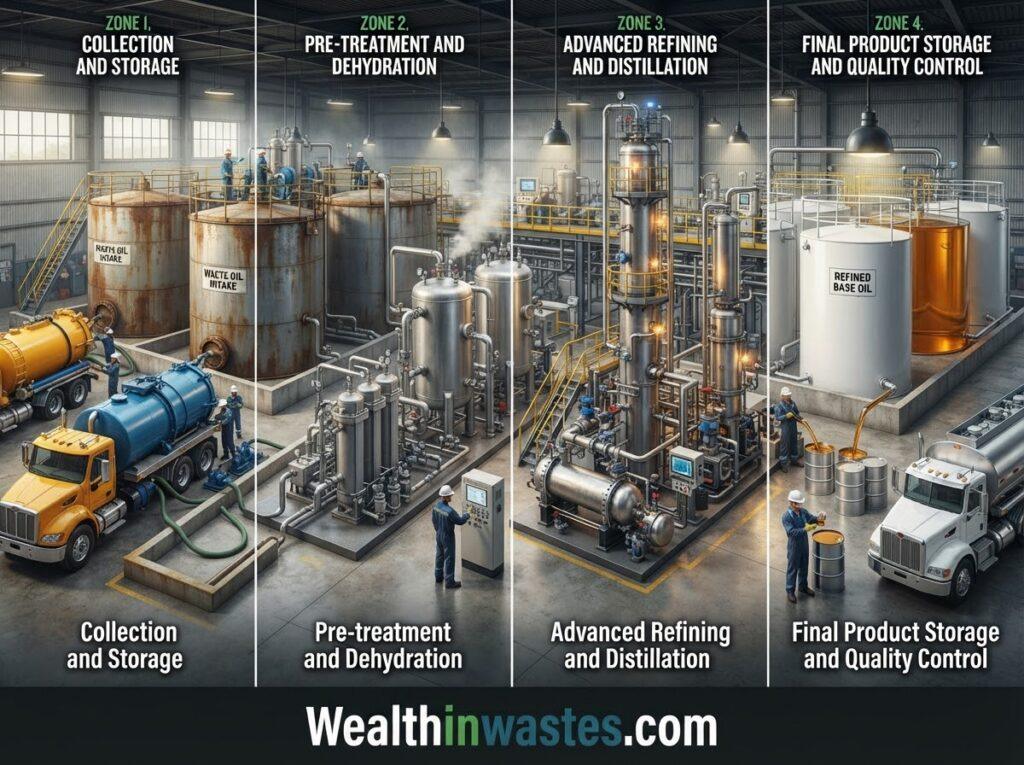
1. Collection and Classification: Licensed handlers collect used oil in suitable, clearly labelled containers. They identify its source and composition before selecting appropriate handling and treatment methods for the material.
2. Settling and Pretreatment: Industrial operators assess water, sediment, and other contaminants, then select appropriate separation and conditioning methods. They also consult available local recycling routes when deciding where collected material should go.
3. Industrial Separation or Conversion: A suitable facility uses controlled equipment to separate oil fractions or apply an appropriate conversion technology. A documented industrial recycling process also accounts for residues and emissions.
4. Upgrading and Quality Testing: Specialists test the resulting product against the specifications for its intended application. The benefits of resource recovery depend on safe processing, reliable quality, and an appropriate destination for the final product.
Why Filtering Waste Oil Does Not Make Diesel
Filtration can remove certain suspended particles, but it cannot reliably eliminate dissolved contaminants or transform used motor oil into standard diesel fuel. Effective waste reduction and treatment begins with understanding the material’s actual properties.
Professional operators may combine separation, treatment, and laboratory analysis to assess whether a recovered product meets its intended specifications. Sound recycling strategies also prevent contaminated materials from entering unsuitable recovery systems.
Garages and workshops can improve waste handling by working with professional collection and sorting services. These operators provide suitable channels for used oil without relying on unsafe household processing experiments.
Explanation on Pyrolysis and Transesterification
Pyrolysis for Used Motor Oil
Pyrolysis uses heat to break down suitable materials in an environment with little or no oxygen. Depending on the feedstock and operating conditions, the process produces mixtures of gases, liquids, and solid residues.
When facilities consider pyrolysis, they must evaluate equipment costs, feedstock composition, emissions controls, energy requirements, and product markets. These factors influence whether commercial waste-recovery ventures can operate safely and economically.
Pyrolysis liquids do not automatically meet diesel specifications. Facilities may need additional refining and testing, while responsible waste-based income opportunities depend on lawful operations and verified demand for the recovered products.
Transesterification for Cooking Oil
Transesterification is a chemical process commonly used to produce biodiesel from suitable fats and oils, including waste cooking oil. It reacts the oil with an alcohol to form fatty acid esters and other products.
Used engine oil is different from waste cooking oil because it contains petroleum hydrocarbons and contaminants from engine operation. Therefore, transesterification is not a simple method for converting old motor oil into biodiesel.
Read Also: How to Make Compost from Kitchen Waste
Safety and Environmental Protection Requirements
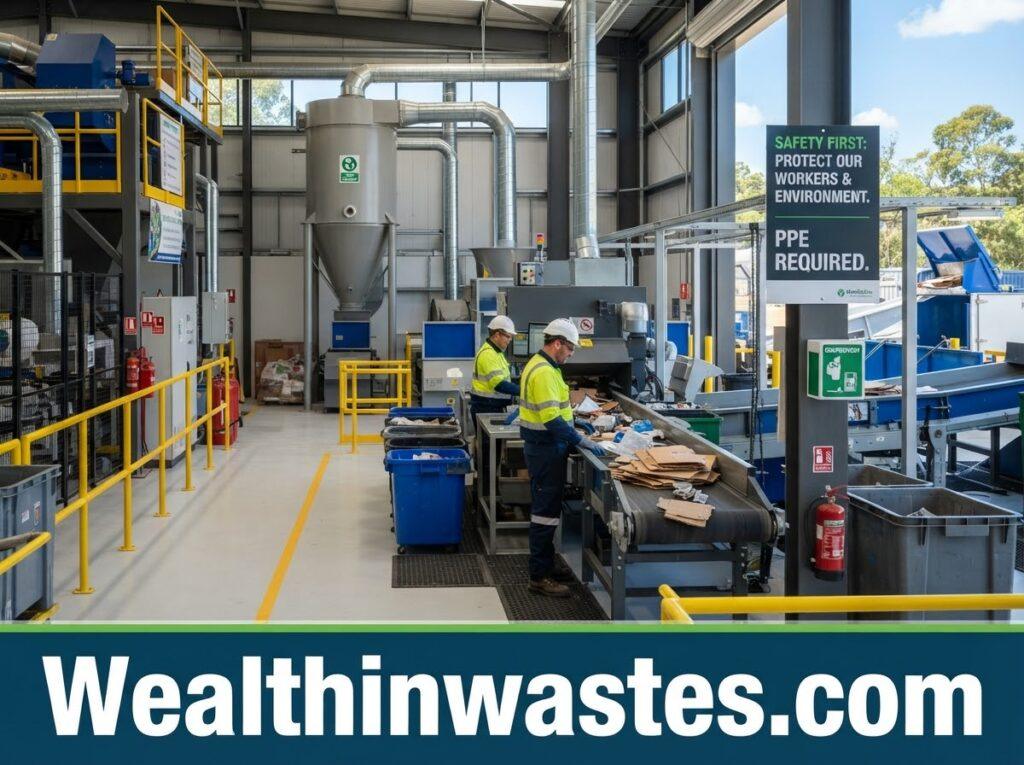
Waste motor oil can contain hazardous substances that harm workers, soil, and water. Facilities should classify each waste stream correctly and follow suitable handling requirements before transporting or processing it.
Store used oil in compatible, sealed, labelled containers, away from drains and ignition sources. Never pour it onto soil or into waterways, and avoid unsuitable disposal systems that could allow contaminants to escape.
Do not mix used motor oil with solvents, fuel, or other waste unless an authorised process specifically permits it. Separating contaminated materials from ordinary materials that recycling facilities cannot accept helps protect workers and recovery systems.
The EPA’s used-oil guidance for businesses also discusses appropriate storage, processing, and environmental controls. Local laws may differ, so operators should consult their environmental authorities before beginning any fuel-recovery activity.
Safer Alternatives to Home Diesel Production
The safest choice for most households and garages is to send used motor oil to an approved collection centre or specialist re-refiner. The waste-management hierarchy encourages recovery before final disposal whenever practical.
People interested in biodiesel should distinguish used cooking oil from motor oil and contact a qualified biodiesel producer. These specialists can assess suitable feedstocks and explain the relevant fuel-quality and legal requirements.
Workshops can also separate other reusable materials instead of mixing everything together. Appropriate routes for difficult-to-recycle plastics and contaminated items depend on local acceptance rules and available recovery facilities.
Metal parts and containers may qualify for separate recovery when handlers remove contamination and follow the facility’s acceptance requirements. Learning about metal recycling practices helps workshops organise different material streams responsibly.
Where available, established recyclers can provide collection schedules, accepted-material lists, and advice about suitable disposal routes. The role of organised recycling services illustrates how collection and sorting can support resource recovery.
Summary on How to Make Diesel from Waste Oil: 4 Essential Steps
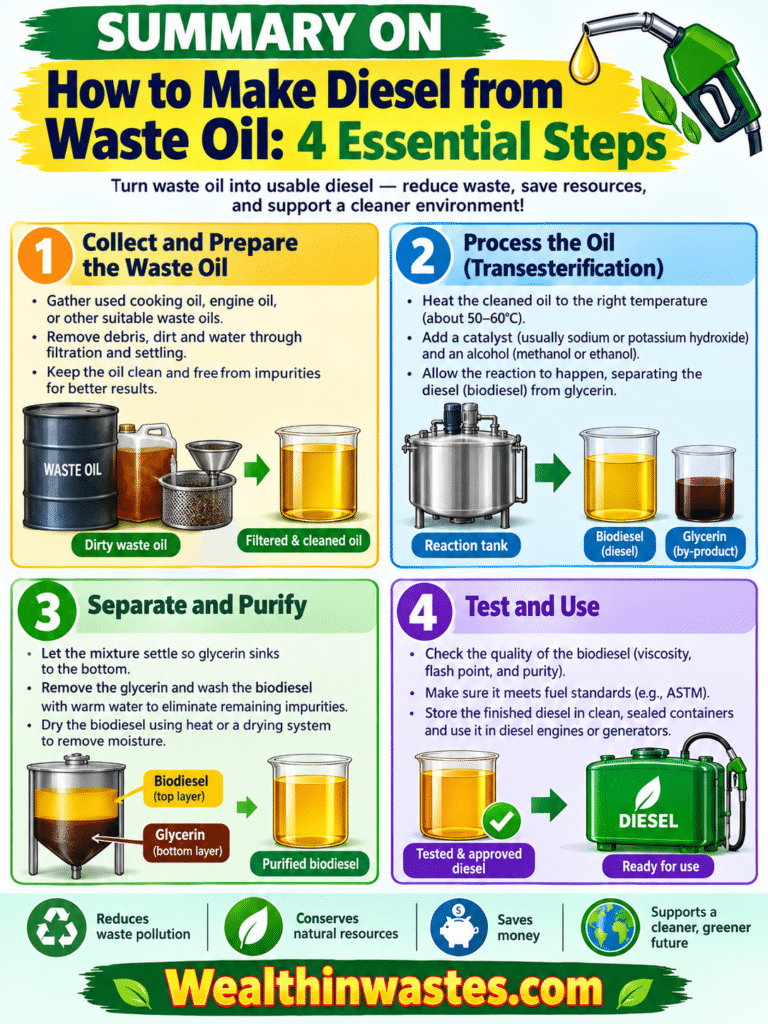
| Topic | Main Point | Key Consideration |
|---|---|---|
| Waste Oil Recovery | Specialist facilities evaluate used oil for suitable recovery routes. | Oil composition determines the appropriate process. |
| Four Processing Stages | Collection, pretreatment, industrial conversion, and product testing. | Operators need suitable equipment and controls. |
| Pyrolysis | Thermal conversion produces a mixture of products. | Further refining may be necessary. |
| Transesterification | Commonly produces biodiesel from suitable fats and cooking oils. | It is not a simple treatment for used motor oil. |
| Safety and Recycling | Approved collection and processing protect people and ecosystems. | Never assume filtered waste oil meets diesel standards. |
Frequently Asked Questions About How to Make Diesel from Waste Oil
1. Can used motor oil be turned into diesel?
Specialist facilities can recover fuel products from suitable waste oil, but processing and quality testing determine their permitted uses.
2. Can I make diesel at home by filtering waste oil?
No. Household filtration does not remove every contaminant or transform motor oil into standard diesel fuel.
3. Is transesterification suitable for used motor oil?
No. It commonly produces biodiesel from suitable fats and oils, particularly waste cooking oil.
4. What is pyrolysis?
Pyrolysis breaks down suitable materials with heat and little or no oxygen, producing mixtures that may require further treatment.
5. Does filtered waste oil meet diesel standards?
Not necessarily. Filtering alone does not establish the chemical composition, performance, or safety required for diesel fuel.
6. Can untreated waste oil run a diesel generator?
Do not assume it can. Untreated oil may damage equipment, create deposits, and increase harmful emissions.
7. How should waste motor oil be stored?
Use compatible, sealed, labelled containers and keep them away from drains, incompatible substances, and ignition sources.
8. What is the safest way to recycle waste oil?
Contact an approved collection centre, licensed waste-oil processor, or specialist re-refiner that follows applicable environmental requirements.
Do you have any questions, suggestions, or contributions? If so, please feel free to use the comment box below to share your thoughts. We also encourage you to kindly share this information with others who might benefit from it. Since we can’t reach everyone at once, we truly appreciate your help in spreading the word. Thank you very much for your support and for sharing!